

 8 hours ago
6
8 hours ago
6
PROTECT YOURSELF with Orgo-Life® QUANTUM TECHNOLOGY
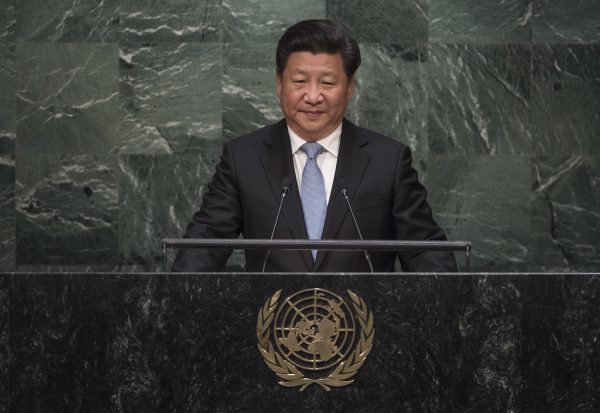
Orgo-Life the new way to the future Advertising by AdpathwayChinese media have confirmed that Xi Jinping will make a state visit to Washington from September 23 to 25 for a much-anticipated summit with U.S. President Donald Trump. The announcement followed talks between their economic chiefs in New York on September 20.
Although the two sides have framed those discussions differently, it is clear that trade and AI will be on the summit agenda. Trump could leave with more orders, Xi with fewer constraints on China’s technological development, and both declare success. For Canberra, the question is what their bargain would mean for Australian investments and security arrangements built around sustained China-U.S. competition.
Allied unease is already visible. On September 21, U.S. Secretary of State Marco Rubio met his Japanese and South Korean counterparts in New York. Their joint statement reiterated the United States’ “ironclad” defence commitments, opposed economic coercion, and stressed peace and stability across the Taiwan Strait. Japanese Prime Minister Takaichi Sanae secured a meeting with Trump on September 22, just before the summit, while South Korean President Lee Jae-myung sought contact during the United Nations General Assembly. Tokyo and Seoul want their security and economic concerns heard before Trump meets Xi. Canberra should draw the same lesson.
Like the Trump-Xi summit held in Beijing in May, this one is likely to buy time rather than lasting stability. The deadline that matters for business falls around November 10. Three temporary arrangements approach their expiration date: Washington’s suspension of restrictions on majority-owned affiliates of listed entities, China’s suspension of expanded rare earth and related export controls, and 178 U.S. tariff exclusions for Chinese goods. The practical questions are how long these pauses will be extended and on what terms.
Trump wants commercial wins ahead of the midterms. Xi wants fewer constraints on China’s technological development. Trade concessions can serve both purposes without resolving the contest over power in the digital age.
Trade and technology may therefore move in different directions. Tariff relief and purchase commitments could coexist with tighter restrictions on advanced chips and overseas computing access. Xi cannot assume Trump can trade these restrictions away. They have bipartisan support in Congress and deep backing in the Pentagon and Commerce Department.
Beijing increasingly treats efforts to block its technological advance as a challenge to its right to development, one of the four red lines in Xi’s book. It will resist broader technology restrictions and pressure on third countries to choose sides.
The two leaders have different philosophies of negotiation. Trump assumes that, at the right price, almost any arrangement can be renegotiated. Xi allows for pragmatism and ambiguity within fixed limits. Beijing accepts broadly worded commitments but demands clarity on Taiwan and its political system. Washington insists on verifiable trade commitments while deliberately leaving uncertain whether it would intervene militarily over Taiwan. Both leaders have domestic reasons to compromise, but both may sign the same wording and mean different things.
Australia has to plan for the consequences. Canberra should compare their announcements for differences in scope, duration, and conditions before treating a diplomatic statement as a reliable basis for the future.
The Albanese government has spent years restoring normal trade with China while supporting Washington’s efforts to reduce dependence on it. If Trump and Xi compromise with one another, Australia could be left bearing the costs of reducing dependence on China while Washington negotiates exceptions for itself.
Canberra should seek durable support for mineral projects, cooperation on shared AI risks, and security commitments that survive a bargain with Beijing.
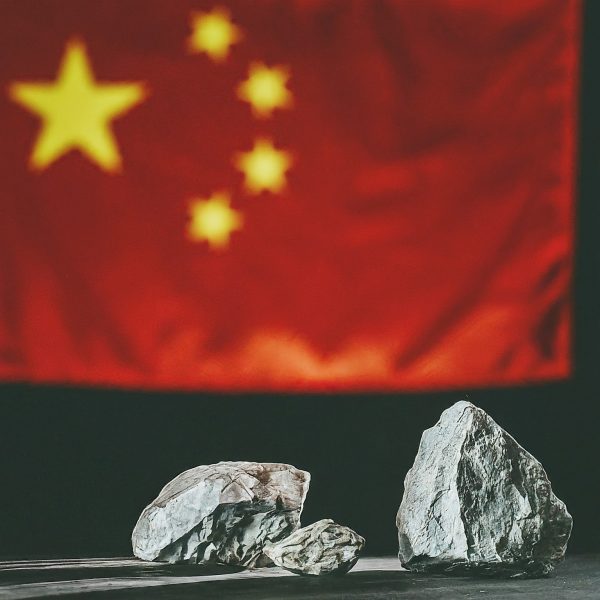
First, critical minerals offer one test. The Australia-U.S. framework envisages price support and financing to develop alternatives to Chinese supply. If Washington and Beijing extend their rare earth arrangements, Canberra should seek assurances that support for Australian alternatives will endure. Australian projects need dependable financing and long-term customers, even when Chinese supplies become easier to obtain.
Second, AI risks extend beyond chips and data centers. Australian businesses use software and digital services shared across borders. Canberra should therefore press for an agreement to warn affected countries and operators of serious AI incidents while there is still time to contain them. Building more local data centers would not, by itself, remove those shared dependencies.
Government hotlines alone cannot do this: the first warning may come from a developer, cloud provider, or independent researcher. Those warnings need to reach Australian authorities and affected businesses without waiting for governments to establish blame. That would give Australia something a bilateral technology deal cannot guarantee: timely notice of a failure that could spread into its own economy. The test is whether warnings reach those who must act, rather than whether the leaders agree to keep talking.
Finally, Australia needs maritime security. Defense-commissioned research reported in 2022 found that a major regional conflict would threaten routes supplying 90 percent of Australia’s refined-fuel imports. With disruption in the Strait of Hormuz already imposing costs, Australia can ill afford another obstructed route in the South China Sea.
Canberra should seek consultation before Washington negotiates any changes affecting its regional military presence or commitments under AUKUS. It should also press for functioning military hotlines and arrangements for reporting incidents at sea and in the air. These mechanisms need procedures both sides will use when tensions rise.
Reaffirming that decisions to use nuclear weapons must remain under human control at the summit would provide another practical safeguard.
Canberra’s test is whether the summit leaves Australia better able to invest, keep essential services running, and protect its trade routes. That requires commitments Washington will honor and crisis arrangements both powers will use. If Trump and Xi buy themselves time while Australia is left carrying the uncertainty, their success will not be ours.


![Beautiful Studio Ghibli coin/card cases recreate scenes and props from anime classics [Photos]](https://soranews24.com/wp-content/uploads/sites/3/2026/09/60.jpg?w=1000&h=525&crop=1)










 English (US) ·
  French (CA) ·
  French (FR) ·