

 1 month ago
72
1 month ago
72
PROTECT YOURSELF with Orgo-Life® QUANTUM TECHNOLOGY
Orgo-Life the new way to the future Advertising by AdpathwayCountry Risk
Key Facts
—The visit. Fitch Ratings analysts will be in Guatemala from 15 to 17 July to review its credit rating.
—The rating. Guatemala holds BB+ with a stable outlook, exactly one notch below investment grade.
—The climb. Fitch lifted the rating from BB to BB+ in October 2025, after a run of upgrades.
—The timing. The review lands as Guatemala enters a pre-election phase ahead of 2027 general elections.
—The strengths. Low public debt, steady growth and strong reserves and remittances underpin the score.
—The prize. Reaching investment grade could save Guatemala up to $640m a year in debt costs.
Guatemala rating watchers have a date circled on the calendar. Fitch is coming to town, and the country is one small step from a milestone it has never reached.
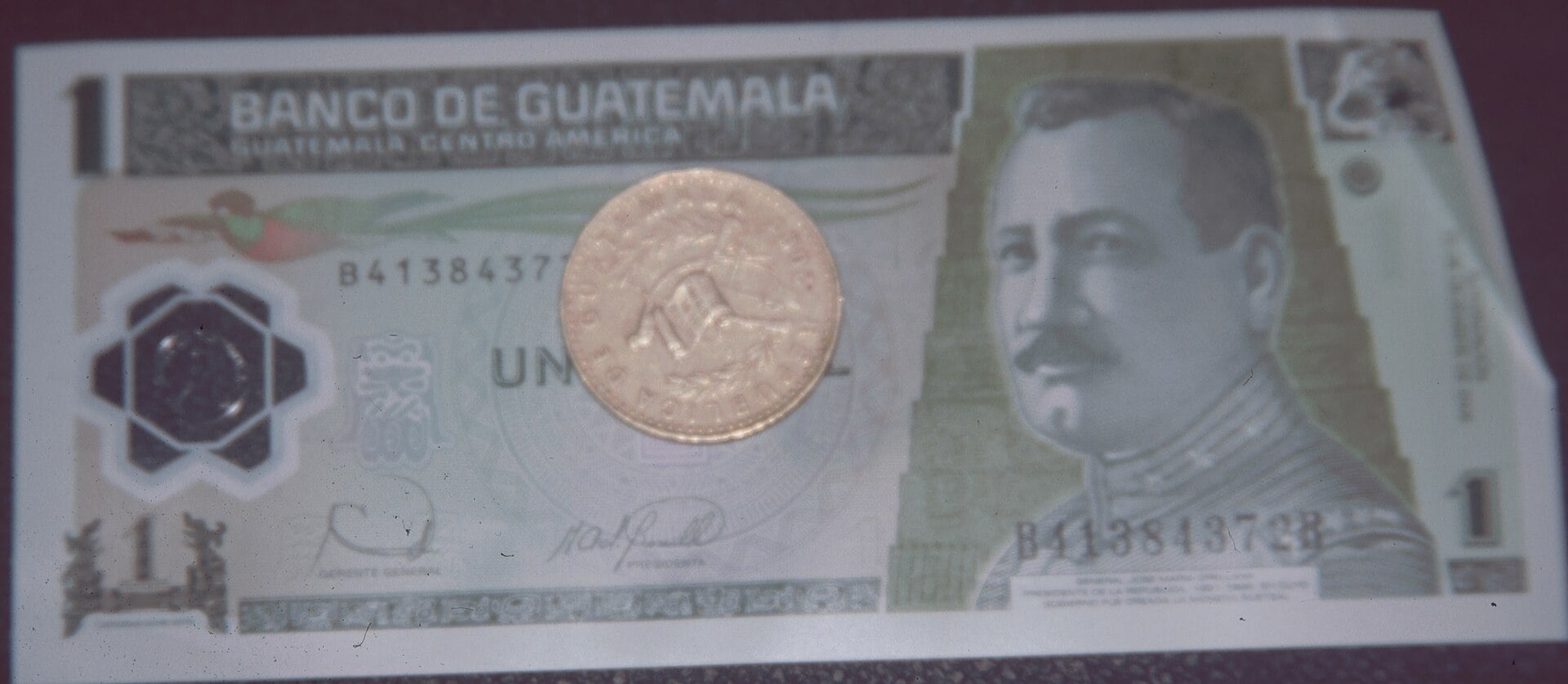
Central America’s largest economy has never held an investment-grade credit rating. After years of upgrades, it now sits a single notch away.
This month brings a key test. One of the big three rating agencies is arriving to take a fresh look.
Credit ratings measure how likely a country is to repay its debts on time. They shape what governments pay to borrow and who is willing to lend to them.
Investment grade is the dividing line between bonds considered safe enough for conservative investors and those seen as riskier bets. Crossing it changes the entire pool of potential buyers.
One-stop reference
Company Intelligence
Every listed company in Latin America — financials, ownership and structure for 1,450+ companies across 26 exchanges, in one place.
What the Guatemala rating review involves
The calendar is set. Fitch analysts will be in the country from the fifteenth to the seventeenth of July, opening this year’s evaluation cycle.
The starting point is strong. Guatemala currently holds a BB+ rating with a stable outlook, which places it exactly one step below investment grade.
That position is recent and hard-won. Fitch raised the rating from BB to BB+ in October last year, part of an unusual run of upgrades across all three major agencies.
The other agencies tell the same story. S&P confirmed Guatemala at BB+ in May, and Moody’s holds it at the equivalent level, all with a stable outlook.
A stable outlook means the agency expects the rating to stay put in the near term unless conditions change. It is neither a green light for an upgrade nor a warning of a downgrade.
The government is not leaving it to chance. An inter-agency panel has spent weeks assembling the technical case it will put to the visiting analysts.
Why the Guatemala rating is so high
The fundamentals are unusually solid for the region. Public debt sits below thirty percent of output, among the lowest in Latin America, alongside controlled inflation and a long record of cautious policy.
External buffers add strength. Foreign reserves and remittances together are large, with money sent home by Guatemalans abroad reaching roughly twenty-five billion dollars in twenty twenty-five.
Those remittances are a double-edged sword, though. Fitch has noted they cushion the economy but also expose how much it leans on money earned abroad rather than at home.
Growth has been steady too. Output has expanded around four percent a year, roughly double the Latin American average.
The government will also point to reforms. It has passed a new anti-money-laundering law, named a new attorney general, and pushed through competition and public-private-partnership laws despite lacking a congressional majority.
The gap that remains
The agencies agree on what is missing. Guatemala’s obstacle is not its finances but its institutions, where weak governance and rule-of-law scores hold it back.
Governance covers how transparent, accountable and effective public institutions are. Rule of law measures whether contracts are enforced, property rights protected and courts independent.
There are structural weaknesses too. A very low tax take of around thirteen percent of output, high informality and an infrastructure deficit all weigh on the assessment.
The election calendar adds a layer. The review comes as Guatemala enters a pre-election phase before 2027 general elections, a period agencies watch for policy continuity.
Will the government maintain fiscal discipline as campaigns heat up? Can reforms survive a transition? These are the questions rating analysts ask when elections approach.
Why it matters
For investors, the stakes are concrete. Analysts estimate that reaching investment grade could cut Guatemala’s borrowing costs by up to six hundred and forty million dollars a year.
The upgrade would also widen the buyer base. Investment grade opens the door to large global pension and insurance funds barred from holding lower-rated debt.
Many institutional investors operate under mandates that restrict them to investment-grade securities. Crossing the threshold means access to a much deeper pool of capital.
The honest read is that this visit is unlikely to deliver the jump itself. Agencies have signalled the leap will take another twelve to twenty-four months and hinge on governance, so the review is a checkpoint rather than the finish line.
Frequently Asked Questions
What is Guatemala’s current rating?
Guatemala holds a BB+ rating with a stable outlook from Fitch, exactly one notch below investment grade. Fitch raised it from BB to BB+ in October 2025, and S&P confirmed the same level in May 2026.
What is holding Guatemala back from investment grade?
The agencies point to weak governance and rule-of-law scores, a very low tax take of around thirteen percent of output, high informality and an infrastructure deficit. They say macroeconomic stability alone will not secure the upgrade in the next 12 to 24 months.
Why does the rating matter?
Reaching investment grade could cut Guatemala’s borrowing costs by up to 640 million dollars a year, according to analyst estimates. It would also open the door to large global pension and insurance funds that cannot hold lower-rated debt.















 English (US) ·
  French (CA) ·
  French (FR) ·