

PROTECT YOURSELF with Orgo-Life® QUANTUM TECHNOLOGY
Orgo-Life the new way to the future Advertising by Adpathway Chemists have developed a way to use free electrons to steer reactions beyond the limits imposed by conventional electron-transfer rules. Credit: Shutterstock
Free electrons offer chemists a new way to control reactions that conventional electron transfer rules would normally prevent.
Inside a reaction flask, an electron can determine which molecules combine and which remain unchanged. Chemists rely on this control to build complex compounds used in lifesaving drugs, advanced materials, and laboratory models of biological systems. One of their most useful tools is single-electron transfer, which can activate molecules that would otherwise resist reacting and allow them to join together.
For decades, however, a basic rule has restricted which reactions chemists can design. When two molecules compete to receive an electron, the electron ordinarily moves to the molecule that is easier to reduce. Researchers led by chemists at the University of Wisconsin–Madison, working with colleagues at Colorado State University and the University of Colorado Boulder, have now developed a different approach. Reported in Nature, the strategy overcomes a persistent problem in electron transfer selectivity and may make previously inaccessible coupling reactions possible.
Free electrons bypass the usual preference
“Our catalyst works a bit differently because it actually just ejects the electron directly into solvent,” says Zachary Wickens, a professor in the UW–Madison Department of Chemistry who led the work. “This gives you, more or less, the strongest reductant and the most aggressive source of electrons you could possibly have since a free electron would rather be in basically any molecule than just on its own in solution.”
Once released into the solvent, the electron rapidly enters the first molecule it encounters. Its choice no longer depends mainly on which molecule is best able to stabilize the added electron. As Wickens puts it, “anything is better than the electron freely floating in solution.”
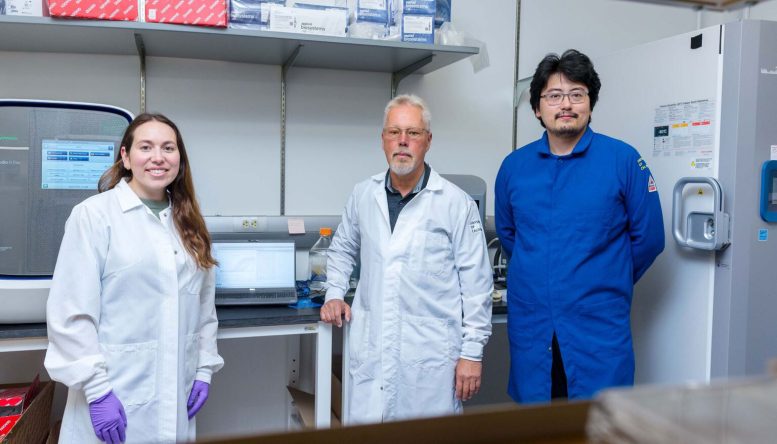
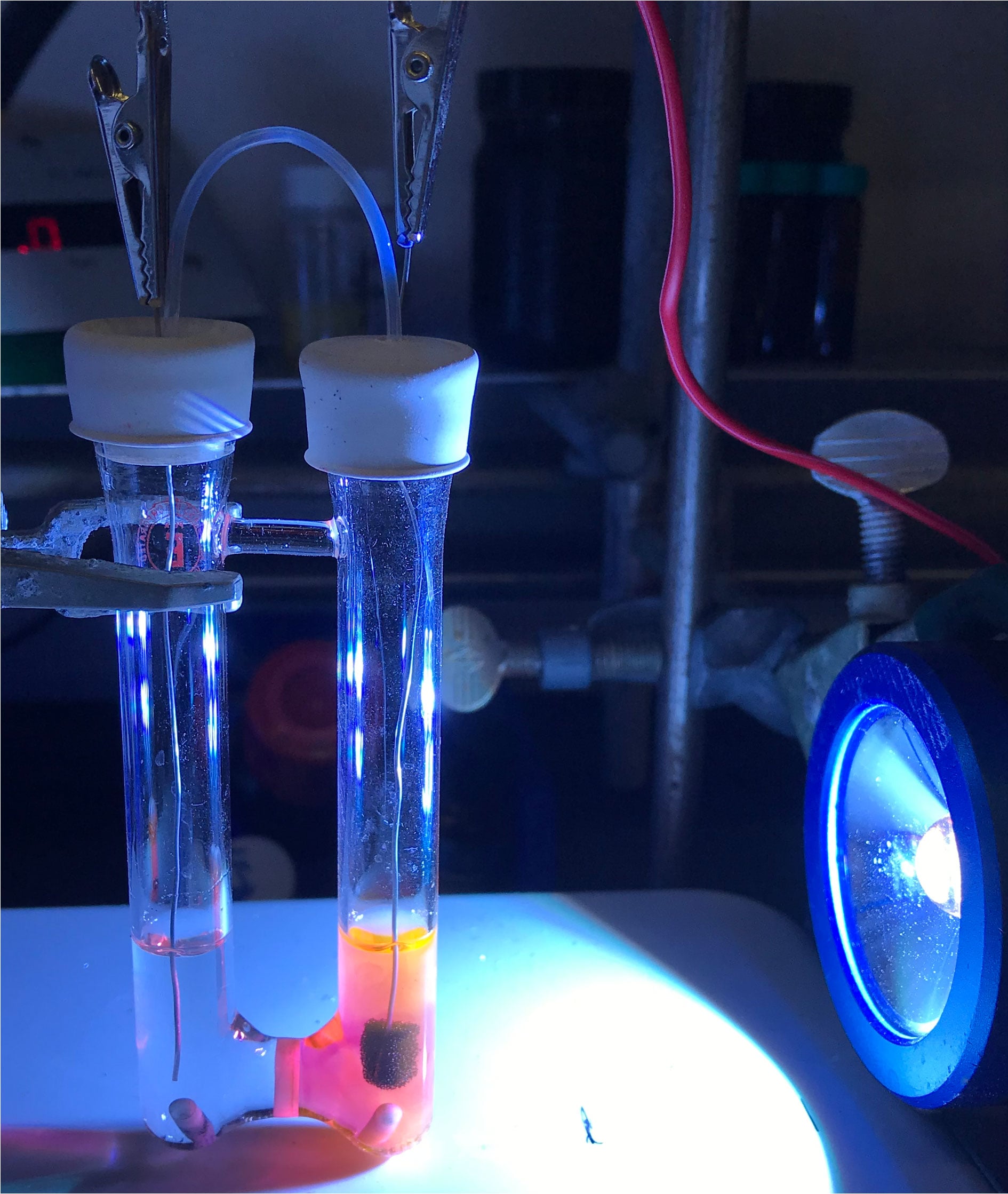 An electrophotocatalytic reaction in progress in the Wickens lab at UW–Madison. Credit: Zachary Wickens
Later steps determine which reaction succeeds
While experiments in Wickens’ laboratory established the new reaction framework, collaborators in Colorado investigated the underlying mechanism. Researchers at Colorado State University used computational modeling, while scientists at the University of Colorado Boulder applied spectroscopy to track the chemical events controlling the reaction. Robert Paton led the Colorado State work with support from the National Science Foundation-funded Center for Sustainable Photoredox Catalysis (SuPRCat).
 Prof. Zachary Wickens, University of Wisconsin–Madison. Credit: UW–Madison Department of Chemistry
The analyses showed that the decisive selection does not occur when the electron first enters a molecule. Instead, it emerges during the steps that follow.
“Our calculations reveal how the decisive selectivity emerges after electron transfer has already occurred,” says Paton. “We found that the desired reactant can escape reversal and continue toward product, while the partner that is easier to reduce is effectively recycled back to its starting material. This explains how the reaction can succeed despite the usual thermodynamic preference.”
The molecule needed for the desired reaction can continue toward the final product, while the competing molecule that more readily accepts an electron reverses course and returns to its original form. This sequence allows chemists to overcome the usual preference imposed by thermodynamics.
A broader framework for redox chemistry
Wickens and his colleagues have spent the past five years developing the catalyst family that made this alternative approach to selectivity possible. Rather than introducing only one additional laboratory technique, the work provides a broader principle for planning reactions involving oxidation and reduction.
According to Wickens, “This is not just another synthetic method; it’s a new way to design redox reactions.”
Reference: “Selectivity Emerges from Indiscriminate Photoreduction” by Joseph M. Edgecomb, Arindam Sau, Niket Manoj, Matthew D. Resmini, Alissia F. Meyer, Robert S. Paton, Niels H. Damrauer and Zachary K. Wickens, 15 July 2026, Nature.
DOI: 10.1038/s41586-026-10897-7
Never miss a breakthrough: Join the SciTechDaily newsletter.
Follow us on Google and Google News.








 English (US) ·
  French (CA) ·
  French (FR) ·