

PROTECT YOURSELF with Orgo-Life® QUANTUM TECHNOLOGY
Orgo-Life the new way to the future Advertising by Adpathway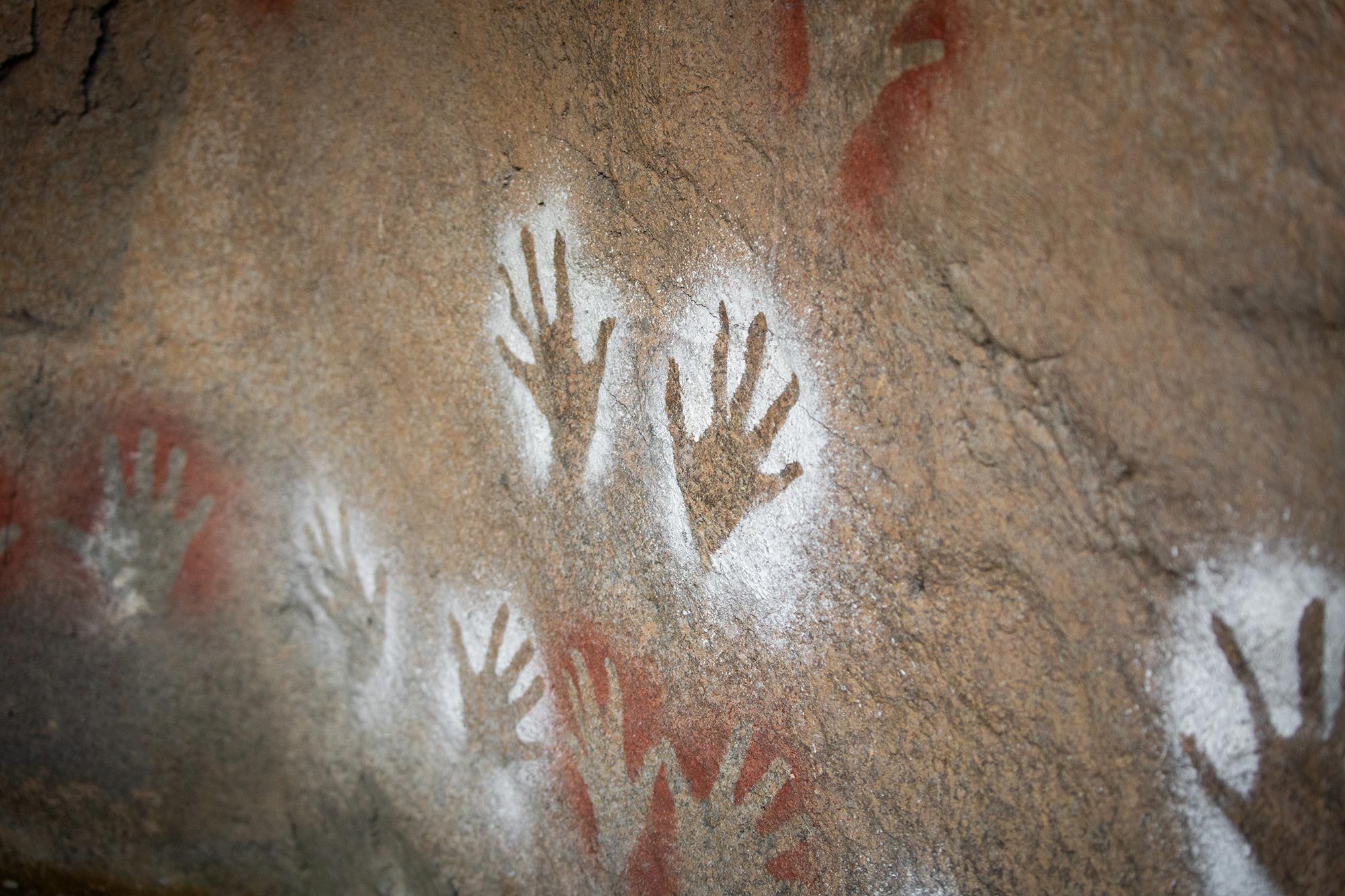 Australia’s Indigenous population has a history stretching back tens of thousands of years, shaped by deep cultural traditions, diverse communities, and close connections to the land. Credit: Shutterstock
New estimates suggest Australia’s Indigenous population was much larger before European colonization and declined by roughly 93% between 1788 and 1861.
European colonization of Australia began in 1788 with the arrival of Britain’s First Fleet. By the time early censuses counted Indigenous people, disease and violence had already devastated their communities, leaving those records an incomplete guide to how many people had lived on the continent before colonization.
A new study puts the median estimate of that population at 2.22 million, far above the 250,000 to 1 million suggested by earlier historical estimates. Starting from this larger population, the researchers calculate that the losses following colonization were also much greater than previously believed. Their model suggests that by 1861, the Indigenous population had fallen to about 7% of its estimated size in 1788, a decline of roughly 93% in 73 years.
To align that starting population with early census records, the model estimates 2.06 million excess deaths between 1788 and 1861. That amounts to an average of about 28,200 deaths per year beyond what would otherwise have been expected.
“These research findings challenge us to rethink the scale of what happened after 1788. We are not talking about a marginal consequence of colonization but a demographic catastrophe at the heart of the Australian story. But the research also tells us something extraordinary. Our survival is one of Australian history’s most remarkable stories,” said Distinguished Professor Larissa Behrendt AO, chair of the Centre Advisory Committee at the Australian Research Council Centre of Excellence for Indigenous and Environmental Histories and Futures (CIEHF).
Early estimates understated Australia’s Indigenous population
Many earlier population estimates trace back to work by anthropologist Alfred Radcliffe-Brown in the 1930s. He calculated that about 250,000 Indigenous people had lived in Australia before colonization, while acknowledging that his estimate did not account for the effects of lethal diseases, frontier violence, and structural violence, meaning harm caused by social systems and institutions. Subsequent evidence has shown that these effects reached further than previously understood, strengthening the case that early figures substantially underestimated the population.
The national research team worked with Indigenous partners to investigate population sizes through time, bringing together evidence that could help fill the gaps in written records. They reviewed ethnographic observations, or descriptions of people and their communities, alongside archaeological and genetic reconstructions. They also modeled the continent’s environmental carrying capacity, an estimate of how many people its environments could support.
The resulting population calculations rested on modeling and genetic evidence, with historical and ethnographic accounts providing support rather than determining the estimates. The researchers report estimates up to seven times larger than previous calculations. Their median figure corresponds to an average population density of 0.29 people per square kilometer, or about 0.75 people per square mile.
Colonization’s losses still shape Indigenous lives
The team says that using multiple approaches is essential when reconstructing population histories from incomplete or biased records. For Professor Corey Bradshaw, a member of the research team, professor of global ecology at Flinders University, and a chief investigator in CIEHF, establishing the population before colonization also has a public purpose.
“Understanding the size of Indigenous populations in Australia before European invasion in 1788 is essential to truth-telling and reconciliation,” says Bradshaw. Co-author Distinguished Professor Lynette Russell, of the Monash University Indigenous Studies Centre and CIEHF, connects the findings to the ways colonization continues to shape people’s lives.
“The findings highlight the scale of demographic catastrophe experienced by Indigenous Australians due to colonization, with the implications being a heightened understanding of intergenerational trauma and to inform future policy that assists Indigenous people. In addition to recognizing this intergenerational trauma and disadvantage, it is also time to recognize intergenerational privilege”, says Russell.
Australia’s Indigenous population has grown since the 1950s, although the 2021 census count was still only about 37% of the study’s median estimate for the population before colonization. “These devastating findings highlight the major impacts of invasion experienced by Indigenous Australians, and demonstrate their remarkable survival, resilience and recovery over the past century,” says lead author Associate Professor Alan Williams, a partner investigator in CIEHF representing EMM Consulting and an adjunct research fellow at James Cook University. If current growth trends continue, the researchers estimate that the population would reach its estimated 1788 size around 2047.
Reference: “Large estimated size of the Australian Indigenous population before its extensive decline following colonial invasion” by Alan N. Williams, Raymond Tobler, Billy Griffiths, Sean Ulm, Matthew C. Nitschke, Michael I. Bird, Shane Ingrey, Frédérik Saltré, Kirsty Beller, Ian J. McNiven, Nicholas Pitt, Lynette Russell, Alistair Paterson, Christopher Wilson and Corey J. A. Bradshaw, 15 September 2026, Nature Human Behaviour.
DOI: 10.1038/s41562-026-02571-9
This research was funded jointly by the Australian Research Council Centre of Excellence for Indigenous and Environmental Histories and Futures (CE230100009), and the Australian Research Council Centre of Excellence for Australian Biodiversity and Heritage (CE17010001).
Never miss a breakthrough: Join the SciTechDaily newsletter.
Follow us on Google and Google News.








 English (US) ·
  French (CA) ·
  French (FR) ·