

PROTECT YOURSELF with Orgo-Life® QUANTUM TECHNOLOGY
Orgo-Life the new way to the future Advertising by Adpathway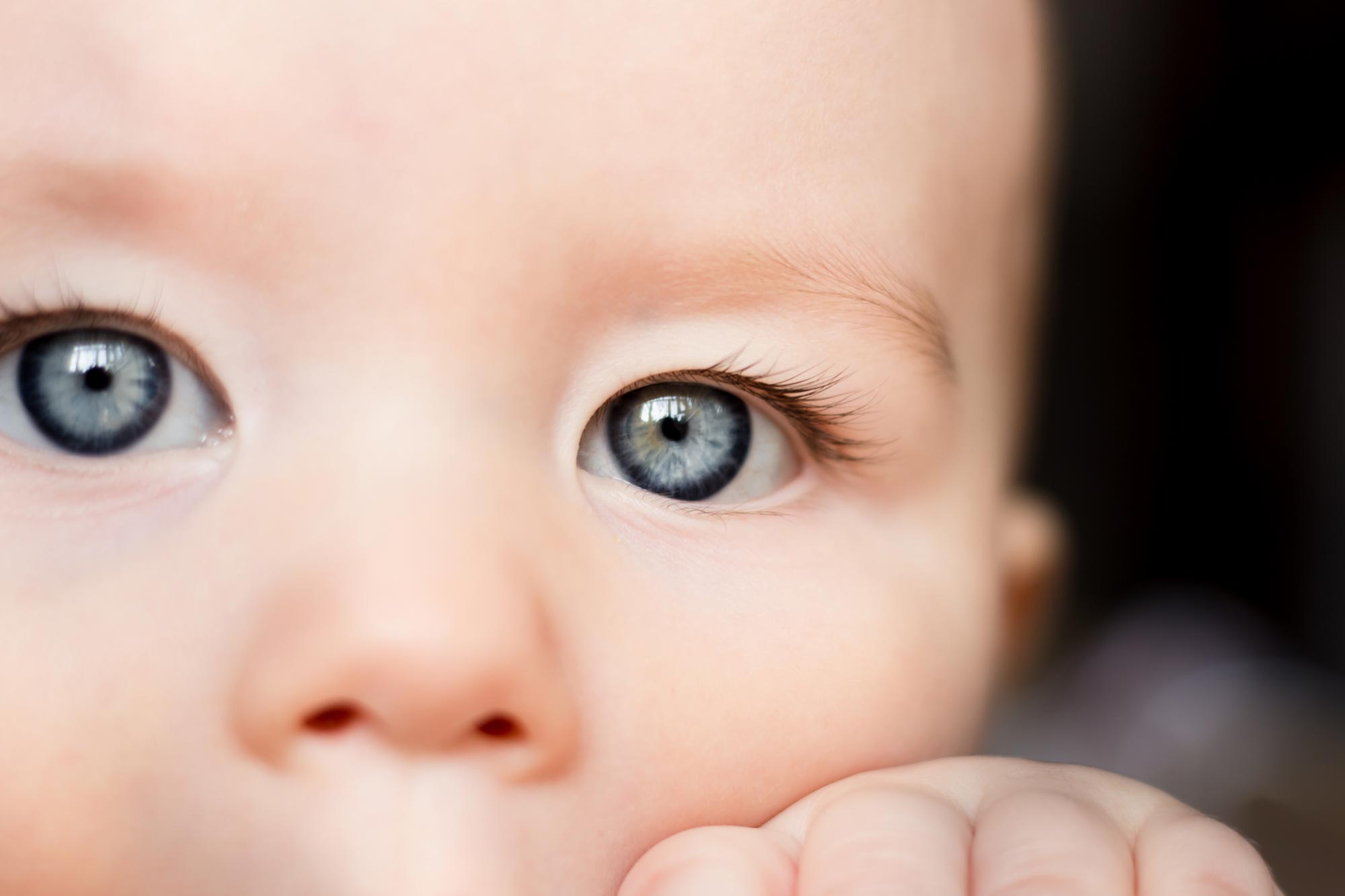 Retinopathy of prematurity (ROP) is a potentially blinding eye disorder caused by abnormal retinal blood vessel growth in babies born very early. Severe cases can damage the retina and require urgent treatment to preserve vision. Credit: Shutterstock
Researchers found that dexamethasone eye drops may reduce the risk that retinopathy of prematurity advances to the treatment stage.
For babies born extremely early, abnormal blood vessel growth in the retina can threaten their sight before they leave the hospital. Researchers in Sweden have now completed the world’s first randomized clinical trial testing whether cortisone eye drops can slow this serious condition and reduce the need for invasive treatment.
The work, led by researchers at the University of Gothenburg and Sahlgrenska University Hospital, focused on Retinopathy of prematurity (ROP), which causes blindness in approximately 35,000 children worldwide each year. The results suggest that dexamethasone eye drops may lower the likelihood that the disease progresses to the point where more aggressive treatment is required.
ROP develops when retinal blood vessels grow abnormally in babies born very prematurely. Severe cases are currently treated with laser therapy or injections directly into the eye to prevent vision loss and blindness. These procedures are invasive and destructive, and the children who need them face the greatest risk of lasting visual impairment.
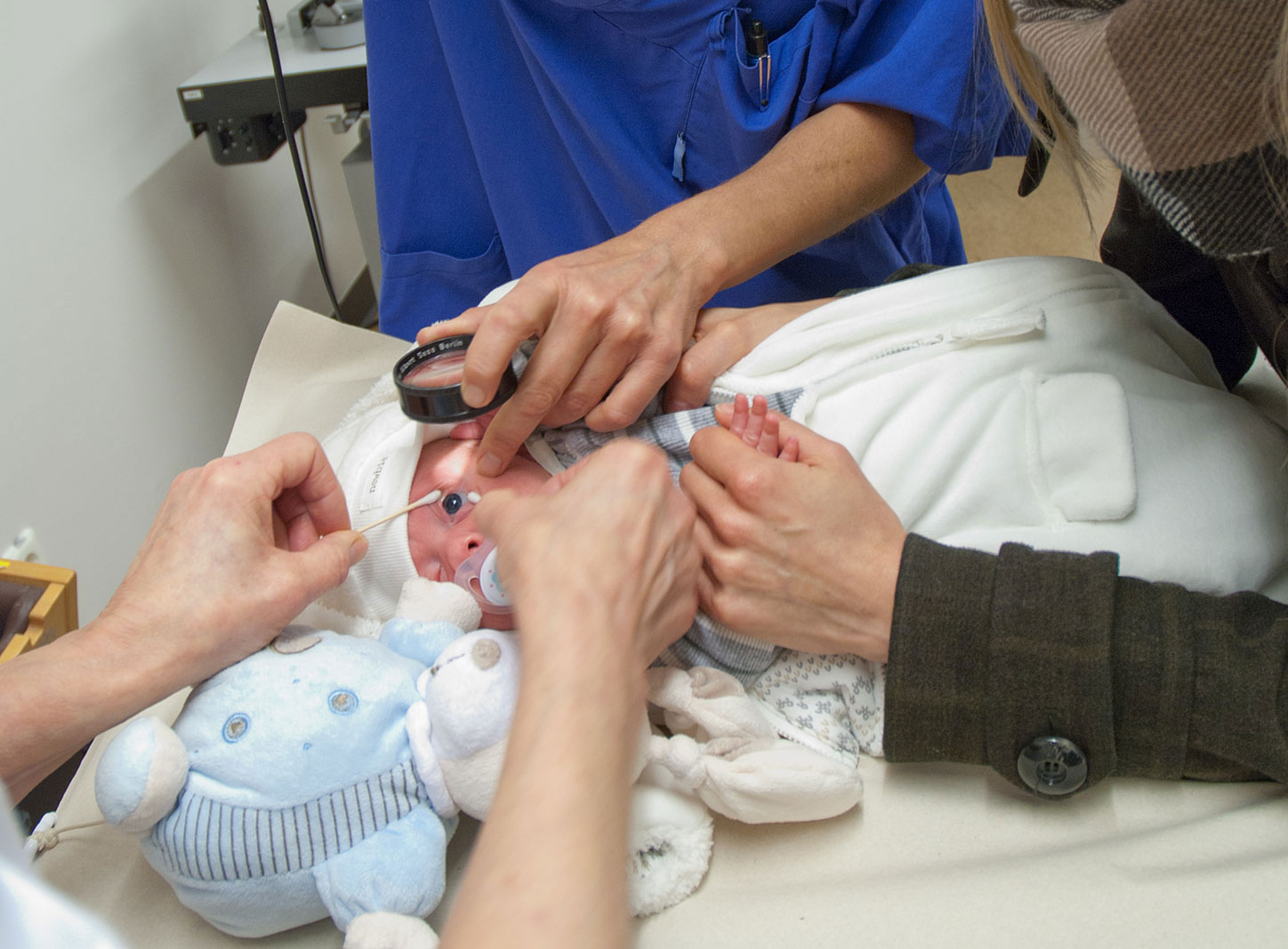 A premature baby is examined for the eye disease Retinopathy of prematurity (ROP). Credit: Ann-Sofie Petersson
Trial tests a less invasive option
The Swedish multicenter DROPROP study enrolled 100 infants born before 30 weeks of pregnancy. Each child had developed a serious form of ROP that had not yet reached the threshold for treatment.
To determine whether the eye drops could slow the disease, the researchers randomly assigned the infants to receive either dexamethasone or a placebo.
Eye drops reduced treatment need
Among the children given dexamethasone, 20 percent developed ROP severe enough to require treatment. That proportion rose to 38 percent in the placebo group, representing a 47 percent reduction in relative risk.
Although the difference was not statistically significant, the researchers reported a large clinical effect.
“The results are very promising because the treatment is simple, inexpensive and non-invasive. In a significant proportion of children, we were able to reduce the need for laser and ocular injections in very fragile premature babies,” says Ann Hellström, professor at the University of Gothenburg and chief physician at Sahlgrenska University Hospital.
 Professor Ann Hellström, University of Gothenburg and Sahlgrenska University Hospital. Credit: Elin Lindström
The researchers also tracked possible complications closely. They found no clinically significant difference between the two groups and observed no clear evidence of serious hormonal or metabolic side effects.
Funded by the Swedish Research Council, the trial took place at six university hospitals and eight county hospitals across Sweden from 2022 through 2025. It is the first double-blind randomized clinical trial to examine dexamethasone eye drops as a treatment for ROP.
Longer follow-up will test durability
The researchers are planning long-term follow-ups to assess how the children’s vision develops and whether any delayed effects of the treatment emerge.
“There is a great global need for simpler treatments for ROP, especially in parts of the world where access to specialist care is limited. If eye drops can prevent severe ROP, it could save the sight of many children around the world,” says Ann Hellström.
Reference: “Dexamethasone Eye Drops to Prevent Treatment-Requiring Retinopathy of Prematurity: The DROPROP Randomized Clinical Trial” by Ann Hellström, Mariya Petrishka-Lozenska, Ulrika Sjöbom, Jenny Wallander, Anders K. Nilsson, Chatarina Löfqvist, David Ley, Lotta Gränse, Hanna Maria Öhnell, Anna-Lena Hård, Gunnar Jakobsson, Karin Sävman, Magnus Domellöf, Stefan Löfgren, Eva Larsson, Lois E.H. Smith, Aldina Pivodic, Pia Lundgren, DROPROP Collaboration Group, Liv Vallin, Ingrid Hansen-Pupp, Kristina Teär Fahnehjelm, Eva Albinsson, Erik Normann, Afsaneh Alibakhshi, Nikica Tomašić, Fredrik Ingemansson, Pierfrancesco Mirabelli, Per Odelberg, Despina Tsamadou, Evangelos Tsigkoulis, Johanna Kopparström, Sofie Eriksson, Karin Hochard Sandgren, Aikaterni Massou, Ylva Friberg-Riad, Athanasia Skriapa-Manta, Liv Lind, Ulrika Lidén and Linnéa Holmberg, 3 August 2026, JAMA Pediatrics.
DOI: 10.1001/jamapediatrics.2026.3247
This work was supported by grants provided by the Swedish Research Council (2021-00341 and 2024-02470), the Swedish state under the agreement between the Swedish government and the county councils (ALF agreements ALFGBG-1005083 and ALF 971188), The Wallenberg Clinical Scholars (KAW 2018.0310, 2024.0253), the National Institutes of Health (EY017017, EY030904-01, and 1U54HD090255), and Skåne University Hospital. The product, Dexafree, was donated by Théa Nordic AB at no cost.
Never miss a breakthrough: Join the SciTechDaily newsletter.
Follow us on Google and Google News.













 English (US) ·
  French (CA) ·
  French (FR) ·