

 1 month ago
52
1 month ago
52
PROTECT YOURSELF with Orgo-Life® QUANTUM TECHNOLOGY
Orgo-Life the new way to the future Advertising by AdpathwayPolitics
Key Facts
—The milestone. The United States marked 250 years since its Declaration of Independence on July 4, 2026.
—The mood. Surveys found national pride near a 25-year low, with many Americans doubting the country’s direction.
—The trade strain. Washington declined to renew its North American trade pact, unsettling partners across the region.
—The security push. The US has widened sanctions on Brazilian gangs and deepened a military footprint in Venezuela.
—The shared stage. The anniversary coincided with World Cup matches on US soil featuring Latin American teams.
—The hedge. Several governments are deepening ties with Europe, Asia and one another to spread their risk.
The world’s most powerful country has just turned 250, and its southern neighbours watched with mixed feelings. The United States 250th anniversary arrived at a moment when Latin America is questioning, more than in years, how far it can rely on Washington.
On July 4, 2026, the United States marked the 250th anniversary of its Declaration of Independence, a milestone known as the semiquincentennial. The official celebrations, from fireworks to a naval gathering of dozens of ships, projected confidence.
Yet the mood at home was subdued. Surveys around the date found national pride near its lowest in a quarter century, and record heat forced several cities to scale back events, a fittingly complicated backdrop.
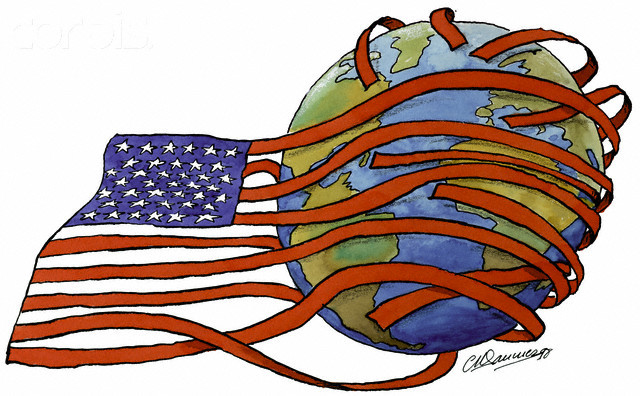
Why the United States 250th anniversary matters to the region
For Latin America, the anniversary is less about American history than about American reach. The United States remains the region’s dominant trading partner, security reference and, for millions of families, the destination for migration and remittances.
So a birthday that Washington frames as a story of enduring strength reads, from the south, as a moment to take stock of a relationship in flux. The question many capitals are asking is simple, namely how predictable the United States will be in its next chapter.
That question has sharpened because three of the year’s biggest regional stories all run through Washington. Each touches a different nerve, and together they explain the wary tone of the anniversary in the region.
Trade, sanctions and a deeper footprint
The first nerve is trade. Washington declined to renew its flagship North American pact in its current form, opening a decade of annual reviews, a signal that even a signature US deal is now negotiable at will, which reframes assumptions from Mexico to Mercosur.
The second is security enforcement. The United States has designated Brazil’s largest gangs as terrorist organizations and warned that even its own citizens now risk penalties for dealing with them, extending American law deep into a neighbour’s economy.
The third is hard power. Six months after a US operation captured Venezuela’s leader, American forces are operating openly inside that country, a footprint the whole hemisphere is reading for what it says about US intentions.
A shared celebration on the field
Not everything about the moment was tense. The anniversary fell during the World Cup, hosted across North America, with matches on US soil on the very weekend of the birthday, including Latin American sides chasing the quarter-finals.
That overlap offered a rare shared jolt of joy, a reminder that the ties binding the Americas are cultural and human as much as they are political. Stadiums full of mixed crowds made a quiet counterpoint to the friction at the negotiating table.
The contrast captures the year. Three neighbours can cheer in the same arenas while their governments pull apart over trade and security, and both truths sit side by side without cancelling each other out.
What the region does next
The strategic response taking shape is to hedge. Rather than rely on a single partner whose commitments now look conditional, several governments are deepening ties with Europe, Asia and each other, from Mercosur’s outreach to closer links with Beijing.
Supporters of Washington’s approach argue it reflects a legitimate defence of American interests and security, and that a confident United States remains the region’s most valuable partner. Critics counter that unpredictability pushes neighbours to look elsewhere, weakening US influence over time.
Both readings will be tested in the months ahead, with a Mexico trade round and Brazil’s October election among the markers to watch. For Latin America, the United States at 250 is neither simply an ally nor an adversary, but a powerful neighbour whose next moves it can no longer take for granted.
What is the United States 250th anniversary?
It is the semiquincentennial, marking 250 years since the US Declaration of Independence on July 4, 1776. The United States celebrated the milestone on July 4, 2026, with official events including fireworks and a large naval gathering.
Why does it matter for Latin America?
The United States is the region’s dominant trading partner, security reference and top migration destination. The anniversary arrives amid strains over trade, sanctions on Brazilian gangs and a US military presence in Venezuela, prompting several governments to reassess how far they can rely on Washington.
How is the region responding?
Many governments are hedging by deepening ties with Europe, Asia and one another rather than relying on a US trading order that has looked more conditional. Supporters and critics of Washington’s approach disagree on whether it strengthens or erodes American influence.












 English (US) ·
  French (CA) ·
  French (FR) ·