

 1 month ago
39
1 month ago
39
PROTECT YOURSELF with Orgo-Life® QUANTUM TECHNOLOGY
Orgo-Life the new way to the future Advertising by AdpathwaySOUTH AFRICA · MINING
Key Facts
—What failed: The Inyoni tailings storage facility, part of the Dikwena chrome plant complex at Samancor’s WCM mine east of Brits, failed at 17:39 on 13 August 2026. There were no fatalities and one reported injury.
—Where it went: Slurry spilled into the neighbouring Eland mine, owned by Northam Platinum, which briefly closed an access road. The volume released has not been disclosed.
—The regulator’s finding: The Department of Mineral and Petroleum Resources found the dam appeared to have been showing persistent seepages. It concluded the failure was reasonably foreseeable on the evidence at the operation.
—Not registered: The department found the facility appeared not to have been registered with the Department of Water and Sanitation. Civil society monitors confirm it is absent from the July 2025 dams register.
—Who ran it: The facility was operated by One Chrome, a company with no website. Samancor Chrome is unlisted and is no longer a member of the Minerals Council South Africa.
—Old rules: South Africa’s tailings standards date from 1998 and are under revision. One senior mining executive said they were unaware of any operation that follows them.
The South Africa tailings dam collapse of 13 August happened at a facility that regulators say was showing persistent seepages and appears never to have been registered with the water authorities. The department’s own finding is that the failure was reasonably foreseeable.
One-stop reference
Company Intelligence
Every listed company in Latin America — financials, ownership and structure for 1,450+ companies across 26 exchanges, in one place.
What the South Africa tailings dam collapse involved
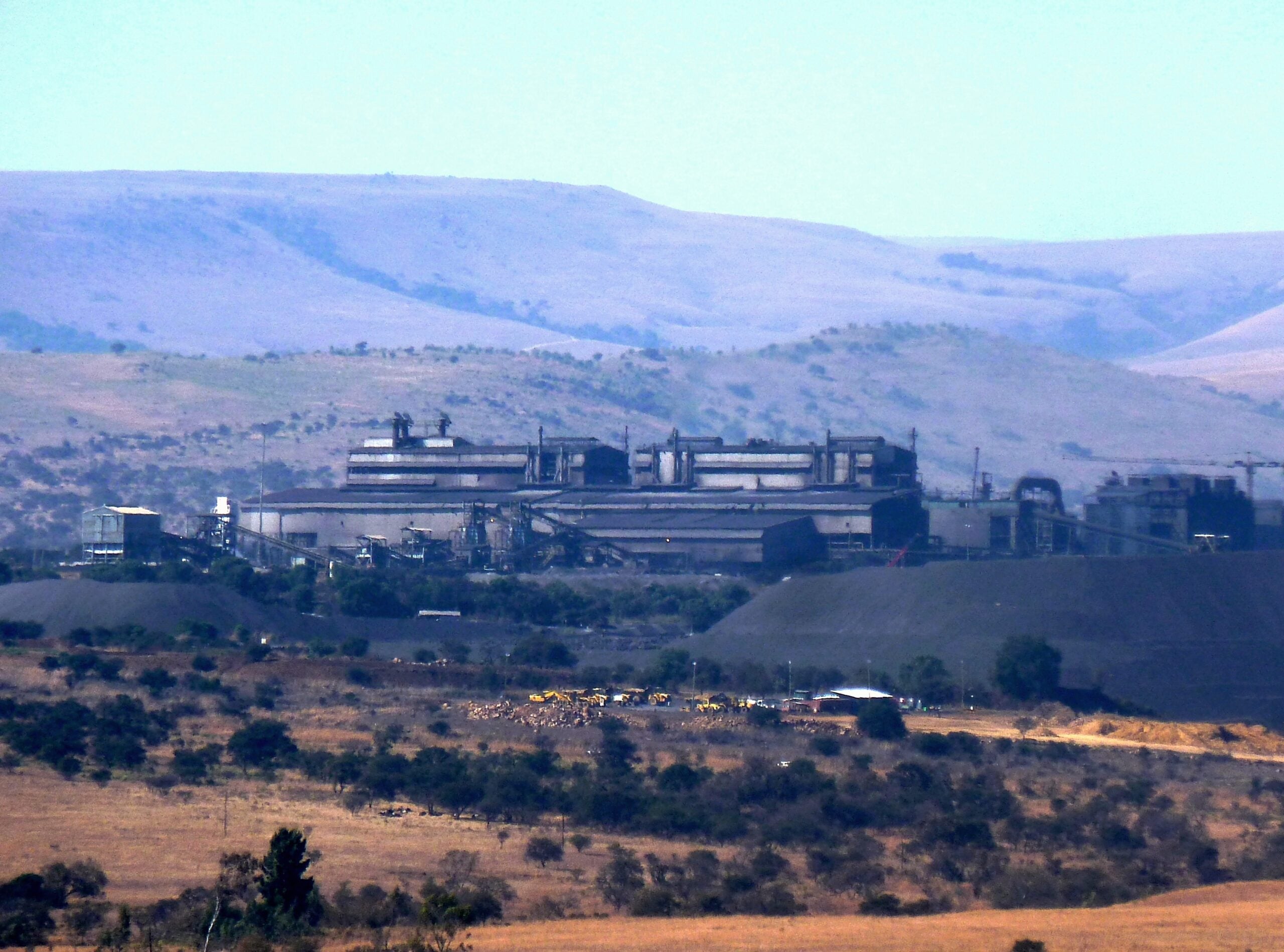
The Inyoni tailings storage facility forms part of the Dikwena chrome plant complex at Samancor’s WCM mine, east of Brits in the North West province. It failed at 17:39 on 13 August 2026.
There were no fatalities and one reported injury, which given the scale of the facility is a matter of timing rather than design. Slurry spilled into the neighbouring Eland mine, owned by Northam Platinum, which briefly closed an access road.
Daily Maverick has seen the Department of Mineral and Petroleum Resources’ Notice of Orders. The department found that the dam appeared to have been showing persistent seepages, and that failure was reasonably foreseeable on the evidence available at the operation.
The volume of material released, the environmental damage assessment and the likely cost of rehabilitation have not been disclosed. Nor has any enforcement action beyond the Notice of Orders.
The dam that was not on any list
The department also found that the facility appeared not to have been registered with the Department of Water and Sanitation. The Civil Society Tailings Working Group confirms it does not appear in the July 2025 dams register.
That is the finding that turns an industrial accident into a governance story. A structure large enough to flood a neighbouring mine was invisible to the department responsible for water safety.
Alastair Bovim, chief executive of the environmental consultancy Insight Terra, called it “mind-boggling” that a structure of that size was unknown to the authorities.
The operator was One Chrome, a company with no website. Samancor Chrome, whose complex it forms part of, is unlisted and no longer belongs to the Minerals Council South Africa.
Standards written in 1998
South Africa’s tailings standards date from 1998 and are currently under revision. One senior mining executive told Daily Maverick they were unaware of any operation that actually follows them.
That is a striking admission in a country with the depth of mining regulation South Africa has. It suggests the gap is not between good rules and bad operators, but between obsolete rules and everybody.
The global standard has moved on considerably since 1998, largely because of what has happened elsewhere. Independent review boards, published inventories and third-party audits are now normal for listed producers.
Unlisted operators face none of the disclosure pressure that listed ones do. That is the structural point buried in this incident.
Why Brazilian readers will recognise this
The comparison that matters is Brumadinho, where a Vale tailings dam collapsed in January 2019 and killed 270 people. It reshaped Brazilian mining regulation, corporate liability and the global insurance market for tailings.
South Africa has its own precedent in the Jagersfontein failure of September 2022, which destroyed homes and killed people downstream. The lesson that both events taught was about inventory: regulators cannot supervise what they have not counted.
Brazil responded by banning upstream-raised dams and forcing a public register with independent certification. Whether that was the right instrument is arguable; that it produced a list is not.
South Africa is now revising standards eight years after Brumadinho and four years after Jagersfontein, with at least one substantial facility that was never on the register. The sequence is the criticism.
What is still unknown
Samancor did not respond to Daily Maverick’s questions. Samancor Chrome chief executive Desmond McManus told the public broadcaster that the company assumes all responsibility for clean-up and rehabilitation.
The ownership structure of One Chrome has not been established, and no cost estimate for rehabilitation exists in the public record. Neither has any downstream water-quality result been published.
The reporting rests on documents seen by one publication, supported by the civil society register and the broadcaster’s interview. That is solid but narrow.
The wider context is a surge in illegal chrome mining and a chrome sector operating largely outside the listed universe. Both make the counting problem harder, not easier.
Frequently Asked Questions
What happened at the Inyoni tailings facility?
The tailings storage facility at Samancor’s Dikwena chrome complex east of Brits failed at 17:39 on 13 August 2026, with no fatalities and one reported injury. Slurry spilled into Northam Platinum’s neighbouring Eland mine.
What did the regulator find?
The Department of Mineral and Petroleum Resources found the dam appeared to have been showing persistent seepages and that failure was reasonably foreseeable on the evidence at the operation. It also found the facility appeared not to have been registered with the Department of Water and Sanitation.
Who operated the dam?
The facility was operated by One Chrome, a company with no website, within Samancor’s Dikwena complex. Samancor Chrome is unlisted and no longer a member of the Minerals Council South Africa.
How old are South Africa’s tailings standards?
They date from 1998 and are currently under revision. One senior mining executive said they were unaware of any operation that follows them.
This article was produced by The Rio Times’ automated newsroom system. How we use AI · Report an error
The Rio Times · Power Map
See who really holds power in Latin America
Click to open the Power Map →















 English (US) ·
  French (CA) ·
  French (FR) ·