

 2 hours ago
3
2 hours ago
3
PROTECT YOURSELF with Orgo-Life® QUANTUM TECHNOLOGY
Orgo-Life the new way to the future Advertising by Adpathway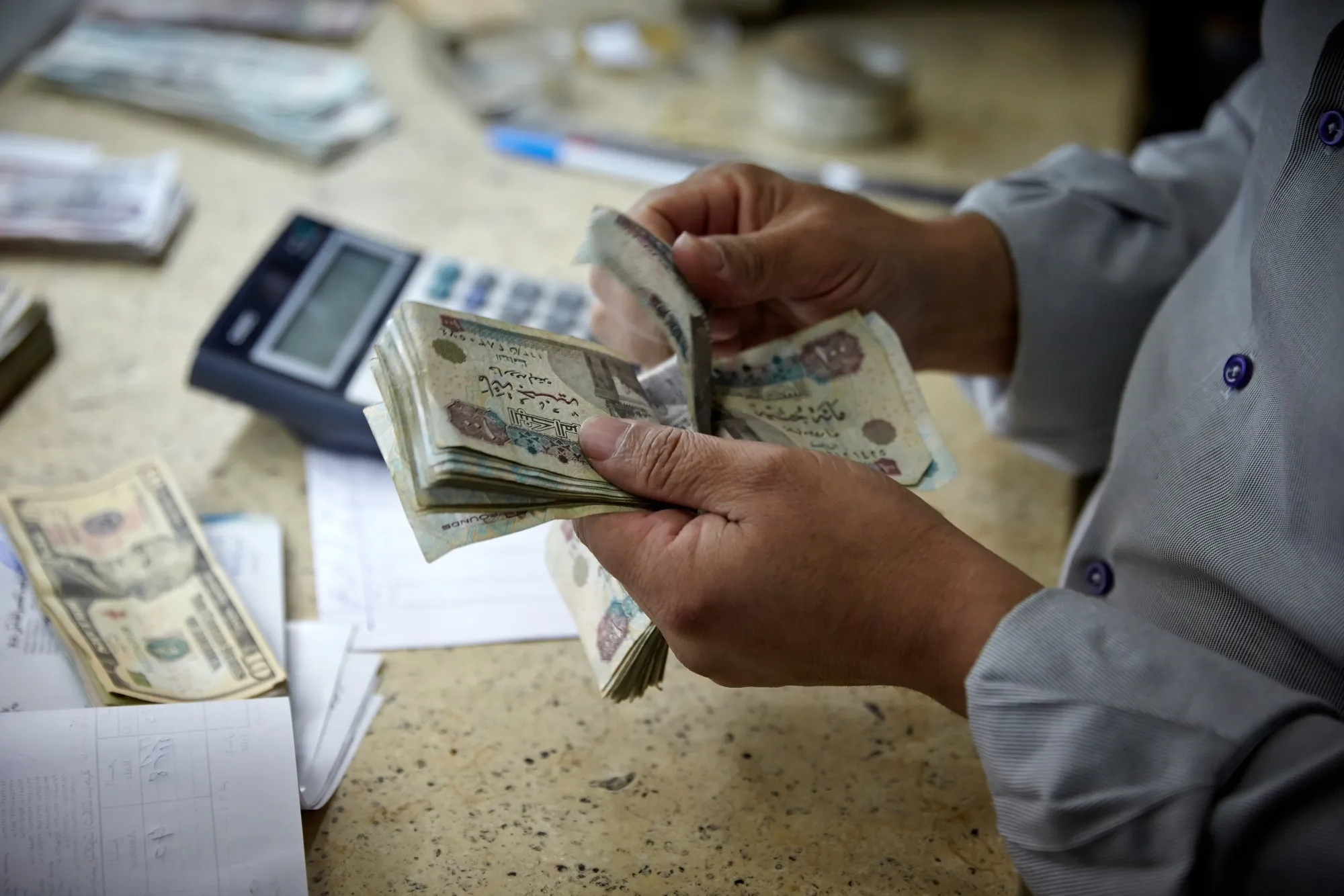
CURRENCY · EGYPT
Key Facts
- —The country Egypt is the most populous Arab country, controls the Suez Canal and is in an IMF-backed economic reform programme.
- —Why it matters A weaker pound raises the cost of Egypt’s fuel imports and cuts the dollar value of Egyptian treasury bills held by foreign investors.
- —Why now Brent crude above US$100 a barrel and regional tension have lifted demand for dollars and pushed some foreign money out of Egyptian debt.
- —What happened The central bank’s official rate closed at 53.18 pounds per dollar on Wednesday 14 October, the weakest for the pound since 19 May.
- —The numbers Foreign investors sold a net 5.8 billion pounds (about US$109 million) of treasury bills on Wednesday. Remittances rose 27.2% to US$33.9 billion in January to August.
- —What it means for you A dollar now buys more pounds for travellers, while US holders of Egyptian debt face currency losses.
- —Still open Whether the central bank lets the slide run or slows it, and whether oil prices ease, is not known.
The Egyptian pound weakened past 53 per US dollar on Wednesday 14 October, its lowest level since May. The Central Bank of Egypt’s official rate closed at 53.04 pounds to buy and 53.18 pounds per dollar to sell.
That compares with 52.90 pounds per dollar at Tuesday’s close, a daily move of about 0.5%. For American readers, a weaker pound makes Egypt cheaper to visit but raises risks for US investors holding Egyptian government debt.
Why the Egyptian Pound Is Falling
Al Manassa, an independent Egyptian news site, said the close was the dollar’s highest since 19 May, citing central bank data. Masrawy, a Cairo news portal, said the pound broke through 53 in early trading for the first time in five months.
At Wednesday afternoon’s close, state-owned National Bank of Egypt and Banque Misr quoted 53.05 pounds to buy and 53.15 pounds per dollar to sell. Commercial International Bank (CIB), a private lender, quoted 53.18 pounds per dollar to sell, matching the central bank, Youm7 reported.
Ali Metwally, an analyst at Mosaic Economics, told Al Manassa that rising global energy prices could lift demand for dollars in Egypt. Egypt imports more petroleum products than it exports, and its petroleum trade deficit widened 31.5% in the fiscal year to June.
Brent crude has traded above US$100 a barrel since early October and reached US$107.15 on Wednesday, Al Manassa reported. The rise followed a strike on a Saudi Aramco facility by the Houthis, the Iran-aligned movement that controls much of northern Yemen.
Mina Rafik, a macroeconomic analyst at Prime Investment, said foreign investors may be leaving over regional tension and higher US bond yields. Foreign investors were net sellers of 5.8 billion pounds (about US$109 million) of Egyptian treasury bills on Wednesday.
Rafik pointed to expectations that the Federal Reserve keeps raising rates while Egypt’s central bank holds its own rates steady. That mix can shrink the extra return that draws short-term foreign money, often called hot money, into Egyptian debt.
Follow this story
Get an email when there’s news on Egypt
Free. One email a day at most, and only when there is news. This also signs you up to our weekday newsletter, Africa Intelligence. Nothing arrives until you click the confirmation link, and you can stop either with one click. Privacy policy.
The Stabilisers Behind the Pound
The central bank reported on Tuesday 13 October that remittances from Egyptians abroad rose 27.2% to US$33.9 billion in January to August. That compares with US$26.6 billion in the same months of 2025, a cushion for the currency.
Banking expert Mohamed Abdel Aal told Al-Masry Al-Youm that remittances and record tourism income shield the pound from a sharp fall. He expects the rate to hold between 52 and 53 pounds to the dollar over the next two months.
Abdel Aal said Egypt’s flexible exchange rate can allow sudden jumps, but it stops a large gap opening between official and market rates. He described the latest moves as fluctuation rather than a trend with no ceiling.
The International Monetary Fund (IMF) completed its seventh review of Egypt’s loan programme on 30 July, allowing about US$1.5 billion in new funds. It urged Cairo to keep the exchange rate flexible and to keep building reserves.
The IMF also expects inflation to rise to 16.7% in the second half of 2026, partly because of a weaker currency. A further slide in the pound would add to that pressure on Egyptian households.
Earlier reporting on the central bank’s reserves is in Egypt’s Reserves Hit Record US$57.35 Billion, and on the external accounts in Egypt Current Account Deficit Hits US$22.5 Billion. For background, see Who Runs Egypt’s Economy, the Key Players in 2026, Egypt Foreign Powers 2026, Gulf, US, China and IMF and the Cairo city guide.
Live Market IntelligenceCommodities — Live Market BoardInside: market breadth, the sector heatmap, currencies & rates, the Latin America scoreboard and the full instrument board.Rio Times · Live Market Intelligence
Commodities — Live Market Board
Global
Oct 14, 2026 · 16:39
Brent crude · benchmark
88.88
-0.03%
+34.42% over 12 months
Market breadth · 15 names
60% advancing
9 ▲ advancing6 declining ▼
Currencies, rates & key inputs
Full instrument board
| GOLD | 4,461 | +1.78% | +33.20% | 4,383 | 4,503 | 4,421 | 139,824 |
| SILVER | 65.59 | +1.26% | +73.05% | 64.77 | 66.98 | 64.81 | 46,406 |
| BRENT | 88.88 | -0.03% | +34.42% | 88.91 | 90.07 | 88.12 | 29,713 |
| WTI | 83.11 | -0.11% | +31.57% | 83.20 | 84.35 | 82.40 | 166,848 |
| COPPER | 6.61 | +0.03% | +46.70% | 6.61 | 6.71 | 6.61 | 39,543 |
| LITHIUM | 75.20 | +1.47% | +62.95% | 74.11 | 75.80 | 75.08 | 89,275 |
| IRON ORE | 161.91 | — | +58.10% | 161.91 | 161.91 | 1 | |
| SOY | 1,184 | +3.20% | +17.05% | 1,148 | 1,199 | 1,168 | 163,179 |
| CORN | 480.50 | +10.02% | +29.34% | 436.75 | 480.75 | 459.50 | 341,248 |
| WHEAT | 655.00 | +3.93% | +29.70% | 630.25 | 657.75 | 631.50 | 128,793 |
| COFFEE | 317.25 | -5.51% | +0.67% | 335.75 | 321.20 | 313.55 | 21,747 |
| SUGAR | 16.43 | -1.79% | -3.01% | 16.73 | 17.11 | 16.22 | 171,992 |
| COCOA | 5,719 | +3.18% | -34.96% | 5,543 | 5,779 | 5,574 | 26,773 |
| ORANGE JUICE | 138.55 | -0.47% | -45.38% | 139.20 | 141.05 | 137.50 | 703 |
| COTTON | 85.03 | +2.33% | +26.78% | 83.09 | 82.90 | 81.96 | 16,546 |
| BEEF | 223.60 | -3.93% | -5.18% | 232.75 | 226.40 | 223.00 | 16,126 |
| CATTLE | 339.10 | -3.16% | -1.82% | 350.17 | 345.50 | 338.60 | 10,164 |
| USD/BRL | 5.16 | +0.01% | -5.13% | 5.16 | 5.18 | 5.14 | — |
Largest moves today
CORN
480.50
+10.02%
COFFEE
317.25
-5.51%
WHEAT
655.00
+3.93%
BEEF
223.60
-3.93%
SOY
1,184
+3.20%
COCOA
5,719
+3.18%
CATTLE
339.10
-3.16%
COTTON
85.03
+2.33%
The session read
The Brent crude eased 0.03%, with breadth positive — 9 of 15 names higher. CORN led, while COFFEE lagged.
From The Rio Times
Related coverage · 14 Oct 2026
What China’s 36.3% Export Jump Means for Brazil
Read →
What It Means for US Readers
For American visitors, the slide means more pounds for each dollar on a trip to Cairo, Luxor or the Red Sea resorts. Rising inflation of the kind the IMF expects can wear that gain away over time.
US funds that hold Egyptian treasury bills earn high pound yields but lose value in dollar terms when the currency weakens. Wednesday’s net foreign sales show that some investors are already cutting their exposure.
Egypt imports much of its fuel, so a weaker pound raises the cost of energy bought in dollars. It also matters to Washington, which treats Cairo as a key partner on Gaza, the Suez Canal and Red Sea security.
What Is Not Known
It is not known whether the Central Bank of Egypt will let the slide continue or act to slow it. The full scale of foreign selling of Egyptian debt this week has not been published.
Oil prices and regional tension are the main swing factors for the pound in the coming weeks. If Brent eases and remittances keep rising, analysts quoted in Egyptian media see room for the rate to settle near 53.
Frequently Asked Questions
What is the Egyptian pound’s rate against the dollar?
The Central Bank of Egypt’s official rate closed at 53.04 pounds to buy and 53.18 pounds per dollar to sell on Wednesday 14 October. That was the weakest level for the pound since 19 May.
Why is the Egyptian pound falling?
Analysts point to higher oil prices, which raise Egypt’s fuel import bill, and to foreign investors selling Egyptian treasury bills. Regional tension and higher US interest rates add to the pressure.
Is the Egyptian pound pegged to the dollar?
No, Egypt uses a flexible exchange rate set largely by supply and demand in the banking system. The IMF has urged Cairo to keep that flexibility while building reserves.
Is Egypt cheaper for American travellers now?
A dollar buys more pounds than it did on Tuesday, which helps visitors paying local prices. Rising inflation can reduce that gain over time.
What supports the pound?
Remittances from Egyptians abroad rose 27.2% to US$33.9 billion in January to August, and tourism income is strong. The IMF programme also gives Egypt access to new funding after each successful review.
Sources: Youm7, central bank and bank closing rates, 14 October 2026 (Arabic); Youm7, closing rates, 13 October 2026 (Arabic); Al Manassa, Egyptian pound weakens past 53 per dollar; Masrawy, dollar passes 53 for first time in five months (Arabic); Al-Masry Al-Youm, why the dollar rose to 53 (Arabic); IMF, seventh review of Egypt’s programme, 30 July 2026.
This article was produced by The Rio Times’ automated newsroom system. How we use AI · Report an error · Editorial responsibility: Matthias Camenzind, Editor-in-Chief


















 English (US) ·
  French (CA) ·
  French (FR) ·