

PROTECT YOURSELF with Orgo-Life® QUANTUM TECHNOLOGY
Orgo-Life the new way to the future Advertising by Adpathway Author photo by B. A. Van Sise / Background by garrettt / Adobe Stock
Culture is to make do and plenty of a place,
rituals from routines, meaning
erupting from nothing. (“Culture”)
In his introduction to the “Philippine-American Lit” special section of WLT, which he guest-edited, Joseph O. Legaspi (b. 1971) writes that the “seismic shift” of immigrating to the United States in 1984 “created the landscape for me to become a writer, a poet” (“Fractured but Whole, Separated but Together,” March 2018, 38). Now with the publication of Amphibian (Curbstone Books / Northwestern University Press, 2026), Legaspi’s newest verse collection, the poetic landscape of this balikbayan (native son) continues to reverberate with the aftershocks of that shift—not as catastrophe, however, but as transnational ripple effect. And rather than a unidirectional arrow from East to West, Amphibian is equally absorbed by returns to the East, the arrow bent into cyclical forms of mutuality. The progression of the book’s five sections (Land, Shore, Water, Ether, Air) is brought full circle when the image of falling rain in the last poem’s final couplet returns us to (home)land.
Legaspi again in 2018: “To be Filipino is to be multifaceted: Spanish, Chinese, Portuguese, Malay, Muslim, Catholic, tribal, indigenous, mestizo. The country itself is an archipelago, consisting of over seven thousand islands, the number, some say, depending on the fluctuation of the tides.” The Philippines’ archipelagic diversity is matched by an astonishing multiplicity of tongues. According to Ethnologue, the country is home to 175 living indigenous languages and 9 living non-indigenous languages, with 27 indigenous languages used as languages of instruction. Such proliferation is on glorious display in Amphibian, mainly in the mestizaje that characterizes the many inheritances to which Legaspi lays claim.
For example, the dog in the poem “Mongrel,” with a coat distinguished by the markings of “species lit afire,” wears such epithets as “mixed breed” and “runt native” like badges of honor. The “wolf shape-shifter” then morphs into a “skittish colonized / mestizo body . . . Transmogrified / by two enduring / loves at least.” Legaspi has written about the Philippines’ dual colonization by Spanish Catholic and American neoliberal empires,[i] in addition to his own identity as both mestizo and queer (elsewhere, he embraces the term “interspecies offspring”), thus standing in for the poem’s speaker in a way that identifies such mongrelization not with shame but with love.
In addition to mirroring the Philippines’ geographical and linguistic diversity, Amphibian revels in variegated forms of culture. Culture here, deriving from the Latin cultus (meaning care, adoration), is marked by aural and visual patterns of attention, ludic desire, and care for the manifold forms of creation. Like a postcolonial, hybrid kundiman (love song), the book is subtly political at times but mostly reads as the work of a writer in love with his subjects.
Like a postcolonial, hybrid kundiman (love song), the book is subtly political at times but mostly reads as the work of a writer in love with his subjects.
The opening “Land” section of the book leads off with themes of maternal incipience: fish, rice, water, eggs (“In Medias Res”). This focus on the mother segues into a poem about “this Lazarus / figment memory I call poetry, my father full of grace,” who then reappears as Lazarus in “Father of the Graveyard,” and finally is buried, unkissed, with clammy “amphibious” hands, at the end of the section.
The iconic poem “Hamburger” leads off section 2 (“Shore”), introducing the newly arrived speaker to the American culture of consumption. Then, in one of the book’s most exquisite poems, “Immigrant Spring,” the twelve-year-old central character of “Hamburger,” now middle-aged, experiences a moment of reckoning as the poem attempts to answer the question, “What is an immigrant?”:
When loss is
Immense, the gulf caterpillars into crawling sentences, lines.
Where loss is savage with wreckage, then uprootedness, he
Story-tells of trees of boats, adrift, makes myth of mosquito
Netting, shroud of mothering, drone of archipelagic folklore.
From “savage . . . wreckage,” the immigrant—who wonders now if he, too, might be an imperialist—performs an act of salvage, wraps himself in the shroud of storytelling, attempting to recuperate loss.
At the heart of the collection, section 3 (“Water”) plunges readers back into the author’s origins—immersed in the maternal (“My mother was my original sea”) and stamped with an archipelagic birthmark. History’s empires intrude upon this idyll, however, as ships thrust colonial rule upon the indigenes, and natural disasters like Typhoon Haiyan leave more savage wreckage in their wake. Yet the grand scale of seaborne disasters is reduced, in the poem “Two Figures on a Boat,” to a “paddler, deliverer of souls” in the stern and “the dead at the bow, arms folded over / his chest.” In a footnote, we learn that the Manunggul Jar, “the oldest man-made artifact of the Philippines,” is a burial jar, the two figures “solemn sojourners” who endlessly “hunt the afterlife.” Haiyan, one of the deadliest typhoons ever recorded in the Philippines, was called Super Typhoon Yolanda by Filipinos, and the poem “Eye”—which closes the section and attempts to come to terms with Haiyan’s destruction—ends with an augury of rebirth, less sojourn than sheer act of survival: “Did you hear about the woman / who stared down the storm, giving / birth to a daughter named Yolanda?”
Section 4 (“Ether”) ensues, with “Quita y Pone” offering one of the book’s most political poems. Written after a visit to the Museo Sugbo in Cebu City, we learn that “this gallery was once a prison isolation chamber,” no doubt a place of torture, now transformed into an art venue. The wood and marble saints on display, missing hands, “are named Quita y / Pone, ‘remove and insert.’” The narrator continues, “We can all play / This game”:
Remove the Datus, the Rajahs.
Insert Magellan, Legazpi. Remove Sanskrit,
Old Tagalog. Insert Spanish. Burn bamboo
Records. Insert three hundred fiery years.
Remove the Spaniards. Incorporate America.
Fall for America.
Legaspi, whose mother tongue is Tagalog yet whose surname is Spanish (Basque), can identify with both oppressor and oppressed. After visiting Manila’s famed walled city of Intramuros in 2015, he wrote: “Erected from the ruins of a Malay settlement, Miguel López de Legazpi, a Spanish conquistador, proclaimed Intramuros as the capital in 1571, becoming the center of political, military, and religious life for four hundred years” (“Fractured but Whole”). Having “fallen” for America, 444 years later, he knows this game of removal and insertion all too well.
Legaspi, whose mother tongue is Tagalog yet whose surname is Spanish (Basque), can identify with both oppressor and oppressed.
Finally, in section 5 (“Air”), figures of the lyrical poet (Orpheus) and doomed sky-son (Icarus) come together in “Scratchy songs / about regret and pain and longing” in the New World (“Distance”), whether during the Covid-19 pandemic, when an airborne virus stalked the world, or in dreams of “an archipelago / where I began—a scattering both / of isolation and attachment” (“On an Island”). Attachments come in the form of maternal longing (“My mother said I was hatched from an egg”) and in the etymological companionship (from the Latin companio, “with bread”) of waking up to “the heavenly scent” of his husband’s freshly baked bread.
Avian and piscine metaphors return in the drama of a poem like “Ducks,” when the turbulence that tosses the speaker’s twin-propeller plane as it plummets toward LaGuardia jolts him into thinking: “I do not want to die, not immobile inside a metallic / winged egg, unhatched.” Soon the “glittering skyscrapers of Manhattan” loom into view, while the “crystalline waters” surrounding the island also grow “darker, deeper, silvery with fishes.” As if to reassure him, echoing Rilke and Bishop, the fishes murmur to the poet: “You do not own your life.” The concluding poems of the book oscillate between Manila and Manhattan, with the epiphany of “Heaven in Grand Central Station” leading to more existential questions (“What is a home?”) and the envoi of the book’s eponymous poem, in which the figure of Icarus returns (“They’ve been known to fall out of the sky”), not with tragedy, but with homecoming.
Amphibian’s design is itself a work of art, and the collection a welcome addition to Curbstone’s remarkable canon. The little “waves” in the lower serifs of the italic letters in the title and the cover’s lovely blue-green palette complement the aqueous aesthetic of the book, enhancing the stunning artwork by Camille Hoffman. The horizontal rule across Hoffman’s hybrid painting acts like a suspension bridge over the chasm below it—one more metaphor for the book’s interweaving of East and West. Kudos to M. Wright for such a thoughtful design and to Northwestern’s entire Editorial, Design, and Production team.
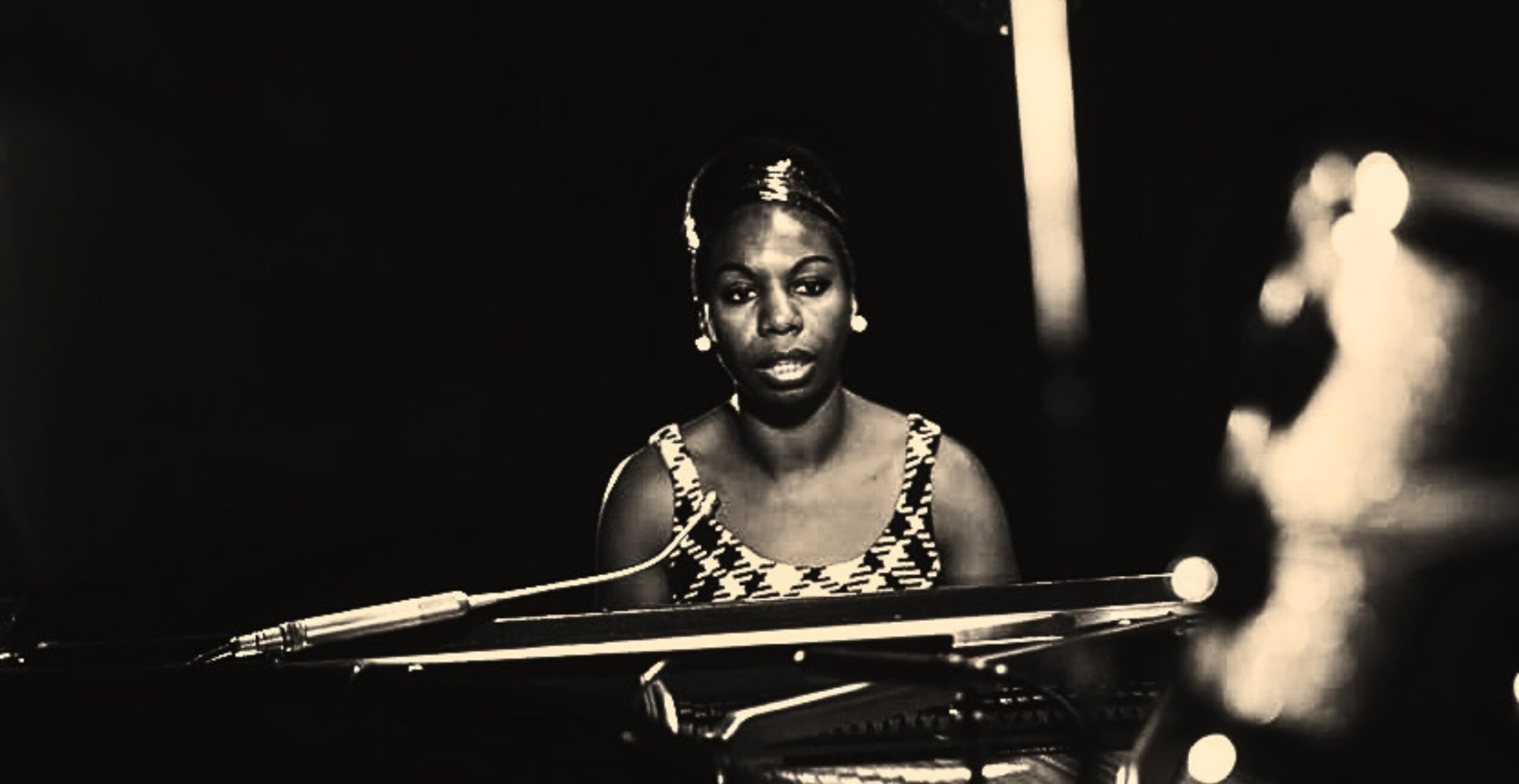
Last but not least, Legaspi provides a soundtrack and mixtape in the acknowledgments section of the back matter, inviting readers to listen in on the poet’s eclectic musical tastes, from Nick Drake and the Smiths to Nina Simone, Lucinda Williams, and Taylor Swift.
A richly cultured book of making plentiful meaning of and from place (“rituals from routines”), Amphibian grounds its poetics in elemental geographies that allow the poet to take flight while always providing artful landing spaces.
University of Oklahoma
Editorial note: Legaspi reads “Aurora Frog,” the closing poem of “Ether,” on S1E2 of the WLT Podcast.

















 English (US) ·
  French (CA) ·
  French (FR) ·