

 1 month ago
30
1 month ago
30
PROTECT YOURSELF with Orgo-Life® QUANTUM TECHNOLOGY
Orgo-Life the new way to the future Advertising by AdpathwayEnergy
Key Facts
—The announcement. Bolivia’s hydrocarbons minister Marcelo Blanco said technical working groups with Petrobras open next week, covering exploration, production, transport, refining and marketing.
—Not a return. Petrobras already operates in Bolivia, taking part in San Alberto, San Antonio, Itaú and the San Telmo Norte exploration area, all under service contracts with the state firm YPFB.
—The awkward part. Two other areas it works, Colpa and Caranda in Santa Cruz, are in the process of being handed back to YPFB.
—No numbers. Asked about investment and timing, Blanco said he would give neither, adding that he never provides exact values or dates.
—Why 2006 still matters. Supreme Decree 28,701 nationalised hydrocarbons and lifted the state’s take on the biggest gas fields to a total of 82%, after which Petrobras suspended new investment.
—The unknown. YPFB’s president says a firm delivers a long-delayed report on Bolivia’s oil and gas reserves next week, covering the position at the end of last year.
The Petrobras Bolivia story of this week is being told as a homecoming, and the detail that makes it interesting is that the Brazilian company never actually went away.
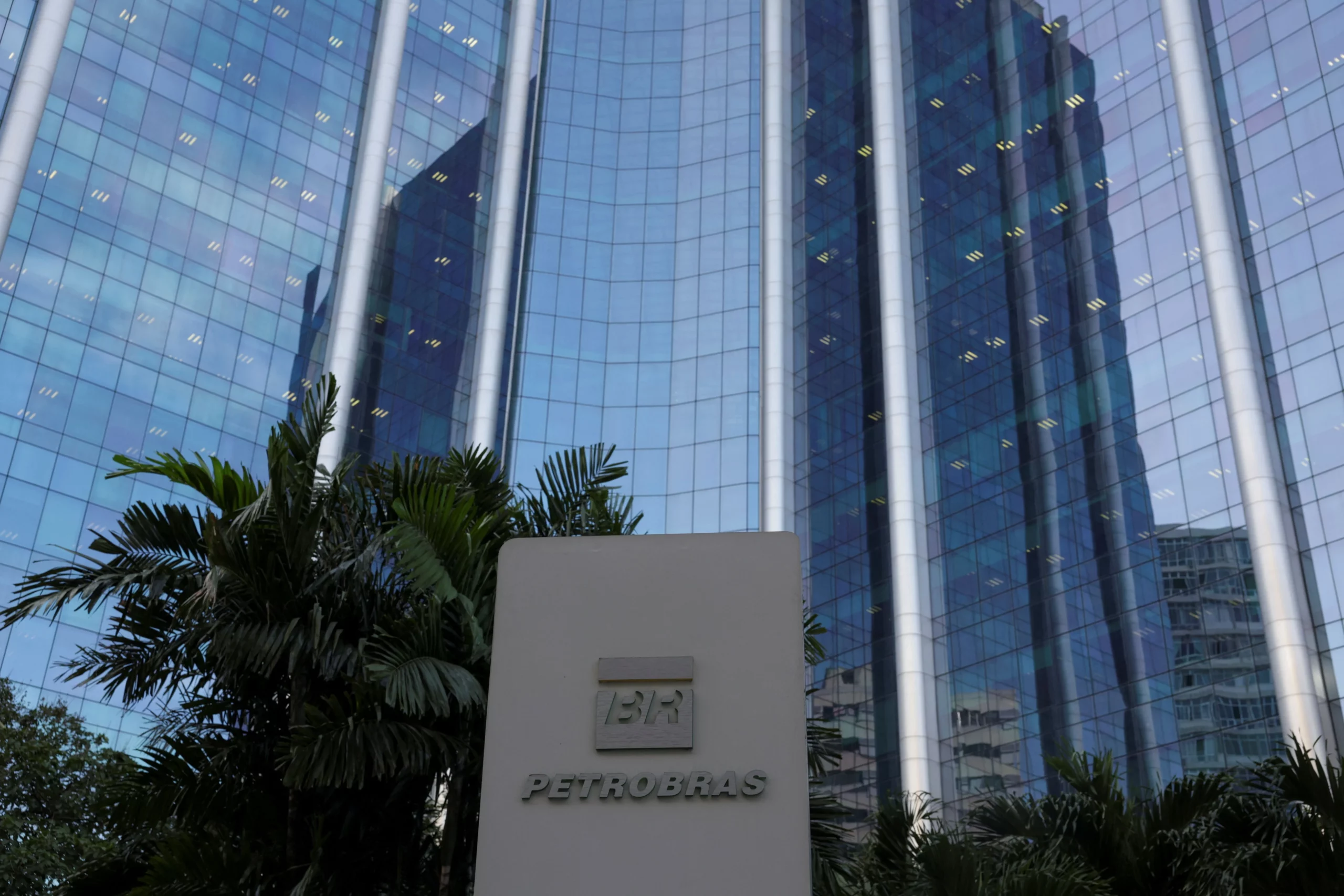
On Wednesday a Bolivian delegation flew to Brazil to meet Magda Chambriard, the chief executive of Petrobras. It included the hydrocarbons minister, the economy minister and the head of YPFB, the Bolivian state oil company.
The minister, Marcelo Blanco, announced the outcome on social media with a single exclamation: Petrobras returns to Bolivia. On Thursday he told reporters that technical working groups would open the following week to examine a wider Petrobras role across exploration, production, transport, refining and marketing.
What the Petrobras Bolivia announcement leaves out
Petrobras has never stopped operating in Bolivia. It currently runs the San Alberto and San Antonio gas fields, and takes part in the Itaú field and the San Telmo Norte exploration area in Tarija, all under service contracts signed with YPFB.
It also works two areas in Santa Cruz, Colpa and Caranda. Those two, according to the Bolivian newspaper Correo del Sur, are in the process of being handed back to the state company.
So in the same week that a minister announces the Brazilian company’s return, the Brazilian company is giving up two Bolivian fields. Both things are true, and only one of them was tweeted.
What Petrobras did stop, twenty years ago, was investing. The distinction matters more than it sounds, because a company that operates a field on someone else’s behalf is a contractor, and a company that invests in one is a partner.
Live Company IntelligencePetroleo Brasileiro Petrobras SA ADR — the full investor dossierInside: live share price, market cap, three-year financials, valuation, ESG and peer benchmarks — plus the latest Rio Times coverage.Rio Times · Live Ticker Intelligence
Petroleo Brasileiro Petrobras SA ADR
PETR4 · B3 São PauloEnergyOil & Gas Integrated
Share price · live
$39.21
▼ -1.11% today
Market cap
$111.1 bn
3.7 bn shares
Dividend yield
18.0%
$2.99 / share
The company
Headquarters
Rio De Janeiro
Petróleo Brasileiro S.A. – Petrobras explores, produces, and sells oil and gas in Brazil, China, the United States, the Americas, Asia, Europe, Singapore, and internationally. It operates through three segments: Exploration and Production; Refining, Transportation & Marketing; and Gas & Low Carbon Energies. The Exploration and…
Financial performance · FY · USD
RevenueNet income
Net income declined to $19.7 bn in 2025, from $25.7 bn in 2023.
Valuation & returns
Enterprise value
$162.3 bn
Revenue growth · YoY
+0.4%
Latest earnings
Q1 2026 — reported EPS 0.96 vs 0.99 expected
Missed −3%
The decree that ended the last partnership
In May 2006 the government of Evo Morales issued Supreme Decree 28,701 and nationalised the country’s hydrocarbon resources. Foreign producers were required to transfer ownership of everything they pumped to YPFB.
The terms were harshest for the biggest fields, and Petrobras operated two of them. In its annual accounts filed with the American securities regulator, Petrobras recorded that San Alberto and San Antonio, each producing above the decree’s threshold, would carry an extra payment to YPFB lifting the Bolivian state’s interest to a total of eighty-two percent.
Under the contracts that followed, YPFB absorbed the revenues, royalties and taxes, and reimbursed the companies their production costs and investments. Petrobras stayed, ran the fields, and stopped putting fresh money into the ground.
It never left the Bolivian gas business entirely, though, because it kept buying. The company remained authorised to import Bolivian natural gas into Brazil across the border crossing points, which is a customer relationship rather than an investor’s one.
Why Bolivia needs this and Brazil does not
The asymmetry is the whole negotiation. Bolivia was once an energy exporter, and years of falling gas production have drained its hard currency and left drivers queuing for fuel.
President Rodrigo Paz, who took office late last year, is trying to reopen the country to foreign energy capital and revive trade with Brazil. His spokesman said Petrobras had shown immense interest in rebuilding deep ties in the sector.
Petrobras, for its part, is spending its exploration budget elsewhere, having just completed the purchase of an offshore block in São Tomé and Príncipe. Bolivia is an option for it, and an emergency for Bolivia.
Blanco was refreshingly blunt about how little has been agreed. He said he would not give numbers, that he would not be irresponsible, and that he never provides exact values or dates.
The report that arrives next week
There is a second document due in the same seven days, and it may matter more than the working groups. YPFB’s president, Sebastián Daroca, said a firm will deliver its final report on Bolivia’s oil and gas reserves as they stood at the end of last year.
Bolivia has been criticised for years over delays in publishing updated reserves data, which has left outsiders guessing at how much gas is actually left. Analysts and industry groups are watching for it closely.
The government intends to use those numbers to discuss how production might be raised in coming years. No oil company commits capital to a country whose reserves it cannot size, which is why the sequence here runs backwards.
The tables open first and the geology arrives afterwards. Investors reading the announcement should treat next week’s reserves report, not the working groups, as the thing that decides whether any of this becomes money.
Is Petrobras Bolivia a genuinely new investment?
Not yet, because nothing has been committed. The two governments have agreed to open technical working groups, and the Bolivian minister declined to name any investment figure or timeline.
Why did Petrobras stop investing in Bolivia?
Because the 2006 nationalisation transferred ownership of production to the state and raised its take on the largest gas fields to eighty-two percent. Petrobras kept operating its fields as a contractor under service contracts, but committed no new capital.
What should an investor watch next?
The reserves report due next week, above all. It sets the ceiling on what any partnership can be worth, and Bolivia’s long delay in publishing such data is the reason foreign capital has stayed away.











 English (US) ·
  French (CA) ·
  French (FR) ·