

 1 month ago
47
1 month ago
47
PROTECT YOURSELF with Orgo-Life® QUANTUM TECHNOLOGY
Orgo-Life the new way to the future Advertising by AdpathwayKENYA · BANKING
Key Facts
—The headline: Profit after tax rose 32% to KSh45.5 billion, about US$351 million, in the six months to June 2026.
—Pre-tax: Profit before tax was up 39% at KSh57.8 billion, on total income of KSh124.9 billion, itself up 25%.
—The balance sheet: Total assets grew 20% to KSh2.16 trillion, roughly US$16.7 billion, with deposits up 21% and net loans up 19%.
—The shift: Subsidiaries outside Kenya now hold 51% of group deposits, 54% of loans and 52% of banking assets.
—Asset quality: The non-performing loan ratio fell to 9.5% from 13.7%, with coverage up to 70% and cost of risk down to 1.4%.
—Returns: Return on equity was 26.5% and return on assets 4.5%.
—Not in the release: The results announcement did not declare an interim dividend and did not disclose earnings per share.
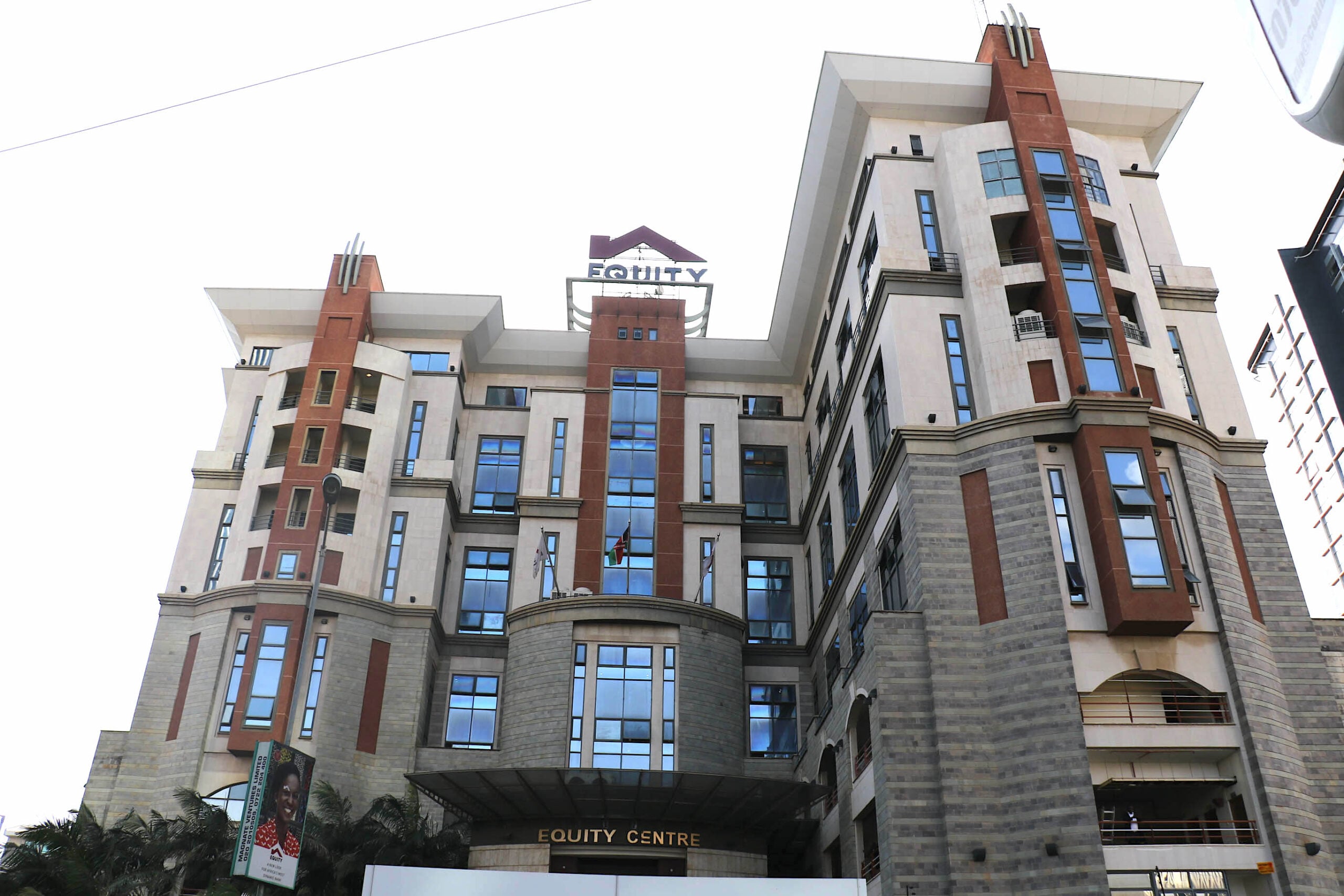
The Kenyan lender has reported an Equity Group half-year profit of KSh45.5 billion, about US$351 million, up 32% and the highest six-month figure in its own accounts. The more consequential number is that its businesses outside Kenya now hold most of its deposits, loans and assets.
One-stop reference
Company Intelligence
Every listed company in Latin America — financials, ownership and structure for 1,450+ companies across 26 exchanges, in one place.
The results
Equity Group Holdings published its half-year figures in Nairobi on 19 August. Profit after tax came in at KSh45.5 billion for the six months to June, against KSh34.6 billion a year earlier.
Profit before tax rose 39% to KSh57.8 billion from KSh41.5 billion. Total income was up 25% at KSh124.9 billion.
Net interest income grew 17% to KSh69.3 billion. Non-funded income, meaning fees and transaction revenue, rose 36% to KSh55.6 billion and now makes up 44.5% of the total.
The balance sheet expanded 20% to KSh2.16 trillion, roughly US$16.7 billion at the central bank rate for 20 August. Customer deposits rose 21% to KSh1.59 trillion and net loans 19% to KSh981 billion.
What is really driving the Equity Group half-year profit
The regional subsidiaries. They now account for 42% of the group’s banking profitability and 47% of its banking revenue.
On the balance sheet the shift has already crossed the line. Subsidiaries hold 51% of group deposits, 54% of loans and 52% of banking assets.
The Kenyan bank is still the largest single unit, with profit after tax of KSh25.7 billion, up 32%. But the Congolese business, Equity BCDC, earned KSh11.8 billion, up 30%, and Tanzania grew 82% to KSh2.0 billion.
Rwanda contributed KSh2.9 billion. The group banks in six markets and has said it is aiming at fifteen countries and 100 million customers by 2030.
The credit book got better, not just bigger
The non-performing loan ratio fell to 9.5% from 13.7% a year earlier. Coverage rose to 70% from 68% and the cost of risk dropped to 1.4% from 1.7%.
Loan loss provisions were 6% lower than a year ago even as the book grew 19%. Management attributes that to the improvement in asset quality; it is also the line an analyst would test first.
Cost-to-income improved to 48.6% from 51.7%. Shareholders’ funds rose 27% to KSh350 billion.
A return on equity of 26.5% is high by the standards of listed African banks. Return on assets was 4.5%.
The scale that makes it work
Equity says it serves 23.3 million customers through 410 branches, 886 automated teller machines, 92,572 agency outlets and 1.4 million merchants. The branch count is almost beside the point.
Some 98.3% of transactions happen outside a branch and 89.7% are digital. That is the cost structure behind a sub-50% cost-to-income ratio.
Chief executive Dr James Mwangi framed the period as proof of a “deliberate transformation into a diversified, regional, technology-enabled financial services Group”. The insurance arm wrote KSh6.4 billion of gross premiums, up 24%, with 79% of policies distributed digitally.
How it compares at home
Kenyan banks have had a strong half-year across the board, so Equity is not an outlier in direction, only in scale. KCB, the other large lender on the Nairobi exchange, lifted profit 21% with a similar story about its non-Kenyan units carrying more weight.
The sector-wide backdrop is less comfortable. The World Bank noted this week that Kenyan banks hold roughly KSh2.2 trillion of government securities, about 27% of total banking assets, and put the industry’s gross non-performing loan ratio at 15.6% in March 2026.
Against that, Equity’s 9.5% looks strong. It also means the group’s headline safety partly reflects the fact that a majority of its book is no longer Kenyan.
What to watch
Two things are missing from the release. There is no interim dividend declaration and no earnings-per-share figure, so shareholders have less to work with than the headline suggests.
The other is concentration risk of a new kind. A Kenyan-listed bank whose majority of assets sit in the Democratic Republic of Congo, Uganda, Tanzania, Rwanda and South Sudan carries a very different risk profile from the one its shareholders bought a decade ago.
That is the trade the group has made. Faster growth outside Kenya, in exchange for exposure to currencies and legal systems that are harder to price from Nairobi.
Frequently Asked Questions
How much did Equity Group earn in the first half of 2026?
Profit after tax was KSh45.5 billion, about US$351 million, up 32% from KSh34.6 billion. Profit before tax rose 39% to KSh57.8 billion.
How much of the group is now outside Kenya?
Subsidiaries outside Kenya hold 51% of group deposits, 54% of loans and 52% of banking assets. They generate 42% of banking profit and 47% of banking revenue.
Did asset quality improve?
Yes. The non-performing loan ratio fell to 9.5% from 13.7%, coverage rose to 70% from 68% and the cost of risk fell to 1.4% from 1.7%.
Was an interim dividend declared?
The results release did not announce an interim dividend. It also did not disclose an earnings-per-share figure.
This article was produced by The Rio Times’ automated newsroom system. How we use AI · Report an error
LatAm Markets: Live Signals → — real-time movers, turnover leaders and FX across Latin America.
The Rio Times · Power Map
See who really holds power in Latin America
Click to open the Power Map →



















 English (US) ·
  French (CA) ·
  French (FR) ·