

 1 day ago
4
1 day ago
4
PROTECT YOURSELF with Orgo-Life® QUANTUM TECHNOLOGY
Orgo-Life the new way to the future Advertising by Adpathway
After years of trying various techniques and packing styles, Neil shares the latest version of his layering system. For an in-depth breakdown of every element of his lightweight, all-weather-oriented kit, watch the video below…
While Logan and I were working on our Rogue Panda Kaibab reviews, we spoke about the contents of our handlebar bags and how I managed to keep my front bag under the 2.5-kilogram load limit recommended for rigid trail riding. I explained that I primarily keep my layering system in the front bag, a lightweight but space-efficient system that I’ve completely re-worked since last year. So, I’m breaking down exactly what I pack, how much it weighs, how small it packs down, and the cost. Check out all the details in the video below, followed by an in-depth look at each piece of gear.
Layering Up Front
We all pack different things in a handlebar system. Some carry their sleeping gear, while others haul a tent or camp essentials like food. Others might use the front area of their storage system for wet gear, carrying their dry gear in the back. Typically, I bikepack in areas where I can pack my tent into my sleeping bag and keep all my layering systems up front. However, if it rains and I have to pack up my tent while it’s still wet, I’ll move layers like rain jackets and other waterproof items, or even food, in with the tent, keeping anything that truly needs to remain dry elsewhere. Living in a desert climate definitely makes this division of gear easier, since most of my bikepacking takes place in dry conditions.
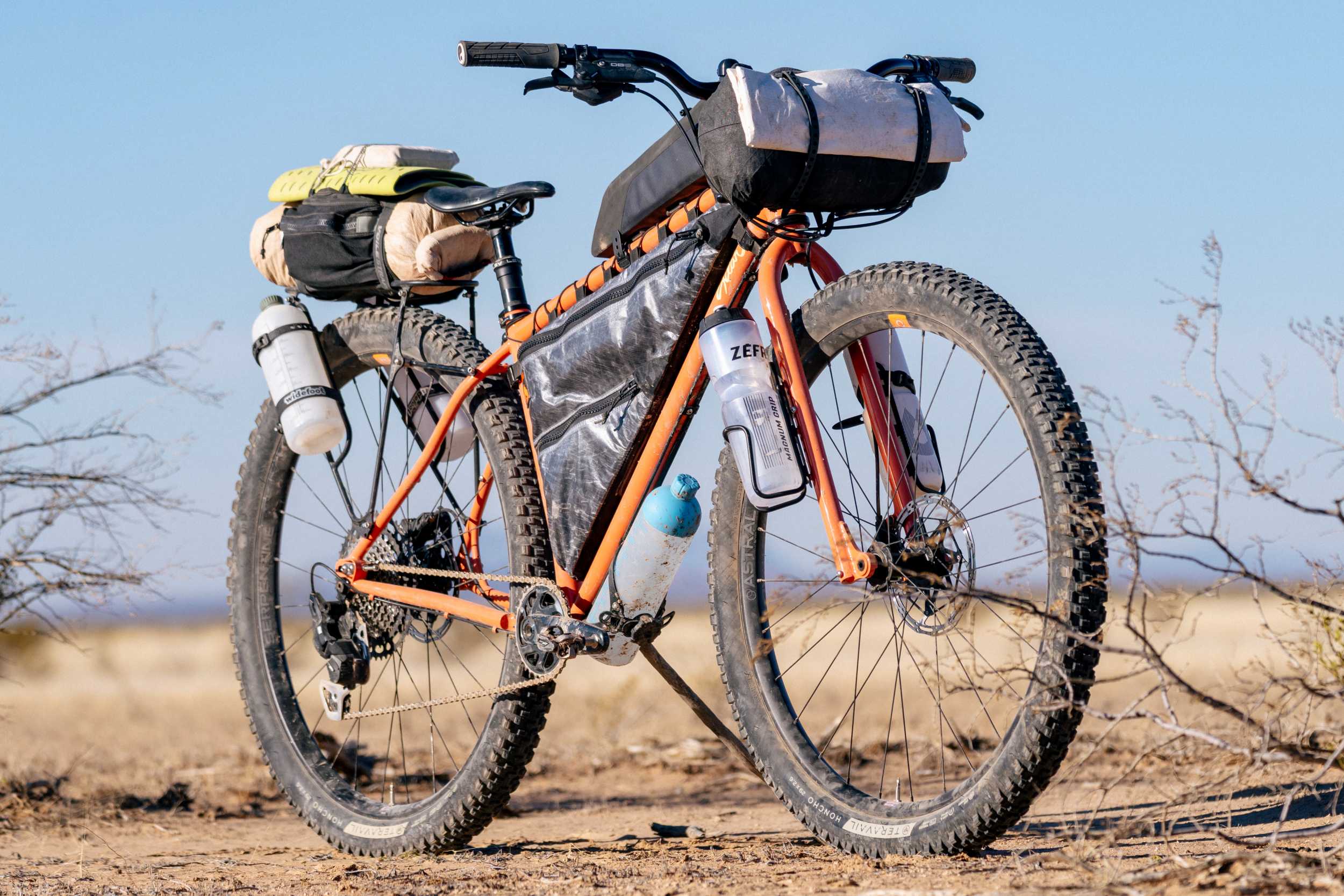
All this to say, I like to pack my layering system up front because it’s typically lighter than my sleep kit. It packs down to a much smaller size, can be accessed during the day if needed, and works well across the wide range of bikes I test. From mountain bikes to drop-bar setups, a lighter load up front gives me a better feel for the bike’s front end. Less weight means more maneuverability and, ultimately, more confidence while riding.
I should note that this list doesn’t include what I’m wearing. Most of the time, my riding kit consists of shorts or bibs with padding, overshorts, a T-shirt, lightweight riding socks, shoes, a helmet, and sunglasses. The list below details what I’d pack for daytime highs of roughly 50–70°F, with lows dipping into the upper 20s to low 40s at night. Those are pretty typical riding temperatures in the places I like to ride, whether the desert in winter or the high mountains in summer.
What’s in my Handlebar Bag?
One element to note is that this isn’t just a pile of clothing; it’s a system. Every piece works in concert with the others, stacking warmth when I need it or stripping things down when I don’t. For reference, all that’s listed below fits inside my small 104-gram, drop-bar-specific Rogue Panda Gila Dry Bag. It’s a seam-taped bag that’s been quite reliable for me, whether I’m running drops or testing mountain bikes. It works well in all the situations I’ve encountered, and it costs just $60.
FarPointe Sun Cruiser
203 grams / $95 at Garage Grown Gear
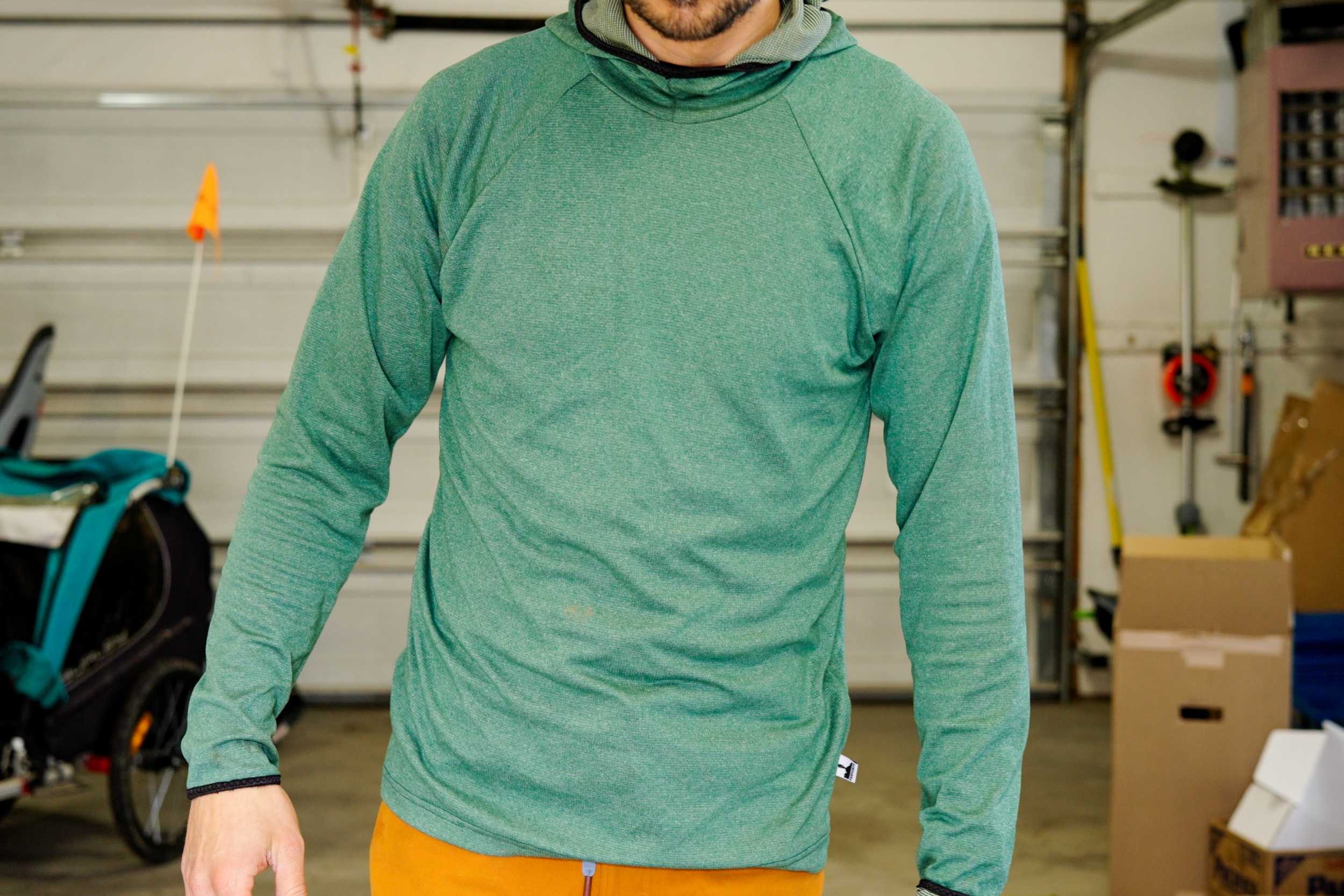
The sun hoodie stays in this bag only during warmer or cloudy conditions. I’ve used quite a few over the past few seasons, from Cotopaxi to some cheaper online options to the Ornot sun hoodie, and more recently, an option from FarPointe. One of the main reasons I like sun hoodies is that they allow me to use less sunscreen. Sun protection is no joke where I live and rice. They also add a subtle bit of warmth, which I find really useful when I’m riding in damp conditions or spending long days at 50°F. It’s a layer that pairs well with a T-shirt without feeling bulky. I also like pulling the hood over my helmet on cool mornings or when it’s really sunny. The FarPointe version I’ve been using is a size small, weighs 203 grams, and retails for around $95. Though it’s on the pricier side for a sun hoodie, the merino/polyester blend is unique. It adds a touch more warmth than most while still wicking and breathing well, making it a great year-round layer.
FarPointe Alpha Cruiser
143 grams / $95 at Garage Grown Gear
The FarPointe Alpha Direct 90 Hooded Top is one of my favorite items. It comes in at 143 grams, and punches way above its weight in terms of warmth per gram—a trend consistent with Alpha Direct products. For those who are unfamiliar, Alpha Direct is a breathable, synthetic, insulating material from Polartec that skips the liner fabric, keeping it light and letting it breathe well while you’re moving. I’ll ride in this hoodie on colder mornings, but where it really shines is under a shell.

Combined with a down jacket or a rain layer, it does a good job of trapping heat. It also packs down to a very small size, given how warm it is. It’s a huge part of why it lives in my handlebar setup. Alpha Direct comes in a bunch of weights, and I’ll be diving deeper into it later in the year, but the 90-weight has been the sweet spot for me. This one from FarPointe is a medium and fits perfectly for me at 5’9.5″ tall. I also love the hooded element. This hoodie retails for around $95, depending on the pattern.
Mountain Hardwear Ghost Whisperer
240 grams / $350 at Backcountry
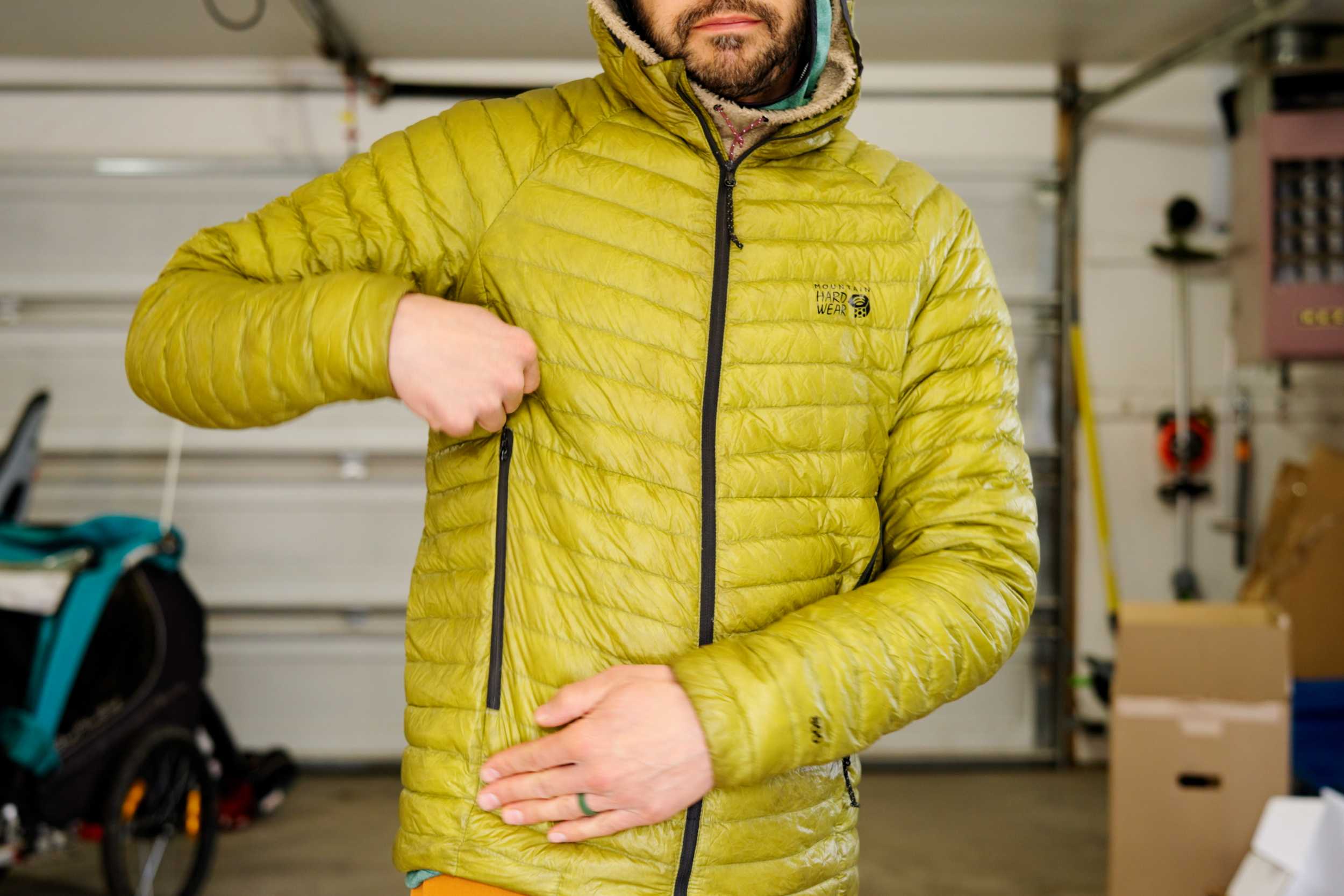
I’ve had this Mountain Hardwear Ghost Whisperer Down Jacket for about four years now, and it has become a staple in my kit. Weighing 240 grams in size small, the primary reason I come back to down is the packability. It compresses to a tiny size compared to most synthetic layers, and newer down pieces have gotten much better in terms of durability and handling a little moisture. It’s comprised of small baffles filled with 800-fill insulation, which has proven to be more than enough for chilly mornings and camp time. The hood is an added bonus. Down jackets aren’t cheap, but they’re a long-term piece of gear that I often say is an investment. This one retailed around $350 when I picked it up a few years back, though you can usually find them discounted.
Outdoor Research Helium Rain Jacket
168 grams / $225 at Backcountry
The last of my upper body layers is the Outdoor Research Helium Jacket. This is a solid, lightweight rain layer that offers decent weather protection. However, it’s just as much about warmth as it is about moisture protection. This size small weighs 168 grams. It’s not really built for riding all day in conditions you might experience in the Pacific Northwest, where breathability and waterproofness become critical, but it works great for waiting out an afternoon storm under a tree or dealing with quick pop-up showers in the desert.
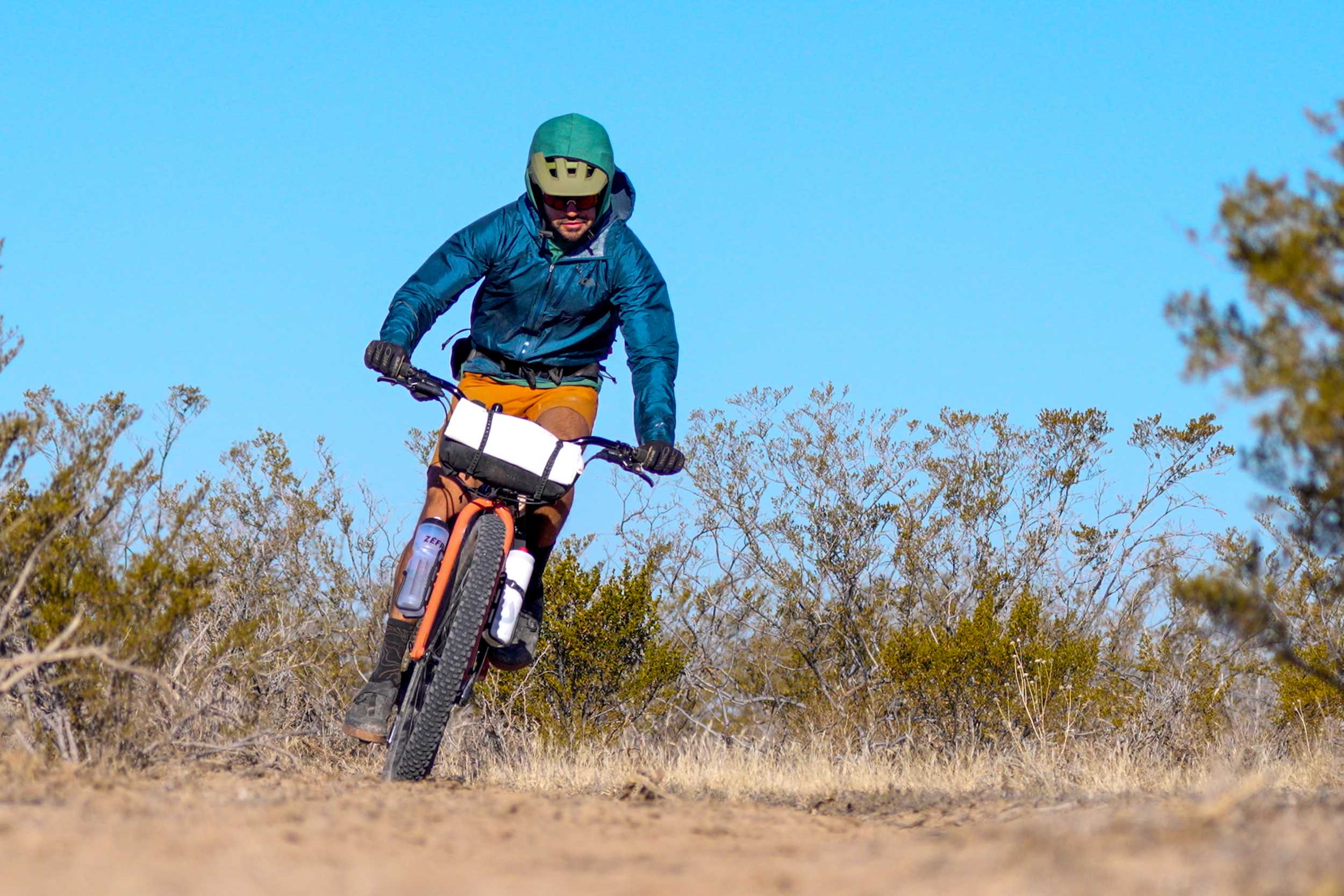
Living in Colorado, it’s been a great addition to my kit. It provides just enough protection in light rain, and, more importantly, it acts as a barrier that traps heat when I’m at camp. This is usually my outermost layer when temps dip toward freezing. I’ll stack everything underneath, then throw the Helium on top to lock in my body heat. Prices on these have crept up over the years, with newer versions now around $225, but older models are still pretty easy to find online for less.
Borealis Wool Boxers
80 grams / $60 at Borealis
My routine upon arrival at camp is typically as follows. First, I set up my sleep system; these days, it’s usually a tent. Then I change out of my riding shorts and put on a pair of wool boxers, followed by my baggy shorts. The boxers also double as another riding layer if I start to have saddle issues, though lately I’ve been pretty happy with my saddle, the WTB Solano. The boxers I’m currently running are the 80-gram Borealis wool boxers, which cost $60, but you could use whatever you want here. I just like that they have seams in all the right places.
Magnet Designs Joggers
103 grams / $90 at Magnet Designs
I recently replaced my down pants with these Magnet Designs joggers made of Alpha 90, as it results in a more modular system. As mentioned, Alpha Direct 90 does a great job of breathing while still providing warmth. The joggers weigh 103 grams and pack down to an incredibly small size. This layer also works well in the morning if I need a little extra warmth on the bike, fitting nicely under my shorts and over my boxers at camp. There are quite a few jogger options from great cottage brands, but these Magnet Designs joggers come in at around $90.
Body Wrapper Ripstop Pants
96 grams / $33 at Body Wrapper
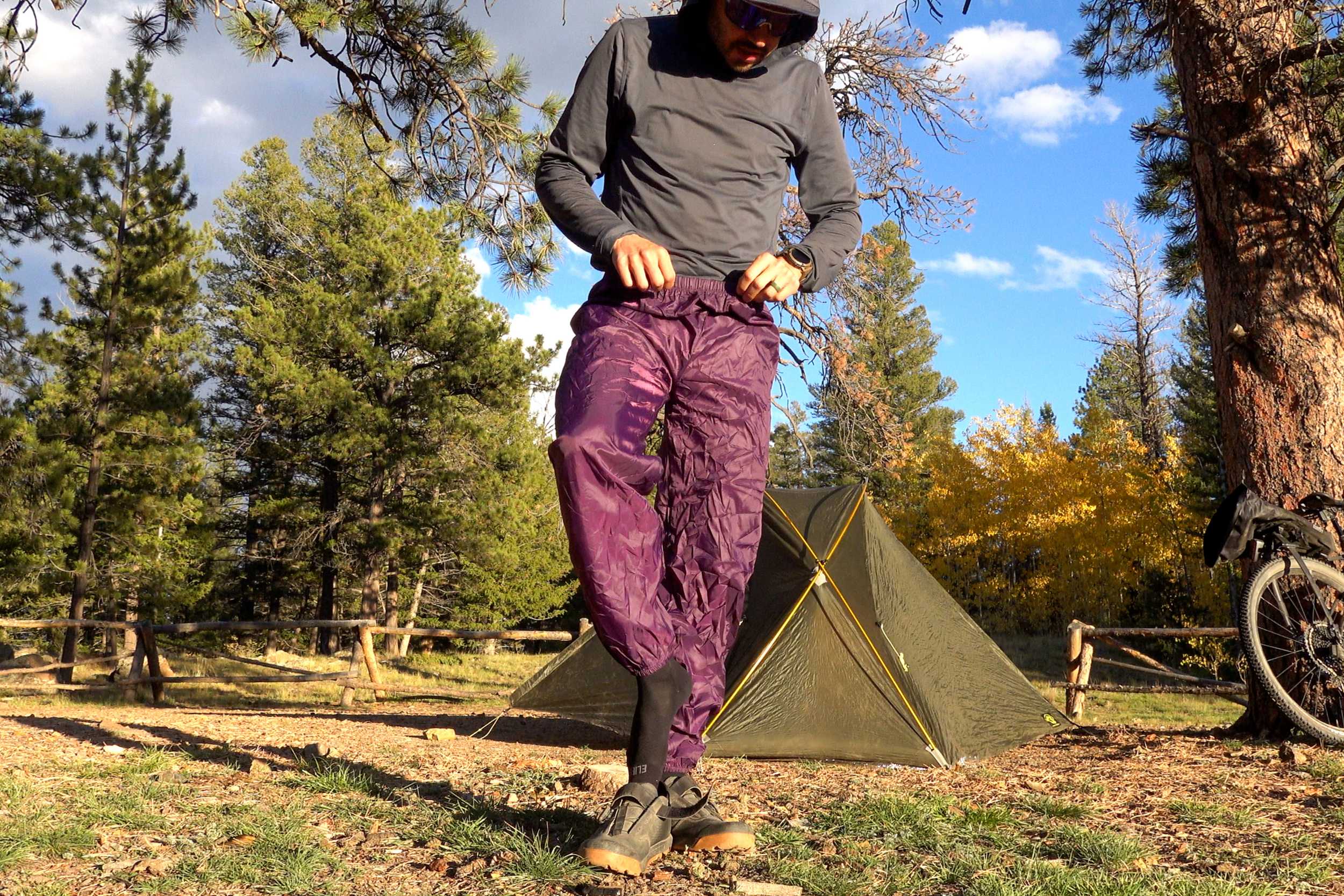
If I’m getting really cold and want to insulate my lower half while trapping heat, I’ll throw on my 96-gram Body Wrapper pants. These are super-thin nylon pants that do a surprisingly good job of retaining warmth. They’re technically designed as warm-up pants for dancers, but they’ve become popular with ultralight backpackers and bikepackers. They’re very simple, just an elastic waist and ankles, and the price reflects that at about $33, although they were closer to $18 just a few years ago. Combined with the Alpha 90 pants, they’ve fully replaced my down pants. The system is more modular, packs down smaller, and is significantly cheaper. Together, they come in around $123.
Warm Wool Socks
79 grams / $26 at DeFeet
In addition to the above, I always bring an extra pair of socks on my trips. They add warmth at night, let me swap out sweaty socks, inspect my feet, and keep me a little warmer on cold evenings. I tend to use them most nights, unless it’s really warm, when I can just let the dogs breathe a bit. These are the DeFeet Woolie Boolies from BIKEPACKING.com, but the non-custom versions work just as well and cost about $25.99. The large size pair I have weighs 79 grams.
Buff / Hat
32 grams / $85 at Buff
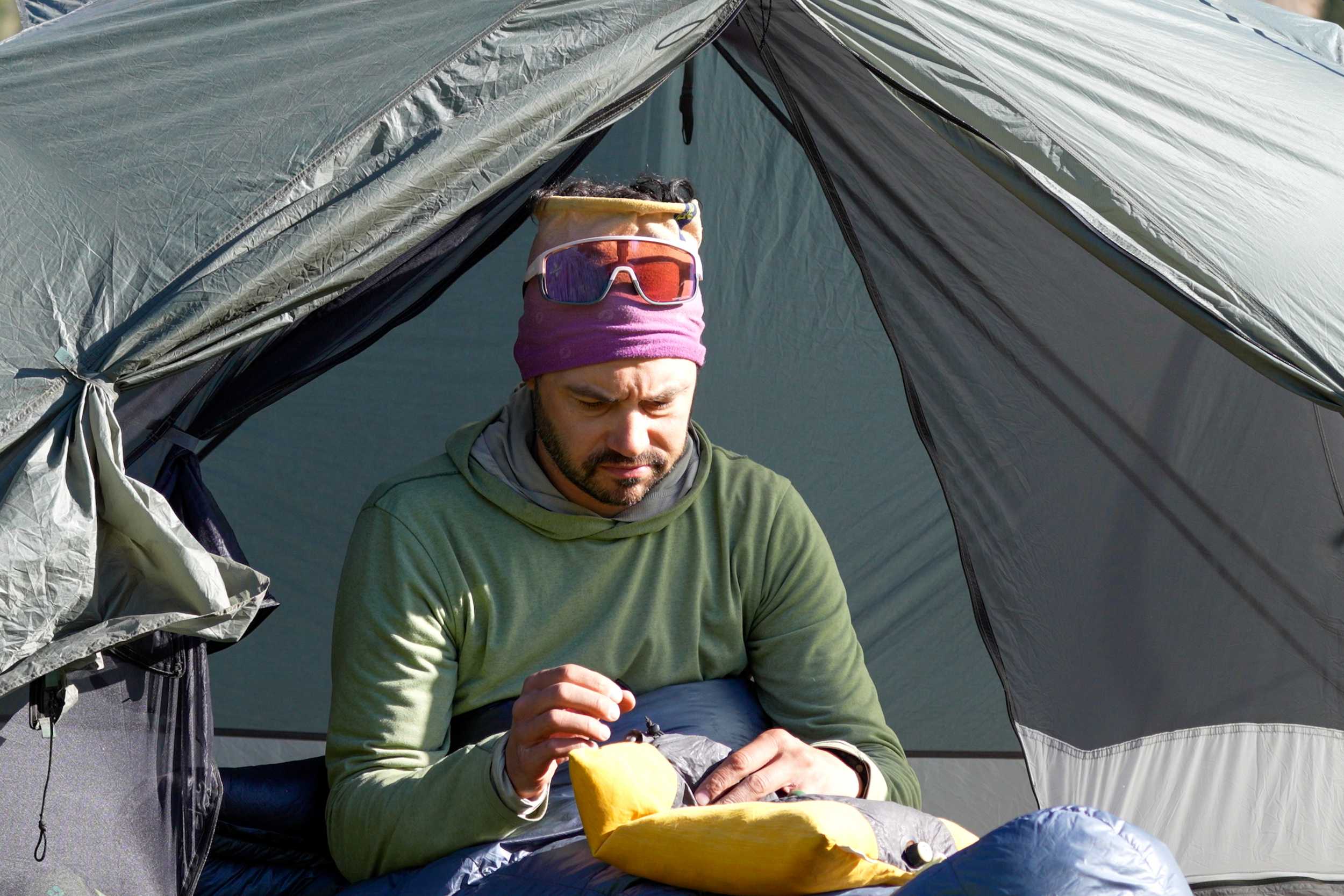
For my head, I typically just bring a Buff. These neck gaiters work great as a lightweight layer to trap in the heat that comes off my skull. When paired with all the hoods I’m carrying, I can stay pretty warm without a hat or beanie. I’ve collected a bunch of Buffs over the years, so it’s nice to be able to get years of use out of items like it that seem to just appear in my garage after events. They pack down to a tiny size, weigh just 32 grams, and can double as sun protection around your neck if needed.
Ornot Insulated Gloves
83 grams / $85 at Ornot

I wear regular full-finger gloves while riding for protection and grip, especially on rough terrain, but I always carry a light pair of insulated gloves as well. In the past, I used Handup winter gloves, which worked great. However, I recently picked up the Alpha Ornot winter gloves. They’re super light at 83 grams, use Alpha insulation paired with a softshell-style outer, and I’ve actually been using them on my winter commutes lately. They keep the wind out, stay warm, feel good on the bars, and still work with a smartphone. These come in at about $85, but the Handup ColdER softshell gloves are closer to $36 if you want a more affordable option.
Handlebar Bag Extras
Rounding out my handlebar bag packlist is my Nemo Tensor sleeping pad. Stuffing it on top of all my layers makes packing easier in the groggy morning hours at camp. After I wake up, I deflate the pad and roll it up with my clothing. It fits better there than trying to squeeze it into my tent or sleep kit. It’s one of the heavier items at 438 grams, but it’s an older full-length Tensor that still works great and helps me sleep well.
Dehydrated meals also tend to fall into this space because they’re easy to store. Obviously, weights vary, and on my last trip, I didn’t even need one since we packed burritos from town every day. But this Harvest Green Curry meal is a good example of what I typically wrap in with the pad. It’s a two-serving portion with around 700 calories and weighs about 210 grams.
System Overview
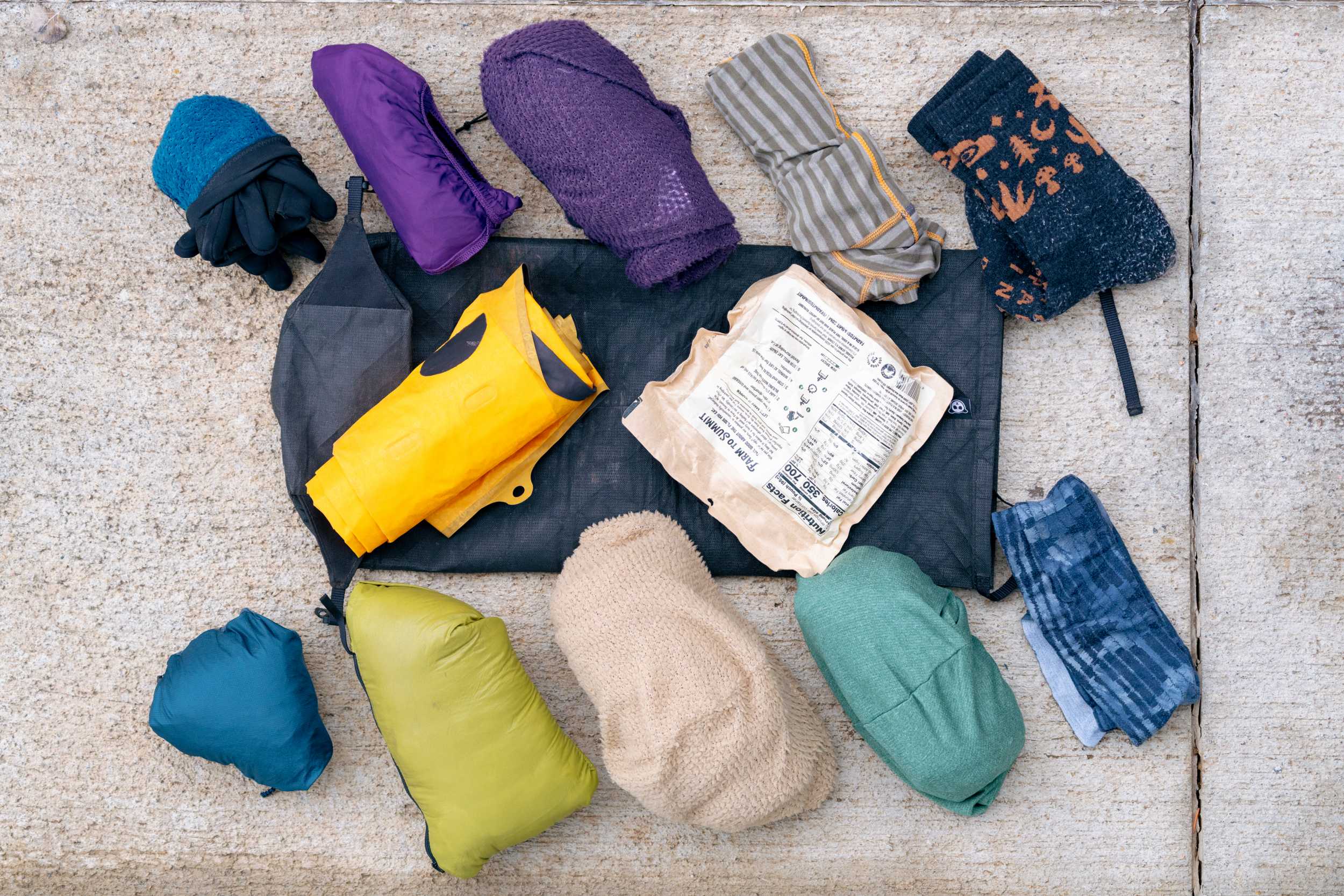
My full layering system, excluding what I’m wearing, weighs 1,331 grams and has an MSRP of just over $800. It’s not cheap by any means, but this kit has been built up slowly over the last four or five years, and I’m really happy with where it is today. Alpha Direct has helped me dial in the lightweight nature of this setup. The packability-to-weight ratio is excellent, and the layers perform well both on and off the bike. Overall, it’s a modular and versatile system. If I were bringing my full rain kit, I’d leave the Helium jacket and the Body Wrapper pants at home, reducing the weight by about 264 grams. Then I’d add my heavier Gore rain jacket and pants, which come in at 313 grams for the jacket and 174 grams for the pants, totaling 487 grams, equating to a 223 gram difference.
I’m happy with this system, but I’d love to hear about your setup. Do you think you could cut weight, or does that not really matter to you? Let us know in the Conversation below…
Further Reading
Make sure to dig into these related articles for more info...
Please keep the conversation civil, constructive, and inclusive, or your comment will be removed.
















 English (US) ·
  French (CA) ·
  French (FR) ·