

 2 months ago
73
2 months ago
73
PROTECT YOURSELF with Orgo-Life® QUANTUM TECHNOLOGY
Orgo-Life the new way to the future Advertising by Adpathway
In the Grey feels like the sort of anonymous streaming-era action thriller that would quietly appear on Netflix one Friday afternoon and be forgotten by Monday morning.
There’s a scene in Quentin Tarantino’s ’90’s blaxploitation film Jackie Brown that perfectly sums up how I felt after watching In The Grey. After a crime scheme gone wrong, Samuel L Jackson’s Ordell Robbie shoots Robert de Niro’s Louis Gara in the stomach and then looks at him with a mixture of disbelief and disappointment.
“What the f*** happened to you, man?” he asks. “Your ass used to be beautiful.”
I would want to say the same to Guy Ritchie after seeing his latest effort as writer-director. After all, this is the same filmmaker who gave us Lock, Stock & Two Smoking Barrels, Snatch and The Gentlemen — three of the coolest crime movies made. Films overflowing with personality, memorable characters and the kind of dialogue that made you want to spend time in the worlds Ritchie created, regardless of what the plot was about.
In The Grey has none of that. Instead, it feels like the sort of anonymous streaming-era action thriller that would quietly appear on Netflix one Friday afternoon and be forgotten by Monday morning.
The story centres on Rachel Wild (Eiza González), a high-powered debt recovery lawyer whose specialty is forcing billionaires to pay what they owe. When ruthless tycoon Manny Salazar (Carlos Bardem) refuses to settle a $1 billion debt and murders the man sent to collect it, Rachel takes over the case.
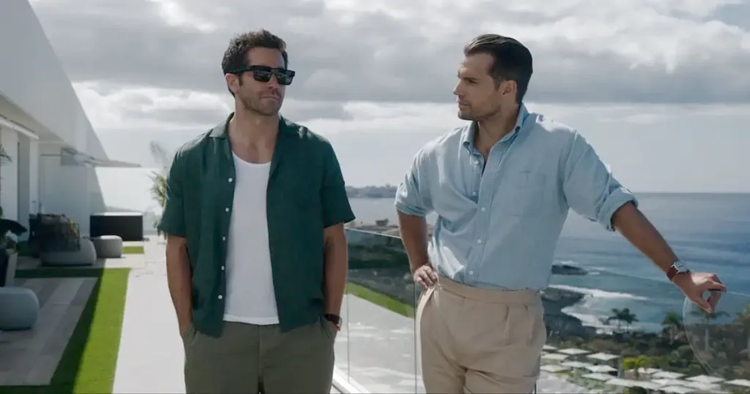
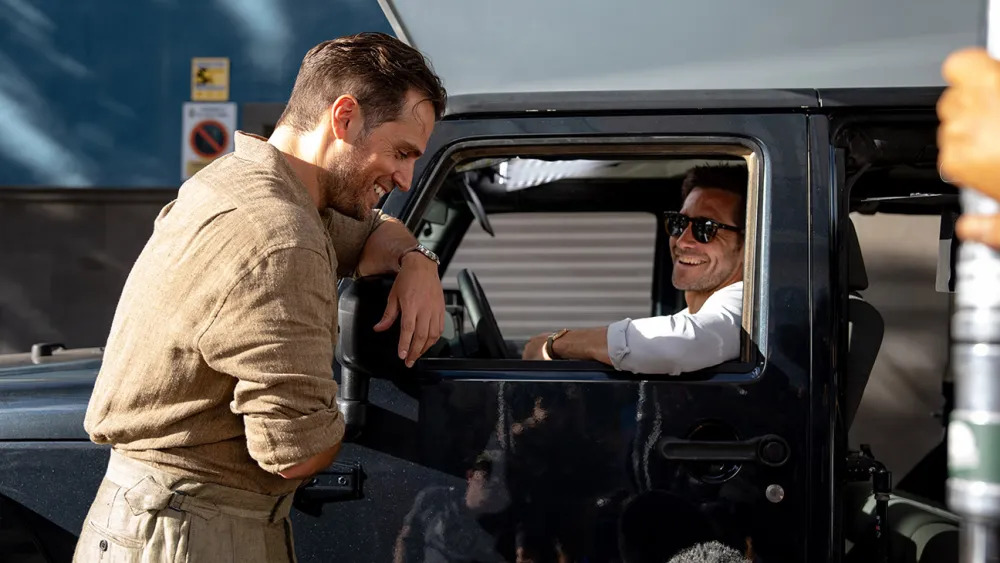
To bring him to heel, she deploys two trusted operatives,Bronco (Jake Gyllenhaal) and Sid (Henry Cavill), who wage a campaign of sabotage, espionage and intimidation against Salazar’s sprawling empire. What begins as an aggressive debt collection exercise eventually escalates into kidnappings, shoot-outs, double-crosses and a small private war on a Mediterranean island.
That’s the basic setup.
The problem is that the film spends so much time explaining plans, contingencies and strategy that it forgets to give us much reason to care about the people involved. Rachel is clearly intended to be the central character. We are repeatedly told how intelligent she is. She’s always 10 steps ahead of everyone else. She has backup plans for her backup plans. Every possible outcome appears to have been accounted for in advance.
Yet by the end of the film, I realised I knew almost nothing about her as a person. What does she want beyond surviving the plot? What keeps her awake at night? What are her fears, regrets or flaws? The film never seems interested in answering the questions. Instead, it treats competence as a substitute for character. The result is a protagonist who feels more like a collection of abilities than a fully realised human being.
Unfortunately, that same problem extends to almost everyone else. Gyllenhaal and Cavill are both movie stars with enough charisma to carry films on their shoulders. Here, however, they are reduced to little more than hired muscle whose primary motivation appears to be loyalty to Rachel.
We learn so little about either man that they feel interchangeable at times. It’s difficult to escape the impression that both actors are sleepwalking through the film on their way to collecting a pay cheque.
Even the villain suffers from a lack of imagination. He is essentially a generic wealthy psychopath with no distinctive personality, memorable dialogue or compelling motivation. In a better Guy Ritchie film, the villain would probably be the most entertaining person in the room. Here he feels like a placeholder.
The lack of character development wouldn’t necessarily be fatal if the action compensated for it. Unfortunately, In The Grey commits another surprising mistake. It spends almost an hour setting up a story that really comes alive only during a lengthy action sequence in the final third.
To be fair, that sequence is excellent. For the first time the film stops explaining what is going to happen and simply lets things happen. The tension rises. The pacing improves. The actors seem more engaged. You briefly glimpse the exciting thriller that might have existed inside this material. But by then it’s too late.
The biggest problem with In The Grey is that there are almost no stakes. Because Rachel is presented as someone who has anticipated every possible scenario, I never truly worried about her safety. Even when she is kidnapped and placed in serious danger, there is little suspense because the film has trained us to believe that she has a contingency plan waiting in the wings. A thriller without tension is in serious trouble.
What makes the film particularly disappointing is that it feels so unlike the work of the filmmaker who made it. The best Guy Ritchie films are irresistibly cool. They are populated by eccentric criminals, colourful con artists and larger-than-life personalities who feel as though they have wandered in from stories far more interesting than the one unfolding on screen.
The plots are often convoluted but it hardly matters because spending time with the characters is the real attraction. In The Grey has no such advantage. It feels mechanical. The characters exist to serve the plot rather than the other way around. By the end, I found myself thinking less about what happened in the film than about how strange it was that Guy Ritchie wrote, directed and produced something so devoid of the qualities that made his name in the first place.
There are flashes of potential here. The cast is attractive. The locations are beautiful. The final action sequence delivers genuine thrills. But those positives aren’t enough to save a film that spends most of its runtime confusing information with drama and strategy with character. I don’t know what happened to Guy Ritchie but his films used to be beautiful.














 English (US) ·
  French (CA) ·
  French (FR) ·