

 4 hours ago
8
PROTECT YOURSELF with Orgo-Life® QUANTUM TECHNOLOGY
Orgo-Life the new way to the future Advertising by Adpathway
BRAZIL · ELECTION AND BUDGET
Key Facts
- —The country Brazil, Latin America’s largest economy, holds a presidential runoff on Sunday 25 October 2026.
- —Why it matters The next president inherits gross public debt of 82.9% of GDP and a central-bank rate of 13.75%.
- —Why now Finance Minister Dario Durigan answered the opposition’s spending plan in an interview on Friday 23 October.
- —What happened Durigan called a cut of R$200 billion (about US$39.7 billion) impossible without hurting basic services.
- —What it means for you US investors in Brazil watch the debt path, interest rates and oil subsidies the winner must fund.
- —Still open Whether Flávio’s campaign itemises its cuts, and whether fuel aid survives into 2027.
- —Prediction markets Polymarket gives Flávio Bolsonaro a 79.5% chance of winning the 25 October runoff and Lula 20.5% (24 October, 5:12 a.m. ET). Polymarket puts Flávio Bolsonaro’s chance of winning at 80% and Kalshi at 79% (Lula: 21% and 22%), as of 24 October, 5:20 am ET; prices are bets, not polls.
- —Power Index Brazil ranks 1st of 14 in The Rio Times Latin America Power Index, with 75.0 points (October 2026 edition).
In Plain English
The primary balance is government revenue minus spending before interest, and a surplus means revenue is higher. Gross debt counts what the whole public sector owes, shown as a share of a year’s economic output (GDP).
Brazil Election Data Room
Runoff poll average: Flávio Bolsonaro 51.0%, Lula 49.0%
41 national polls from 20 pollsters since 4 October, updated hourly. Every poll, free to download.
The Selic is the central bank’s policy interest rate, and “tesouraço” is the word Flávio Bolsonaro used for a large cut in government spending. Dario Durigan runs the federal budget as finance minister and is also the economic coordinator of Lula’s campaign.
A Brazil budget cut of R$200 billion (about US$39.7 billion) for next year is “totally impossible” without serious harm to basic services, Finance Minister Dario Durigan said on Friday 23 October 2026. He was answering conservative candidate Flávio Bolsonaro in an interview with the news portal UOL, two days before the Brazil election 2026 runoff.
For US investors the argument matters because the winner on the Brazil runoff date, Sunday 25 October, inherits gross public debt of 82.9% of GDP and a central-bank rate of 13.75%. Brazil election polls show a near tie, and Brazil election odds on Polymarket favour Flávio, so each side’s budget plan is under close scrutiny.
Durigan, who is also the economic coordinator of President Lula’s re-election campaign, said the cut could not be made without “grave compromises in a series of basic services” (translation ours), Folha de Pernambuco reported. His remarks are a campaign rebuttal, so they are one side’s claim and not an independent audit.
What the Finance Minister Said
Durigan said an adjustment of R$200 billion (about US$39.7 billion) would hit pay rises for civil servants, public policies and people who receive benefits, Folha de Pernambuco reported, paraphrasing him. He said his view comes from closing the federal budget every year, not from academic theory, the same paper added.
Without naming her, Durigan answered an adviser to Flávio, whom Folha de Pernambuco identified as economic coordinator Daniella Marques, by noting that a third of federal civil servants are teachers. Marques said on 14 October that a Flávio government would not cut social programmes and would target super-salaries and state-company losses instead, A Crítica reported, and we did not check her words ourselves.
Durigan said the fiscal problem cannot be solved in the first year of the next government and that he would build on a 2027 surplus “without a sharp U-turn and without doing crazy things”, CNN Brasil reported (translation ours). He also asked whether universities would again become “an enemy of the government”, as under Jair Bolsonaro, which is his opinion, and the sources show no reply from the Bolsonaro side.
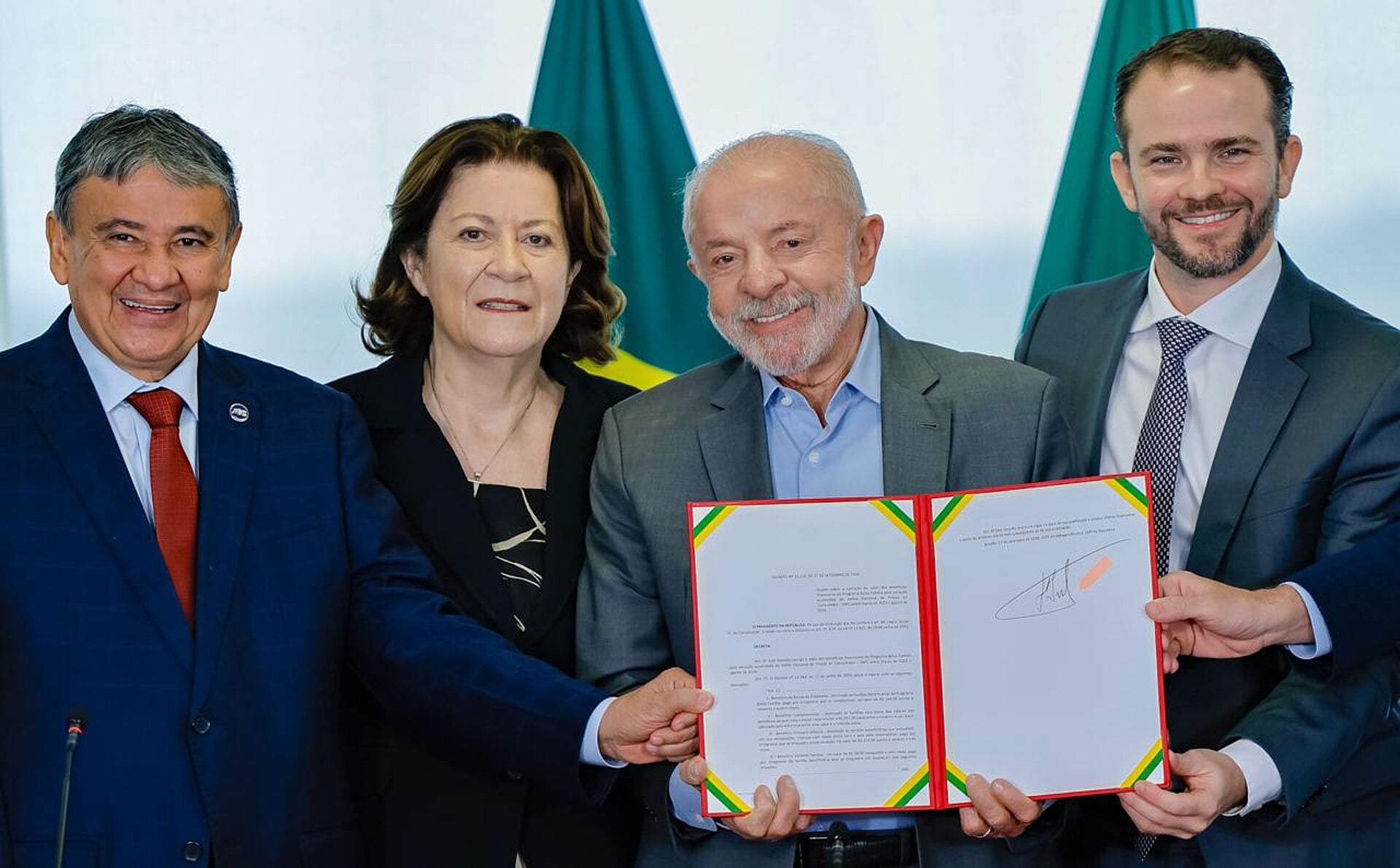
The Brazil Budget Cut Flávio Bolsonaro Promised
Flávio, a senator from Rio de Janeiro and the son of former president Jair Bolsonaro, promised a “tesouraço” of R$200 billion (about US$39.7 billion) a year in a TV Globo interview on Friday 16 October, Metrópoles reported. He said the government has 39 ministries, that he would have at least 10 fewer, and that this would save about that amount.
He also attacked Lula’s management of state companies and said corruption must be fought, Metrópoles reported. The sources we reviewed give no itemised list of which ministries or spending lines would go.
Durigan spoke of a R$200 billion (about US$39.7 billion) result “for next year”, Folha de Pernambuco quoted him, while Flávio spoke of savings “per year”, Metrópoles reported. The two may therefore not describe the same measure.
Where Brazil’s Budget Stands
Brazil’s 2026 target is a primary surplus of 0.25% of GDP, or R$34.3 billion (about US$6.8 billion), CNN Brasil reported from the Finance Ministry’s Prisma Fiscal survey of 15 October. The survey’s market median expects a 2026 primary deficit of R$53.05 billion (about US$10.5 billion).
For 2027 the draft budget guidelines law sets a surplus target of 0.5% of GDP with a tolerance of 0.25 points either way, the Planning Ministry said on 19 October. CNN Brasil says the government sees an effective 2027 surplus of R$18.6 billion (about US$3.7 billion), while the survey median expects a deficit of R$44 billion (about US$8.7 billion).
Durigan said on Thursday 22 October that the 2027 surplus forecast holds even after recent measures, which include a Bolsa Família rise of about 15%, fuel relief and the Desenrola 3.0 debt programme, Agência Brasil reported. The Planning Ministry plans to shift about R$20 billion (about US$4.0 billion) inside the 2027 budget without raising the spending ceiling.
Debt and Interest Rates
The central bank’s data series shows gross general government debt at 82.87% of GDP in August 2026, up from 81.04% in May. Durigan said the debt is held by Brazilians, so there is no risk of default, and blamed its growth on high interest rates, Folha de Pernambuco reported.
The Selic has stood at 13.75% since 17 September, down from 14.00% in early August, the same series shows. The central bank’s weekly Focus survey of 16 October put the median forecast at 13.25% for the end of 2026 and 12.00% for the end of 2027.
Durigan said lowering interest rates is key for a Lula government, alongside spending cuts and targeted public investment, Folha de Pernambuco reported. He denied any recession risk, saying a slowdown is likely because of high rates, the war in Iran and El Niño, the same paper reported.
Fuel Aid and Oil at US$116.72
Durigan said the government could keep fuel subsidies in 2027 if Brent stays very high and extra revenue keeps coming, Agência iNFRA reported. He said the aid is meant to soften prices and keep inflation from spiking, not to fix prices.
Brent futures for December delivery closed on Friday at US$116.72 a barrel, up 3.13% on the day and 6.24% on the week, Agência Brasil reported. We covered the existing relief in Brazil Fuel Subsidies Face US$113 Oil Test and the diesel risk in Goldman Flags 50% Petrobras Diesel Hike Risk.
Durigan said the oil export tax is not meant to raise money, a claim oil companies dispute, Agência iNFRA reported. The tax agency also highlighted the crude oil export tax take in September’s revenue of R$239.4 billion (about US$47.5 billion), Agência Brasil reported.
What It Means for You
For US investors, the budget path shapes how Brazil’s debt, interest rates and currency behave after the vote, whichever candidate wins. The central bank’s PTAX rate put the real at R$5.0377 per US$1 on 23 October, and the dollar closed below R$5 per US$1, Agência Brasil reported.
Our guides Brazil Power Structure Explained 2026 and Brazil Geopolitics Explained 2026 explain who sets these policies. Our earlier reports Brazil Debt Tops Assets After 19 Years and Brazil’s September Tax Take Hits Record give more fiscal background.
Visitors and expats feel budget choices through prices and public services rather than bond yields. Our Rio de Janeiro expat city guide covers day-to-day costs.
What Prediction Markets Say
Polymarket gives Flávio Bolsonaro a 79.5% chance of winning the 25 October runoff and Lula 20.5% (24 October, 5:12 a.m. ET). The Brazil Presidential Election event has drawn about US$194.2 million in bets, with about US$26.2 million on the Flávio contract and US$29.5 million on the Lula contract.
These prices are bets, not polls, and they say nothing about the budget. Live prices are on our odds page.
Prediction markets · who wins the runoff
Implied chance of winning Brazil’s presidency on 25 October, from traders’ prices.
Polymarket
Flávio Bolsonaro 79.5% · Lula 20.5% (US$194 million traded)
Kalshi (regulated in the US by the CFTC)
Flávio Bolsonaro 79% · Lula 22%
As of 24 October, 5:20 am ET (10:20 Lisbon), updated every 20 minutes. Prices are bets, not polls, and can move fast.
Why we show this: prediction markets turn real-money bets into a live probability that moves within minutes of the news, which is why investors, campaigns and newsrooms in the United States now follow them closely. We show them next to polls and official results, never instead of them.
Why we show this: prediction markets turn real-money bets into a live probability that moves within minutes of the news, which is why investors, campaigns and newsrooms in the United States now follow them closely. We show them next to polls and official results, never instead of them.
What Is Not Known
We could not open the UOL interview itself, so Durigan’s words rest on three Brazilian outlets that agree on the main points. Flávio’s campaign reply to the Friday remarks was not found in the sources we reviewed.
Flávio’s R$200 billion (about US$39.7 billion) Brazil budget cut figure is his own estimate, and the sources do not itemise which spending would be cut. Durigan is both finance minister and a campaign coordinator, so his claim that the cut is impossible is a political judgment, not a neutral audit.
It is not known whether the 2027 surplus target is realistic, since the market survey median expects a deficit of R$44 billion (about US$8.7 billion). It is also not known whether fuel aid will be extended, because Durigan tied it to oil prices and extra revenue.
Frequently Asked Questions
What did Brazil’s finance minister say about the spending cut?
Dario Durigan said on 23 October that a cut of R$200 billion (about US$39.7 billion) is “totally impossible” without serious harm to basic services. The claim comes from a minister who is also economic coordinator of President Lula’s campaign.
Who proposed the Brazil budget cut?
Conservative senator Flávio Bolsonaro promised a “tesouraço” of R$200 billion (about US$39.7 billion) a year in a TV Globo interview on 16 October. He said cutting at least 10 of the government’s 39 ministries would help produce the saving.
What is Brazil’s budget target for 2027?
The draft budget guidelines law sets a primary surplus target of 0.5% of GDP, with a tolerance of 0.25 points either way. A market survey of 15 October expects a deficit of R$44 billion (about US$8.7 billion) instead.
Could Brazil keep fuel subsidies in 2027?
Durigan said it is possible if Brent stays very high and extra revenue keeps coming. No decision or cost estimate has been announced in the sources we reviewed.
What does this mean for US investors?
The next president inherits gross debt of 82.9% of GDP and a policy rate of 13.75%, so the credibility of the budget plan matters for Brazilian assets. Flávio’s cuts are not itemised in the sources we reviewed, and Durigan’s rebuttal is a campaign statement.
Sources: CNN Brasil, 23 October 2026; Folha de Pernambuco, 23 October 2026; Folha de Pernambuco, 23 October 2026 (debt); Agência iNFRA, 23 October 2026; Metrópoles, 16 October 2026; Agência Brasil, 22 October 2026; Agência Brasil, 19 October 2026; CNN Brasil on the Finance Ministry Prisma Fiscal survey, 15 October 2026; CNN Brasil on oil, 23 October 2026; Agência Brasil on Receita Federal revenue, 22 October 2026; Agência Brasil on the dollar, 23 October 2026; Central Bank of Brazil, gross debt series; Central Bank of Brazil, Selic series; Central Bank of Brazil, PTAX rate 23 October 2026.
This article was produced by The Rio Times’ automated newsroom system. How we use AI · Report an error · Editorial responsibility: Matthias Camenzind, Editor-in-Chief
Free · Any country in the world · Prediction markets
Want prediction market reports on your country?
Pick any country in the world. Your report arrives the moment you confirm, then every Sunday: what the markets say about elections, currencies and policy there, with volumes and plain-English explanations.
The Rio Times · Power Map
See who really holds power in Latin America
Click to open the Power Map →


















 English (US) ·
 French (CA) ·
 French (FR) ·