

.png) 2 months ago
11
2 months ago
11
PROTECT YOURSELF with Orgo-Life® QUANTUM TECHNOLOGY
Orgo-Life the new way to the future Advertising by Adpathway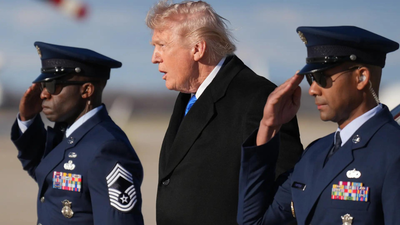
US President Donald Trump’s abrupt shift from a 48-hour ultimatum to a five-day pause on striking Iran’s energy infrastructure has exposed the competing pressures shaping Washington’s strategy in a rapidly escalating war.
Just days after threatening to “obliterate” Iranian power plants if Tehran failed to reopen the Strait of Hormuz, Trump stepped back, citing “very good and productive conversations” with Iranian officials.Iran plays down threat of strikes on energy infrastructure — Follow live updates
The reversal came as the original deadline expired on Monday, raising the prospect of a dramatic escalation targeting civilian energy infrastructure, a move widely seen as crossing a dangerous threshold.
Instead, Trump announced a five-day reprieve, presenting it as an opportunity for diplomacy to take hold. “We’re doing a five-day period,” he said, adding that success could lead to a settlement, while failure would mean continued bombardment.
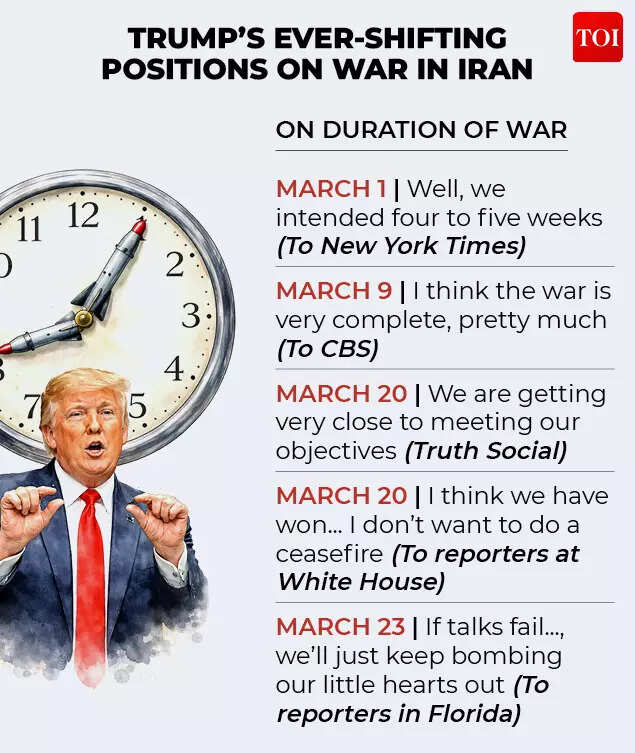
Yet the diplomatic opening Trump described appears fragile at best. Iranian officials have publicly denied that negotiations are underway, while US officials privately concede that any contacts remain preliminary and largely exploratory.
The disconnect has fuelled scepticism over whether the pause reflects a genuine breakthrough or a tactical retreat.A convenient offramp?
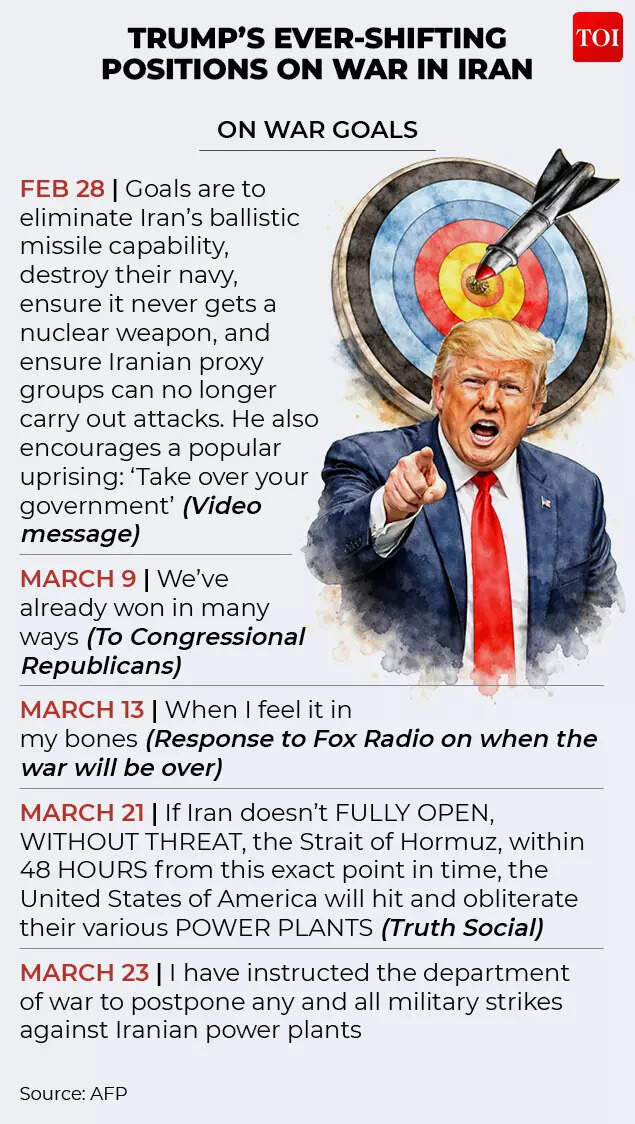
Iran, however, has pushed back strongly. Senior figures, including parliamentary speaker Mohammad Bagher Ghalibaf, dismissed Trump’s claims as an attempt to “escape the quagmire” facing the US and Israel. Iranian officials have instead framed the pause as evidence that Washington backed down under threat of retaliation.Pressure from allies and the region
While countries including Qatar, Oman and France are passing messages, there is still no clear framework for formal talks.Even potential meeting proposals, including high-level discussions in Pakistan or Turkey remain unconfirmed. Markets, oil, and domestic pressure
The Strait of Hormuz, through which roughly a fifth of the world’s oil passes, remains at the centre of the negotiations.Trump’s announcement of a pause had an immediate impact: oil prices dropped sharply, and stock markets rallied. US indices recorded their strongest gains in weeks, while Brent crude fell below $100 a barrel.The timing of the decision just before US markets opened has led analysts to conclude that stabilising markets was a key consideration.
“Trump needed some way to climb down,” one former US defence official said, noting that targeting energy infrastructure risked severe economic and humanitarian consequences.At home, the president is also facing political pressure. Prolonged conflict, rising fuel prices and uncertainty in financial markets have all added to the urgency of finding a way out.Strategy or improvisation?
He has repeatedly issued sweeping threats, only to pull back and claim progress towards a deal.In this case, the shift from a 48-hour ultimatum to a five-day pause reflects what some analysts describe as a blend of brinkmanship and improvisation. While Trump insists that Iran is now ready to negotiate seriously, there is little concrete evidence to support that claim.At the same time, military operations continue. US and Israeli strikes have not stopped, and additional American forces are moving into the region. Israel has made clear it intends to press ahead, signalling that the war itself is far from over.











 English (US) ·
  French (CA) ·
  French (FR) ·