

 1 month ago
29
1 month ago
29
PROTECT YOURSELF with Orgo-Life® QUANTUM TECHNOLOGY
Orgo-Life the new way to the future Advertising by AdpathwayARGENTINA · MARKETS
Key Facts
- —What happened Argentina let the wholesale peso trade above 1,500 per dollar this week while bonds and stocks rose.
- —The reserves Gross central bank reserves rebounded about US$2.1 billion from their early-August low to US$50.912 billion on August 25, a seven-year high, then fell back to US$49.791 billion on Friday.
- —The slowdown The central bank bought about US$36 million a day in August, down from US$103 million a day in July.
- —The risk gauge Country risk finished the week around 510 points, up from 506 a week earlier but below the 535-point spike of August 20.
- —The catch The 1,500 level was symbolic, not a policy limit — the legal ceiling of the exchange-rate band sat near 1,876 on Friday.
- —What comes next The wholesale peso enters September above 1,500 per dollar, with fresh Treasury auctions due within weeks.
Argentina closed the week with the wholesale peso above 1,500 per dollar for the first time in this phase of the programme, yet equities rose and country risk held near 510 points — a combination that would have been unthinkable a year ago.
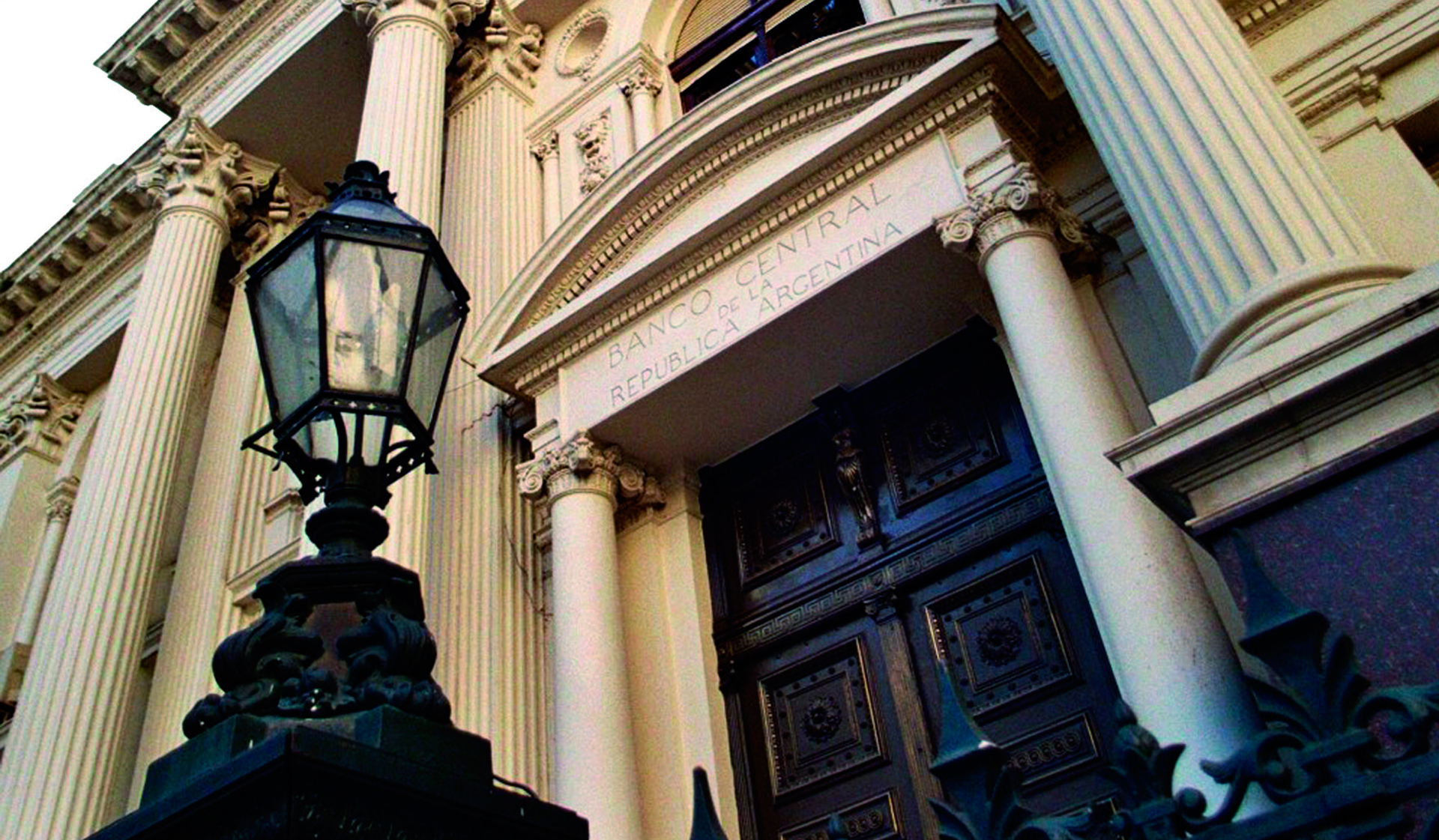
A symbolic line, quietly crossed
The wholesale dollar ended the week at 1,512.00 pesos after breaking the 1,500 barrier that had held through most of August. At the state-run Banco Nación, the retail dollar sold on Friday at 1,535 pesos.
The informal “blue” dollar, the street rate Argentines watch as a stress gauge, changed hands at 1,555 on Friday. That leaves the gap between the retail official rate and the blue at just 1.3 percent, and 2.8 percent measured against the wholesale rate, remarkably narrow by local standards.
Crucially, 1,500 was never the legal limit. The central bank’s exchange-rate band, the corridor inside which the peso is allowed to float, put its ceiling at 1,876.50 for Friday.
The government in effect chose to let the peso drift rather than burn reserves defending a round number. That is a political decision as much as a monetary one, because a weaker peso feeds through to prices.
Reserves at a seven-year high, purchases at a crawl
Gross reserves touched US$50.912 billion on August 25, the highest level since September 2019. From the early-month dip to US$48.835 billion, caused by an US$840 million payment to the International Monetary Fund, that is a rebound of roughly US$2.1 billion.
The stock then fell US$1.069 billion on Friday alone, to US$49.791 billion, on month-end accounting.
Yet the central bank is no longer buying dollars the way it did. August purchases totalled US$722 million, an average of about US$36 million a session, against US$103 million a day in July and US$137 million in May.
The gap between a rising stock and falling purchases is explained mostly by valuation. A higher gold price and currency movements have inflated the book value of the reserve pile without fresh buying.
Markets read the larger stock as a buffer ahead of the coming electoral calendar. They read the slower buying as a warning that the buffer depends on gold staying expensive.
Bonds and stocks rise as risk eases
Buenos Aires equities gained over the week, the S&P Merval rising about 2.3 percent to 2,979,472 points, though it slipped 0.72 percent on Friday. Dollar sovereign bonds ended the week roughly flat to slightly weaker.
Country risk, the extra yield investors demand over US Treasuries, settled around 510 points on Friday.
That is down from the spike above 530 points on 20 August and essentially flat against Thursday’s 509. It remains far above the lows near 480 seen earlier in the month.
The week’s pivotal event was Thursday’s Treasury auction, which renewed 96 percent of the 12.6 trillion pesos (US$8.3 billion) falling due. Investors demanded yields near 30 percent a year to roll the paper, as we reported on Friday.
The unrenewed slice releases pesos into the market, one reason the dollar was allowed to drift. A state that pays old lenders with new loans must watch how much cash leaks out the side door.
What to watch in September
The first marker is whether the wholesale rate holds above 1,500 or slips back. A quick retreat would suggest the crossing was auction noise rather than a new equilibrium.
The second is the September auction calendar, with fresh maturities due within weeks. Each rollover now tests the same question: how much yield does stability cost.
The third is the blue-chip swap and informal rates, which price expectations faster than the official market. A widening gap there would be the earliest sign of trouble.
Frequently Asked Questions
Did Argentina devalue the peso this week?
No. The peso floats inside an official band, and the wholesale rate crossed the symbolic 1,500-per-dollar mark on its own. The band’s legal ceiling was near 1,876 pesos on Friday, far above the market price.
How much did the central bank add to reserves?
Gross reserves rebounded roughly US$2.1 billion from their early-August low of US$48.835 billion to US$50.912 billion on August 25, a seven-year high, before easing to US$49.791 billion on Friday. Much of the gain came from gold-price valuation rather than dollar purchases.
What is country risk and where does it stand?
Country risk is the extra yield investors demand to hold Argentine bonds over US Treasuries, measured in points. It finished the week around 510, down from a mid-August spike to 535 but slightly higher than the 506 of a week earlier.
What happened at Thursday’s debt auction?
The Treasury renewed 96 percent of the 12.6 trillion pesos (US$8.3 billion) falling due. Investors demanded yields near 30 percent a year to roll the bills into November and beyond.
Why did stocks rise while the peso weakened?
Equity investors rewarded the government for not spending reserves to defend a symbolic exchange rate. Letting the peso drift inside its band was read as policy discipline, not distress.
Sources: Ámbito, Infobae, Rava Bursátil, Página/12, central bank (BCRA) market data.
Daily series
← Previous session: August 27, 2026
This article was produced by The Rio Times’ automated newsroom system. How we use AI · Report an error
The Rio Times · Power Map
See who really holds power in Latin America
Click to open the Power Map →













 English (US) ·
  French (CA) ·
  French (FR) ·