

PROTECT YOURSELF with Orgo-Life® QUANTUM TECHNOLOGY
Orgo-Life the new way to the future Advertising by Adpathway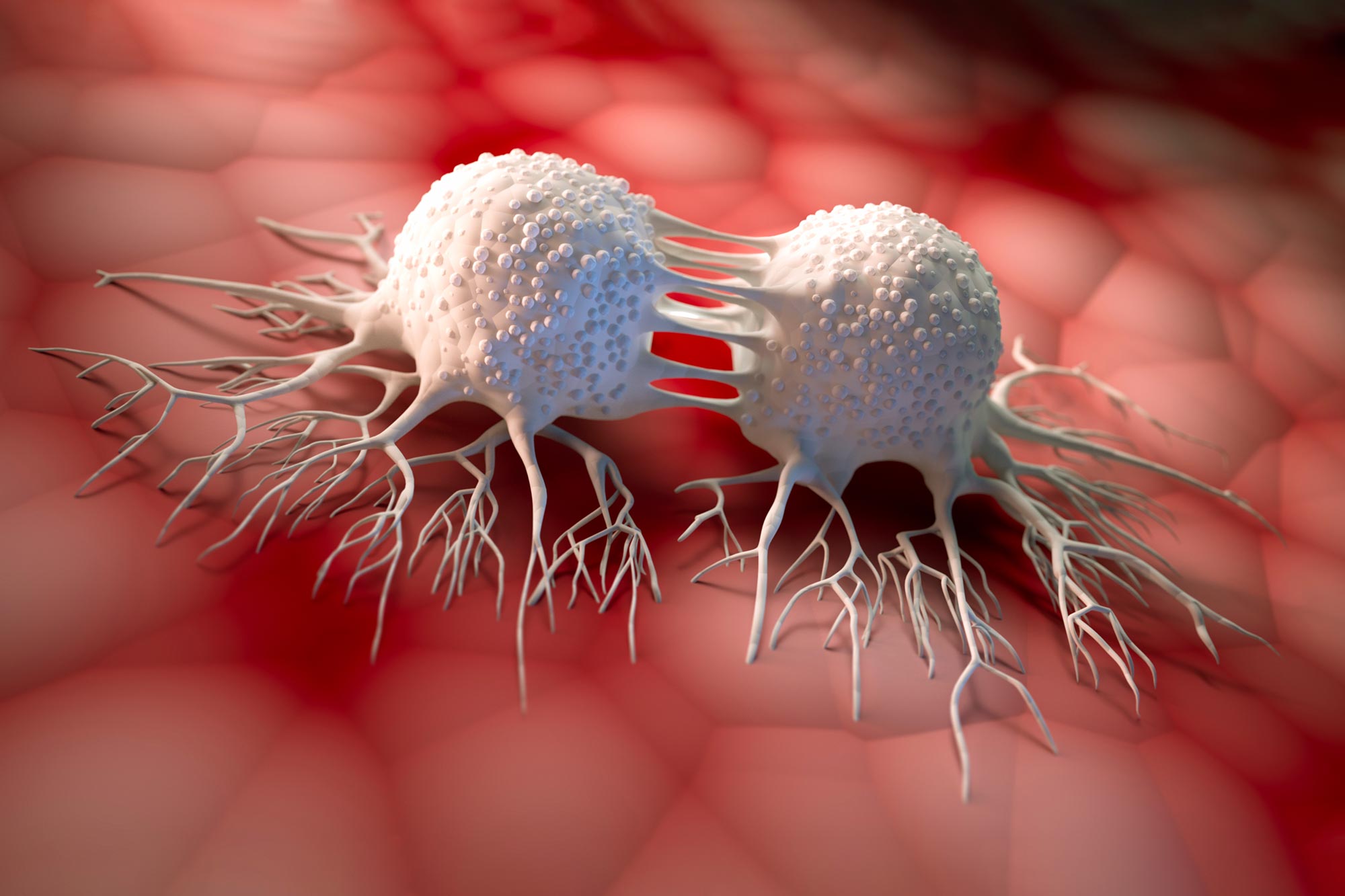 Scientists have uncovered how pancreatic cancer cells evolve into more aggressive forms, revealing genetic changes that may contribute to tumor spread and treatment resistance. Credit: Shutterstock
Blocking one gene’s activity shifted aggressive pancreatic cancer cells into a less aggressive form in experiments, pointing to a possible way to disrupt tumor evolution.
Pancreatic ductal adenocarcinoma kills nearly 85 percent of people within five years of diagnosis. Part of the challenge is that its cancer cells can change, shifting between less aggressive and more aggressive forms in ways that earlier studies could not explain.
A study led by researchers at NYU Langone Health and its Perlmutter Cancer Center now shows how genetic reshaping within individual tumors enables those transitions. Published in Nature Genetics, the findings suggest that ongoing changes to cancer cells’ DNA help fuel both resistance to treatment and metastasis, the spread of cancer to other parts of the body.
Cancer clones follow different evolutionary paths
More than half a dozen genes have been implicated in this complex disease. Earlier research generally measured increases and decreases in gene activity across groups of cells analyzed together, separating pancreatic cancer cells into two broad subtypes: classical, which is less aggressive, and basal, which is more aggressive. Those bulk measurements could not explain how cells switched between the two.
To examine the differences among individual cells, the researchers used transcriptomics, which measures gene activity. They analyzed 443,451 single cells from 62 tumors in 56 men and women with pancreatic ductal adenocarcinoma. Six patients provided tumor samples both before and after chemotherapy, allowing the team to examine changes across treatment.
“Our study provides the most granular view to date of pancreatic ductal adenocarcinoma, revealing how ongoing genetic reshaping drives tumor evolution over the course of disease,” said study lead investigator Despoina Kalfakakou, PhD, a postdoctoral research fellow at NYU Grossman School of Medicine and Perlmutter Cancer Center.
Within the tumors, the team identified clones, groups of cells with similar genetic makeup. Individual tumors contained between two and 11 clones on average, with mixtures of basal and classical cells. These groups behaved differently as they evolved, with some developing resistance to therapy and others acquiring the ability to spread rapidly.
“Our research also suggests that single-cell clonal analysis offers a better approach to understanding complex cancers, like pancreatic ductal adenocarcinoma, as it develops over time, by mapping how tumors evolve and adapt at each stage of disease progression,” said study co-senior investigator Aristotelis Tsirigos, PhD, a professor in the Departments of Medicine and Pathology at NYU Grossman School of Medicine and a member of Perlmutter Cancer Center.
Blocking MYC reverses an aggressive state
Using patterns of gene activity to trace the clones’ genetic origins, the researchers linked variations in DNA copy number to the mix of cells making up each tumor. This helped them identify which genes were most active at different stages of disease progression. Among the changes associated with tumor evolution was increased activity of a gene called MYC in aggressive tumor cell populations.
In further experiments with basal pancreatic tumor cells, blocking MYC activity returned the cells to the less aggressive classical form. It also exposed them to more immune cells, potentially making them more vulnerable to immune attack. “These findings suggest that targeting the mechanisms underlying tumor evolution, including MYC, may help restrain the cancer’s rapid progression,” Kalfakakou said.
Clues to pancreatic cancer’s immune escape
Other differences among clones offered clues to why this cancer resists immunotherapy. In some clones, the TIGIT gene was more active, producing proteins that help cancer evade immune detection. In those same cells, activity of the PD1 gene was suppressed, which may help explain why some immunotherapies targeting PD1 are rarely effective against the disease.
“More broadly, our study results highlight the critical role of clonal diversity, genetic plasticity, and interactions with the tumor’s microenvironment in shaping human pancreatic ductal adenocarcinoma biology,” said Dr. Tsirigos, who also serves as co-director of the Division of Precision Medicine and director of NYU Langone’s Applied Bioinformatics Laboratories.
Clinical trials of MYC inhibitors or TIGIT inhibitors for pancreatic ductal adenocarcinoma and other cancers are underway, Tsirigos said. He added that the findings should encourage larger investigations into the different states cancer cells can occupy and how treatments might target them.
Reference: “Clonal heterogeneity in human pancreatic ductal adenocarcinoma and its impact on tumor progression” by Despoina Kalfakakou, Daniel C. Cameron, Emily A. Kawaler, Motoyuki Tsuda, Lidong Wang, Qi Su, Sungsik Kim, Elektra Manolakos, Xiaohong Jing, Cristina Hajdu, Dylan L. Tamayo, Yoona Shim, Amanda Ackermann, Daniel Weissinger, Hayley Zimny, Rosmel Hernandez, Matthew Beier, Dacia Dimartino, Peter Meyn, Kalina Rice, Shanmugapriya Selvaraj, Cynthia Loomis, Adriana Heguy, Amanda W. Lund, Hannah Carter, Rosalie C. Sears, Theodore H. Welling, Igor Dolgalev, Aristotelis Tsirigos and Diane M. Simeone, 13 October 2026, Nature Genetics.
DOI: 10.1038/s41588-026-02779-5
This project was supported by a National Institutes of Health grant no. R01CA245005 (D.M.S.) and a Sky Foundation seed grant award (D.K.).
Never miss a breakthrough: Join the SciTechDaily newsletter.
Follow us on Google and Google News.




















 English (US) ·
 French (CA) ·
 French (FR) ·