

 2 days ago
18
PROTECT YOURSELF with Orgo-Life® QUANTUM TECHNOLOGY
Orgo-Life the new way to the future Advertising by AdpathwayOn October 21, China’s Premier Li Qiang traveled from Beijing to St. Petersburg to meet with Russian President Vladimir Putin and Prime Minister Mikhail Mishustin. The Li-Mishustin summit – the 31st such encounter between the Chinese and Russian heads of government – culminated in a long communiqué outlining a great number of collaborative initiatives in areas ranging from artificial intelligence to space exploration and nuclear energy.
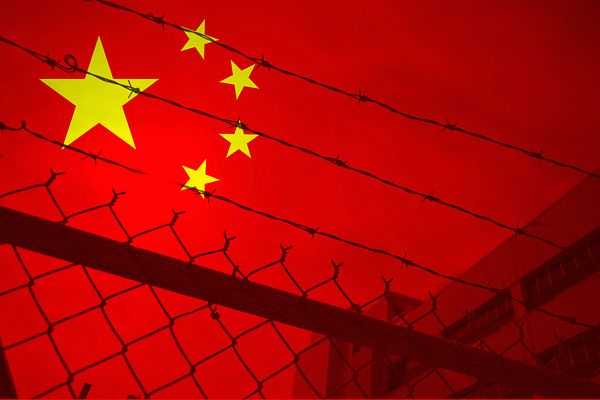
Nestled among these, a commitment to “enhancing patriotic education for youth” toward the end of the communiqué could easily be overlooked. But this item deserves greater scrutiny. Often portrayed as simply a matter of convenience or unsentimental realpolitik, China and Russia’s collaboration on patriotic education helps to reveal how the two countries’ “no limits” friendship is, in reality, rooted in a shared obsession with revenging national humiliation and “Western influence.”
The term “patriotic education” is used broadly across the post-Communist world, from Belarus to Vietnam, part of an inherited Leninist approach to “thought work” and propaganda. In all cases, it refers to top-down efforts to suppress criticism and promote loyalty to the state throughout the education system, drilling school children in correct “moral-ideological” standpoints. In many cases, the rollout of “patriotic education” measures is a direct response to a moment of political crisis. In Belarus, for example, a new patriotic education program was approved by the Council of Ministers as a response to the 2020 anti-government protest movement.
China is the archetype of this trend. The term “patriotic education” was first discussed by China’s leadership in June 1989, a mere two weeks after the massacre of student protesters in Tiananmen Square. Facing a serious legitimacy crisis, the Chinese Communist Party (CCP) assumed the garb of patriotism to deflect overseas criticism. As part of the new “patriotic education campaign” rolled out across Chinese schools, students were exhorted to be loyal to the state and to distrust Western influences, with a dire reminder of Europe’s colonial exploitation of China during the 19th century. Schools held flag-raising ceremonies, instructed students in a new “patriotic” curriculum, and organized visits to historic sites, such as the remains of the Summer Palace razed by British and French forces in 1860. A new generation of Chinese students would be sternly exhorted, at every step, biewang guochi: “never forget national humiliation.” It worked: the Tiananmen crisis abated and the CCP recast itself as the righters of historical wrongs suffered by China.
Both Putin and Xi Jinping appear to have taken this lesson to heart. In 2001, with Russia still reeling from the disintegration of the USSR, Putin – then newly-elected president – unveiled a new five-year plan for “the Patriotic Education of the Citizens of the Russian Federation.” Originally, Russian patriotic education stressed national pride in Russian culture and history, as well as instructing students in conservative moral teachings. However, successive iterations of patriotic education became more explicitly militaristic and resentful of foreign influence, particularly after Russia’s annexation of Crimea in 2014. Patriotic education became a crucial medium through which to promulgate an image of Russia locked in an existential struggle against external threats, and to valorize military service for the glory of Russia.
Under Xi’s rule, meanwhile, the Chinese state has elevated the patriotic education campaign into a whole-of-society effort to enforce ideological compliance with the CCP and combat “historical nihilism,” the party’s preferred term for public criticism of its record or skepticism about official historical narratives.
This effort culminated in the 2023 Patriotic Education Law, which created a legal obligation for a wide range of institutions, not just schools and universities, to inculcate loyalty to the nation and the CCP. Professionals and organisations are expected to demonstrate “patriotic feelings and behavior that bring glory to the country.” The message – to be repeated continuously across Chinese society – is that under Xi, China has now overcome its historic humiliations and resumed its proper role as the regional superpower.
Why the intensifying need for patriotic feelings among Chinese youth? China has keenly followed the developments of Russia’s patriotic education system, noting its success in cultivating nationalist feeling amongst Russia’s youth – and its role in boosting support for Putin’s military operations via military ceremonies and training sessions in Russian schools. Concerningly, patriotic education in China similarly appears to lay the groundwork for promoting the annexation of Taiwan, the self-governing island that the CCP claims as its territory.
The Patriotic Education Law, which speaks of “the sacred duty to complete the great undertaking of uniting the motherland,” is explicitly aimed at increasing popular support for the forcible unification of Taiwan and China, including via covert influence operations in Taiwan itself. When CCP apparatchiks claim that the goal of patriotic education is to “gather the strength of the people for the great cause of building a strong country and national rejuvenation,” this is party-speak for Taiwanese unification, peaceful or otherwise.
“Patriotism is the last refuge of a scoundrel,” observed Samuel Johnson, famously, in 1775. Just over 250 years later, having staked their legacies on grand promises of expanded territory and renewed national pride, Putin and Xi alike find themselves under pressure to deliver or be exposed as weak and illegitimate in the eyes of the public. A commitment to boost cooperation on patriotic education suggests that these leaders are doubling down on a shared narrative of existential struggle against “the West.” The implications for the inhabitants of Eastern Europe and Taiwan, and for all of us, are sobering indeed.
















 English (US) ·
 French (CA) ·
 French (FR) ·