

 4 hours ago
6
PROTECT YOURSELF with Orgo-Life® QUANTUM TECHNOLOGY
Orgo-Life the new way to the future Advertising by Adpathway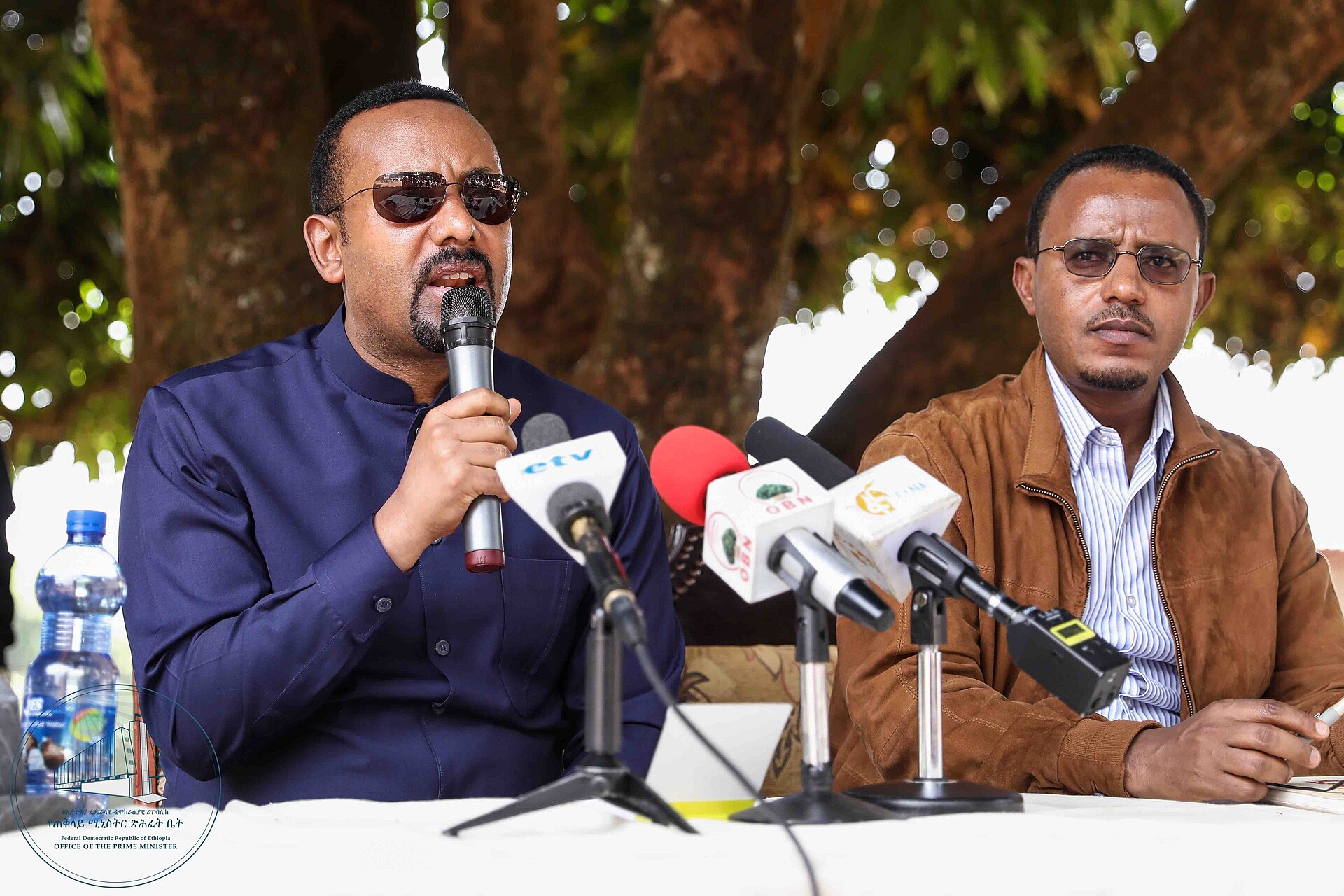
ETHIOPIA · POLITICS
On 7 November 2026, a Saturday, power in Ethiopia sits mainly with the Prosperity Party, the ruling party, and the circle around Prime Minister Abiy Ahmed. The regions and the army are the other pillars, as our guide to Ethiopia’s key players and institutions explains.
Key Facts
Free daily brief — no card needed
Get every Africa story in one morning email
We build you a personalized brief around the topics you follow — free for 7 days. Love it? Your first month after that is US$1.
Yes, email me my free daily brief — I can unsubscribe any time.
- Who leads Abiy Ahmed began a second five-year term as prime minister on 5 October 2026.
- The party The Prosperity Party won 438 seats in the 1 June 2026 election.
- The cabinet Parliament approved a deputy prime minister and 22 ministers on 8 October 2026.
- The flashpoint A federal caretaker administration has run Tigray since 16 October 2026.
- Prediction markets Polymarket, an online betting market, prices Abiy leaving office in 2026 at 4.7% (7 November, 2:18 p.m. US Eastern time).
The Prosperity Party and the Prime Minister’s Circle
The Prosperity Party won 438 seats in the House of Peoples’ Representatives, the elected lower chamber of parliament. That is a landslide, and opposition parties won far fewer seats.
The vote took place on Monday 1 June 2026. The National Election Board, the country’s electoral commission, announced final results on Sunday 21 June 2026.
Abiy Ahmed has been prime minister since 2018. Parliament re-elected him, and he was sworn in for a second five-year term on Monday 5 October 2026.
Around the prime minister sits a small group of office-holders. Temesgen Tiruneh is deputy prime minister, the second-ranking member of the cabinet.
Ahmed Shide, a former finance minister, was elected Speaker of the House on Monday 5 October 2026. He had held the finance portfolio before the new cabinet.
Who Holds Which Post
- Prime minister: Abiy Ahmed
- Deputy prime minister: Temesgen Tiruneh
- Speaker of the House: Ahmed Shide
How the Cabinet Is Chosen
The constitution of 1995 sets the rules. Under Article 73, the prime minister is elected from among members of the House of Peoples’ Representatives.
Under Article 74, the prime minister submits ministerial nominees to that House for approval. The same article makes the prime minister chief executive and chairman of the Council of Ministers.
Parliament approved the latest cabinet, formally the Council of Ministers, on Thursday 8 October 2026: a deputy prime minister and 22 federal ministers. Read our report on the cabinet vote for the full background.
Fitsum Assefa is now finance minister, replacing Ahmed Shide. Mohammed Idris is defence minister, Gedion Timothewos is foreign minister and Hana Arayaselassie is justice minister.
The arithmetic matters here. With 438 seats, the governing party holds a large majority in the chamber that approves ministers.
The full list of ministers and portfolios is on our site. Article 74 also makes the prime minister commander-in-chief of the armed forces.
The House of the Federation and the Federal Bargain
Ethiopia, which our country guide profiles, is a federation of regional states and two chartered cities, Addis Ababa and Dire Dawa. The 1995 constitution began with nine member states, and Article 47(4) gives member states equal rights and powers.
Article 39(1) goes further: each nation, nationality and people has an unconditional right to self-determination, including secession. Secession means a region leaving the country.
Article 62 gives the House of the Federation, the upper chamber that speaks for ethnic communities, several jobs. Among them, it interprets the constitution, decides on self-determination claims and can order federal intervention in a state that endangers the constitutional order.
This makes the House a referee between the regions and the centre. A House of the Federation decision came before the federal caretaker administration in Tigray, set up on Friday 16 October 2026.
The Federal Bargain in Four Rules
- Article 39(1): every nation, nationality and people may claim self-determination
- Article 47(4): member states have equal rights and powers
- Article 62: the House of the Federation interprets the constitution
- Article 73: the prime minister comes from the elected lower chamber
Oromia, Amhara, Tigray and the Somali Region
Oromia is the most populous region, and its regional council held its first session of the new term on 28 September 2026. One regional report says the council re-elected Shimelis Abdisa as president, but we could not find a second confirmation.
In the Somali region, Mustafe Mohamed Omer was re-elected president of the Somali region at the first session of the new regional council, reported on Thursday 1 October 2026. Its regional capital is Jigjiga.
Tigray is run differently. On Friday 16 October 2026 the federal government set up a six-month caretaker administration after a House of the Federation decision.
Its stated aims are to restore stability and prepare for elections. It follows renewed fighting between federal forces and Tigrayan forces, linked to the Tigray People’s Liberation Front (TPLF), that threatens the Pretoria agreement of November 2022, the peace deal that ended the Tigray war, as our Tigray report explains.
The Amhara region has seen armed conflict since 2023. The fighting pits the army against Fano, local armed militias.
Who Runs Each Region
- Oromia: a regional report says Shimelis Abdisa was re-elected president; not yet confirmed
- Somali region: President Mustafe Mohamed Omer, re-elected 1 October 2026
- Tigray: a federal caretaker administration since 16 October 2026
- Amhara: armed conflict between the army and Fano militias since 2023
The Army and Eritrea
Field Marshal Birhanu Jula was chief of the general staff of the Ethiopian National Defence Force, the federal army, as of February 2026, and we found no report of a replacement. Mohammed Idris is defence minister.
The army matters politically because it is involved in several conflicts. It is fighting Fano militias in Amhara, it is in renewed fighting with Tigrayan forces, and it faces the dispute with Eritrea.
Ethiopia has been landlocked since Eritrea became independent in 1993. In a letter to the UN Security Council in early October 2026, Ethiopia said Eritrea had launched an “all-out invasion”, which Eritrea denies.
Our report on Eritrea’s list of war threats covers the Red Sea angle. A landlocked country depends on its neighbours for sea access, so the Eritrea question touches trade as well as security.
Business and the State Holding Company
Ethiopian Investment Holdings, or EIH, is the state holding company that manages state-owned enterprises. Its own announcement of 4 December 2024 said it added eight more of them, including the postal and railway enterprises.
The International Monetary Fund (IMF), the global lender, approved an Extended Credit Facility, a loan arrangement, of about US$3.4 billion on Monday 29 July 2024.
With the fourth review, completed on 16 January 2026, total disbursements reached about US$2.18 billion. The IMF said all quantitative performance criteria were met, but the federal budget for 2025/26 deviated from agreed parameters and missed a structural benchmark.
Business in Ethiopia is therefore tied closely to the state. The government owns the large enterprises through EIH, and the IMF programme sets limits on how it manages the currency and the budget.
The IMF Programme in Brief
- Size: about US$3.4 billion, approved 29 July 2024
- Disbursed by January 2026: about US$2.18 billion
- Fourth review completed: 16 January 2026
- Open item: a missed benchmark tied to the 2025/26 federal budget
The Church and the Unions
The Confederation of Ethiopian Trade Unions, known as CETU, is Ethiopia’s national federation of trade unions. A union federation represents workers in wage talks with employers and the state.
The Ethiopian Orthodox Tewahedo Church, led by Patriarch Abune Mathias, is one of the country’s oldest and most widely followed churches. Neither it nor CETU appears in the constitutional chain that runs from voters to parliament to cabinet.
Inequality Across the Country
Power in Ethiopia is not shared evenly between places. Reports on the final results said voting did not take place in Tigray or in some parts of Amhara, so those voters had no say in the new parliament.
Conflict adds another divide. The International Organization for Migration, the UN migration agency, counted over 3 million displaced people at the end of 2023, about 69% of them displaced by conflict.
That count is more than two years old and covers areas the agency could reach. We have no newer national total that we can confirm.
Who Is Left Out
The opposition is small against the Prosperity Party’s 438 seats. Opposition parties won far fewer seats, which leaves little room for a counterweight in parliament.
The seat count tells only part of the story. In Tigray, a caretaker administration set up by the federal government now runs the region.
Residents of Amhara live in an area contested by the army and Fano militias since 2023. People displaced by conflict, counted above, are another group whose circumstances national averages hide.
Article 47(4) protects equal rights and powers for member states. Whether every region feels equal in practice is a question this article cannot answer.
What Prediction Markets Say
Polymarket, an online market where users bet real money on outcomes, lists a market on whether Abiy Ahmed leaves office in 2026. On 7 November at 2:18 p.m. US Eastern time it priced a yes at 4.7%, with about US$13,100 traded.
A second Polymarket market asks whether Eritrea invades Ethiopia by 31 December 2026. At the same time it stood at about 12.5% yes, with about US$123,000 traded.
These prices are bets, not polls. The first suggests that traders see a departure of the prime minister this year as unlikely.
Why we show this: prediction markets turn real-money bets into a live probability that moves within minutes of the news, which is why investors, campaigns and newsrooms in the United States now follow them closely. We show them next to polls and official results, never instead of them.
What It Means for US Readers
Ethiopia is an economy under an IMF programme, and its biggest companies sit inside a state holding company. Investors usually watch the IMF’s reviews for signs of progress or delay.
The party’s dominance makes federal policy predictable, while conflict in Amhara and Tigray remains the main risk. Travellers should rely on official government travel advisories, and nothing here is travel or investment advice.
Any US diplomacy on Tigray or Eritrea would run through the offices described above. These include the prime minister, foreign minister Gedion Timothewos and defence minister Mohammed Idris.
What Is Not Known
It is not yet clear when Tigray’s election will happen. The caretaker administration has a six-month mandate and says it will prepare elections, but no date has been given.
The Ethiopian and Eritrean accounts of the border fighting conflict, and independent confirmation of troop positions is limited. It is also unknown whether the army and the Fano militias in Amhara will reach talks. Nor is it confirmed who presides over Oromia’s new regional council, because we found only one report that Shimelis Abdisa was re-elected.
The largest question is how much power sits outside the party. The seat count shows control of parliament, but it does not measure the influence of regions, the army, the church or business.
Open Questions
- When will Tigray vote?
- Will the army and Fano militias in Amhara talk?
- Will Oromia’s president be confirmed?
- How much power sits outside the party?
Frequently Asked Questions
Who runs Ethiopia?
Prime Minister Abiy Ahmed and the Prosperity Party run the federal government. The party won 438 seats on 1 June 2026, and Abiy began a second term on 5 October 2026.
How is Ethiopia’s prime minister chosen?
Under Article 73 of the constitution, the prime minister is chosen from among members of the House of Peoples’ Representatives. The prime minister then submits ministerial nominees to that House for approval under Article 74.
Who rules Tigray now?
A federal caretaker administration has run Tigray since 16 October 2026. It has a six-month mandate to restore stability and prepare for elections.
What is the House of the Federation?
It is the upper chamber that speaks for Ethiopia’s ethnic communities. Under Article 62 it interprets the constitution, among other jobs, and decides on self-determination claims.
What do prediction markets say about Abiy leaving office?
On 7 November 2026 at 2:18 p.m. US Eastern time, Polymarket priced a yes on Abiy leaving office in 2026 at 4.7%. These are bets with about US$13,100 traded, not polls.
Sources: Constitution of Ethiopia, full text; IMF press release 26/009, 16 January 2026; International Organization for Migration, displacement report; Polymarket, Abiy Ahmed out as Prime Minister of Ethiopia in 2026, read 7 November 2026.
This article was produced by The Rio Times’ automated AI newsroom. Editorial responsibility: Matthias Camenzind, Publisher and Editor-in-Chief. How we use AI · Report an error
Free · Any country in the world · Prediction markets
Want prediction market reports on your country?
Pick any country in the world. Your report arrives the moment you confirm, then every Sunday: what the markets say about elections, currencies and policy there, with volumes and plain-English explanations.











 English (US) ·
 French (CA) ·
 French (FR) ·