

PROTECT YOURSELF with Orgo-Life® QUANTUM TECHNOLOGY
Orgo-Life the new way to the future Advertising by AdpathwayOne of the last videos taken of Elliott Smith shows him at the Fonda Theatre, in Los Angeles. He’s sitting in a metal stacking chair, wearing faded dark pants and a T‑shirt that says i <3 metal, a little slumped over his guitar. A leather cuff is strapped to his wrist. His hair is falling in his face, because it always is.
The concert opens unevenly. His voice is weak and drowsy, like he might be on something, or coming off it. About forty‑five minutes in, after he finishes up “Pretty (Ugly Before),” someone shouts from the audience, and Elliott doesn’t quite catch the words. “Get a what?” he asks. “A back-bone?” He fiddles with his hair as the comment starts to sink in. “Get a backbone?” he repeats. “What the fuck?… I could tell you a dream I had last night; otherwise, I can’t be more fuckin’ for real.”
He seems upset, in disbelief, and then, fingering the neck of his guitar, starts to turn the phrase over in his head, assimilating it. The anger in his voice dissolves. He apologizes. “I’m not trying to pick on you,” he says. “Maybe I didn’t understand what you were saying.” Who knows what the heckler is really thinking? Maybe they’re just having a rough night.
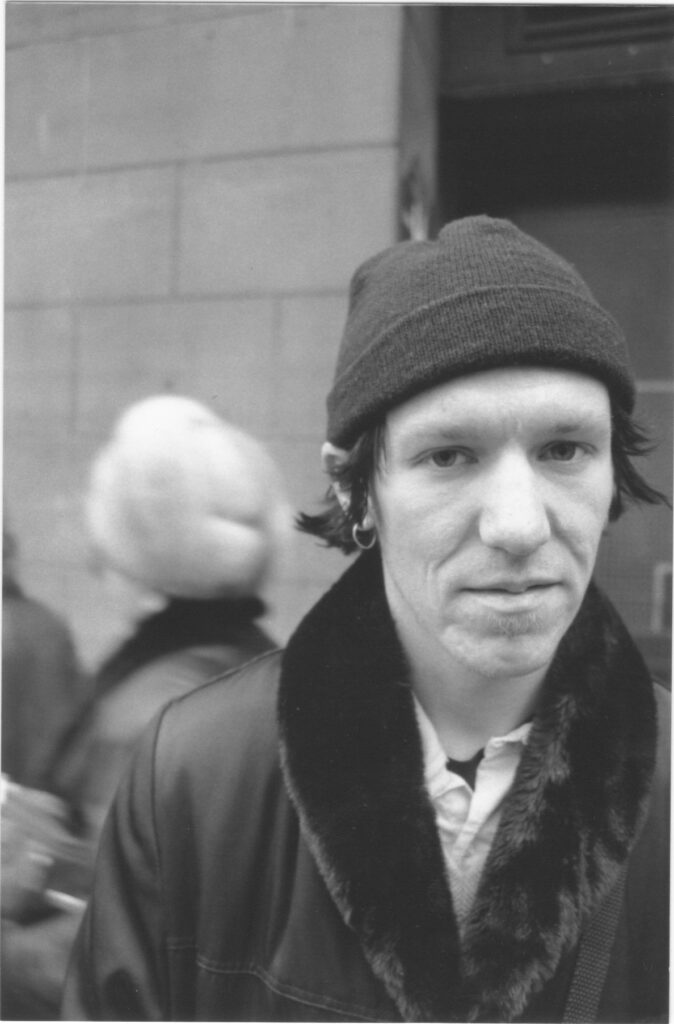 Elliott in Paris, December 1996. “I think it was more my romantic idea,” Joanna says. “When we went there, it wasn’t so easy.” Photographs by Joanna Bolme.
“I’m very healthy now,” he says, to whistles and cheers. “So don’t get bummed out.”
He’s been gentle with the audience—“I want to play new things,” he announced earlier, turning down a request for “The Biggest Lie,” “and they might seem dark, but they’re not from now, necessarily…I’m fine, really”—and, heckler aside, the audience has been gentle with him.
Then he starts playing “Plainclothes Man”:
you’re everybody’s second
home always trying to get me
alone an easy way to lose it all
It’s a song about addiction, probably heroin, but like most of Elliott’s songs about addiction, it’s not really about the drugs. It’s about change and need. When he wrote it, in the mid‑nineties, he was on his way out of his band, entering the solo career that would define him. It was one of the first songs showcasing Elliott’s mature voice, not only as a songwriter—easy rhymes, sly use of common turns of phrase, a vocabulary that feels unfussy—but also literally, in his vocal style. The pubescent croak of Roman Candle is gone, the chesty metal voice of Dead Air replaced by something soft and assured, authoritative.
He wrote sad songs but didn’t want to make anyone sad. He had the kind of shy, exaggerated empathy of someone who’s always afraid of hurting people but never afraid of hurting himself.
Onstage in Los Angeles, Elliott is singing about someone half caught in a moment when he seems to be on the verge of transformation himself. His concert that night marks the beginning of a fragile comeback tour and a promising sobriety. His voice is stronger than it was at the start of the show, but it’s breaking up with emotion. He wrings everything out of the vowels, out of his breath, until his voice is a wavering sob. It’s a rebuttal to the heckler, or proof that the heckler is right, or both. Elliott was always good at being both.
He strokes the last chord, singing about continual decline, and frowns. “That one was too sad to stop on,” he says. He can’t end on a sad song.
*
It’s been twenty‑three years since the recording of that concert—one of the more famous videos of Elliott because there’s so much in it, and so much around it. It was made in January 2003; by late October, he was gone. The video is a conflicting document of his recovery, for people who like to argue about that. Mostly it’s a snapshot of his artistry and his empathy, which were fully intertwined. He knew how people felt, or tried to. He wrote sad songs but didn’t want to make anyone sad. He had the kind of shy, exaggerated empathy of someone who’s always afraid of hurting people but never afraid of hurting himself.
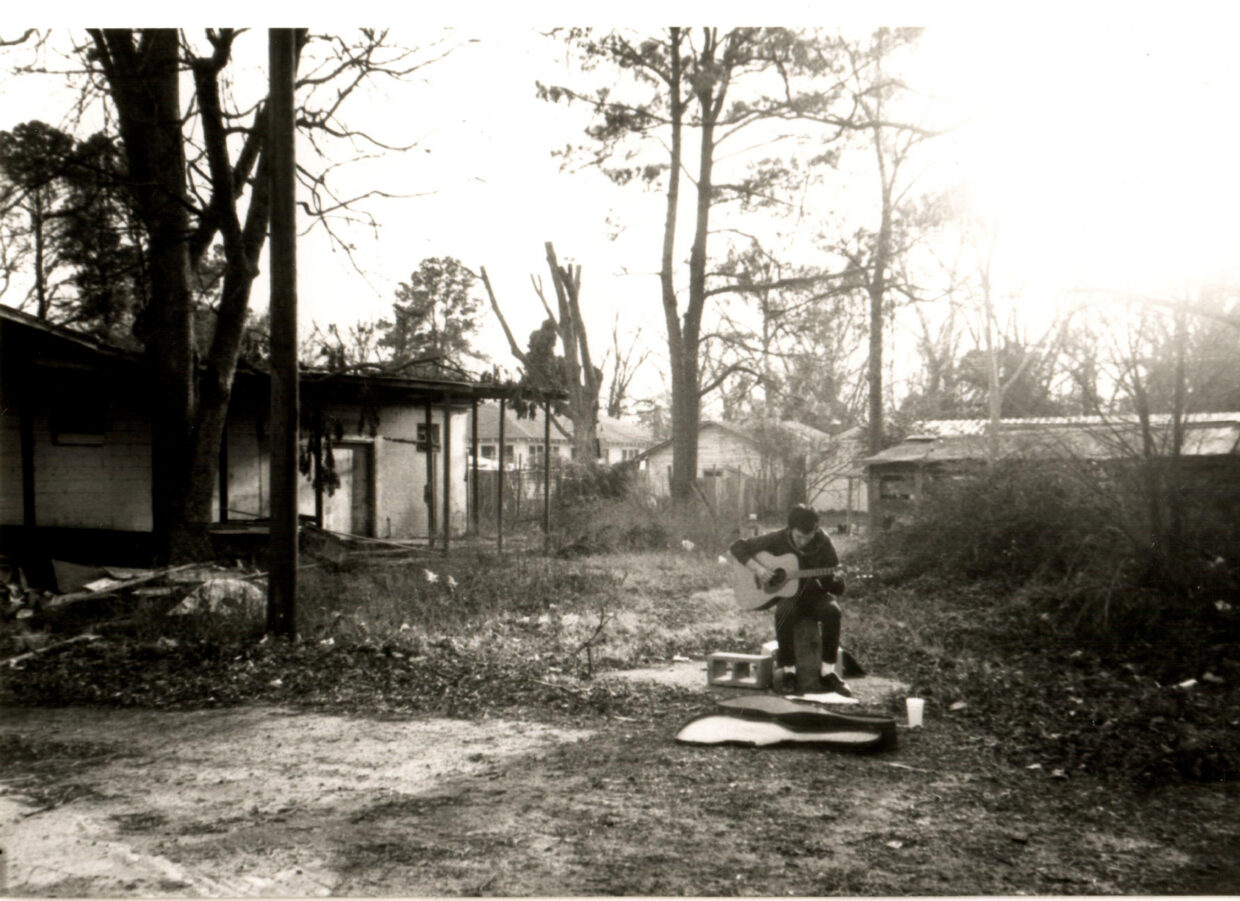 Elliott working on “Angeles” in early 1996, on tour with the Softies in Louisiana. “Anytime we had days off, he would just be working on songs,” Rose Melberg says. “I remember feeling dumbfounded by its beauty.” Photograph by Jen Sbragia.
Twenty‑three years after his death, Elliott still isn’t particularly well known, or well understood, but he is terribly loved. The task of understanding and preserving his legacy has become a collective project. There are YouTube accounts like I Remember Elliott; his old fan site Sweet Adeline, defiantly mired in Web 1.0; oral‑history blogs like so flawed and drunk and perfect still; Smiling at Confusion, a site for posting guitar tabs, guidance on fingerings and chords. Fans share bootleg recordings and unreleased songs, reflections on his lyrics or entreaties for help understanding them, and they speculate darkly on his death. Below videos you’ll find hundreds of comments, people gushing over Elliott’s fingerpicking, arguing about whether he’s on something at this concert or just tired but clean, thanking him for accompanying them through depression or addiction, for making them feel less alone.
“Come here when I’m close to the edge, almost always these days.” “A few summers ago a good friend of my dad’s killed himself and I used to come downstairs at night when I couldn’t sleep and listen to this. I love you, Elliott.”
“He’s been saving me during this Covid insanity and the profound loneliness that’s come with it. Then again he’s been saving me for over twenty years.”
“Love you, Elliott. Wherever you are.”
Elliott lived in a liminal time: late enough for easy recordings and portable video cameras, early enough that what we have is spare. So much of it has degraded—tapes rotted to spooky fuzz, videos with shaggy images and too‑white faces. It makes us feel his fragility. We enthuse over warm, clear concerts where you can see Elliott bouncing his leg, hear his shy “Thanks” after songs, like he’s sitting next to you; we enthuse over performances where you can hear the grit of a bad recording in his voice, over battered tapes that sound like something from the advent of the gramophone. We enthuse over anything that feels like presence, because the absence is too hard to confront.
On r/elliottsmith, people post pictures of themselves in Elliott Smith shirts purchased on Etsy and TeePublic, designs for their Elliott‑inspired tattoos, images of Figure 8’s cover painted on their bedroom walls, up-dates on the status of the original mural on Sunset Boulevard. They share memes on depression and leave heartfelt comments about listening miserably to Elliott, remarks that immediately get downvoted by Redditors who are there to talk about his technical prowess and musical genius, not to share a platform with a bunch of emo teenagers or people who act like them. “Daylight Saving Time ending just means I get an extra hour to cry in bed to Elliott Smith,” someone posts. “Is this what this sub has become?” another user complains underneath.
We are contentious and affectionate as any family reunion.
Once I posted a recording of Elliott playing a tricky, Moorish-sounding improvisation before diving into “LA” at the Black Cat in February 2000, a little motif I wasn’t sure anyone had ever noticed before, and within minutes someone was asking desperately if I had the tabs. Of course I don’t have the tabs, I thought. No one has the tabs. This is the kind of dazed enthusiasm Elliott Smith generates.
*
When Elliott fans argue, we’re putatively arguing with each other, but we’re also arguing with competing versions of Elliott. There are people who see him as unflappably morose, the “sadcore” singer the press wanted him to be. There are people who see his lyrics as a codex to his relationships and life experiences, almost everything charting one‑to-one, map to territory. As Elliott explained once, almost apologetically, “There are pieces of me in other people and I don’t really always know how much of a song is really me and how much is other people.” Listening to “Christian Brothers,” the second track of his self‑titled album, for the first time, I wondered the same thing: There was the inexorable climb of the guitar melody, pressing toward a fight; the high hiss of Elliott’s voice in the chorus; the soft threat of his curses. “Christian Brothers” is a song about confronting a father figure, but the song instantly became about my own relationship with my father. It was like looking in a mirror that Elliott offered up and seeing a familiar face.
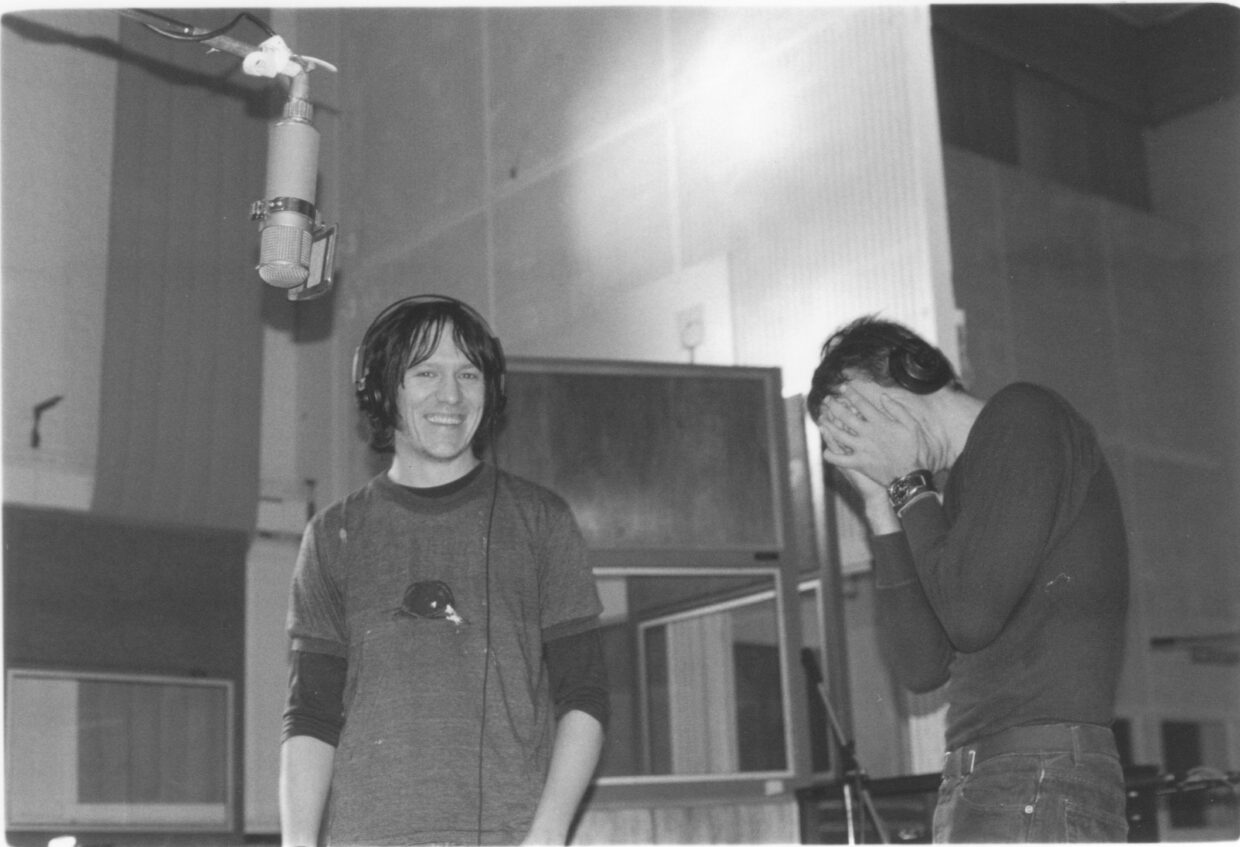 Elliott and Sam Coomes at Abbey Road, October 1998. Elliot described Sam as his only contemporary. Photograph by Joanna Bolme.
There are the guitar jockeys and the music theorists, and then there are the people who are here to post pictures of Elliott with pink hair or a silly blond wig with bangs or a mustache made out of tape or a picture of his tattoo of Ferdinand the Bull, just so we don’t forget goofy, sweet Elliott, the person who couldn’t hurt anyone, even if he did. The Elliott who wrote the soft, painfully resigned “Twilight” (“and if I went with you / I’d disappoint you too”) is also the Elliott who would confidently play Rachmaninoff from memory, blitzing up and down the piano; the Elliott who loved the Kinks but also Xena: Warrior Princess; the Elliott who kept cracking himself up trying to whistle “Jealous Guy”; who spent hours pretending to be a French hairdresser as he cut his oldest sister’s hair and wrote his college thesis on poststructuralist feminist jurisprudence.
As I worked on his biography, Elliott’s friends and family told me about a lanky teenage boy who took his little sister on picnics and taught her what apartheid means; an anxious college student who couldn’t sleep until he had listened to Elvis Costello’s Trust all the way through; a musician who would catch your eye in the studio and then pretend to walk downstairs until the top of his head vanished under the control room window. He was musically omnivorous, in love with George Harrison but also Marvin Gaye, the Saints, Nico, Lead Belly, Paul Westerberg, and Chet Baker. He was wry, thoughtful, infuriating, impossibly bad at keeping in touch. He could be a contrarian for the joy of it. He hated the Eagles but once got in a debate with a girlfriend, trying to convince her that the chord progression in “Hotel California” was interesting enough to be salvageable. Sometimes he was angry that he hadn’t written “Rocket Man.” “Literally angry,” his friend Garrick Duckler told me.
They talked, too, about Elliott’s vulnerability to the world. He could be swamped by his feelings, like a kid wearing a shirt several sizes too big. He walked out of movies because he couldn’t bear to see children hurt, even in a fictional context, and tucked hundred‑dollar bills into the shoes of people sleeping on the street. He drank in books, whether he was at home with Stendhal or on the tour bus with a textbook on quantum physics propped on his knees—Garrick says that Elliott always talked about books “like he had just had a long, exhausting conversation with them”—and he connected profoundly with Dostoyevsky, whose characters flicker so helplessly between rage and despair, guilt and panic and ecstatic love.
But mostly there is, in the public memory, a dark Elliott. He was called “Mr. Misery” by The Guardian, asked by Revolver if he wanted to be “willfully miserable,” given a “mope rating” of five rain clouds by CMJ New Music Monthly. “Oh, Elliott,” Pitchfork asked. “Are things really that bad?” After he died, SPIN magazine congratulated itself, in an editor’s note, for producing a “detailed, empathetic look at the last years of Elliott Smith’s life.” The article begins by comparing Elliott to “an indigent blind man who had wandered up the steps to the stage.” In Hazlitt several years ago, a writer coronated Elliott “the McCartney of Methadone,” a “Katy Perry” of the “catchy jumper’s anthem,” writing archly about “melodies as irresistible as car commercial jingles about dreaming of a disappeared lover from a pool of drool in a dive bar.”
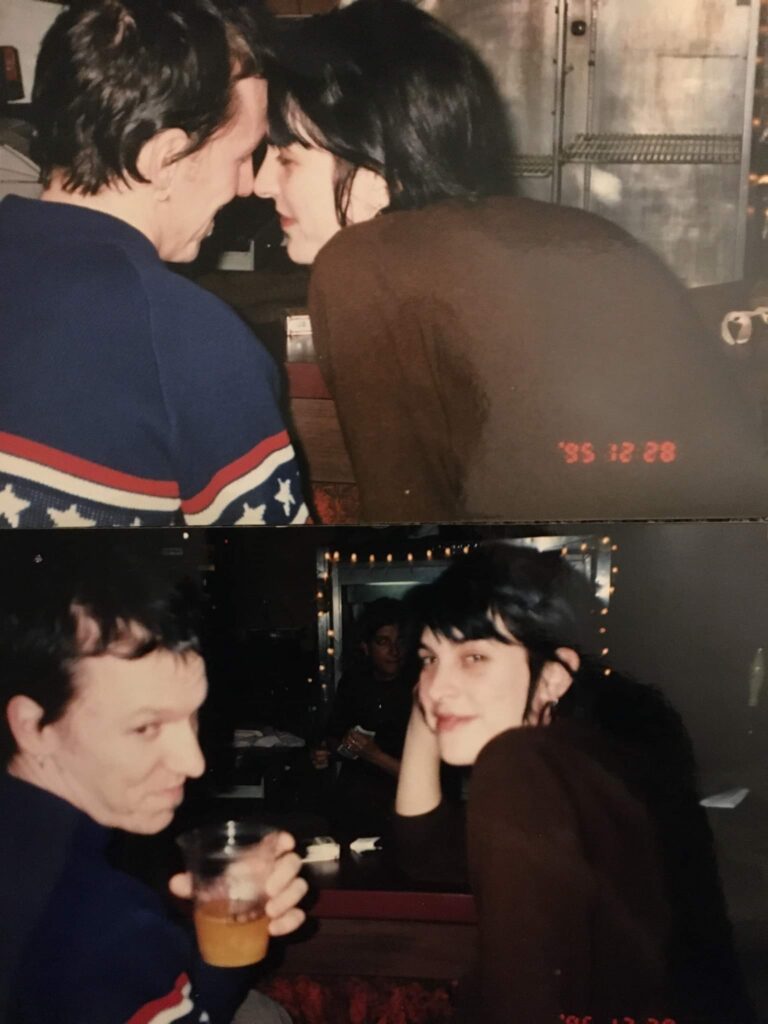 Elliott and Joanna Bolme at Satyricon in 1995. “I love that she loved him,” Neil says. “That she saw him and understood right away what his beauty was.” Courtesy of Bruce Greif.
When an artist dies, who gets to be remembered for their art, and who gets caught in the amber of their death? Longevity helps; if Picasso hadn’t outlived his Blue Period and Guernica by a long stretch of years, he might be dinted today as indulgently moody. At eighty‑two Leonard Cohen was still making decadently sad albums—his last, You Want It Darker, only months before his death—but because he wore a suit and spent time as a monk, he’s remembered less as a poet laureate of melancholy, more as a poet, full stop. Elliott has been swallowed up by a darkness that fully consumed him only at the end. It’s never seemed—to use a childish word—fair. “There’s kind of an inordinate amount of focus on whether I’m personally happy or not,” Elliott said once. “If you have a bad dream, does that mean that you’re not a happy person? I mean, that’s the same place that songs come from.”
Elliott has been swallowed up by a darkness that fully consumed him only at the end. It’s never seemed—to use a childish word—fair.
He is often understood, rightly and wrongly, as a kind of unfiltered confessional poet. That’s partly a misunderstanding born of his productivity. There was a period in the nineties when his output—dozens and dozens of perfect songs—was so prodigious that it thwarts human understanding. The musician Neil Gust, Elliott’s close friend for years, remembers being staggered by it. It reminded him of what Allen Ginsberg had said about Bob Dylan—how Dylan had become one with his breath, “a column of air.” “That’s where Elliott got,” Neil says. “He got to a place where it just lined up. He just couldn’t not nail it.” And yet Elliott’s art was also considered. Like Elizabeth Bishop, he polished his words over years; like Chekhov, he examined his characters from a thoughtful, compassionate distance, turning them over in his hands. He wrote songs “as full of mystery and suggestion as an overheard conversation,” as one critic observed. In the years since his death, demos and early drafts sung in concert have shown how deliberately Elliott pared his lyrics back and tinkered with phrases, sometimes changing lines even after an album was finished. Luke Wood, his A&R rep at DreamWorks, watched him write out four or five sets of the same lyrics, revising the pronouns. His longtime producer, Rob Schnapf, remembers Elliott taking a finished song off XO because he was unhappy with the word the. “That’s not even a word!” Rob says, laughing.
Elliott was also mispegged as a folk singer during his lifetime, to his own bafflement; his music has a pop architecture that runs deep, and an architecture that goes deeper than that is purely, idiosyncratically Elliott. When I spoke to the virtuoso jazz pianist Brad Mehldau, who released a tribute album last year, he stressed that Elliott was “deeply original” as a harmonist, with songs full of movement that recall not Dylan, but the Zombies, Fauré, and Wayne Shorter. “The final effect is an emotional one,” he says. “It’s an emotional landscape that’s not just primary colors, but full of pastels and wonderful blurred hues.” The producer David McConnell, who worked on Elliott’s final album, compares the typical song to racing around a track, hitting the same predictable markers over and over—verse, chorus, verse, chorus. What Elliott was doing was more like cross‑country: continual discovery, the landscape always changing underfoot. “He wasn’t predictable,” David told me. “He would even fool himself, you know, and that’s what he wanted to do. He wanted to fool everybody.”
Elliott has no true written archive. Correspondence carried out through EarthLink and Hotmail addresses has, with a few exceptions, vanished into the ether. He rarely kept papers. In interviews, he often skirted the truth. One of the fullest troves of documents consists of 150 pieces of paper tucked into plastic sleeves, often just napkins he jotted lines on at a bar. The rest I’ve scavenged from friends, former lovers, producers, and scattered set lists, made available for the first time. My narrative is also informed by hundreds of bootlegs and access to unreleased recordings granted by his estate.
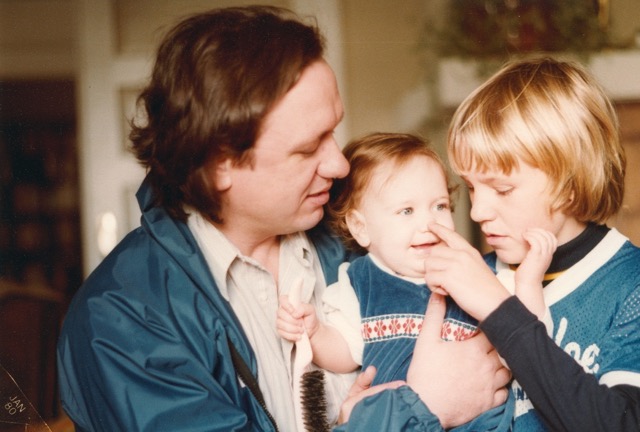 Gary, Elliott, and Rachel ca. 1979. Courtesy of the Smith family.
These scraps are precious, vital; they are also insufficient. A biography of Elliott Smith must instead be written from oral history, from memory, interviews with 140 people who knew him at all stages of his life—a mosaic that slowly illuminates the contours of a human face. Elliott revealed different facets of himself in every encounter. “People are really kaleidoscopic,” he remarked once, using a word he loved, and I’ve tried to capture that quality in him. As his friend James Clark told me, “I don’t think anyone really understands him completely, which is how he’d want it.”
I have been moved throughout this process by everyone who has put their trust in me. To some extent, that trust was hard‑won—it took about a year of outreach, sometimes two or three, before most people would talk with me—but it was also given on faith that a stranger who did not know Elliott could somehow be equipped to write about him. As Elliott’s friend Scott McPherson told me, “I thought you would be a good caretaker for this story.” “I think we all feel that way,” Larry Crane, the estate’s archivist, said.
I’ve tried to give Elliott the biography he might have wanted, with the understanding that he probably wouldn’t have wanted a biography at all. To that effect, I’ve written a book that focuses on Elliott’s music and the music that mattered to him, the songs and artists that made him feel the way so many of us feel about Elliott. And I’ve written a book that understands his story in the context of everyone he cared about, including, for the first time, his family and nearly all of his romantic partners. I think he would have wanted that, the spotlight on the people he loved. Sometimes that meant being honest about hearts he had broken, including his own.
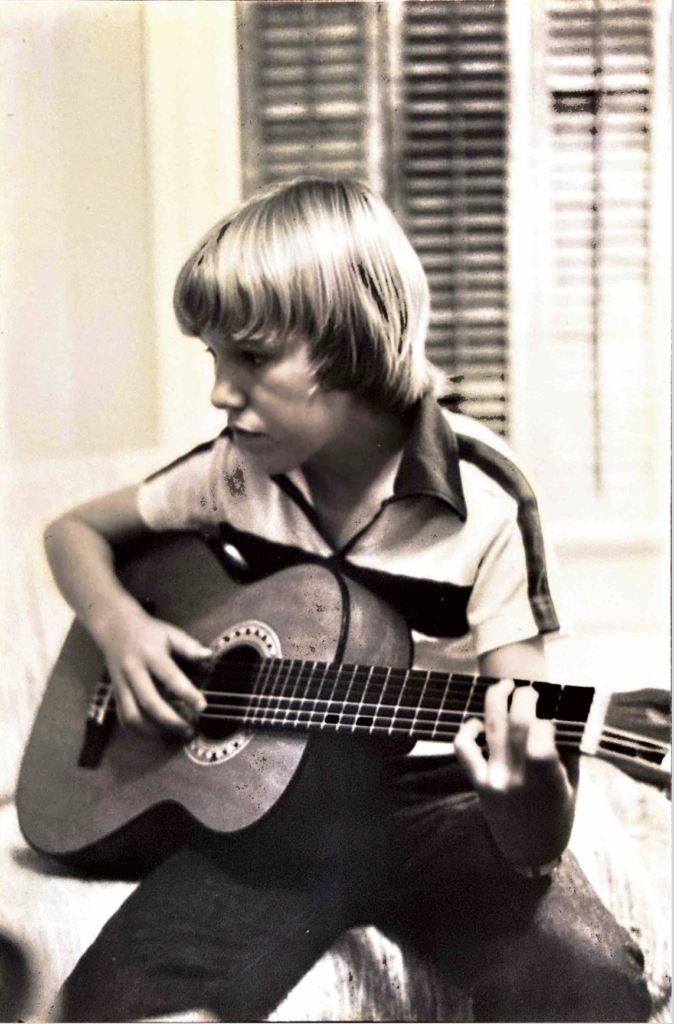 Elliott with the guitar his father gave him, ca. 1981. “When I was about twelve or thirteen, my dad gave me an inflatable raft and a nylon-string guitar for my birthday,” he said. “I liked the raft a lot better at first.” Courtesy of the Smith family.
Elliott’s lyrics acknowledge that some things are hard and never get better. The brightness in his songs, the crack where the light gets in, as Leonard Cohen puts it, is in the recognition he shines on difficulty, the phrase that’s like a fishing line that hooks your heart: “using all your strength to keep the world at an arm’s length”; “people you’ve been before / that you don’t want around anymore.” His songs trace our own contradictions and inner arguments, the warring impulses that tip us over into people we never wanted to be or reel us back from the edge. The joy of his songs, the counterargument to their pain, lies within the melodies. “I wrote a lot of sweet, happy melodies this time,” Elliott said wryly of XO. “The songs aren’t really happy. But you can pretend they’re happy.”
At the Fonda in 2003, where he promised not to end on a sad song, he was more earnest. “Some songs are sad, but they make you happy anyway,” he says, looking delicate, knees turned in, fiddling with the opening chords to “Strung Out Again.”
The softness of his voice, the comfort of his hum in “Roman Candle,” the unearthly beauty of “Waltz #1,” the moment in “Pitseleh” when he reminds you that “no one deserves” the pain they’re put through, followed by a flood of piano that sweeps you up in compassion and human understanding—that’s not just pretend happiness; that’s happiness.
______________________________
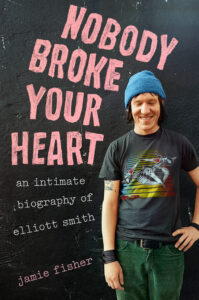
From Nobody Broke Your Heart: An Intimate Biography of Elliott Smith by Jamie Fisher, to be published on August 25th, 2026 by Dutton, an imprint of Penguin Publishing Group, a division of Penguin Random House, LLC. Copyright © 2026 by Jamie Fisher. Featured image: Elliott at the 9:30 Club in DC, May 2000 in DC, May 2000. Photograph by Meagan Perkins
















 English (US) ·
  French (CA) ·
  French (FR) ·