

 3 weeks ago
53
3 weeks ago
53
PROTECT YOURSELF with Orgo-Life® QUANTUM TECHNOLOGY
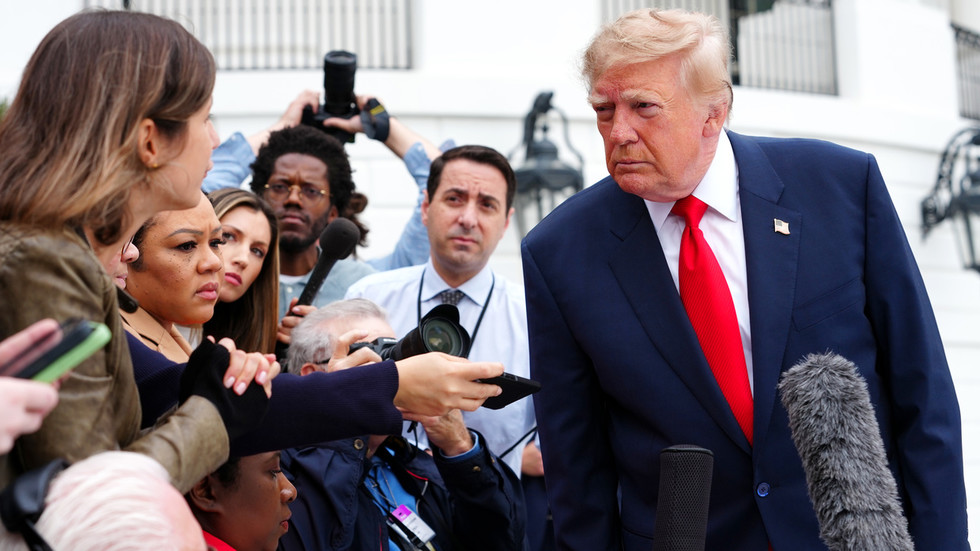
Orgo-Life the new way to the future Advertising by AdpathwayNew York, New York – On Tuesday, United States President Donald Trump took the podium at the United Nations General Assembly in New York City and in a 38-minute speech – which included threatening to annihilate Iran, outlining a security agreement with Greenland and Denmark, and a proposal to rename artificial intelligence (AI) to “super intelligence” (SI) – the Republican leader also spent about five minutes focused on the Western Hemisphere.
Although Trump mentioned tariffs and strikes on drug boats in Latin America in his 2025 address to the General Assembly, 2026 saw the president aim to establish the U.S.’s role in the Americas in front of the international body.
What that looks like is “might over right, military force over law, and U.S. regional dominance,” Council on Foreign Relations Latin America Fellow Will Freeman said.
Praising his January 3, 2026 raid on Caracas that captured Venezuelan President Nicolás Maduro, Trump said the U.S. “will no longer permit threats to America to gain a foothold anywhere in the Western Hemisphere” and added that the country would use “unmatched military might” to protect its interests in the region.
Regarding the massive oil deal that followed with Venezuela’s interim President Delcy Rodriguez, Trump commented, “it’s perhaps the biggest deal ever made to the victor belong the spoils.”
Trump also met with Rodriguez on the sidelines of the UNGA, where she reportedly thanked him for his support.
Read more: Venezuela’s interim president Delcy Rodríguez meets Trump as opposition leader’s return blocked
In another show of his “might over right” priorities, Trump then turned to the administration’s assault on drug cartels in the region, calling them the “ISIS of the Western Hemisphere.”
Since September 2, 2025 when the first boat was attacked, the U.S. military has destroyed 80 vessels and killed at least 234 people in strikes on small boats allegedly smuggling narcotics in the Pacific Ocean and Caribbean Sea.
This week, UN Special Rapporteur Ben Saul released a report on the strikes, saying that there are “reasonable grounds to believe” that the attacks “constituted crimes against humanity of murder under customary international law.”
In his speech, Trump claimed, falsely, that the strikes on alleged drug boats have destroyed, “97 percent of the drugs coming into the ocean and sea. You’ve seen it. They disappear very quickly and we’re down 90 percent.”
Mexico, the president said, is the “epicenter of the cartel violence” and he called on the country’s government to “reclaim control of its soil from the enemies of humanity.”
“It’s unacceptable for the United States to share a 2,000 mile border with a territory controlled by enemy cartels,” he added.
Since re-taking office, Trump has at times got into diplomatic rows with Mexican President Claudia Sheinbaum, mostly over tariffs and national sovereignty, as he threatens to strike drug cartel operators within Mexico’s borders.
Following Trump’s speech which lambasted Mexico’s security situation, Sheinbaum said, “I could say it’s very difficult to live next to a country with such high drug consumption … or that it’s very difficult to live next to a country with so much weapons production, but I’m not going to say that.”
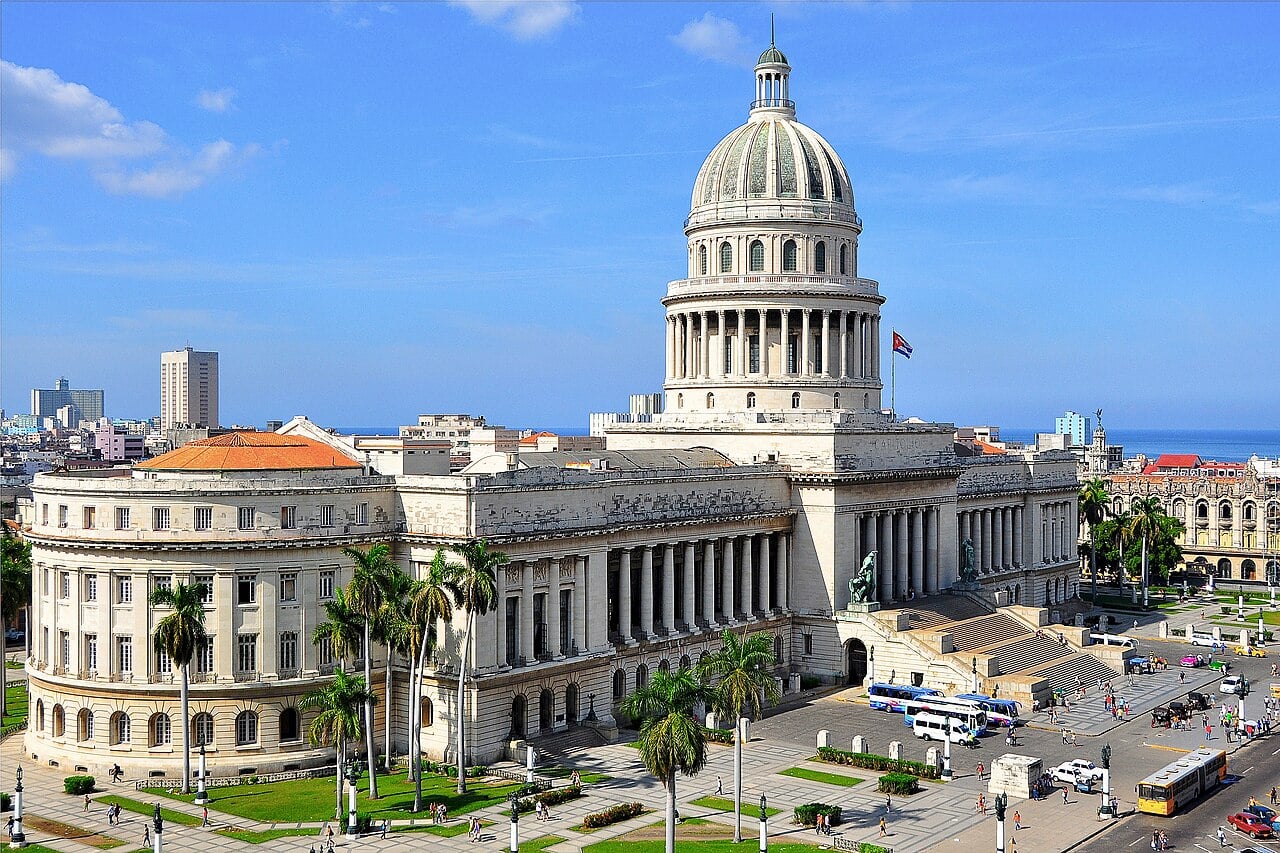
Finally, Trump turned to Cuba, whose population for months has been caught between a U.S. oil embargo and a Cuban government that increasingly cannot meet basic food and energy needs.
Trump said his administration is “seeking a fundamental change in the situation in Cuba” and called the country an “absolutely failed state … It’s failing like never before, and it will fall.”
Trump accused the Cuban regime of spending decades coordinating with “left-wing radicals and communist networks” in the U.S., explicitly naming the Communist Party USA, Antifa and the “Democrat Socialists of America.”
He assured the Assembly that “communism will never be coming to America, but freedom will be coming to Cuba, and safety and security will be coming to Mexico.”
Cuba’s delegation promptly walked out of the General Assembly hall while Trump was speaking.
Cuban Foreign Minister Bruno Rodríguez Parrilla released a statement on X rejecting the “falsehoods from the U.S. President,” asserting Cuba’s right to be a “fully independent and sovereign country.”
He added that “Cuba is not a threat to the U.S. nor to any country,” and condemnred U.S. sanctions as an “economic blockade” and an “act of genocide and collective punishment.”
On the sidelines of the UNGA, Trump met with officials from the Shield of the Americas, a U.S.-led security coalition aimed at going after drug cartels. He reportedly asked the participating countries to “formally designate narco-terrorists as common threats to stability and apply crushing sanctions.”
Trump and Secretary of State Marco Rubio urged members to join the U.S. in a push to freeze the assets of 24 criminal groups, impose visa restrictions, pursue criminal charges, and designate the groups as “common threats to stability.”
Argentina, Bolivia, Chile, Colombia, Costa Rica, the Dominican Republic, Ecuador, El Salvador, Guyana, Honduras, Panama, Paraguay, Peru, and Trinidad and Tobago joined the agreement targeting drug trafficking groups like MS-13, Tren de Aragua, Mexican cartels, Colombia’s ELN, Peru’s Shining Path, and Brazil’s Primeiro Comando da Capital and Comando Vermelho.
Al Jazeera noted that the pledge is “largely symbolic for now.” Brazil and Mexico have not joined the coalition.
Featured image: US President Donald Trump addressing the UN General Assembly on September 22, 2026
Image credit: Whitehouse.gov









 English (US) ·
  French (CA) ·
  French (FR) ·