

 2 days ago
16
2 days ago
16
PROTECT YOURSELF with Orgo-Life® QUANTUM TECHNOLOGY
Orgo-Life the new way to the future Advertising by AdpathwayKey Points
- U.S. manufacturing stayed in expansion in December, but momentum slowed and new orders fell for the first time in a year.
- Output rose even as demand weakened, creating the widest production-versus-orders gap since 2008–2009.
- Hiring improved and price pressures eased slightly, yet tariff-linked costs kept nudging prices higher.
The latest snapshot of U.S. manufacturing looks steady at first glance. S&P Global’s Manufacturing PMI slipped to 51.8 in December from 52.2 in November, matching expectations.
Because readings above 50 still signal expansion, the headline suggests the sector is growing. The warning is inside the components. New orders declined for the first time in a year. Export sales fell again.
Backlogs shrank, meaning factories worked through existing work faster than it was replaced. Yet production kept rising, leaving firms making more goods while the pipeline thins.
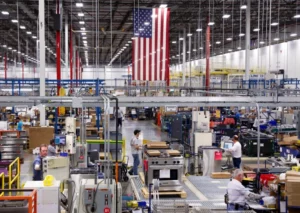 U.S. Factories Keep Running As Orders Fade, Setting Up A 2026 Test. (Photo Internet reproduction)
S&P Global’s chief business economist, Chris Williamson, compared the setup to a “Wile E. Coyote” moment—factories still running after demand starts to drop away.
He said the gap between output growth and order contraction is now the largest since the 2008–2009 financial crisis. Unless demand improves, today’s production pace becomes difficult to sustain.
Employment was the bright spot. Companies reported stronger hiring, with some staffing up ahead of expected improvement in 2026. That optimism can cushion the slowdown. But it can reverse if managers decide capacity must be cut to match weaker orders.
Prices remain the pressure point. Input and output prices were still described as historically elevated, even though both rose at their slowest pace in 11 months.
Firms continued to point to tariffs as a key reason costs stayed high and a motive for passing increases on to customers. For readers outside the U.S., this matters because American factory demand sits upstream of global supply chains.
If orders stay soft, suppliers from Mexico to Europe and Asia can feel it. Factory floors respond to customers, not political promises.
Online, market accounts framed the release as a quiet headline with louder internals. TikTok chatter could not be verified due to access limits, but the signal from the data is clear: costs, demand, and policy may collide in 2026.

















 English (US) ·
  French (CA) ·
  French (FR) ·