

.svg) 2 months ago
57
2 months ago
57
PROTECT YOURSELF with Orgo-Life® QUANTUM TECHNOLOGY
Orgo-Life the new way to the future Advertising by Adpathway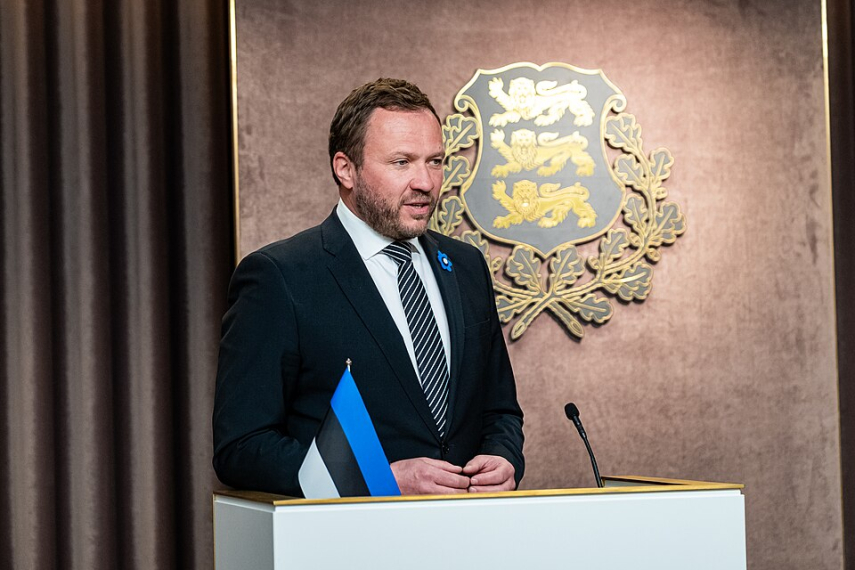
Photo: Estonian Foreign Ministry
TALLINN – According to Foreign Minister Margus Tsahkna, the European Union agreed on Thursday on the measures of the 21st sanctions package, which aim to reduce Russia's state budget revenues and thereby limit its ability to continue its aggression against Ukraine.
Under Estonia's leadership, the package addresses restricting access to the Schengen area for Russian fighters who have participated in the war against Ukraine. Among other things, the sanctions package includes freezing the oil price cap at its current level for the next year.
"In recent months, with its deep strikes against Russia, Ukraine has tipped the scales of success in its favor. Russia is facing increasing difficulties both militarily and economically, and it is therefore important to seize this moment and strengthen the pressure on Russia so that it is finally forced to end its aggression against Ukraine," said Foreign Minister Tsahkna.
With the EU's 21st sanctions package, it was decided to impose a visa ban on Russian fighters who have participated in Russia's war of aggression against Ukraine. The aim of the measure, initiated by Estonia, is to prevent the threat to the internal security of the Schengen area posed by individuals with combat experience and anti-European sentiment. There are approximately 650,000 people on active duty in the Russian armed forces.
"Estonia is the main advocate for restricting the entry of Russian fighters into the Schengen area, and we expect that in addition to the agreement just adopted, the European Commission will come up with proposals this autumn on how to quickly implement the bans and keep Russian fighters who have participated in the war out of Europe," Tsahkna said.
"The newly agreed package includes measures that will reduce Russia's state budget revenues and thereby its ability to continue the war. At the same time, Estonia, along with several other member states, wanted to impose even stronger measures, especially to limit Russia's energy exports," Tsahkna said, adding that regrettably, shipments of Russian LNG by European Union companies are continuing.
The price cap on Russian-origin oil will remain frozen at its current level of 44.1 US dollars per barrel for the next year. "Keeping the oil price cap frozen at the current level is extremely important to prevent Russia from earning more revenue for its budget due to rising oil prices on the world market," the foreign minister said.
The sanctions package also includes economic and individual sanctions in the financial, energy, and trade sectors. Among other things, measures against Russia's banking sector and shadow fleet will be tightened, and member states will be required to report the sale of LNG tankers. It will also be possible in the future to add ships that provide services, such as bunkering, to already sanctioned shadow fleet vessels to the sanctions list.
In addition, measures will be strengthened to limit Russia's ability to use crypto-asset services to circumvent sanctions. While the previous package banned the use of Russian crypto platforms in the EU, it is now possible to impose sanctions on crypto-asset service providers in third countries that are used to evade sanctions against Russia.
In the financial and energy sectors, the 21st package adds credit and financial institutions and traders enabling the circumvention of oil sanctions to the transaction ban list. Additionally, 41 ships, most of which are shadow fleet tankers, will be added to the sanctions list. Several Russian ports and airports will be added to the transaction ban list.
Individual sanctions will also be significantly expanded. More than 200 individuals and entities will be added to the sanctions list, including Russian banks, defense industry companies and their affiliates, Russian businessmen and heads of large corporations, propagandists and war supporters, metallurgy companies including the gold industry, oil industry companies in Russia, and third-country companies facilitating Russian oil exports. The sanctions will also be extended to Belarus.

















 English (US) ·
  French (CA) ·
  French (FR) ·