

PROTECT YOURSELF with Orgo-Life® QUANTUM TECHNOLOGY
Orgo-Life the new way to the future Advertising by Adpathway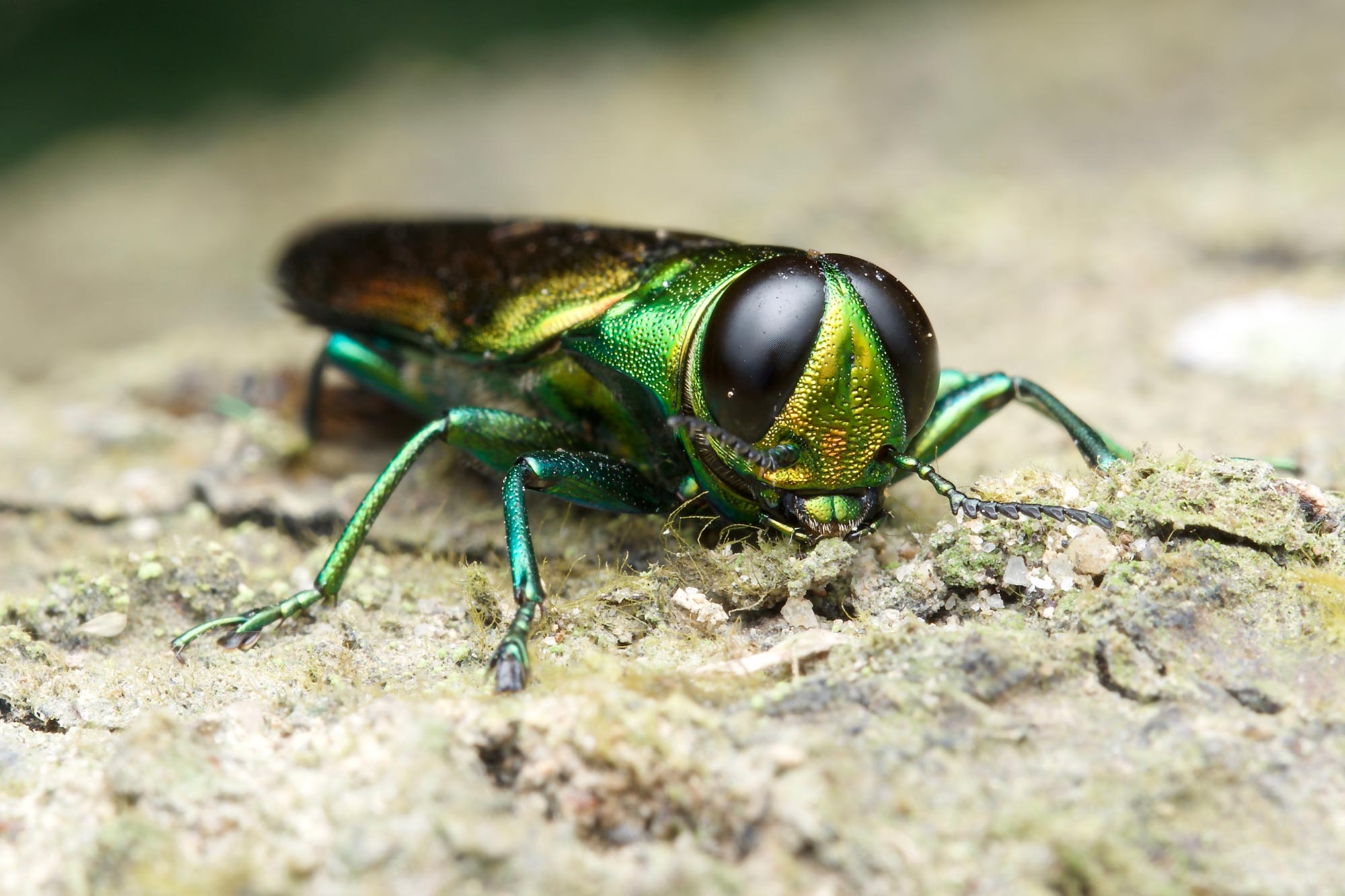 Emerald ash borers are invasive metallic-green beetles that attack ash trees by tunneling beneath the bark. Their larvae disrupt the flow of water and nutrients, eventually killing infested trees and causing widespread ecological and economic damage across North America. Credit: Shutterstock
The emerald ash borer is an invasive wood-boring beetle that has killed hundreds of millions of ash trees across North America.
Emerald ash borer has reached five more Texas counties, extending the range of an invasive beetle that has already killed hundreds of millions of ash trees across North America. Adults are small, metallic green beetles about half an inch long, while their pale larvae feed unseen beneath the bark, carving winding galleries that disrupt a tree’s ability to move water and nutrients.
Texas A&M Forest Service confirmed new detections in Delta, Erath, Hardin, Walker, and Wood counties, bringing the number of newly confirmed Texas counties this year to eight.
The latest infestations were identified through the agency’s statewide emerald ash borer monitoring program. Purple traps are placed across Texas during the adult beetles’ flight season, generally beginning in February or early March and remaining in the field through July or August. Trapping for 2026 has ended, but officials continue watching for evidence of infestations throughout the year.
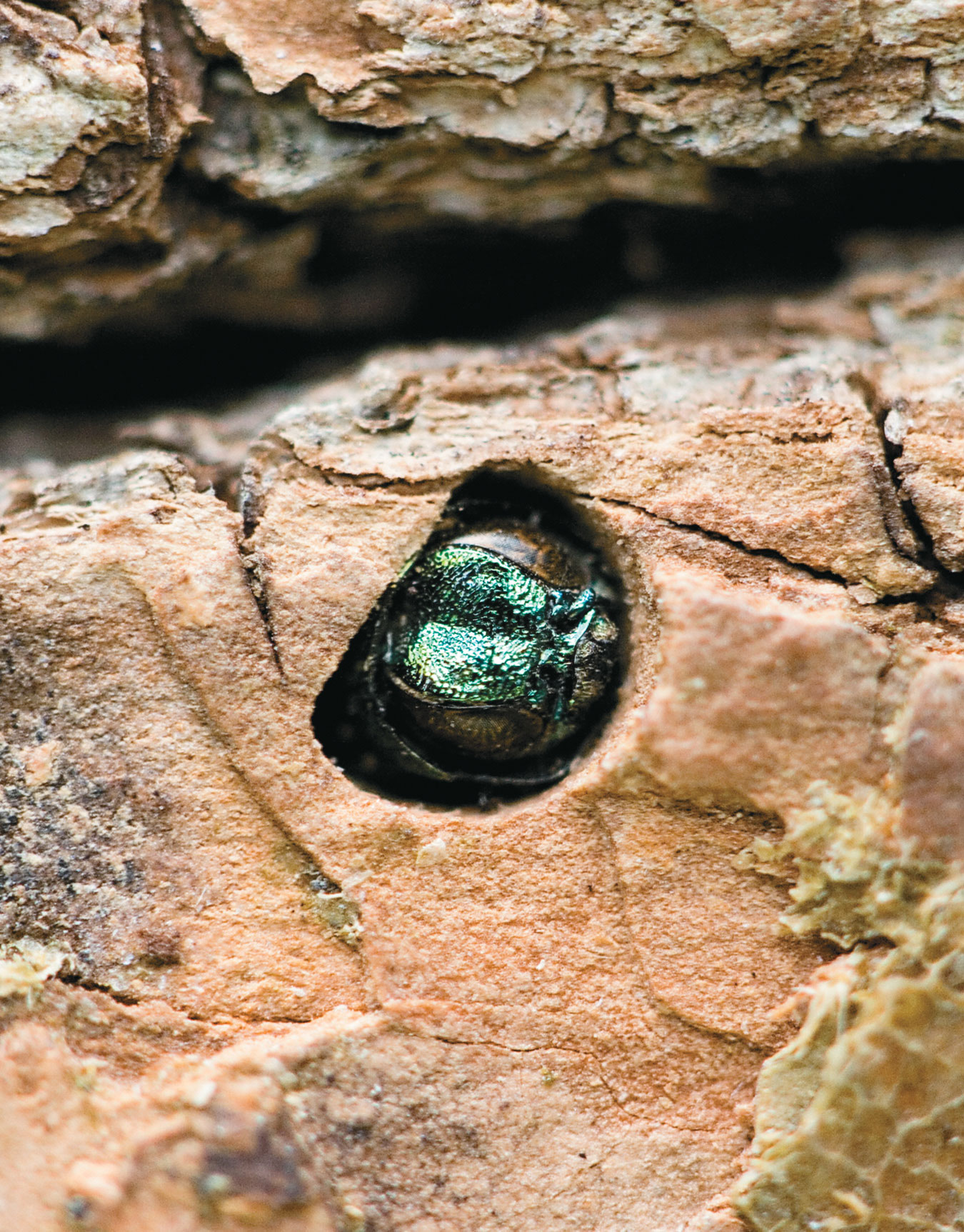 Emerald ash borer emerging from an ash tree. The metallic green adult beetle exits through a characteristic D-shaped hole in the bark. Credit: Texas A&M University
The beetle is pushing farther south
Emerald ash borer has become one of North America’s most destructive invasive forest pests, killing hundreds of millions of ash trees. First detected in Texas in 2016, the beetle has steadily expanded its range and now threatens all 16 ash species native to the state in cities and forests alike.
“As the current southernmost boundary for this insect in the U.S., Hardin County signals a clear message: where ash trees extend south, this pest has been able to follow,” said Demian Gomez, Texas A&M Forest Service regional forest health coordinator.
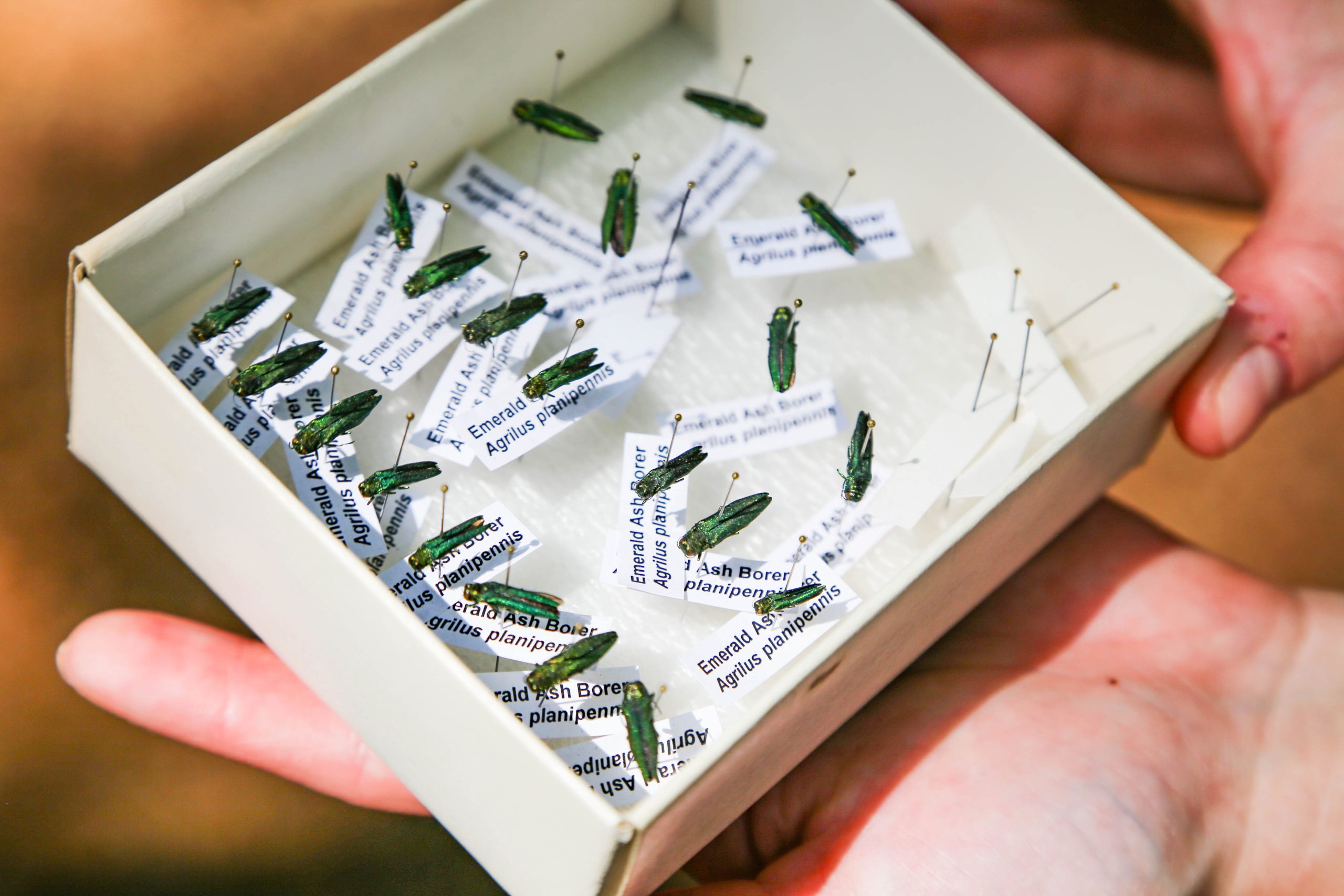 Emerald ash borer specimens collected for monitoring. Trapped beetles help forest health specialists track the invasive insect’s spread into new areas. Credit: Texas A&M University
Adult emerald ash borers are metallic green and measure about half an inch long. Detecting an infestation early can be difficult because attacked ash trees may initially show few or no visible signs.
As damage progresses, trees can develop thinning canopies, splitting bark, increased woodpecker activity, and distinctive D-shaped exit holes created when adult beetles emerge. Beneath the bark, feeding larvae carve winding S-shaped galleries that interfere with the tree’s ability to move water and nutrients.
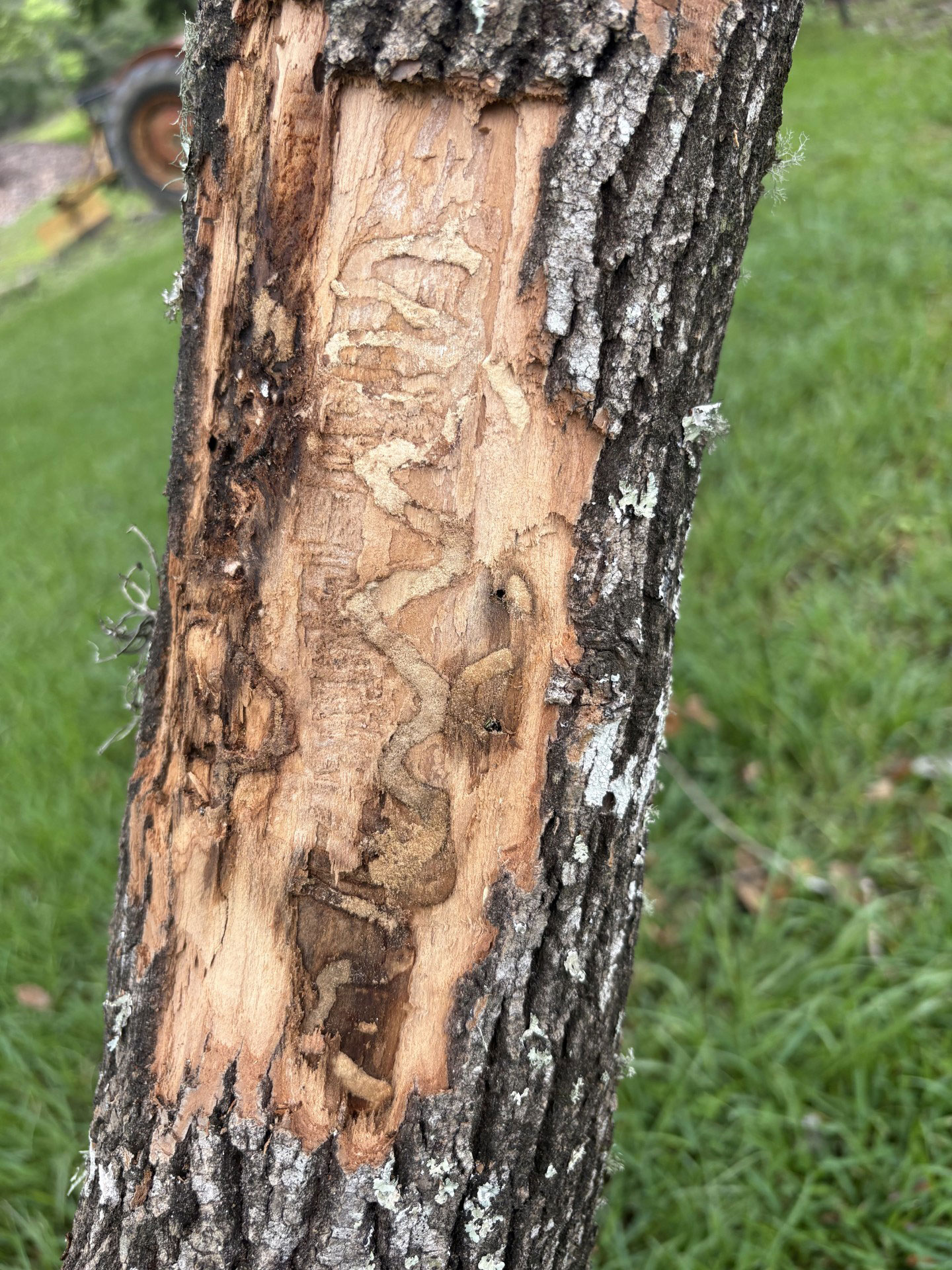 Emerald ash borer damage beneath ash tree bark. Feeding larvae create winding, S-shaped galleries that disrupt the tree’s transport of water and nutrients. Credit: Texas A&M University
Moving firewood can accelerate the spread
Emerald ash borer can expand its range naturally, but people can greatly speed that movement by transporting infested firewood, logs, and other ash wood products. Texas A&M Forest Service advises residents to purchase firewood near the place where it will be used rather than carrying untreated wood over long distances.
The agency works with communities, landowners, and industry partners to locate infestations and provide information about available management options. Texas A&M Forest Service also works with the Texas Department of Agriculture on quarantine zones intended to restrict the movement of wood products that could carry the beetle into additional areas.
Never miss a breakthrough: Join the SciTechDaily newsletter.
Follow us on Google and Google News.














 English (US) ·
  French (CA) ·
  French (FR) ·