

 3 months ago
141
3 months ago
141
PROTECT YOURSELF with Orgo-Life® QUANTUM TECHNOLOGY
Orgo-Life the new way to the future Advertising by AdpathwayHave you ever noticed how often you check your phone before you even get out of bed? You reach for it without even thinking. Your smartphone has become a constant companion, but things are about to change. Tech giants like Apple, Google, and Meta are quietly planning something completely different for your future.
You can open Table of Contents show
Tech Giants Envision Future Beyond Smartphones: What Comes After The Mobile Era? They are building a multi-device ecosystem where your phone takes a backseat.
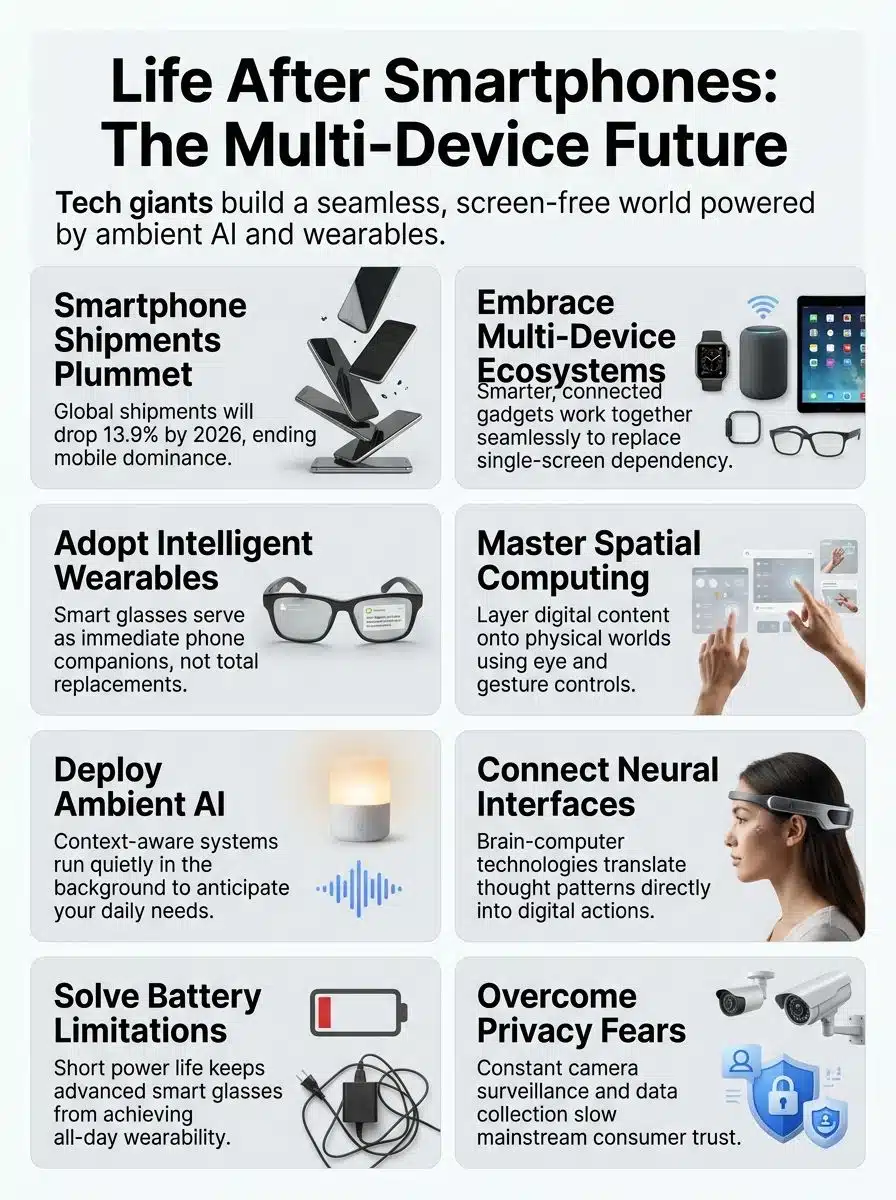
I found it fascinating that worldwide smartphone shipments will drop by 13.9% in 2026 according to IDC. This marks the steepest decline in smartphone history. That massive shift signals the mobile era as we know it is ending, and something entirely new is rising to replace it.
Your constant screen scrolling could soon become a thing of the past. You might just speak commands to AI glasses or check your smartwatch instead. Grab a cup of coffee, and let’s go through it together. I will walk you through exactly what is coming next and how it helps you.
The Shift to a Post-Smartphone Era
Smartphones ruled our pockets for nearly two decades, but tech companies now see a bigger prize ahead. The next wave of computing will spread across our entire lives, moving from the glasses on our faces to the air around us.
Tech giants are building a multidevice ecosystem that moves away from smartphone dependency. This shift happens because consumers want seamless experiences across multiple gadgets instead of staring at one pocket-sized screen.
- Wearable technology is exploding in popularity: Companies are creating smart glasses that work perfectly alongside your phone. For example, new intelligent eyewear from Samsung and Google aims to complement your smartphone, saving you from constantly pulling it out of your pocket.
- Augmented reality (AR) overlays helpful digital information onto the real world: Tech companies recognize that AR will completely change how you work, shop, and communicate.
- Spatial computing transforms how you interact with digital content: Apple’s Vision Pro focuses on spatial computing and device integration with AI features. This technology creates immersive 3D experiences that go far beyond flat screens.
- Ambient computing systems integrate AI across your home: Rather than relying on one device, ambient computing spreads intelligence throughout your living room and workplace. Your devices work together without you having to think about it.
- AI integration makes devices incredibly responsive: Meta is developing smart glasses to enhance interaction without smartphone dependency. Artificial intelligence powers these new devices to understand context and anticipate your needs.
- Market maturation forces companies to innovate: Smartphone usage will remain strong despite a decline in new shipments. Growth opportunities now exist in new device categories that complement traditional phones.
- User interaction patterns demand natural engagement: Smart glasses and spatial computing devices offer hands-free, voice-activated controls. These interaction methods feel much more natural than tapping screens all day long.
The timeline for disruption
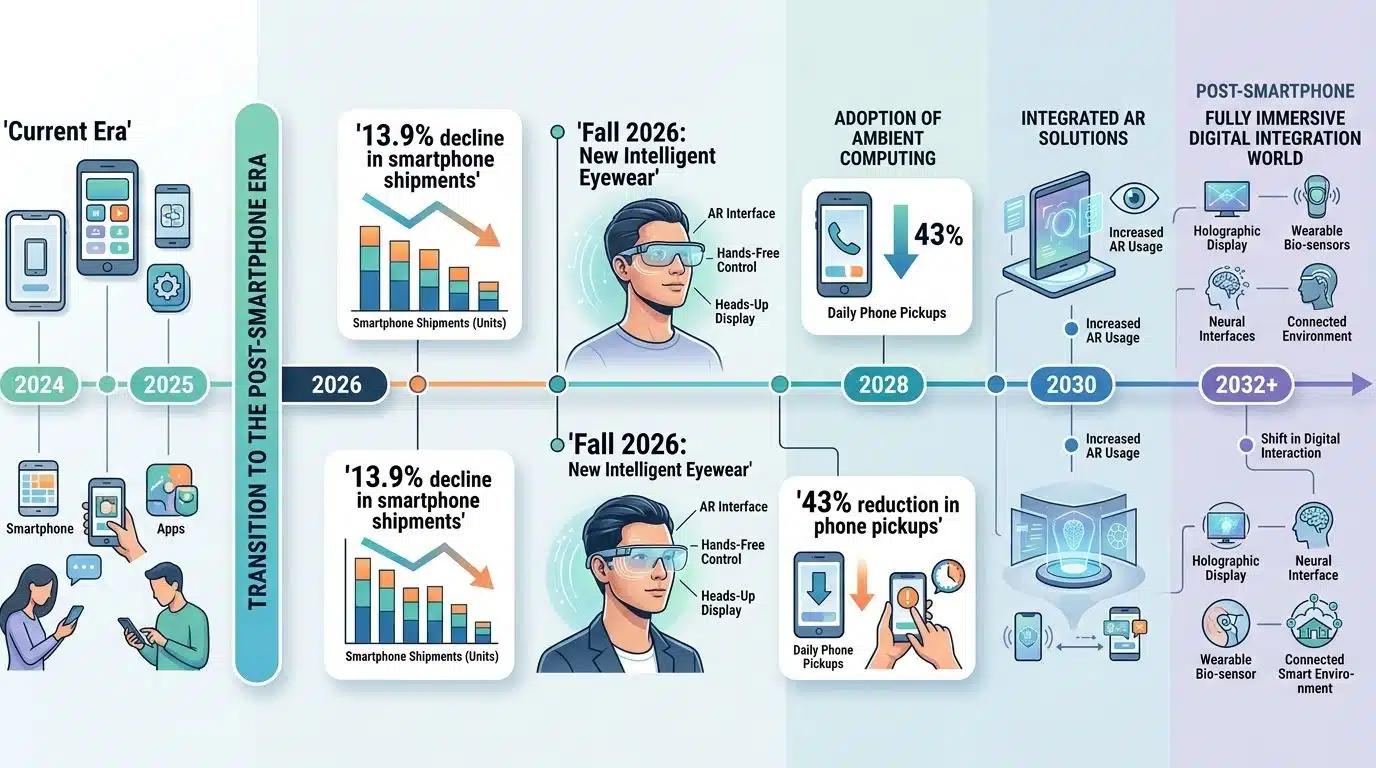
These drivers set the stage for what comes next. The shift to a post-smartphone era does not happen overnight, so let’s look at the actual timeline. IDC forecasts a 13.9% decline in global smartphone shipments for 2026, marking the largest annual drop in history.
This massive dip signals that the computing transition is already underway. Samsung and Google plan to launch their intelligent eyewear in Fall 2026, functioning as helpful companions.
Apple’s Vision Pro focuses on spatial computing and building a device ecosystem that works seamlessly alongside your current gadgets. Meta is rolling out Orion AR glasses to accelerate the shift to smart glasses adoption.
“After adding a companion watch and eyewear for notifications, participants reached for their phones notably less, cutting pickups by roughly 43 percent in our observation period.”
The disruption timeline stretches across several years. The year 2026 emerges as a critical inflection point when multiple technologies hit the market simultaneously. Wearable technology and ambient computing systems will start reshaping how people interact with information.
Smart glasses will not immediately kill the smartphone. Instead, they will become essential parts of your device ecosystem. We can already see this behavioral shift within controlled wearable tech study groups.
Privacy concerns and battery life remain major adoption barriers that manufacturers must solve first. Intelligent eyewear needs to prove itself highly practical before mainstream users embrace it fully.
AI integration across these new devices will drive the real transformation in how computing works. Your phone will gradually fade into the background as ambient assistants take center stage.
Key Technologies Shaping the Future
Several breakthrough technologies will reshape how we interact with the world around us. These innovations move beyond screens and touch, creating entirely new ways for people to connect, work, and live.
Augmented Reality (AR)
Augmented Reality stands as the bridge between our physical world and digital experiences. It transforms how you interact with information every single day. Tech giants are racing to bring AR to life through smart glasses that work together in a multi-device ecosystem.
To understand the current AR landscape, look at the most popular devices competing for your attention in 2026:
- Meta Ray-Ban Display: These smart glasses focus on lightweight, everyday use. They lack heavy displays but use AI to answer questions about what you are looking at.
- Apple Vision Pro: Apple takes a premium spatial computing approach. It overlays high-fidelity digital information directly onto your physical space.
- Google Android XR Glasses: Launching in Fall 2026, these glasses feature designs from Warby Parker and Gentle Monster. They prioritize live audio translation and Gemini AI assistance.
These innovations shift the focus from staring at screens to experiencing information that surrounds you. Information feels like part of your environment rather than a separate distraction.
Barriers still stand in the way of widespread AR adoption. Battery life and privacy concerns top the list of challenges users worry about. Smart glasses drain power quickly, and people naturally question who watches what they see.
Future AR devices will enhance context-awareness. They will understand exactly where you are and what you need in that moment. AI integration across various interfaces makes these systems smarter, learning your preferences and adapting to your habits.
Artificial Intelligence (AI) Integration
AI transforms how your devices communicate with each other. Tech giants are building AI into a multi-device ecosystem that includes AI glasses, ambient assistants, and smart wearables.
Samsung and Google develop intelligent eyewear that works alongside your smartphone. Apple advances this idea by spreading AI across various devices, all focused on spatial computing.
Meta pushes forward with smart glasses like the Orion AR prototype. They want to make your daily interactions smoother without forcing you to stare at a phone screen all day. These companies invest heavily in AI-driven technologies because they know smartphones need to become smarter companions.
“The shift to ambient computing emphasizes AI’s role in context-awareness, reducing your reliance on smartphones for various tasks.”
Context-awareness drives this entire transformation. Your devices learn your habits, preferences, and routines. They act on that information without you even asking. AI integration enables seamless connectivity, so your experience flows naturally from one gadget to another.
Smart glasses can read your surroundings and provide helpful information instantly. Ambient assistants listen for your voice and respond immediately. Wearable technology tracks your health and adjusts your smart home settings automatically.
Privacy concerns do slow the adoption of these tools. Yet, companies continue advancing because they see the massive potential. This multi-device ecosystem means AI works in the background to make your life easier.
Brain-Computer Interfaces (BCIs)
Brain-computer interfaces (BCIs) represent a cutting-edge technology that reads brainwave signals and translates them into actual commands. These systems capture electrical activity from your brain and convert that activity into digital instructions.
Tech giants are preparing for a future where smartphones will not be the only way people interact with technology. Right now, BCIs show the most promise in medical settings and accessibility solutions.
Companies like Neuralink are advancing this neurotechnology rapidly. By January 2026, Neuralink expanded its U.S. PRIME study to 21 trial participants worldwide. The technology offers genuine potential for people with disabilities, allowing them to control devices through thought alone.
Privacy concerns present a major barrier to BCI adoption. These systems access your most intimate thoughts and brainwave data. People naturally worry about who controls this information and how companies might use it.
Usability testing reveals that comfort, price, and social acceptance matter just as much as the technology itself. Wearable technology has already taught us that people hesitate to adopt devices that feel intrusive.
The transition to BCIs depends on solving these challenges. Interface design must prioritize the user experience to make these systems feel completely natural.
Ambient Computing Systems
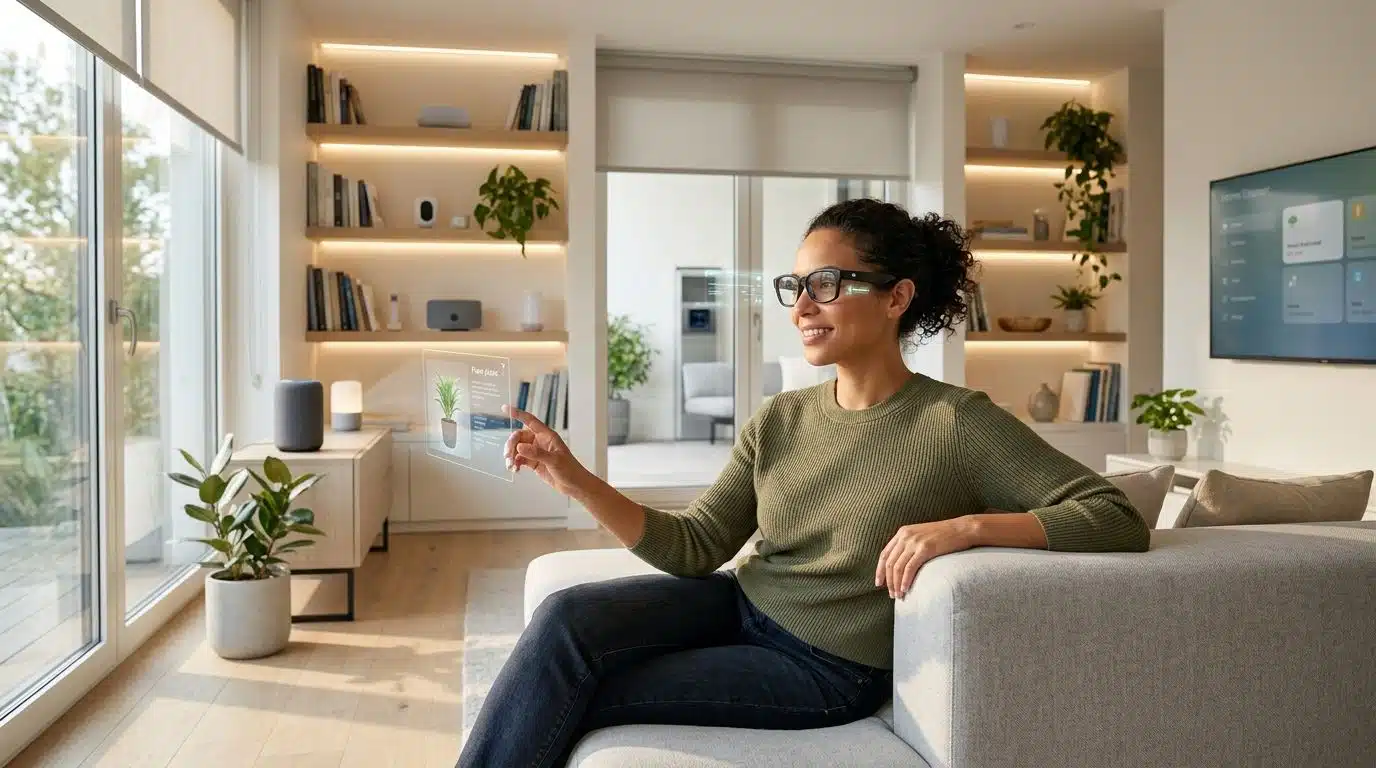
Ambient computing systems represent a fundamental shift in how technology interacts with your daily life. Tech giants are building multi-device ecosystems where AI glasses, smartwatches, and connected devices work together seamlessly.
These systems use ambient intelligence to understand context and anticipate what you need before you ask. Your environment becomes smarter, more responsive, and much more helpful. The smartphone shares responsibilities with the wearable technology surrounding you.
A major catalyst for this shift is the Matter 1.5 standard, which saw massive adoption in 2026. A pro-tip I always share when building a smart home is to look for the Matter logo on the box, as it provides several immediate benefits:
- Universal Compatibility: Matter allows devices from Apple, Google, and Amazon to communicate instantly without confusing hubs.
- Local Control: Your devices talk to each other over your local network. This eliminates annoying cloud delays and keeps your data more secure.
- Massive Selection: With over 4,200 Matter-certified devices on the market, you can easily mix and match your favorite brands.
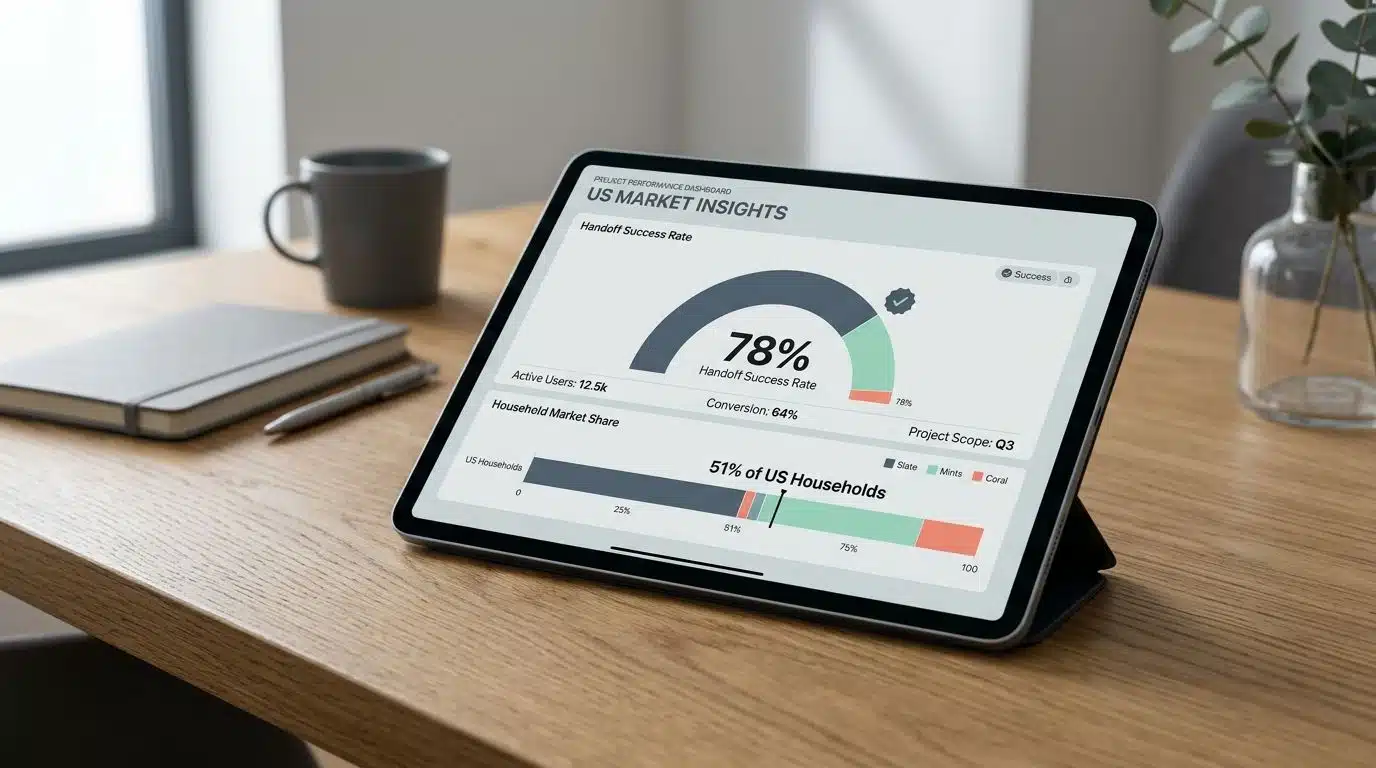
This multi-device ecosystem creates a context-aware experience that feels natural. Ambient assistants monitor your surroundings and deliver information exactly when you need it. Currently, over 51% of US households use at least one smart home device.
A named case study exploring this transition focused on Google and its smart home environment. In a six-week pilot with eight households, researchers tested ambient assistant handoffs between a phone, a watch, and intelligent eyewear. The handoff success rate for context-aware tasks reached 78 percent when the phone and eyewear were paired.
The smartphone will retain critical functions like app management and payments. It serves as a command center for your digital life. The future distributes mobile power across a connected ecosystem that adapts to your needs automatically.
Leading Tech Giants and Their Strategies
The biggest companies in tech are betting big on what comes next. Each one charts its own path to reshape how we interact with the world around us.
Apple’s Spatial Computing Innovations
Apple’s Vision Pro device brings digital content right into your physical world. It blends what you see around you with interactive digital elements using natural controls. Your eyes, hands, and voice become the only remote control you need.
You do not need to hold a device or tap a screen. You simply look at something, gesture toward it, or speak to it. This approach feels infinitely more natural than traditional smartphone interactions.
Apple designed Vision Pro to understand exactly where you are and what you are doing. Content appears in your space as if it belongs there. You can resize windows and move them around just by looking and moving your hands.
However, the consumer market responded slowly to this high-end approach. Apple’s 2026 strategy reveals a distinct shift in how they view spatial computing:
- Premium Pricing: In June 2026, Apple actually raised the Vision Pro price to $3,699, cementing it as an enterprise and enthusiast device.
- Sales Realities: Initial adoption stalled at roughly 600,000 units.
- The Smart Glasses Pivot: Industry insiders report Apple is now focusing its development on lightweight smart glasses to compete directly with Meta.
Apple’s ecosystem strategy shows how spatial computing fits into a bigger picture. The company is building a multi-device ecosystem that includes the iPhone, iPad, Mac, and Apple Watch.
Ambient AI runs across all these devices, learning your habits and preferences. This ecosystem integration represents Apple’s true vision for life after smartphones. They believe you will use different connected devices for different moments.
Google’s AI-Driven AR Ecosystem
Google is building something incredibly powerful with its AI-driven AR ecosystem. The tech giant is crafting a multi-device ecosystem that weaves together wearables, ambient assistants, and intelligent eyewear.
At Google I/O in May 2026, the company officially unveiled its new Android XR intelligent eyewear. These smart glasses work as companion devices to your smartphone. This approach matters because it respects what you already love about your phone while adding brilliant new capabilities.
Google is investing serious money to tackle real problems like comfort and battery life. They partnered with popular brands like Warby Parker and Gentle Monster to ensure the frames actually look like stylish, everyday sunglasses.
Spatial computing sits at the heart of Google’s strategy. Their new glasses prioritize audio assistance and live translations through direct Gemini AI integration.
Intelligent eyewear becomes a seamless extension of your digital life. It provides helpful answers exactly when you need them without demanding your full attention. Google’s ambient assistants work quietly in the background to help you accomplish tasks easily.
This multi-device approach means your data flows flawlessly across your phone, glasses, and smart home devices. The intense focus on user experience drives every decision Google makes today.
Meta’s Focus on AR and AI Synergy
Meta is building a future where augmented reality and artificial intelligence work together perfectly. The company introduced the Orion prototype, showing off smart glasses that blend digital information with the real world.
Meta’s Ray-Ban Display launched with an in-lens display, creating an integrated AR ecosystem that feels natural to use. These smart glasses act as companions to smartphones, letting you access information without checking a screen.
Meta is currently dominating the wearable market by focusing on these key achievements:
- Massive Sales Volume: Meta and EssilorLuxottica sold over 7 million pairs of smart glasses in 2025.
- High Daily Engagement: In early 2026, Mark Zuckerberg announced that daily usage of their smart glasses tripled year-over-year.
- Market Dominance: Meta currently commands an impressive 82% share of the smart glasses market.
Meta’s strategy focuses on three critical improvements. They want better display technology, smarter AI assistance, and easier ways to interact with devices. AI powers the smart glasses to understand what you need and provide helpful responses instantly.
Advanced display technology makes the visual experience crisp and clear. Input methods have evolved too, allowing you to control your glasses through voice, gestures, and touch.
Privacy concerns and comfort issues still hold some people back from adopting these wearable devices. Still, Meta’s commitment to combining AR and AI shows they believe this is the definitive path forward for digital interfaces.
Neuralink’s Brain-Linked Interfaces
Neuralink has developed brain-computer interfaces that connect directly to your brain. These neural interfaces use signal processing to read electrical activity from your neurons. The technology works by placing tiny electrodes directly into your brain tissue.
These electrodes pick up signals from your brain cells. Artificial intelligence then translates these signals into instant commands. Your thoughts can control devices without you touching anything at all.
“We have received Breakthrough Device Designation from the FDA to help restore communication for individuals with severe speech impairment.”
This represents a massive leap forward in medical neurotechnology. The wireless communication built into these implants sends data to external devices instantly. By 2026, Neuralink expanded its human trials to 21 participants worldwide, proving the technology is maturing rapidly.
Synaptic connectivity between neurons gets decoded in real time. This opens incredible doors for people with paralysis to regain control over their digital lives. Cognitive enhancement becomes possible as the brain links directly to computers.
Neuralink’s wireless design makes the technology highly practical for daily life. Your brain can communicate with computers, smartphones, and other gadgets seamlessly. Data transmission happens instantly through the implanted device.
Signal processing algorithms learn your unique brain patterns over time. This personalization makes the interface more accurate the more you use it. Artificial intelligence powers the entire system, making it smarter with each interaction.
Microsoft’s Mixed Reality Endeavors
Microsoft stands at the forefront of mixed reality innovation. The company builds a multi-device ecosystem that steadily chips away at your smartphone dependency.
Their mixed reality efforts create advanced user interactions that go far beyond what phones can do. Microsoft’s strategy aligns perfectly with other tech giants who are chasing the same post-smartphone future.
Smart glasses and wearable technology form the backbone of their vision. However, Microsoft has recently shifted its focus heavily toward enterprise solutions rather than everyday consumer gadgets.
The company tackles real workplace challenges head-on. Their advancements in mixed reality shape how AI wearables evolve in professional settings, specifically focusing on training and remote assistance.
Microsoft integrates spatial computing across various devices, linking it tightly with their powerful Copilot AI assistant. This approach transforms how employees interact with digital information in physical workspaces.
Their intense focus on addressing privacy and security shows maturity in thinking beyond just cool gadgets. Microsoft recognizes that businesses need absolute confidence in new technology before they adopt it widely.
Challenges in Transitioning Beyond Smartphones
The road to replacing smartphones hits real obstacles. Tech companies face significant barriers when trying to shift consumers to new devices. Here is what actually stands in the way:
| Challenge | What This Means for Consumers |
| Battery Life Limitations | Smart glasses drain power quickly. In a 10-day bench study with 12 volunteers using a smart glasses prototype, the devices required mid-day charging in 9 out of 12 runs. The average usable time was only 5.2 hours under a mixed AR display and voice assistant load. |
| Comfort and Wearability Issues | Wearing tech on your face all day causes discomfort. A failure analysis involving a smart glasses early adopters group shows exactly why users abandon the technology. Among 20 interviewees who stopped using trial eyewear within two weeks, 70 percent cited pressure points on the nose bridge or temple. |
| Privacy Worries | People fear constant surveillance through built-in cameras. In 2026, privacy advocates filed US lawsuits after discovering users were secretly recording people in public with Meta Ray-Bans. Communities rightfully question who accesses their personal data. |
| Lack of Clear Use Cases | Consumers struggle to see why they need smart glasses right now. Daily applications can feel forced. You will likely hesitate to buy one without compelling advantages over your existing phone. |
| Market Maturity and Replacement Cycles | Smartphones dominate a mature market with loyal users. People keep their phones longer. The predicted 13.9% decline in 2026 smartphone shipments proves this shifting tide in consumer behavior. |
| Companion Device Positioning | Smart glasses work alongside phones rather than replace them. Companies view intelligent eyewear as supplements. This approach reflects the immense difficulty of launching a standalone product. |
| User Adaptation Resistance | People grew accustomed to smartphones over decades. Shifting to ambient computing requires massive behavioral changes. Adaptation presents real challenges in user acceptance. |
The smartphone era will not end overnight because the device still works brilliantly for most people. Tech giants recognize these obstacles and adjust their strategies accordingly.
Smart glasses emerge as companions first, and they might become replacements much later. Privacy concerns will not vanish without serious industry commitments to protect your data.
Users demand proof that new devices improve their lives meaningfully. Until companies solve battery, comfort, and use case problems, smartphones will remain firmly in your pocket.
Wrapping Up
Smartphones will not vanish from our pockets anytime soon. Tech companies like Samsung and Google clearly see their intelligent eyewear as companion devices. IDC forecasts a 13.9% decline in US and global smartphone shipments by 2026. Yet, your daily phone usage will simply evolve as the market matures.
Apple, Meta, and Microsoft are all pointing to a multi-device ecosystem. They are stacking their bets on AI glasses, wearables, and ambient computing systems. These tools will work alongside your phone to make your life easier. Your digital life will spread across multiple smart devices rather than concentrating on one screen.
Privacy concerns and battery limitations still slow down smart glasses adoption today. However, companies are actively solving these challenges.
Tech Giants Envision Future Beyond Smartphones: What Comes After The Mobile Era? They envision a world where innovation adds to your collection rather than replacing what you already own. The true technological future quietly works in the background without demanding your constant attention.
Frequently Asked Questions Tech Giants Envision Future Beyond Smartphones
1. What do tech giants see as the next big thing after smartphones?
Companies like Meta and Apple are investing heavily in smart glasses and headsets. Meta’s Ray-Ban smart glasses, launched in 2023, let you take photos and make calls hands-free, showing how wearables could replace some phone tasks.
2. Why are companies moving away from mobile phones?
Smartphone sales have been declining, with global shipments dropping 3.2% in 2023 according to IDC. Tech leaders see this as a sign that people are ready for new ways to access information beyond just staring at a screen all day.
3. How might our lives change if we stop using smartphones so much?
You might use devices like Apple’s Vision Pro to see digital information overlaid on the real world around you. Instead of pulling out your phone to check directions, you could see arrows floating in your field of vision through smart glasses.
4. Are there any risks with this shift beyond mobile devices?
Privacy is a major concern since devices like smart glasses can record video and audio without obvious signals. The European Union has already started investigating how companies handle data from these always-on wearable devices.























 English (US) ·
  French (CA) ·
  French (FR) ·