

.svg) 3 weeks ago
44
3 weeks ago
44
PROTECT YOURSELF with Orgo-Life® QUANTUM TECHNOLOGY
Orgo-Life the new way to the future Advertising by Adpathway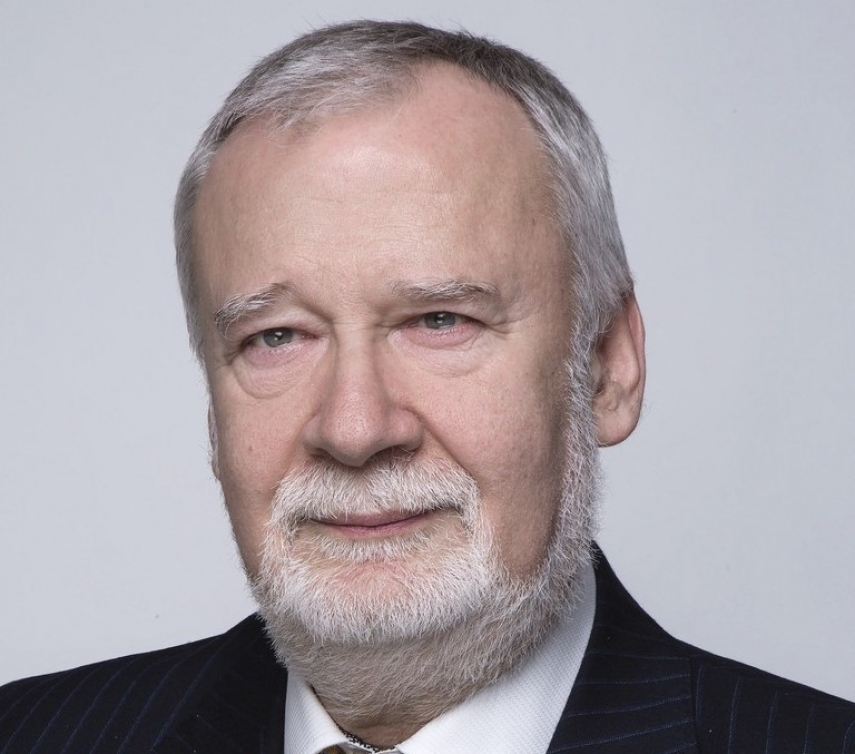
Photo: Evgeny Shikhman is Founder and Chairman of Silver Fox
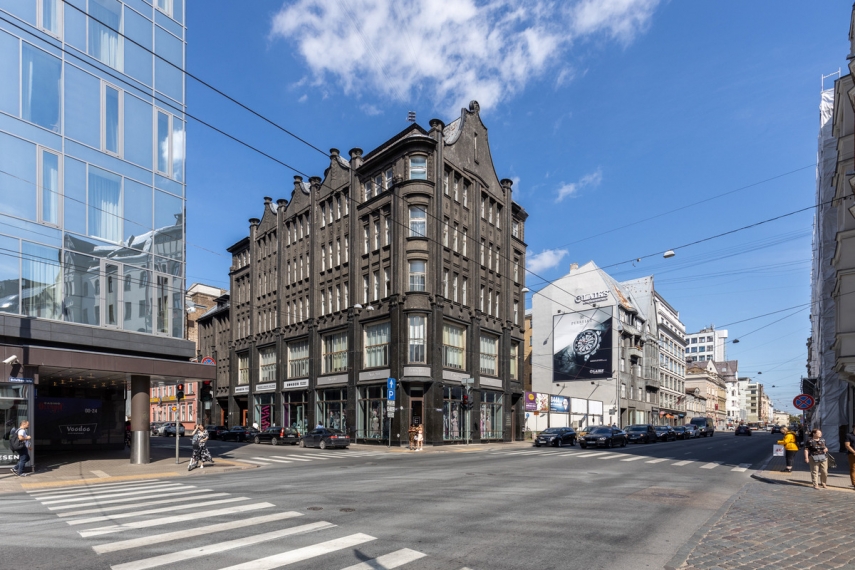
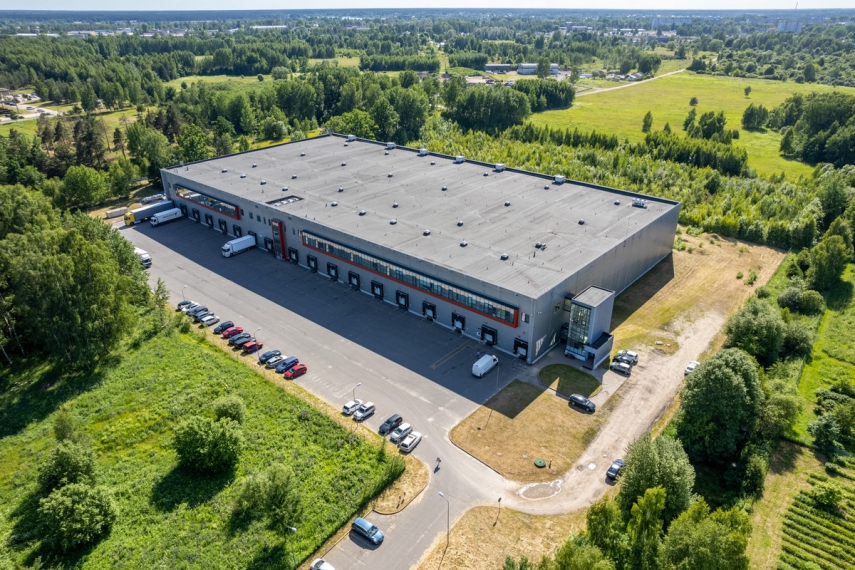
For the past 22 years, Silver Fox, a Riga-based commercial real estate and investment advisory firm specialising in commercial property transactions, investment consulting, redevelopment projects, logistics and retail assets, has helped investors and developers navigate Latvia's evolving property market through a wide range of economic cycles and market transformations.
"Today's investors make decisions based on in-depth analysis, asset quality, cash-flow sustainability and long-term strategy rather than simply focusing on the price per square metre," Evgeny Shikhman, Founder and Chairman of Silver Fox, one of Latvia's leading commercial real estate advisory firms, told The Baltic Times Magazine.
How does Silver Fox's "Smart Property Solutions" approach differ from traditional real estate and investment consultancy services?
First and foremost, we do not sell square metres or trade addresses. For us, property is always a tool for solving a client's specific challenge – whether preserving capital, expanding a business, generating stable income or delivering a development project.
We take an extremely detailed approach to every client and every transaction. For property owners, we do much more than simply market an asset. We conduct a detailed analysis, assess strengths and weaknesses, help organise documentation and legal matters and, where necessary, provide recommendations for improving the asset's attractiveness.
For buyers and investors, we begin not with properties but with objectives. We seek to understand their goals, priorities, risk tolerance and expected outcomes before proposing solutions.
Equally important is our role throughout the transaction process. We support clients from the first conversation through to completion, helping both buyers and sellers find common ground and achieve mutually beneficial outcomes.
Perhaps it is this highly personalised and deeply involved approach that distinguishes Silver Fox from many other firms. For us, a successful transaction does not end with the signing of a contract but with the moment when all participants can celebrate the result together.
Which types of commercial property does Silver Fox currently consider the most attractive for investors in Latvia?
Looking at the market as a whole, both international consultancy reports and our own experience indicate that investor interest has shifted noticeably towards logistics and industrial real estate. This is a global trend driven by changes in supply chains, the growth of e-commerce, efforts to reduce logistical risks and the desire to locate production and warehousing facilities closer to end markets.
Quality retail assets also continue to attract strong interest. Despite the growth of online shopping, well-located retail properties anchored by grocery tenants continue to demonstrate resilience and attract both institutional and private investors.
We are also seeing steadily growing interest in redevelopment projects. The reason is simple: the supply of vacant land in prime locations is limited. If an investor is looking for a site in a developed area with established infrastructure and proven demand, acquiring an existing asset with redevelopment or repositioning potential is often the only realistic option. As a result, redevelopment is increasingly viewed not as a niche segment but as a fully-fledged investment strategy.
Silver Fox places particular emphasis on detailed risk assessment. Which risks should investors prioritise in today's market?
Today it is essential to evaluate not only the property itself but also its ability to adapt to changing market conditions. Key considerations include not only location and tenant quality but also broader socio-economic developments such as demographic shifts, changes in tourism flows and market regulation.
In practice, we have encountered situations where strong tenants and reliable financing alone were not enough to ensure a property's sustainable development under changing conditions.
How would you describe the current state of Latvia's commercial real estate market?
Latvia's commercial real estate market has entered a phase of active growth. Many projects that were placed on hold several years ago due to high financing costs and uncertainty are now moving forward again. Developers are actively seeking new land plots and redevelopment opportunities, while investors are increasingly willing to consider long-term projects.
This suggests that the market has moved from a waiting phase to a period of growth and opportunity.
Are there any market segments that you believe remain undervalued or overlooked by investors?
I would not say that there are any segments currently overlooked by investors. Whether residential developments, development land, logistics facilities, office properties or redevelopment projects, investors are carefully evaluating all available opportunities.
In fact, we are seeing the opposite problem. Some assets are overvalued by their owners. A property owner may have purchased an asset five, seven or ten years ago, developed a concept or secured approvals and then assume this automatically doubles or triples the asset's value.
However, the market often sees things differently.
Professional investors focus on project economics, required capital expenditure, implementation timelines, financing costs and expected returns. If the asking price does not align with these fundamentals, an asset may remain unsold for a long time regardless of its quality or potential.
How have higher financing costs and economic uncertainty influenced investor behaviour over the past few years?
The slowdown began during the pandemic in 2020. Geopolitical developments in 2022 further affected investor sentiment and many market participants adopted a wait-and-see approach. Numerous projects were postponed and many transactions delayed.
However, sentiment began to improve in 2025. Investors and businesses grew tired of waiting for the perfect moment. The world has not become more predictable – quite the opposite. As uncertainty increased, many investors realised that decisions could not be postponed indefinitely.
At the same time, investment approaches changed significantly. Investors became more demanding regarding asset quality and analytical rigour. This is especially evident in the office sector, where increasingly selective tenants are forcing developers and owners to rethink their strategies.
We have also observed declining interest in purely speculative investments based solely on expectations of capital appreciation.
If an international investor approached Silver Fox today with capital to invest in Latvia, which assets or market segments would you recommend and why?
The answer depends on the size of the investment, the investor's strategy, business experience and outlook.
For investors entering the market with relatively modest capital of 1–2 million euro, stabilised income-producing assets are often the most rational choice. These typically include fully occupied residential rental properties managed by professional operators or small and medium-sized street retail assets with stable tenants. According to market benchmarks for 2025–2026, gross yields generally range from 5–7 percent for residential rental properties and around 6–8 percent for street retail assets.
For larger investors with long-term strategies, opportunities expand significantly. Logistics and industrial parks, large shopping centres and redevelopment projects become particularly attractive. Current market benchmarks suggest yields of around 6–7 percent for quality logistics assets and 6–8 percent or more for major retail properties, depending on location and tenant quality.
In these segments, investors focus not only on current income but also on capital appreciation potential and long-term development opportunities.
Which factors will shape Latvia's commercial property market over the next three to five years?
In our view, future market development will depend not only on geopolitics and the cost of capital but also on regional economic growth, infrastructure development and demographic trends.
Projects that successfully combine economic efficiency with high-quality urban environments will become increasingly important.
















 English (US) ·
  French (CA) ·
  French (FR) ·