

 2 months ago
34
2 months ago
34
PROTECT YOURSELF with Orgo-Life® QUANTUM TECHNOLOGY
Orgo-Life the new way to the future Advertising by AdpathwayHistory · Cuba
Key Facts
—The death. Ramiro Valdés Menéndez, a commander of the Cuban Revolution, died in Havana on Sunday at the age of ninety-four.
—The résumé. He was one of only twelve men to survive the 1956 Granma landing that launched Fidel Castro’s war.
—The role. He built and twice ran the interior ministry that became the island’s security and intelligence machine.
—The fall and return. A clash with Fidel Castro in 1986 pushed him out for seventeen years, before he returned to the top in 2003.
—What it leaves. His death narrows the living founders of 1959 to essentially Raúl Castro and Guillermo García Frías.
—The backdrop. He died amid Cuba’s deepest economic slump in decades, with long daily blackouts across the island.
The death of Ramiro Valdés removes one of the very last men who fought their way to power with Fidel Castro, and it leaves the Cuban Revolution with almost no living link to where it began.
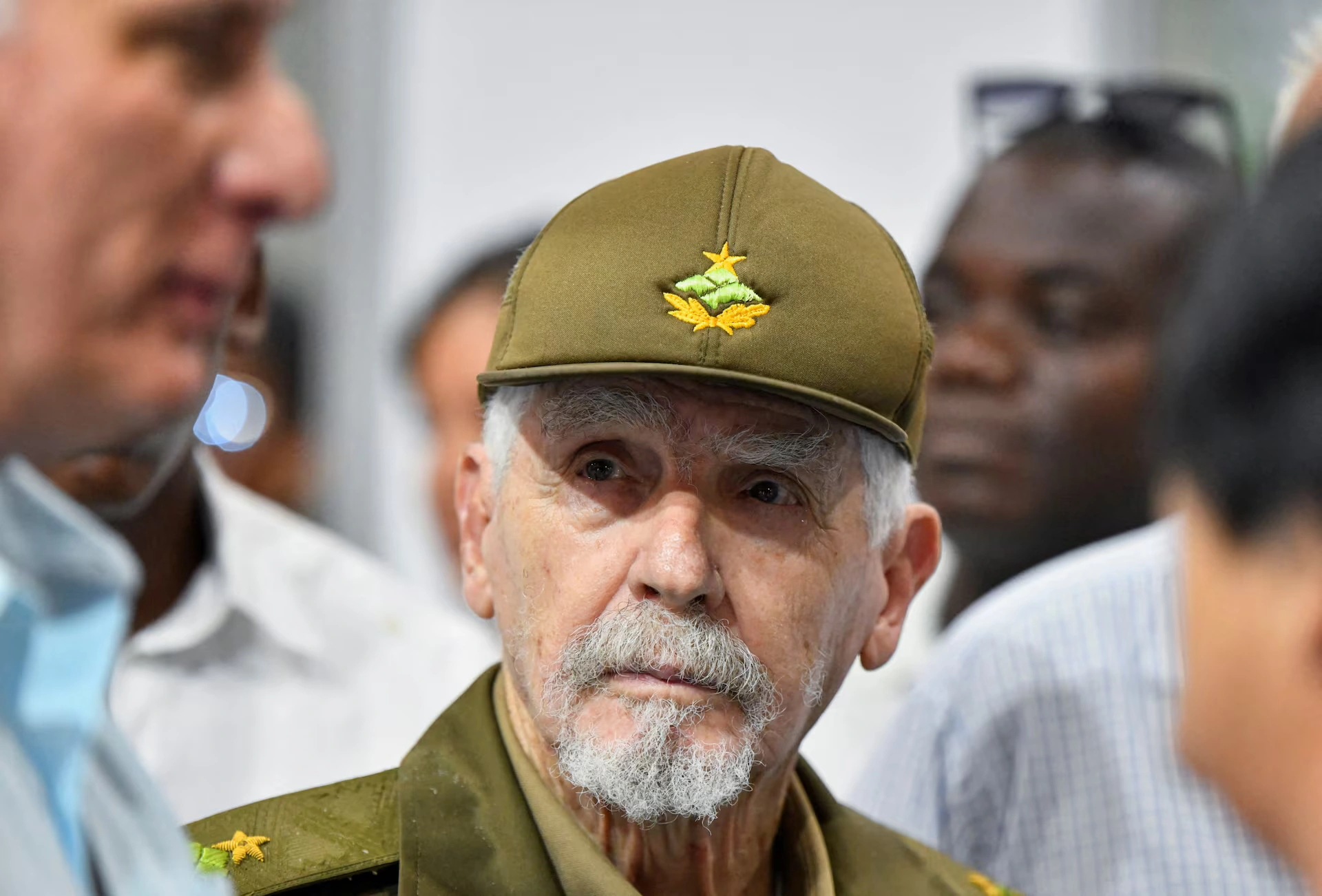
Ramiro Valdés Menéndez, one of the last surviving commanders of the Cuban Revolution, died in Havana on Sunday morning at the age of ninety-four. His death was announced by President Miguel Díaz-Canel and confirmed in an official notice from the Communist Party, the state and the government.
For most readers outside the island his name will mean little. Inside Cuba he was, for more than sixty years, one of the most powerful and most feared men in the country.
Who Ramiro Valdés was
He was there at the very start. Born in 1932, he was barely twenty-one when he joined Fidel Castro’s failed 1953 assault on the Moncada barracks, the attack treated in Cuba as the opening shot of the revolution.
Three years later he was one of roughly eighty fighters who sailed from México aboard the yacht Granma to restart the rebellion. Only about a dozen survived the landing, a group that also included Fidel Castro, his brother Raúl and the Argentine revolutionary Che Guevara.
According to the official death notice published by Cubadebate, he fought as a second-in-command under Guevara and helped win the decisive Battle of Santa Clara, the clash that broke the old regime in late 1958. That record earned him the honorary rank of Comandante de la Revolución, a title only a handful of men ever held.
The man who built the security state
After 1959 his power lay in one institution above all. He founded and twice led the Ministry of the Interior, known by its Spanish initials MININT, the body that runs Cuba’s police, intelligence and state-security services.
This is where the two versions of his life part ways. To the government he was a loyal servant of the homeland, and the official tribute praised his devotion to the revolutionary cause.
To opponents at home and in exile he was the architect of the apparatus that watched, detained and silenced dissenters, the system Cubans know as the G2. When anti-government protests swept the island in July 2021, a crowd in the town of Palma Soriano was filmed shouting “murderer” at him in the street.
A fall, and an unlikely comeback
His career was not a straight climb. In 1986, while serving as interior minister, he fell out with Fidel Castro and was pushed out of the inner circle, vanishing from public life for some seventeen years.
Then he came back. He returned to the Council of State in 2003 and was later handed the communications and information-technology ministry, a striking choice for a man already past seventy.
It was in that job that he made his most quoted remark, comparing the internet to a wild colt that had to be tamed before it could be useful. By 2009 he was a vice-president of the Council of Ministers, and for a time the third-ranking figure in the Communist Party.
Why his death matters now
The forward-looking point is about more than one man. Valdés was a living bridge between the current leadership under Díaz-Canel and the original generation that took power in 1959.
With him gone, that founding generation is essentially reduced to two names, the retired former president Raúl Castro, now ninety-five, and the veteran Guillermo García Frías. The men who actually fought in the mountains are almost all gone, and the government that rules in their name is run increasingly by people who were not yet born when the revolution won.
The timing sharpens the point. He died during Cuba’s worst economic crisis in decades, on an island living through long daily blackouts and severe shortages, just as the link to its own origin story fades.
Frequently Asked Questions
Who was Ramiro Valdés?
He was one of the last surviving commanders of the Cuban Revolution, who fought alongside Fidel Castro and Che Guevara. He went on to found and twice run Cuba’s interior ministry, the heart of its security and intelligence system.
Why is he a controversial figure?
The Cuban government honoured him as a loyal hero of the revolution. Critics and exiles instead remember him as the architect of the state-security apparatus used to suppress dissent, and protesters once shouted “murderer” at him in 2021.
What does his death mean for Cuba?
It leaves the founding generation of 1959 reduced to essentially Raúl Castro and Guillermo García Frías. The Cuban Revolution loses one of its last direct links to its origins, at a moment of deep economic crisis.
The Rio Times · Power Map
See who really holds power in Latin America
Click to open the Power Map →










 English (US) ·
  French (CA) ·
  French (FR) ·