

.png) 6 hours ago
7
6 hours ago
7
PROTECT YOURSELF with Orgo-Life® QUANTUM TECHNOLOGY
Orgo-Life the new way to the future Advertising by AdpathwayBy Manuel Ribeiro & Euronews with AP
Published on 18/01/2026 - 21:17 GMT+1 •Updated 22:28
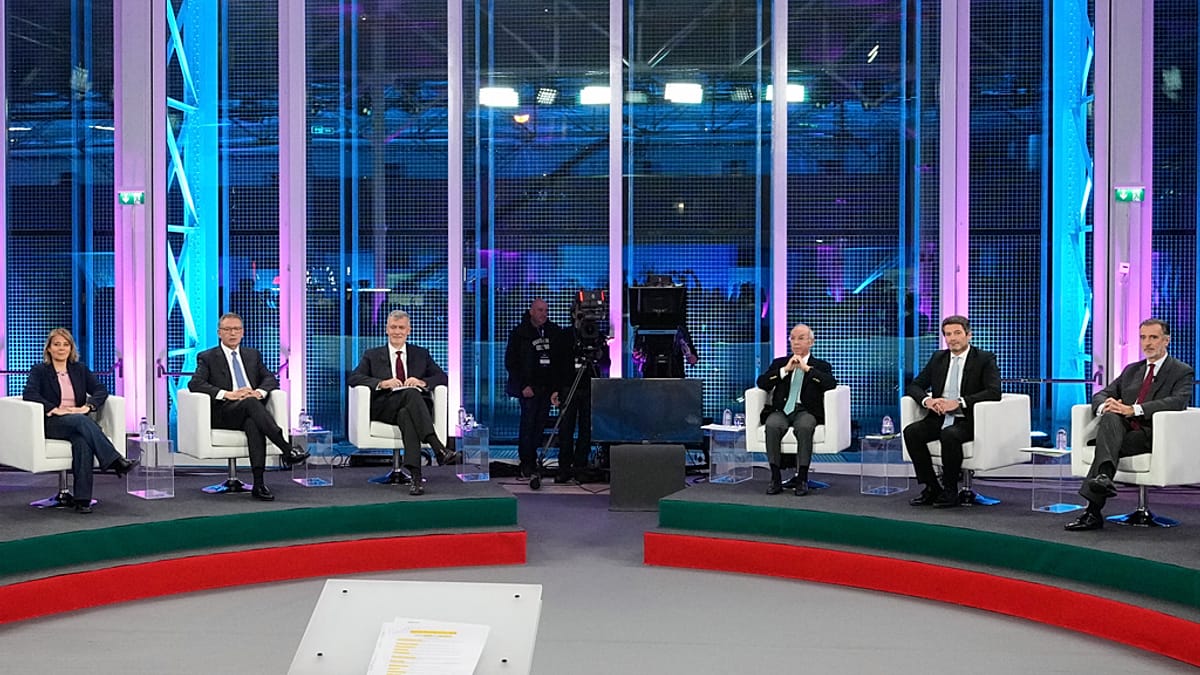
First Exit Polls see André Ventura, leader of the populist Chega party in a possible second place at 20-24%, behind the centre-left candidate António José Seguro with a projected 30-35% of the vote, and neck-and neck with Cotrim de Figueiredo, backed by the Liberal Initiative, at 17-21%.
The two candidates with the most votes this Sunday will compete in a second roundscheduled for 8 February.
More than 11 million voters are registered and eligible to vote today, with most results expected by the end of the day. The winner will replace President Marcelo Rebelo de Sousa, who has fulfilled the limit of two five-year terms.
One of Ventura's main targets has been what he calls "excessive immigration", as foreign workers have become more visible in Portugal in recent years. "Portugal is ours," says the populist close to the European far right.
During the election campaign, Ventura put up billboards all over the country with the phrases "This is not Bangladesh" and "Immigrants should not be able to live on welfare". An administrative court forced the candidate to remove these billboards a few months later on the grounds that they were discriminatory.
Such blatant anti-immigrant sentiment, expressed in public, was unthinkable in Portugal just a few years ago. However, the country needs immigrants to meet the many challenges Portugal faces, not least labour.
At 11-14%, the expected strong challenge from retired Rear Admiral Henrique Gouveia e Melo seems to not have materialised. He was running as an independent and has received plaudits from the public for overseeing the rapid roll-out of COVID-19 vaccines during the pandemic.
Challenges for the next president
In May 2025, Portugal held its third general election in three years, during the worst period of political instability in decades. Stabilising the country is one of the main challenges for the next President of the Republic.
Ventura, the populist leader, tried to make immigration a campaign issue, but voters seem more concerned about the property crisis, the future of young people and the high cost of living.
What's at stake
In Portugal, the president is largely a symbolic figure, with no executive power. Most of the time, the head of state tries to stay above the political fray, mediating conflicts and easing tensions.
However, the president is an influential voice and has some powerful tools, being able to veto legislation from parliament, although the veto can be overturned. The head of state also has what, in Portuguese political jargon, is called an "atomic bomb", which is the power to dissolve parliament and call early elections.


 English (US) ·
  French (CA) ·
  French (FR) ·