

 2 months ago
34
2 months ago
34
PROTECT YOURSELF with Orgo-Life® QUANTUM TECHNOLOGY
Orgo-Life the new way to the future Advertising by AdpathwayIf we view the calendar not merely as a system of days and months, but as a living archive of human triumph, tragedy, and transformation, July 31 stands out as a remarkable date. Acting as a crossroads of civilizations, this single day has witnessed the rise and fall of empires, groundbreaking leaps in space exploration, the birth of literary titans, and revolutionary strides in human rights.
You can open Table of Contents show
As an expert historian and cultural anthropologist, I invite you to travel back in time. We will explore the echoes of July 31 across various regions and eras, unearthing the narratives that have shaped the world we live in today. Whether you are a history enthusiast, a trivia buff, or a curious reader, this comprehensive “On This Day” guide will take you on a chronological journey across the Bangalee sphere, the diverse expanses of the Indian subcontinent, and the broader global stage.
The Bangalee Sphere
The Indian subcontinent, with its rich tapestry of culture, colonial struggles, and socio-political evolution, has seen monumental events occur on July 31. This date carries deep historical weight, stretching from the era of Mughal emperors to the modern strides of democratic republics.
Historical Events
-
1658 – The Ascension of Aurangzeb: On this day in 1658, Aurangzeb officially proclaimed himself the Emperor of the Mughal Empire. This marked a turning point in South Asian history, ending a brutal war of succession and initiating a reign that would expand the empire to its greatest territorial extent, though simultaneously sowing the seeds for its eventual decline due to religious conservatism and endless regional wars.
-
1933 – Gandhi Leaves Sabarmati: Mahatma Gandhi left the Sabarmati Ashram in Gujarat forever, vowing never to return until India achieved independence. Sabarmati had been the epicenter of his non-violent struggle and the starting point of the famous Salt March. This poignant departure intensified the psychological weight of the freedom movement.
-
1948 – Transport Reforms in Bengal: West Bengal established India’s first State Transport Corporation. In the immediate aftermath of partition, this was a crucial step toward stabilizing civil infrastructure and public mobility in a region heavily impacted by massive refugee influxes.
-
1950 – India-Nepal Peace Treaty: The landmark Treaty of Peace and Friendship was signed between India and Nepal. This treaty established a close strategic and economic relationship between the two nations, allowing the free movement of people and goods across borders—a geopolitical framework that continues to dictate South Asian diplomacy today.
-
1993 – A Maritime First: India inaugurated its very first floating ‘Maritime Museum’ in Calcutta (Kolkata), preserving the rich naval and riverine heritage of the Bengal delta.
-
2015 – The Historic Enclave Exchange: At midnight on July 31, India and Bangladesh enacted the Land Boundary Agreement. They exchanged 162 enclaves (Chhitmahals) along their borders, ending 68 years of statelessness for over 50,000 residents and resolving one of the world’s most convoluted border disputes.
Famous Births
Munshi Premchand (1880)
Born Dhanpat Rai Srivastava in the village of Lamhi near Varanasi, Munshi Premchand fundamentally transformed the landscape of early 20th-century Hindi and Urdu literature. Before Premchand, Hindustani literature was largely dominated by fantastical tales, mythology, and romanticism. He pioneered the introduction of stark realism, grounding his narratives in the dust, sweat, and struggles of rural India.
Writing under the pen name “Nawab Rai” before adopting “Premchand,” he authored over a dozen novels and nearly 300 short stories. Masterpieces like Godaan (The Gift of a Cow), Gaban, and Karmabhoomi, along with poignant short stories like Idgah and Kafan, exposed the brutal realities of the zamindari (landlord) system, crippling debt, untouchability, and the plight of women under extreme patriarchal norms. Premchand was not just a storyteller; he was a social reformer wielding a pen, whose empathetic portrayals of the peasantry and the working class remain as relevant today as they were a century ago.
Mumtaz (1947)
Starting her cinematic journey at the tender age of 11 in Sone Ki Chidiya (1958), Mumtaz initially faced the hurdle of being typecast in supporting roles and B-grade action films. However, her sheer charisma, vivacious energy, and undeniable talent propelled her to the absolute pinnacle of Bollywood royalty in the 1970s.
Her breakthrough into top-tier stardom came alongside Rajesh Khanna in the blockbuster Do Raaste (1969). The duo went on to become one of the most successful and beloved romantic pairings in Hindi cinema history, delivering consecutive megahits like Apna Desh, Aap Ki Kasam, and Roti. Mumtaz proved her acting mettle by winning the Filmfare Best Actress Award for her role in Khilona (1970), where she played a woman nursing a man back to sanity. Renowned for her expressive dancing, impeccable comic timing, and distinctive style—including her famously draped orange sari in Brahmachari—Mumtaz remains a defining icon of Bollywood’s golden era.
Famous Deaths
Shaheed Udham Singh (1940)
Orphaned at a young age, Udham Singh’s life was irrevocably altered on April 13, 1919, when he survived the Jallianwala Bagh massacre in Amritsar. Witnessing the slaughter of hundreds of unarmed Indians by British troops under the command of General Reginald Dyer left a burning desire for justice in the young man’s heart.
He held Michael O’Dwyer, the then Lieutenant Governor of Punjab who endorsed the massacre, personally responsible. For 21 years, Singh traveled across continents, joining the revolutionary Ghadar Party and meticulously planning his revenge. On March 13, 1940, his decades-long wait culminated at Caxton Hall in London, where he shot and killed O’Dwyer. During his subsequent trial, he remained defiant and unapologetic, famously referring to himself as “Ram Mohammad Singh Azad”—a name symbolizing the unity of India’s major religions and his ultimate goal of freedom. He was hanged at Pentonville Prison on July 31, 1940, forever cementing his legacy as a legendary martyr of India’s independence struggle.
Mohammed Rafi (1980)
With a career spanning four decades, Mohammed Rafi’s voice was the emotional compass of South Asian cinema. He possessed an astonishing vocal range and a unique ability to mold his voice to flawlessly suit the persona of whichever actor he was singing for—whether it was the tragic melancholy of Dilip Kumar, the energetic exuberance of Shammi Kapoor, or the romantic charm of Dev Anand.
Rafi was exceptionally versatile, mastering everything from complex classical ragas and soul-stirring ghazals to foot-tapping rock-and-roll numbers, patriotic anthems, and deeply spiritual qawwalis. Collaborating with master composers like Naushad, S.D. Burman, Shankar-Jaikishan, and O.P. Nayyar, he recorded thousands of songs in multiple Indian languages. Earning a Padma Shri and numerous National Film and Filmfare Awards, Rafi’s sudden passing in 1980 brought the entire nation to a standstill. Today, his timeless classics like Chaudhvin Ka Chand and Kya Hua Tera Wada continue to resonate, proving that his voice is truly immortal.
Nabarun Bhattacharya (2014)
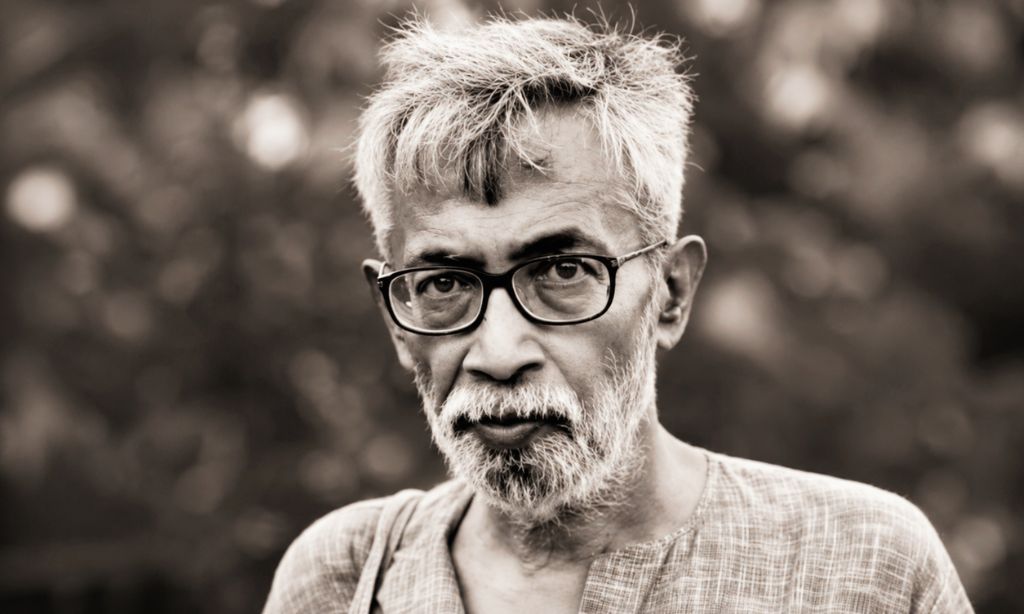
Born to the illustrious literary and theatrical couple Mahashweta Devi and Bijon Bhattacharya, Nabarun Bhattacharya carved out a fiercely independent and radical space in Bengali literature. He completely rejected middle-class gentrification in his writing, choosing instead to focus entirely on the underbelly of society—the marginalized, the outcasts, and the oppressed living on the fringes of Kolkata.
His magnum opus, the novel Herbert (1993), for which he won the Sahitya Akademi Award, is a devastatingly dark and tragicomic exploration of a man driven to the edge by society, later adapted into a critically acclaimed film. However, Bhattacharya is perhaps most legendary for creating the ‘Fyataru’—a subaltern, anarchist class of people who possess the magical ability to fly by uttering a specific mantra. The Fyataru spend their time sabotaging the grand, empty spectacles of the capitalist and political elite. Through his biting satire, magical realism, and aggressive, street-level vocabulary, Bhattacharya served as a relentless, anti-establishment conscience for modern Bengali society.
International Observances & Holidays
On a global scale, July 31 hosts a variety of unique observances that highlight environmental conservation, historical emancipation, and the digital age.
-
World Ranger Day: Celebrated globally, this day honors the dedication and sacrifices of park rangers who risk their lives to protect wildlife, preserve natural habitats, and combat illegal poaching.
-
System Administrator Appreciation Day: Typically observed on the last Friday of July (which frequently falls on the 31st), this day honors the unsung IT heroes who keep global networks, servers, and digital infrastructures running smoothly.
-
Mary Prince Day (Bermuda): A national holiday in Bermuda honoring Mary Prince. She was an enslaved Bermudian woman whose brutal yet eloquent 1831 autobiography exposed the horrific realities of slavery, fundamentally influencing the British abolitionist movement.
-
Birthday of the Sultan of Pahang (Malaysia): A regional public holiday in the Malaysian state of Pahang, celebrating the royal heritage and continuous cultural lineage of the state.
Global History
History is inherently interconnected. The events of July 31 outside of South Asia have profoundly shaped our modern global society, from aerospace engineering to civil rights.
United States
-
1790 – The Birth of American Intellectual Property: The very first U.S. patent was issued to Samuel Hopkins for a new method of making potash, a crucial fertilizer ingredient. The document was signed by President George Washington. This established the foundation for American innovation and patent law.
-
1971 – Driving on the Moon: During the Apollo 15 mission, NASA astronauts David Scott and James Irwin became the first humans to drive the Lunar Roving Vehicle on the Moon. This engineering marvel dramatically expanded the area astronauts could explore, turning a brief walk into a sweeping geological survey of the lunar surface.
Russia / USSR
-
1982 – Cold War Nuclear Testing: The Soviet Union conducted a major underground nuclear test, a grim reminder of the high tensions and arms race of the Cold War era.
-
1991 – The START I Treaty: In a monumental pivot toward global peace, U.S. President George H.W. Bush and Soviet leader Mikhail Gorbachev met in Moscow to sign the Strategic Arms Reduction Treaty (START I). This treaty drastically limited the deployment of nuclear weapons and effectively signaled the beginning of the end of the Cold War.
China & Asia
-
1992 – The Kathmandu Tragedy: Thai Airways International Flight 311 crashed into the Himalayas while attempting to land at Tribhuvan International Airport in Kathmandu, Nepal, tragically killing all 113 people aboard. It remains one of the worst aviation disasters in the region’s history.
United Kingdom
-
1942 – The Birth of Oxfam: The Oxford Committee for Famine Relief was founded in England to alleviate starvation in Greece caused by the Allied naval blockade during WWII. Today, it is known as Oxfam International, a massive global confederation fighting poverty.
-
1998 – The Landmines Act: Following immense public pressure—heavily championed by the late Princess Diana—the British Parliament officially passed legislation to ban anti-personnel landmines.
Europe
-
1492 – The Alhambra Decree: One of the darkest moments in European religious history occurred as the Alhambra Decree took full effect, forcing all remaining Jewish populations to either convert to Catholicism or be completely expelled from Spain. This triggered the massive Sephardic diaspora.
-
1919 – The Weimar Constitution: Germany’s National Assembly adopted the Weimar Constitution, attempting to establish a liberal democracy after the devastation of World War I. Ultimately, its structural weaknesses would be exploited by the Nazi party a decade later.
Australia & Oceania
-
1865 – Railway Revolution: The world’s first narrow-gauge mainline railway opened in Queensland, Australia. This innovative engineering choice was perfectly suited for Australia’s rugged, expansive terrain, transforming cross-country transportation and commerce.
Rest of World
-
1498 – Sighting of Trinidad: On his third voyage across the Atlantic, Italian explorer Christopher Columbus became the first European to sight the island of Trinidad.
-
2006 – Power Shift in Cuba: Amid failing health, long-time Cuban President Fidel Castro temporarily transferred presidential power to his brother, Raul Castro. This marked the beginning of the end for Fidel’s half-century absolute rule over the island nation.
Notable Births & Deaths (Global)
July 31 has been the entry and exit point for some of the most influential figures in literature, sports, politics, and the arts.
Famous Births
-
Milton Friedman (1912 – 2006): Born in New York, Friedman became one of the most prominent economists of the 20th century. Winning the Nobel Prize, his staunch advocacy for free-market capitalism profoundly shaped the fiscal policies of governments worldwide, including the Reagan and Thatcher administrations.
-
Mark Cuban (1958): The American billionaire entrepreneur, television personality (famous for Shark Tank), and former owner of the Dallas Mavericks was born on this day.
-
Wesley Snipes (1962): An acclaimed American actor and martial artist, Snipes revolutionized the modern superhero genre with his portrayal of the titular character in the Blade film franchise.
-
J.K. Rowling (1965): The British author who fundamentally changed the landscape of modern literature. Her creation of the Harry Potter series ignited a global cultural phenomenon, making her one of the most widely read authors in human history.
Famous Deaths
-
Andrew Johnson (1875): The 17th President of the United States passed away in Tennessee. Assuming office after Abraham Lincoln’s assassination, Johnson’s bitter clashes with Congress over post-Civil War Reconstruction led him to become the first U.S. president to be impeached.
-
Antoine de Saint-Exupéry (1944): The visionary French aviator and author of the timeless classic The Little Prince. He vanished under mysterious circumstances over the Mediterranean Sea while flying a reconnaissance mission during World War II.
-
Jim Reeves (1964): The velvet-voiced American country music pioneer died tragically when his private plane crashed during a severe thunderstorm near Nashville.
-
Gore Vidal (2012): The brilliant, patrician American novelist, playwright, and public intellectual died at age 86. Known for his sharp wit and biting critiques of American politics, he left behind a massive literary legacy.
-
Bill Russell (2022): The legendary American basketball player and civil rights activist passed away. Russell won an astonishing 11 NBA championships with the Boston Celtics, cementing his status as one of the greatest winners in North American sports history.
“Did You Know?” Trivia
To make you the most interesting person at your next dinner party, here are a few lesser-known, fascinating facts about July 31:
-
The Earliest Volcanic Record: The oldest documented eruption of Japan’s iconic Mount Fuji was recorded on this exact day in the year 781 AD.
-
Flowers Instead of Stones: In 1703, the famous English writer Daniel Defoe (author of Robinson Crusoe) was placed in a pillory as public punishment for writing a political satire. Instead of throwing rotten food and rocks at him—as was customary—the sympathetic public threw flowers.
-
The Birth of Water Skiing: On July 31, 1922, an 18-year-old named Ralph Samuelson successfully rode the world’s first pair of water skis on Lake Pepin in Minnesota. He used two wooden boards and a clothesline as a towrope!
-
Olympic Swimming History: On this day in 2012, legendary American swimmer Michael Phelps won his 19th Olympic medal, officially breaking the 48-year-old record held by Soviet gymnast Larisa Latynina to become the most decorated Olympian of all time.
Quote of the Day
“It is our choices, Harry, that show what we truly are, far more than our abilities.”
— J.K. Rowling (Born July 31, 1965)
Final Thoughts
From the shifting borders of the Bangalee sphere to the dusty, untamed surface of the Moon, July 31 is a date steeped in profound human achievement and historical consequence. As we peel back the layers of this day, we uncover stories of resilience, such as India’s struggle for independence and the end of decades of statelessness for enclave residents. We also witness the darker chapters of humanity, from the Alhambra Decree to tragic aviation disasters.
History is not just a collection of old dates in a textbook; it is the living, breathing context of our modern world. Understanding what transpired on July 31 across different centuries allows us to appreciate the delicate complexities of global politics, the brilliance of human innovation, and the enduring power of culture and literature. As the cycle of time continues continuously, one can only wonder what future historical milestones will inevitably land on this remarkable day.















 English (US) ·
  French (CA) ·
  French (FR) ·