

 2 months ago
74
2 months ago
74
PROTECT YOURSELF with Orgo-Life® QUANTUM TECHNOLOGY
Orgo-Life the new way to the future Advertising by Adpathway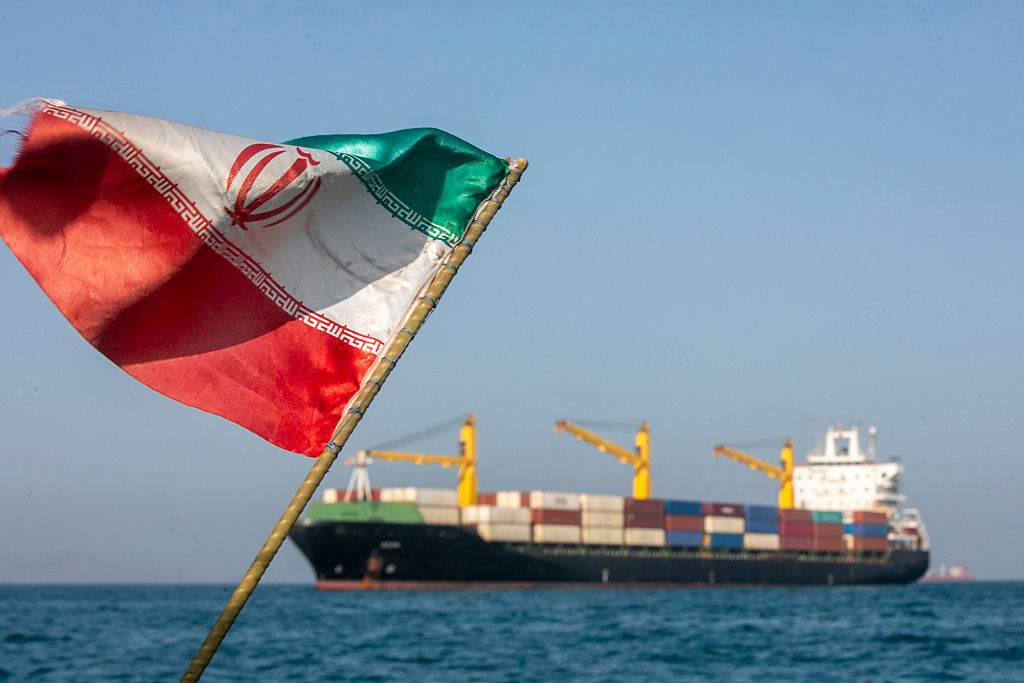
An Iranian flag flutters in the wind as ships remain anchored on 16 May in the Strait of Hormuz near Larak Island, Iran. Negotiations between the US and Iran over opening this critical waterway have largely stalled as the countries have rejected each other's proposals to end the war that began when the US and Israel attacked Iran on 28 February.
Majid Saeedi/Getty Images
- Trump claimed shipping was resuming through the Strait of Hormuz, but tracking platforms showed virtually no movement on Monday.
- Only one or two vessels crossed the strait on Monday, compared to one hundred and twenty daily transits before the war.
- The US-Iran agreement stipulates reopening within 30 days, with over 500 commercial vessels currently stuck in the Gulf.
Shipping through the Strait of Hormuz remained virtually at a standstill on Monday, according to tracking platforms, despite US President Donald Trump’s claim that crossings were resuming under his deal to end the war with Iran.
Trump said on Monday that loaded oil tankers were “starting to move” out of the strait, apparently on a route near to Oman, in a post on his Truth Social platform.
Announcing the accord with Iran on Sunday, he had said that the strait could reopen immediately after the scheduled signing of the agreement on Friday.
A “memorandum of understanding” between the two nations meanwhile stipulated the “reopening of the Strait of Hormuz within 30 days”, as quoted by Iran’s Mehr news agency.
At 1400 GMT on Monday, tracking firm Kpler had detected only one commodities carrier crossing the strait during the day with its transponder switched on.
The Maltese-flagged Disha left the Gulf carrying a cargo of 60 000 tonnes of liquefied natural gas (LNG) loaded in Qatar and was heading towards India, Kpler said.
READ | US-Iran peace deal announced with ‘permanent’ end to military action
A second vessel, the bulk carrier Kaiser, also appeared to have exited the strait around midday, according to its AIS signal traceable on the MarineTraffic platform.
“Crossings still remaining limited while there are more than 500 commercial vessels that have given an AIS signal in the Persian Gulf” in the past 24 hours, Nikos Pothitakis, Kpler’s media relations manager, said on X, referring to the ships stuck west of the strait due to the conflict.
Over the previous week, an average of 6.4 commodities vessels transited the strait each day.
Before the war, around 120 daily transits were recorded, according to maritime news site Lloyd’s List.
















 English (US) ·
  French (CA) ·
  French (FR) ·