

 3 months ago
78
3 months ago
78
PROTECT YOURSELF with Orgo-Life® QUANTUM TECHNOLOGY
Orgo-Life the new way to the future Advertising by Adpathway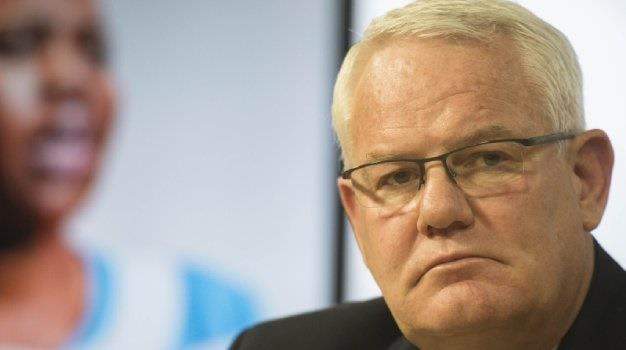
The Nkabinde Commission faces mounting challenges as retired Major General Johan Booysen withdraws from testifying, further depleting the evidence leaders’ witness roster.
Deaan Vivier/Gallo Images/Netwerk24
- Retired Major General Johan Booysen’s abrupt decision not to testify leaves Nkabinde Commission evidence leaders with a shrinking witness list, following earlier setbacks.
- The commission is investigating the National Prosecuting Authority’s racketeering charges against Booysen and the Cato Manor unit, as well as Chauke’s role in defending those decisions and his failure to prosecute former Crime Intelligence head Richard Mdluli.
- Calls for the reinstatement of charges against Booysen and his co-accused are growing, with critics arguing that the decision to withdraw lacked a thorough, evidence-based review.
The Nkabinde Commission evidence leaders’ already fragile witness roster has suffered yet another blow after retired Major General Johan Booysen abruptly withdrew from testifying.
The move has deepened concerns that the inquiry into suspended South Gauteng Director of Public Prosecutions Andrew Chauke is running out of witnesses.
A letter from the Office of the State Attorney, which was addressed to the chairperson of the inquiry, retired Constitutional Judge Justice Bess Nkabinde, read: “Please be advised that General JW Booysen has since informed evidence leaders that he will no longer be submitting his statement [and] will, as a result, not be coming to give his evidence at the inquiry.”
Booysen was expected to testify on Wednesday after failing to submit his statement last week.
His withdrawal comes as the commission faces a shrinking witness list.
Since former National Director of Public Prosecutions Shamila Batohi walked out of the commission mid-testimony in December, only one other witness — Western Cape Deputy Director of Public Prosecutions Shareen Riley — has testified for the evidence leaders.
Riley was part of the expert panel that guided Batohi in her decision to withdraw racketeering charges against members of the Cato Manor Organised Crime Unit.
In response, the commission adjusted its process to allow Chauke and his witnesses to testify before the evidence leaders concluded their case.
Since Chauke finished giving evidence, only Riley has testified for the evidence leaders, with Booysen scheduled to testify next.
Several other potential witnesses have delayed submitting statements or have not appeared.
The inquiry is examining the National Prosecuting Authority’s decision to institute racketeering charges against Booysen and members of the Cato Manor unit, as well as Chauke’s role in defending that decision. It is also probing Chauke’s failure to prosecute former Crime Intelligence head Richard Mdluli in connection with the 1999 murder of Oupa Ramogibe.
Booysen’s evidence was expected to address allegations that the Cato Manor unit operated as a “death squad”. The claims formed the basis of the racketeering case that was later withdrawn by the NPA.
Last year, the state paid out millions of rands to Booysen and his co-accused in a confidential settlement after the case collapsed. Booysen had claimed more than R10 million.
The settlement took place while the Nkabinde Inquiry, established by President Cyril Ramaphosa, was ongoing. Chauke was suspended in July 2025 pending the outcome of the inquiry.
READ | ANALYSIS: When a collapsed case refuses to die - Cato Manor returns to the dock
Booysen previously told News24 that he would challenge the basis of the prosecution. He denied that he commanded the Cato Manor unit, saying he was a provincial head while operational control rested with officers, including Colonel Rajen Aiyer.
He also rejected claims that warrants for operations did not exist, describing them as “patently false”, and said he would provide documentary proof before the commission.
Booysen further said there was “no evidence in the dockets” supporting key allegations made by prosecutors. He disputed claims of widespread civil payouts to alleged victims, stating that only one claim was settled and that a civil settlement did not amount to criminal liability.
He also said former police minister Nathi Mthethwa had stated under oath that a contested shooting was lawful.
His withdrawal leaves evidence leaders with fewer witnesses to support the NPA’s decision to withdraw the racketeering charges.
While the witness list continues to shrink, political pressure on the NPA is increasing.
In a letter to the current National Director of Public Prosecutions Andy Mothibi, the MK Party’s parliamentary whip for the peace and security cluster, Mzwanele Manyi, called for the immediate reinstatement of charges against Booysen and his co-accused.
“The original enrolment of charges established a prima facie case. The subsequent withdrawal did not constitute a judicial determination on the merits,” Manyi wrote.
He said evidence presented at the inquiry, including testimony from Riley, showed flaws in the decision to withdraw the charges.
“What was remarkable is that she did not read the majority of the expert ballistics report and did not read more than 1 000 pages when she prepared the report,” he said.
Manyi added that Batohi had admitted she had not read key documents before deciding to withdraw the charges.
“This falls far short of the rigorous, evidence-based assessment demanded by the law for a matter of this gravity,” he said.
He warned that a failure to reinstate the charges would undermine the criminal justice system.
“Any inaction would undermine the integrity of the criminal justice system and the foundational principle that no one is above the law,” Manyi said.
He called on the NPA to “immediately re-evaluate the matter and reinstate the prosecution without further delay”.













 English (US) ·
  French (CA) ·
  French (FR) ·