

PROTECT YOURSELF with Orgo-Life® QUANTUM TECHNOLOGY
Orgo-Life the new way to the future Advertising by Adpathway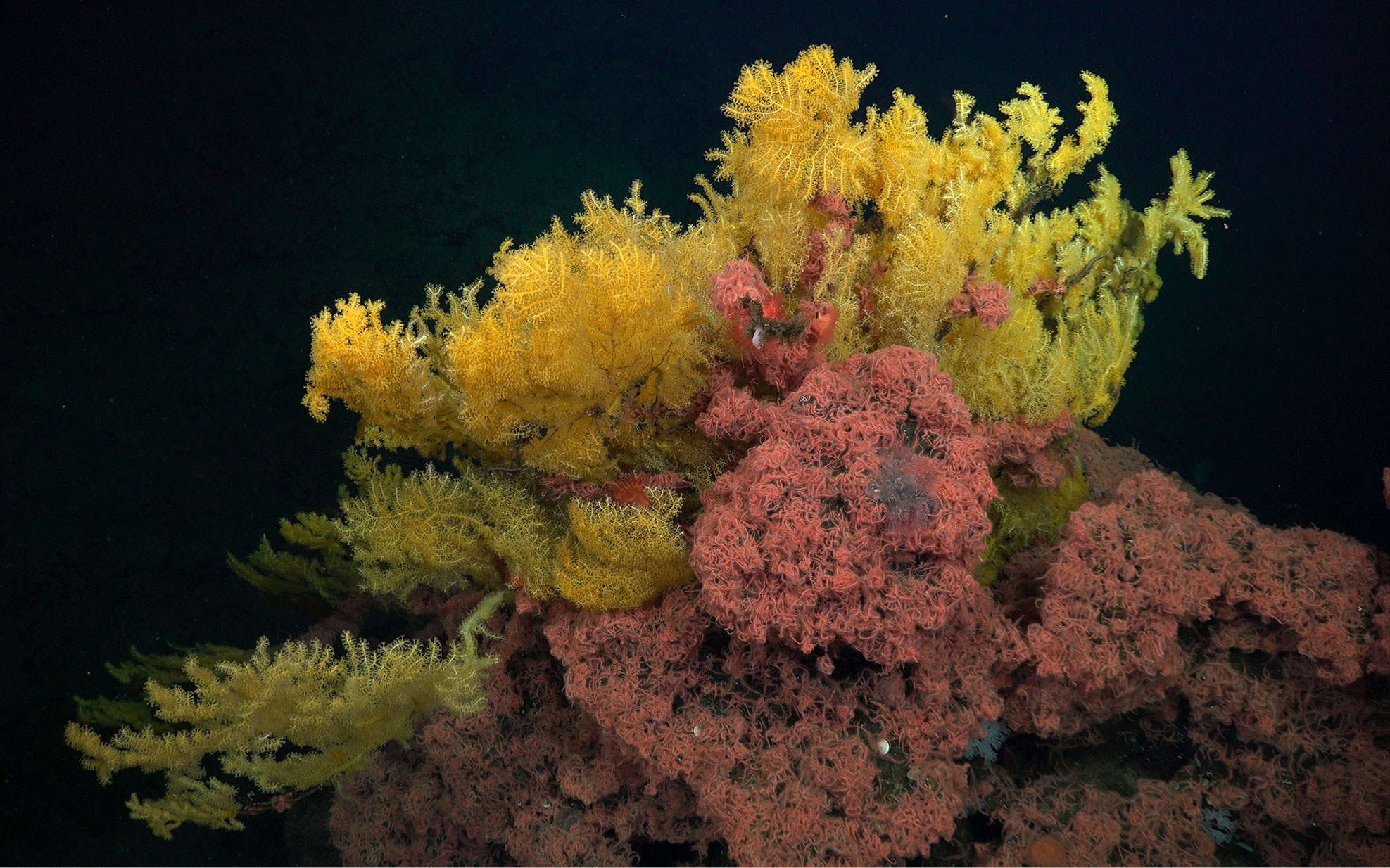 In situ colony of Laurinque elenya gen. et sp. nov. in Las Gemelas II, taken during the 2023 expedition. Credit: ROV SuBastian
The coral was found thriving in large numbers on rocky outcrops almost completely covered by brittle stars.
Hundreds of meters below the Pacific off Costa Rica, bright yellow coral colonies rise from rocky seamounts covered with brittle stars. The coral is so different in its anatomy and genetics from known relatives that scientists created an entirely new family to classify it. Found at depths of about 360 to 529 meters, the species is described in the open access journal ZooKeys.
Some colonies grow more than a meter tall. Researchers collected specimens with the remotely operated vehicle SuBastian during expeditions in 2019 and 2023 aboard the Schmidt Ocean Institute research vessels Falkor and Falkor (too). The expeditions explored seamounts near Isla del Coco and along Costa Rica’s Pacific margin.
The coral was abundant on rocky outcrops almost completely covered by brittle stars, with its golden branches extending above the densely populated seafloor.
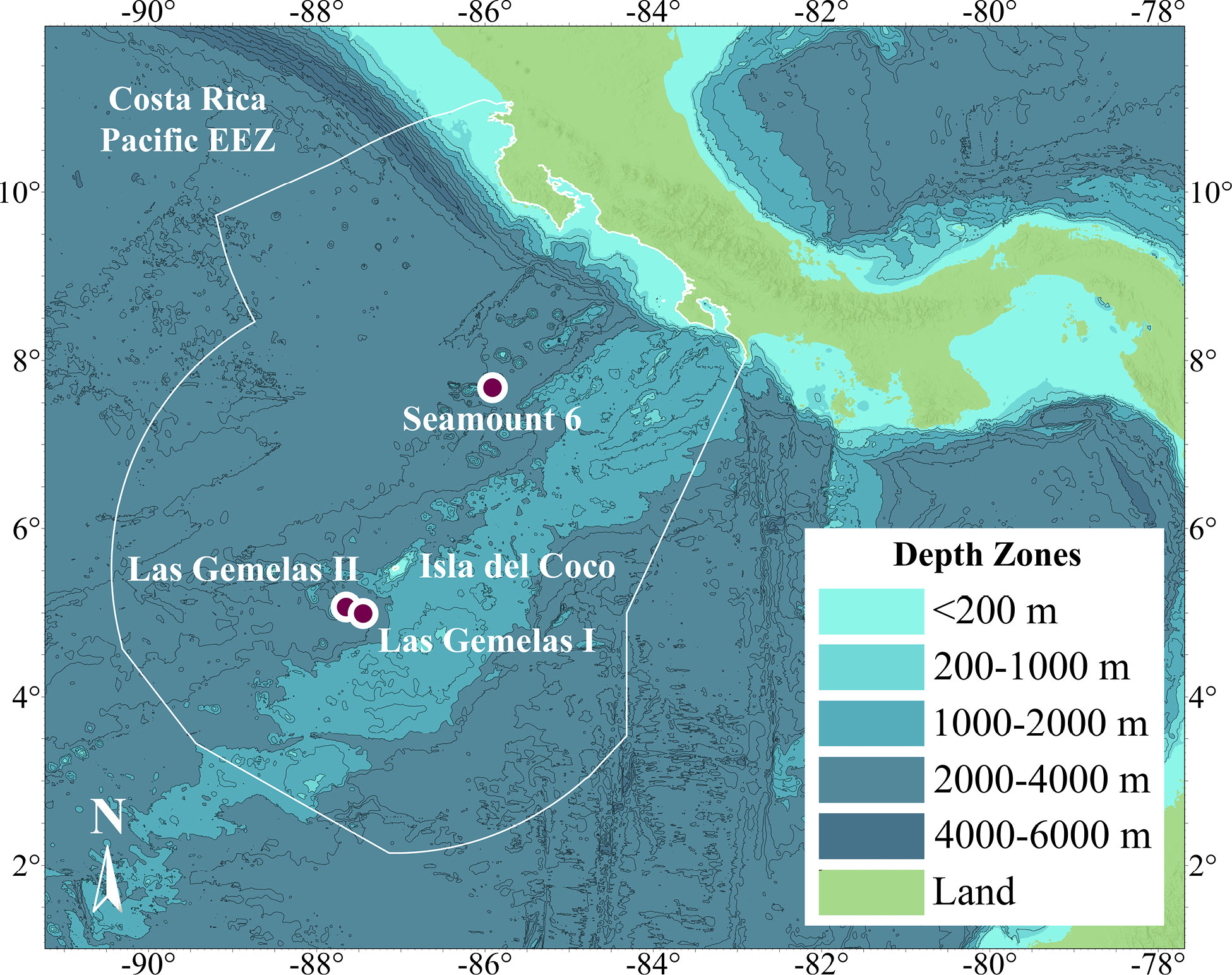 Map showing the geographic location of the collected samples within the Pacific Exclusive Economic Zone (EEZ) of Costa Rica. Credit: Beatriz Naranjo (UCR)
The seafloor inspired its unusual name
That distinctive setting helped determine the coral’s name. The new genus, Laurinque, is derived from “Laurinquë“, the Quenya word for “golden tree.” Quenya is the Elvish language created by J.R.R. Tolkien for The Lord of the Rings and The Silmarillion, and the name refers to the coral’s bright yellow color and tree-like shape.
Its species name, elenya, means “stellar” or “of the stars” in Quenya, referring to the brittle stars surrounding the colonies. Together, the names reflect a deep seafloor scene that reminded the researchers of a mystical elvish landscape.
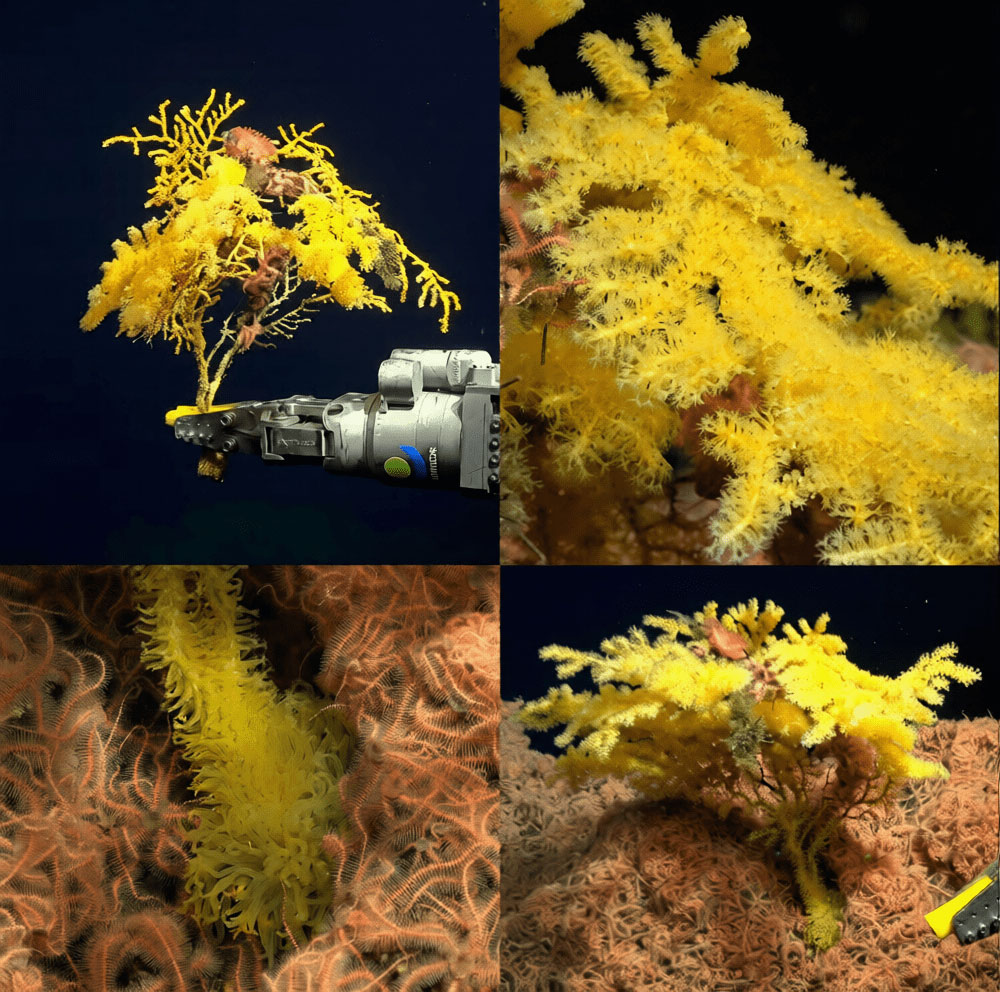 Laurinque elenya gen. et sp. nov., morphology of the holotype, in situ. Credit: ROV SuBastian
Genetics revealed an entirely new lineage
Determining the coral’s position on the evolutionary tree proved unexpectedly complicated. When researchers sequenced three genes commonly used for coral classification, each gene placed the species in a different, unrelated family, producing an unusually strong conflict among the results.
The researchers therefore used phylogenomics, which compares hundreds of genes simultaneously, to resolve its ancestry. The broader analysis showed that the coral belongs to no previously recognized family. Although its closest known relatives belong to Eunicellidae, its genetics and anatomy were different enough to justify both a new family, Laurinqueidae, and the new genus Laurinque.
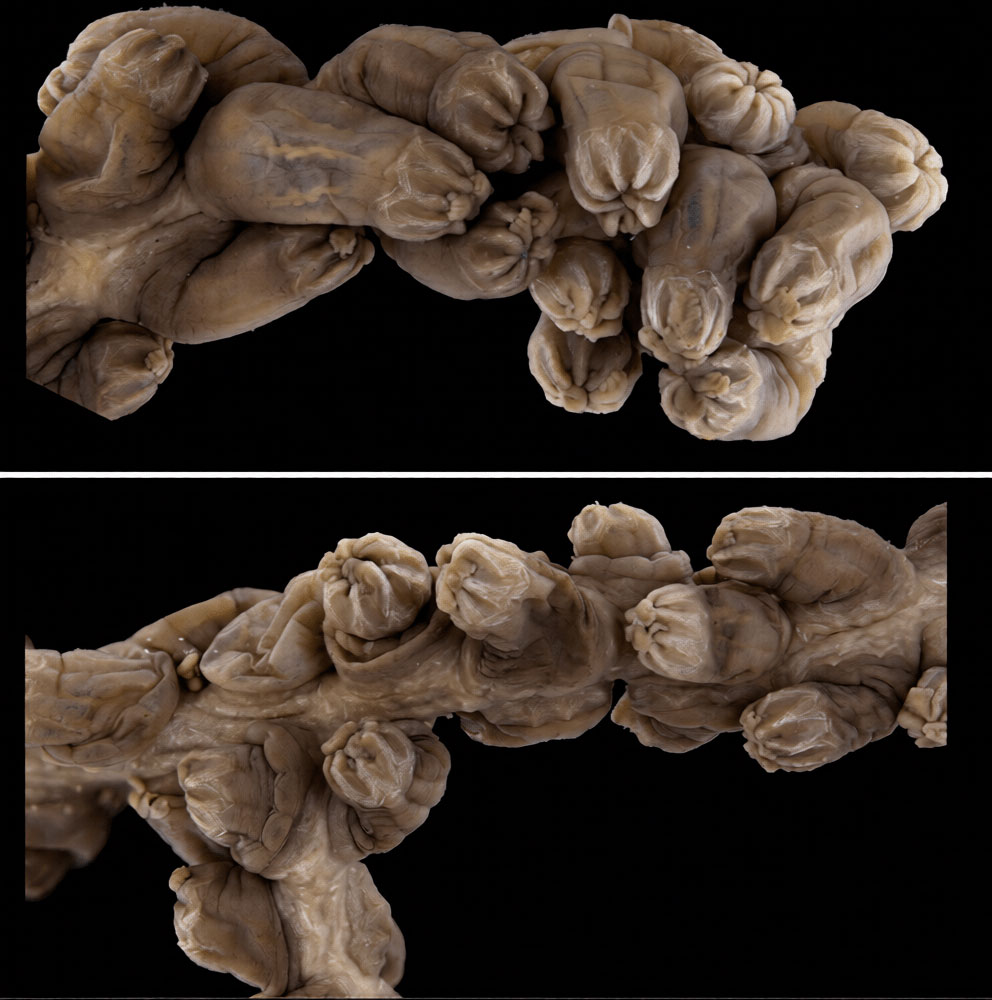 Holotype (ethanol preserved fragment) detail of anthocodiae and polyp arrangement of Laurinque elenya. Credit: Fiorella Vásquez (UCR)
“I saw the octocoral garden for the first time in 2019 and I was impressed by the beauty of the landscape, which inspired, later, the elvish name of the taxa. I thought the species could belong to a known family and genera, but after the preliminary morphological analysis I realized that it was something very different that I could not match with the known taxa.
In 2023, we collected more samples and thanks to the exhaustive molecular analyses made by my colleagues, Cathy McFadden, Catalina Murillo and Andrea Quattrini, we were able to determine the taxonomic placement of the stunning species, in one of the most enigmatic sites,” said Dr. Odalisca Breedy of Universidad de Costa Rica, lead researcher on the study.
Costa Rica’s seamounts remain underexplored
Dr Breedy led the research with an international group of collaborators. The Schmidt Ocean Institute supported the expeditions, along with a research grant from the National Geographic Society.
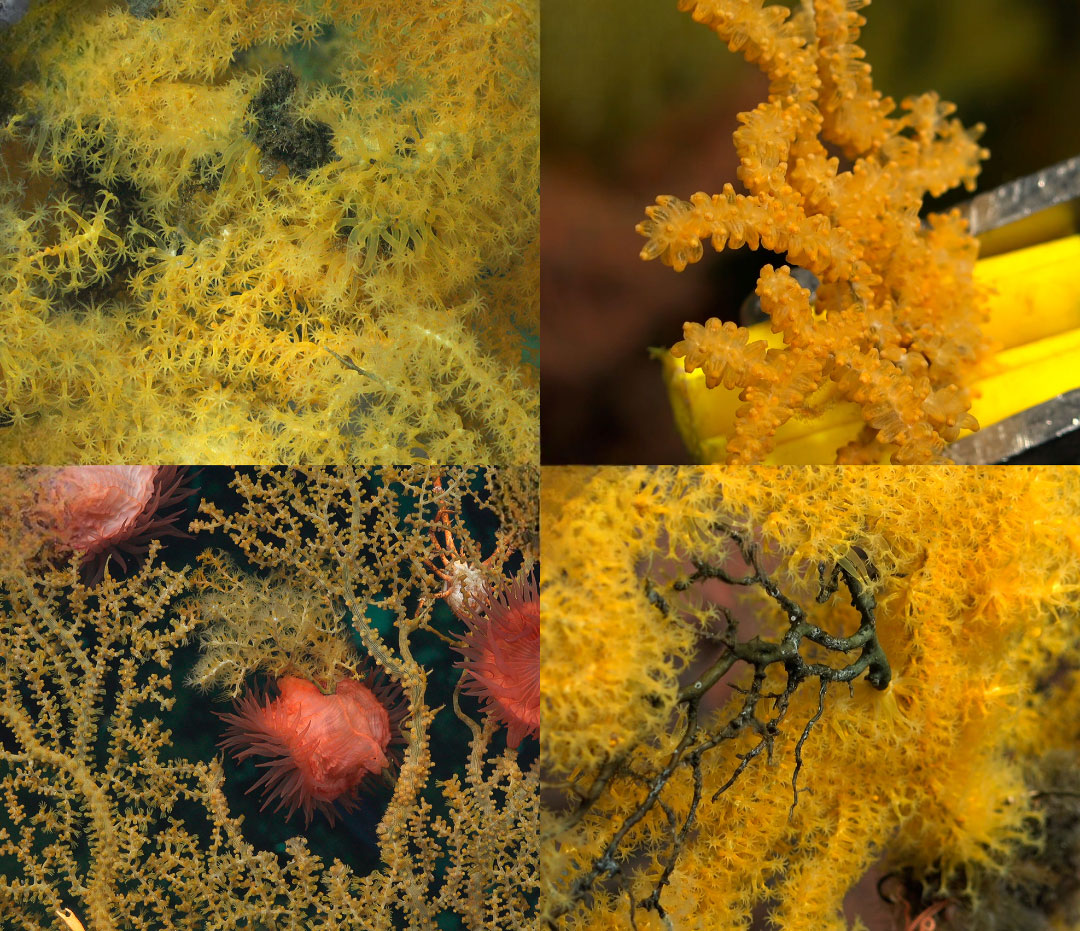 Laurinque elenya gen. et sp. nov., in situ colonies in Las Gemelas II. Credit: ROV SuBastian
The finding joins a growing number of previously undocumented species discovered on Costa Rica’s seamounts and underscores how much of the deep ocean remains unexplored. The deep ocean covers roughly two-thirds of Earth’s surface, while coral gardens like this one are considered vulnerable marine ecosystems because their complex structures provide habitat for many forms of deep-sea life.
Reference: “A coral among stars: A new octocoral family (Anthozoa, Octocorallia, Malacalcyonacea) from seamounts in the tropical eastern Pacific” by Odalisca Breedy, Catherine S. McFadden, Catalina Murillo-Cruz, Ana-Belén Yánez-Suárez, Katleen Robert and Andrea M. Quattrini, 30 June 2026, ZooKeys.
DOI: 10.3897/zookeys.1283.191899
Expeditions were supported by the Schmidt Ocean Institute and a National Geographic Society research grant.
Never miss a breakthrough: Join the SciTechDaily newsletter.
Follow us on Google and Google News.




















 English (US) ·
  French (CA) ·
  French (FR) ·