

 4 hours ago
4
4 hours ago
4
PROTECT YOURSELF with Orgo-Life® QUANTUM TECHNOLOGY
Orgo-Life the new way to the future Advertising by AdpathwayMOROCCO · AFRICA ROLE
Key Facts
- —The country Morocco is a North African kingdom of 36.8 million people, just across the Strait of Gibraltar from Spain. Its economy, about US$174 billion, is less than a twentieth the size of Britain’s.
- —Why it matters Its banks, the state fertiliser group OCP and Atlantic ports give it influence across West Africa and the Sahel.
- —Why now King Mohammed VI named Fatima Ezzahra El Mansouri head of government on 29 September 2026. She is the first woman to hold the post.
- —What happened Her Authenticity and Modernity Party (PAM) won 97 of 395 seats in the 23 September election. It needs partners to reach a 198-seat majority.
- —The numbers The economy grew 4.9% in 2025, inflation averaged 0.8% and unemployment stood at 13%, according to official statistics.
- —What it means for you Investors get a stable, Europe-linked base for West African markets. Foreign policy is steered largely by the royal palace, so a new cabinet rarely changes it.
- —Still open Who joins the coalition and who runs foreign affairs. The UN Security Council must also renew its Western Sahara mission by 31 October 2026.
The weight of Morocco in Africa rests on banks, fertiliser, ports and patient diplomacy, not on size. A new government is now forming in Rabat, led by the country’s first woman head of government.
Many outsiders know Morocco as a holiday destination or a factory floor for European carmakers. This guide explains how the North African kingdom projects influence across the continent, and what the change of government means.
A New Government in Rabat
Morocco held parliamentary elections on Wednesday 23 September 2026. The centre-right PAM came first with 97 seats, ahead of the outgoing ruling party, the National Rally of Independents (RNI), on 66.
The nationalist Istiqlal party took 65 seats and the Islamist Justice and Development Party (PJD) 54, AFP reported. Turnout was the lowest in nearly two decades.
On Tuesday 29 September the king appointed El Mansouri, 50, under Article 47 of the constitution. It requires him to choose from the largest party.
She was mayor of Marrakesh and housing minister in the outgoing cabinet.
No new cabinet had been named by Sunday 4 October. PAM’s national council has formally tasked her with coalition talks, Morocco World News reported.
Who Sets Morocco’s Africa Policy
Morocco is a constitutional monarchy in which the king keeps the final say on foreign affairs, defence and religion. King Mohammed VI has reigned since 23 July 1999.
Nasser Bourita has been foreign minister since April 2017, with a portfolio covering African cooperation. He stays in post in a caretaker role until a new cabinet is sworn in.
The central bank, Bank Al-Maghrib, is run by Abdellatif Jouahri, governor since 2003. On 22 September 2026 it held its key interest rate at 2.25%.
How Big Is Morocco in Africa?
Morocco sits at the north-western corner of the continent, where Europe, the Arab world and sub-Saharan Africa meet. Its 2024 census counted 36,828,330 residents, far fewer than Nigeria, Ethiopia or Egypt.
The High Commission for Planning (HCP), the national statistics office, puts 2025 output at 1.72 trillion dirhams (about US$174 billion). That uses 9.86 dirhams per US dollar, the market rate at the close on 2 October 2026.
Real growth reached 4.9% in 2025, up from 4.4%, helped by a farm recovery and strong investment. Output per person was about 45,600 dirhams (about US$4,600).
The economy is unusually diversified for the region. Car and aircraft parts, phosphates, farm exports, tourism, banking and logistics all carry weight.
Drought remains the main weak spot, because farming still employs about a quarter of workers. The HCP put 2025 unemployment at 13%, and at 37.2% for people aged 15 to 24.
Morocco Compared with Its Rivals
Egypt has a far larger population and economy, plus the Suez Canal. Nigeria and South Africa are bigger markets with deeper capital pools.
Morocco competes on location, political stability and links to European factories. Its banks and telecom groups also give it a stronger commercial footprint in French-speaking West Africa than most northern neighbours.
Algeria, its eastern neighbour, has larger oil and gas reserves and a bigger army. The two are rivals, mainly over Western Sahara, and their land border has been closed since 1994.
Back in the African Union
Morocco left the Organisation of African Unity, the African Union’s forerunner, in 1984. It walked out after the body admitted the Sahrawi Arab Democratic Republic (SADR), the state proclaimed by Western Sahara’s independence movement.
Rabat rejoined the African Union (AU) in January 2017. That let it argue its case on Western Sahara from inside the continent’s main political body.
The SADR is still an AU member, which limits Rabat’s room inside the union. Algeria backs the Polisario Front, the movement behind the SADR, and frames the issue as self-determination.
Western Sahara: The Dispute That Shapes Everything
Western Sahara is a former Spanish territory on the Atlantic coast, south of Morocco. Morocco controls most of it and calls it its Southern Provinces; the UN lists it as a non-self-governing territory.
Rabat offers autonomy under Moroccan sovereignty, a plan first presented to the UN on 11 April 2007. The United States recognised Moroccan sovereignty over the territory in December 2020.
On 31 October 2025 the UN Security Council adopted Resolution 2797 by 11 votes to none, with China, Russia and Pakistan abstaining. It backed talks “taking as basis Morocco’s Autonomy Proposal”.
The resolution extended the UN mission there, known as MINURSO, until 31 October 2026. Another renewal vote is therefore due within weeks.
Trade, Corridors and the Sahel
Morocco is not a member of ECOWAS, the Economic Community of West African States. Its own regional bloc, the Arab Maghreb Union founded in 1989, is largely frozen by the quarrel with Algeria.
Morocco ratified the African Continental Free Trade Area (AfCFTA) agreement on 24 February 2022. It deposited the ratification with the AU on 18 April 2022, according to the AU treaty register.
In November 2023 the king offered landlocked Mali, Niger, Burkina Faso and Chad access to the Atlantic through Moroccan ports. The plan depends on security, money and stable borders across the Sahel.
Banks, Fertiliser and Factories
Moroccan banks run subsidiaries across West and Central Africa, providing trade finance and corporate loans. That reach also exposes them to coups, sanctions and weak currencies.
OCP, the state-controlled phosphate and fertiliser group, ties Morocco to food production across the continent. The country holds roughly two-thirds of the world’s known phosphate reserves, according to the US Geological Survey.
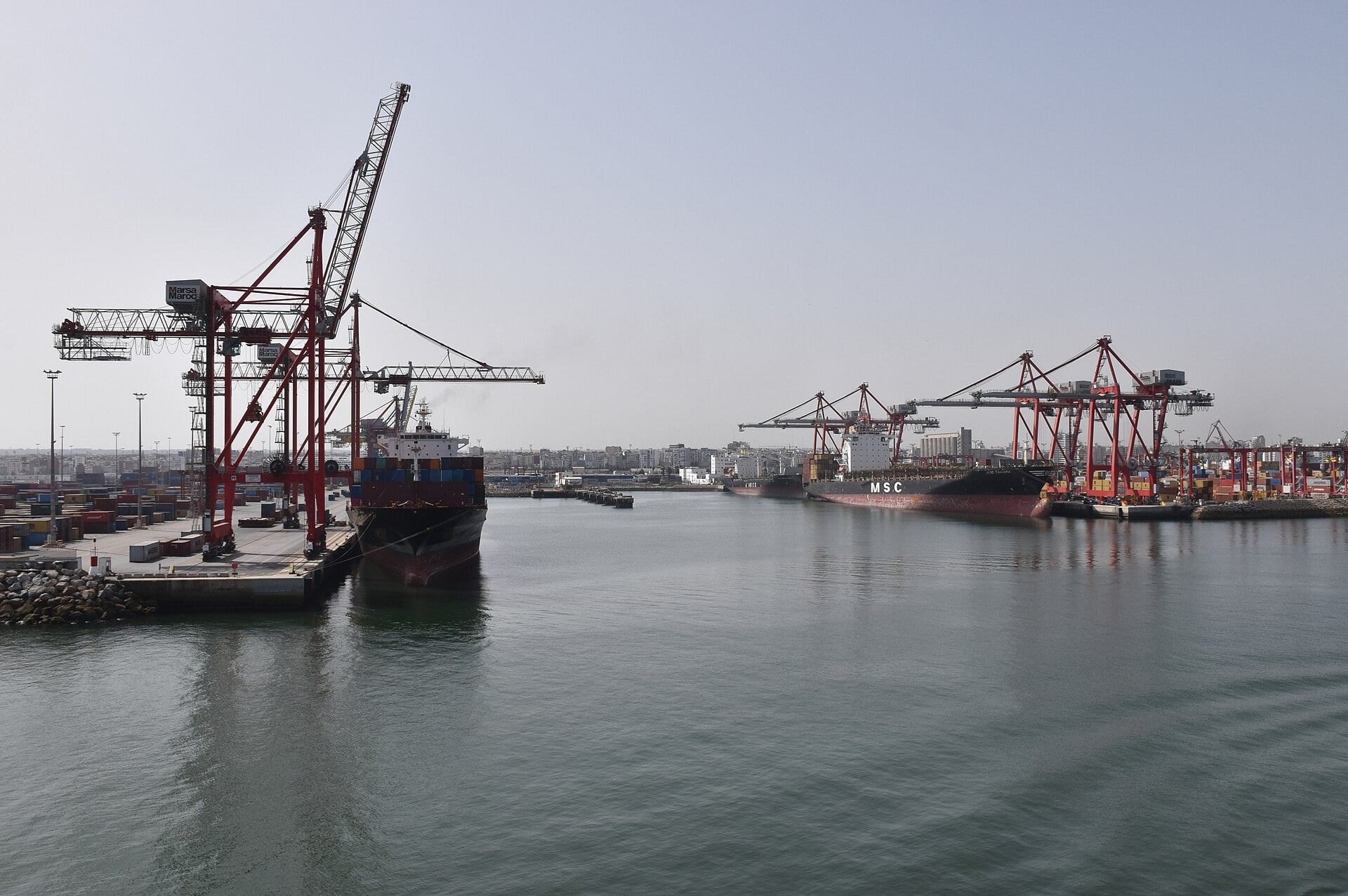
Car making has become a pillar of exports, built on factories close to European buyers. Casablanca markets itself as a hub linking African firms with European and Gulf capital.
What It Means for Foreigners and Investors
For residents and visitors, Morocco offers a stable, Europe-linked base with low inflation. Bank Al-Maghrib reported average inflation of 0.8% in 2025.
For investors, the appeal of Morocco in Africa is its role as a platform into West African markets. The risks sit mostly in those markets rather than in Morocco itself.
What to Watch
First, the coalition: which parties join PAM, and whether Bourita keeps foreign affairs. Second, the Security Council’s Western Sahara vote, due by 31 October 2026.
Third, whether the Atlantic corridor for the Sahel moves from pledge to projects. Each will show how far Rabat’s continental influence can grow.
Frequently Asked Questions
Who is Morocco’s new prime minister?
King Mohammed VI appointed Fatima Ezzahra El Mansouri head of government on 29 September 2026. She leads the PAM, which won 97 of 395 seats, and is negotiating a coalition.
Is Morocco a member of the African Union?
Yes. Morocco rejoined the African Union in January 2017. It had left the union’s forerunner in 1984 over the admission of the Sahrawi Arab Democratic Republic.
Why is Western Sahara central to Morocco in Africa?
It divides the African Union and drives the rivalry with Algeria. The UN Security Council backed talks based on Morocco’s autonomy plan in October 2025.
How big is Morocco’s economy?
Official statistics put 2025 output at 1.72 trillion dirhams, about US$174 billion at current exchange rates. Real growth was 4.9% that year.






 English (US) ·
  French (CA) ·
  French (FR) ·