

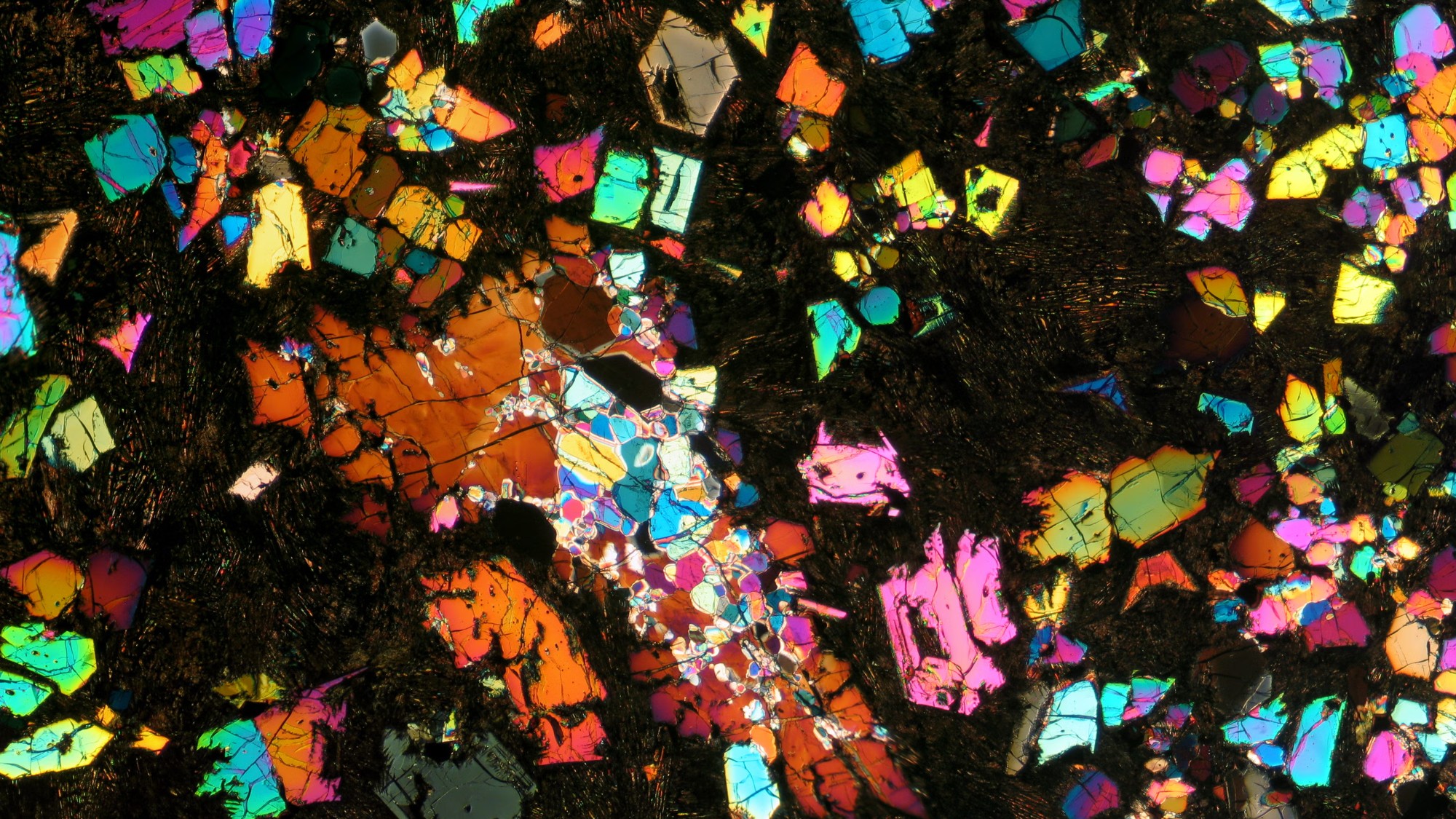
A rare meteorite recovered from the Sahara Desert contains the first definitive evidence of a long-lost world that may have rivaled the moon in size and existed just a few million years after the solar system formed 4.5 billion years ago, according to a new study.
The meteorite, known as Northwest Africa (NWA) 12774, is a roughly one-pound (454-gram) rock discovered in the Sahara Desert in 2019. Scientists classify it as an angrite, a rare type of meteorite that ranks among the oldest volcanic rocks in the solar system. This particular chunk of space rock, known as NWA 12774, preserves an unusual chemical signature that suggests some of the solar system's earliest worlds developed differently from other rocky planets, researchers say.
"The materials that formed the angrite parent body are fundamentally different from the ingredients of Earth and Mars," study lead author Aaron Bell, who is a geoscientist at the University of Colorado Boulder, said in a statement. "These meteorites preserved evidence of a completely different pathway through which early planets developed."
By measuring tiny radioactive elements within them that act like natural clocks, scientists know that angrites formed alongside the young sun more than 4.5 billion years ago. As such, they preserve valuable clues about how planets formed and evolved, according to NASA. They are also remarkably scarce — only 68 of more than 80,000 meteorites recovered on Earth are known angrites.
What makes them particularly puzzling is their chemistry. Unlike Earth, Mars and most other rocky worlds, angrites contain very little silica — what the familiar sand is made of — a major component of planetary crusts throughout the solar system. Because of that unusual composition, scientists had long assumed they originated from a relatively small asteroid.
While analyzing NWA 12774, however, Bell and his colleagues identified crystals of a mineral called clinopyroxene that were "exceptionally rich" in aluminum, a telltale sign the rock formed under immense pressure.
By reconstructing the conditions under which the meteorite formed, the team found the mineral required pressures of at least 17.5 kilobars — more than 17 times the pressure at the bottom of the Mariana Trench, the deepest point on Earth. Such extreme conditions could not have existed inside a small asteroid, so the parent body must have been much larger, the study notes.
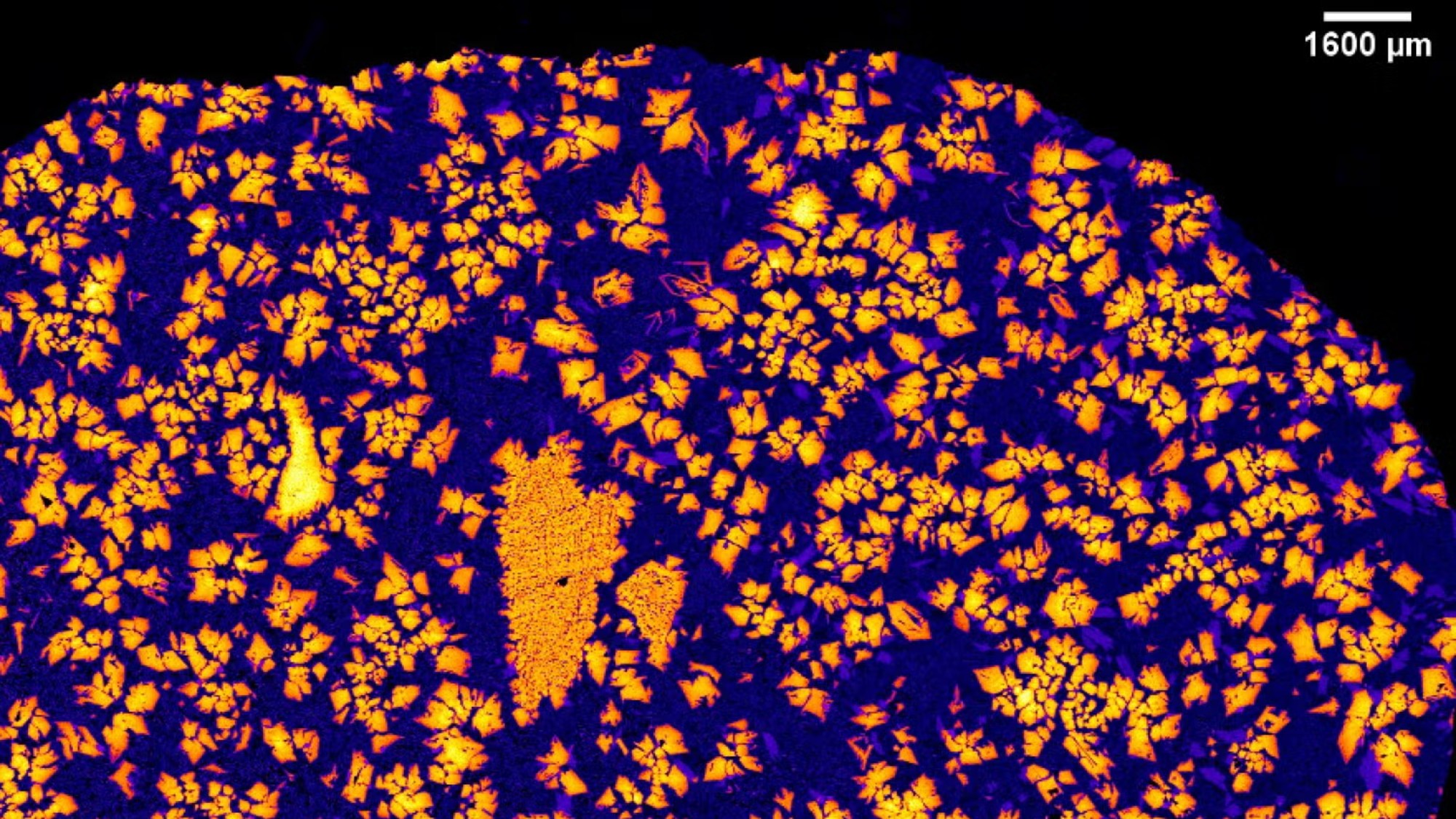
The crystals inside the space rock also preserved characteristics such as sharp edges and chemical patterns that scientists expect would have been erased if they had spent long periods deep inside a hot planetary interior. These clues suggest the minerals formed at relatively shallow depths, meaning the parent body would have needed to be substantially larger to generate the same pressures near its surface, according to the study.
Under that scenario, the lost world may have exceeded 1,118 miles (1,800 kilometers) in radius, making it comparable in size to Earth's moon and potentially approaching Mars, according to the study.
"It's incredible to think there was once a world this large," Bell said in the statement. "We only know it existed because a few fragments of it happened to land on Earth."
What ultimately happened to the ancient world remains unclear. One possibility, the researchers say, is that it was destroyed in one of the violent collisions that routinely reshaped the young solar system, with fragments like NWA 12774 later incorporated into other rocky planets, including Earth.
And it may be that there is more evidence of these lost worlds that has so far been overlooked.
"There are many meteorites sitting in drawers that haven't been thoroughly studied, so there were likely more of these protoplanets we don't know about," Bell said.
This research is described in a study published in the journal Earth and Planetary Science Letters.













 English (US) ·
  French (CA) ·
  French (FR) ·