

 13 hours ago
6
PROTECT YOURSELF with Orgo-Life® QUANTUM TECHNOLOGY
Orgo-Life the new way to the future Advertising by Adpathway
One-stop reference
Company Intelligence
Every listed company in Latin America — financials, ownership and structure for 1,450+ companies across 26 exchanges, in one place.
MAURITANIA · BUDGET
Key Facts
- —The country Mauritania is a desert republic on Africa’s Atlantic coast, between Senegal, Mali and Algeria, led by President Mohamed Ould Cheikh El Ghazouani since 2019.
- —What happened On Wednesday 21 October 2026 the Council of Ministers adopted the 2027 finance bill, the state news agency AMI reported.
- —The numbers Revenue MRU 152.11 billion (about US$3.79 billion), spending MRU 145.91 billion (about US$3.64 billion), surplus MRU 6.20 billion (about US$155 million), at MRU 40.1 per US$.
- —The assumptions The bill assumes 5.0% growth and 3.3% inflation in 2027, while the International Monetary Fund projects 4.4% growth and about 7% inflation.
- —The rule A June 2026 law caps the primary balance excluding resource income at 3.5% of GDP, and 2027 sits exactly there, against 4.0% in 2026.
- —What it means for you Mauritania exports gas with US partner Kosmos Energy, so its budget discipline and IMF review matter to American investors.
- —Still open Parliament has yet to debate the bill, and the IMF mission in Nouakchott has not yet given its view on the forecasts.
Mauritania’s cabinet adopted a 2027 budget on Wednesday 21 October that shows a surplus of MRU 6.20 billion (about US$155 million). President Mohamed Ould Cheikh El Ghazouani chaired the meeting, and parliament must still debate the Mauritania budget, the state news agency AMI reported.
For US readers, the Mauritania budget shows how a gas-exporting Atlantic state keeps its books tidy while an International Monetary Fund programme runs. It also sets a 5.0% growth forecast against the IMF’s lower projection of 4.4% for the same year.
What the 2027 Budget Contains
Revenue and grants are set at MRU 152.11 billion (about US$3.79 billion), against spending and net lending of MRU 145.91 billion (about US$3.64 billion). Finance Minister Koudiourou Moussa N’Gnour called the resulting surplus “budget sovereignty” and said it is an exception in the region.
He spoke on Wednesday evening at the AMI headquarters in Nouakchott, hours after ministers adopted the bill. The text assumes 5.0% growth in 2027, an average of 4.3% a year from 2027 to 2029, and inflation of 3.3%.
Follow this story
Get an email when there’s news on Mauritania
Free. One email a day at most, and only when there is news. This also signs you up to our weekday newsletter, Africa Intelligence. Nothing arrives until you click the confirmation link, and you can stop either with one click. Privacy policy.
The New Rule Behind the Surplus
The Mauritania budget follows a June 2026 fiscal rule that caps the primary balance, excluding resource income, at 3.5% of gross domestic product (GDP). The primary balance is the budget result before interest payments, and resource income means money from gas, minerals and other natural wealth.
On that measure the 2027 shortfall is MRU 21.03 billion (about US$524 million), or 3.5% of GDP. That is down from MRU 22.18 billion (about US$553 million), or 4.0%, in 2026.
The rule leaves resource income out of the target, which is why an overall surplus sits beside a deficit on the rule’s own measure. The government says the rule ties the spending ceiling to projected revenue.
Where the Money Goes
The budget backs a programme for the Nouadhibou port region costing about MRU 39.6 billion (about US$987 million) over 2026 to 2029. Of that, MRU 25.44 billion (about US$634 million) goes to productive infrastructure, including a deep-water port and a wastewater plant for the fishing sector.
The same programme sets aside MRU 4.63 billion (about US$115 million) for water and sanitation. Roads get MRU 3.06 billion (about US$76 million) and urban upgrades MRU 3.03 billion (about US$76 million).
Nouakchott, the capital, gets MRU 11.59 billion (about US$289 million) for the second phase of its city development programme. A separate emergency programme to bring basic services to local communities is funded at MRU 26.4 billion (about US$658 million) over 2025 to 2027.
What Households Get
The Aoun social support operation gets more than MRU 6 billion (about US$150 million) extra in the Mauritania budget. Cash transfers to poor households rise by MRU 1.6 billion (about US$40 million), and the minister gave no detail on subsidies.
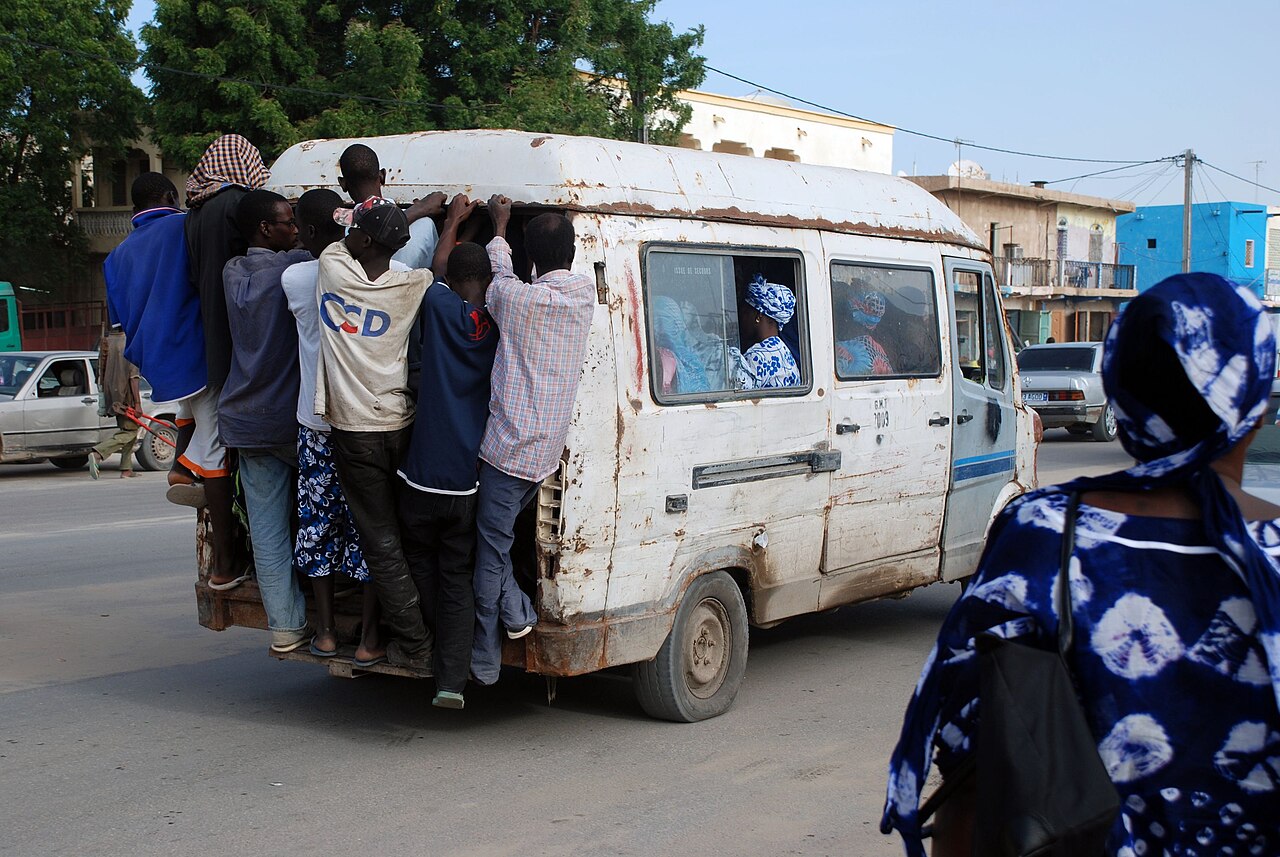
Prices are the pressure point, because tomatoes and other staples got costlier in Nouakchott after Morocco briefly paused tomato exports, Le360 Afrique reported. Government spokesman Mohamed Babana said on Wednesday that ministers track food prices and supply chains daily.
How the Plan Compares With IMF Forecasts
The International Monetary Fund projected in its October outlook that Mauritania grows 4.4% in 2027, below the 5.0% in the budget. It also expects consumer prices to rise about 7% in 2027, against the 3.3% the government assumes.
An IMF mission is in Nouakchott until 1 November to review public finances and energy, the news site Madar reported. The fund approved a 42-month, US$95.8 million programme for Mauritania in June, so its view of the 2027 numbers will carry weight.
The Risks the Minister Named
The minister listed the threats himself, starting with renewed Middle East tensions, lasting high energy prices and slower disinflation that raises subsidy costs. He added a fall in gold prices, a gas output disruption, fewer donor grants and soft loans, and investment spending below plan.
Gas matters because exports from the Tortue field, shared with Senegal, rose 16% in the third quarter. The budget’s safeguards are a spending ceiling, a cash buffer at the central bank and payments into the national hydrocarbon revenue fund.
What It Means for US Readers
Washington is the largest shareholder of the International Monetary Fund, which has a mission in Nouakchott until 1 November. US firm Kosmos Energy is a partner in the Tortue gas project, and the first US business mission to Mauritania took place in early October.
The Mauritania budget’s surplus and fiscal rule make the country look steadier to investors in gas, gold and iron ore. Its forecasts are more optimistic than the IMF’s, so US investors should watch whether the final numbers hold.
What Is Not Known
The summaries of the Mauritania budget released so far do not show how spending divides among wages, subsidies and investment. The Council’s communiqué gives no 2026 overall balance, so the change from this year’s result is unclear.
The date of the parliamentary debate on the bill is not yet public. The IMF has not said whether it accepts the 5.0% growth and 3.3% inflation assumptions.
More: Africa news in English, every day from The Rio Times.
Frequently Asked Questions
What does the Mauritania budget for 2027 show?
Ministers adopted the 2027 finance bill with revenue of MRU 152.11 billion (about US$3.79 billion) and spending of MRU 145.91 billion (about US$3.64 billion). That leaves a Mauritania budget surplus of MRU 6.20 billion (about US$155 million).
Why is there a surplus and a deficit at once?
The overall surplus counts income from gas, minerals and other resources, while the fiscal rule’s target leaves that income out. On the rule’s measure the 2027 shortfall is 3.5% of gross domestic product, or MRU 21.03 billion (about US$524 million).
How does the budget compare with the IMF’s forecasts?
The budget assumes 5.0% growth and 3.3% inflation in 2027. The International Monetary Fund’s October outlook projects 4.4% growth and about 7% inflation.
Who is Finance Minister Koudiourou Moussa N’Gnour?
He is Mauritania’s finance minister in Prime Minister Mokhtar Ould Djay’s reshuffled cabinet. He presented the budget at a press briefing at the AMI on Wednesday evening.
What does the Mauritania budget mean for US investors?
It signals fiscal discipline in a gas and mining exporter. Its growth forecast is above the IMF’s, and US firm Kosmos Energy is a partner in the Tortue gas project.
Sources: AMI, Conseil des Ministres: le projet de loi de finance repose sur une croissance reelle nationale de 5,0% en 2027, 21 October 2026; AMI, Ministre des Finances: le budget alloue a l’operation Aoun a augmente de plus de 6 milliards de MRU, 21 October 2026; Madar via Cridem, Budget 2027: un excedent de 6 milliards et le pari de la souverainete budgetaire, 22 October 2026; Sahara Medias via Cridem, Des risques eleves: la Mauritanie adopte le budget 2027, 22 October 2026; Le360 Afrique via Cridem, Nouakchott: penurie de tomate, 22 October 2026.
Editorial responsibility: Matthias Camenzind, Editor-in-Chief · Editorial standards · Report an error













 English (US) ·
 French (CA) ·
 French (FR) ·