

PROTECT YOURSELF with Orgo-Life® QUANTUM TECHNOLOGY
Orgo-Life the new way to the future Advertising by Adpathway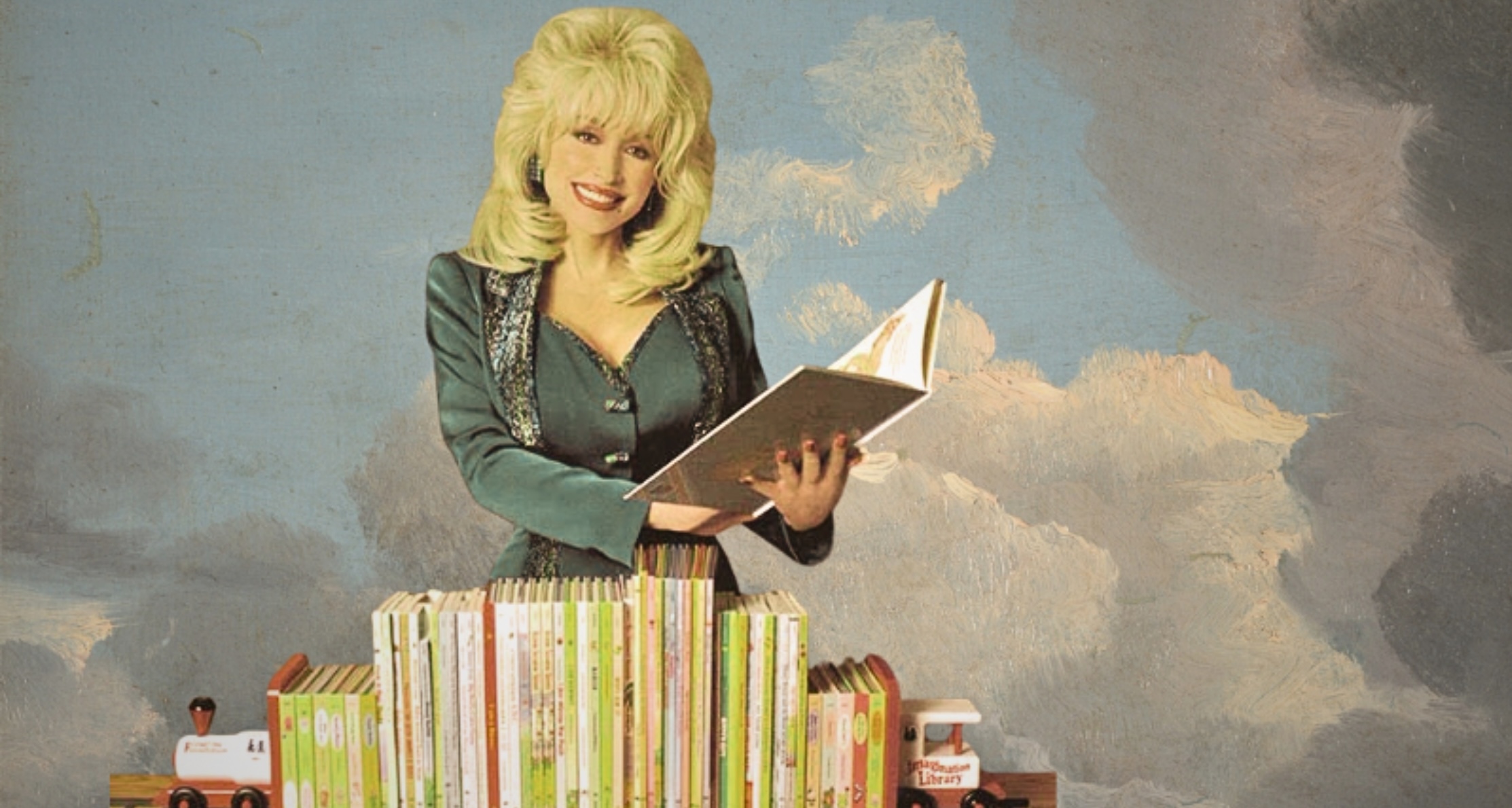
Ellen O'Connell Whittet on the Radical Enterprise of the Imagination Library
I signed my first baby up for Dolly Parton’s Imagination Library when she was one week old, at the advice of her pediatrician. It was May 2020, and the pandemic was just beginning to close its fist around the world. I was a brand-new, first-time mother in a state of total freefall, sleepless, traumatized from birth, and closed off from all the support promised to me in the form of a village or any institutions. These were buckling under the weight of much bigger crises than the one I was experiencing after having a baby during global shutdown. Hospitals and businesses and schools were all straining under the pressure of what was happening outside, but my pediatrician was going through her usual checklist as though these were all things we could handle. “Have you signed her up for Dolly Parton’s Imagination Library yet?” she asked. “It’s free, and a book will come to your house every month until your baby turns five.” I wrote it down in my phone’s notes app, next to advice about feeding and tummy time. Dolly Parton was the one who handed me the lifeline.
And true to the doctor’s—and Dolly’s—word, once a month, for five years, my daughter received a book in the mail, addressed to her. At first, it was so surreal to see her full government name on a piece of mail, but it happened so often that we got used to the idea that one of the world’s biggest superstars was sending my baby a monthly gift. We could request the books in English or Spanish, which seems like such a momentous choice for a country in which Spanish speakers take longer in reaching standardized English proficiency compared with other immigrant language groups.
Dolly herself was from a hollow in East Tennessee, and understood that any attempt at equity would begin with the alphabet. Dolly’s father never learned to read or write, a fact that always bothered her because she could see how intelligent he was. When she started the Imagination Library in 1995 in Tennessee, it was an act of retroactive love for a man who didn’t get to dream as big as his world-famous daughter was able to. That part really gets me in the solarplexus, that she spent the last thirty one years of her life ensuring that no child grew up the way her father did, without access to books. At the time of her death, the Imagination Library had expanded to mail 270 million books to children in five countries.
The books themselves were carefully curated and calibrated with my child’s age. Some were classics and some were new to me. The children were representative of children in this country, meaning they were white and Black and brown and Asian. The pictures were well illustrated and the stories were inspired. It was always an event in our home when one showed up in our mailbox. And on my daughter’s fifth birthday, waiting for me in my email inbox, was a message from Dolly.
In 2020, when every other institution was cracking under the global crisis that shaped my first years of motherhood, Dolly Parton’s Imagination Library didn’t crack. It chugged along and showed up for us every single month.
“Congrats, Graduate,” it said, addressing my daughter by name and telling her she’d made it all the way to five and to the last book in the Imagination Library, and sending her off into school and new friendships with an original set of verses about the star inside her, about diamonds in the rough, about how nobody should be allowed to block her path or dim the passion in her heart. There was a recorded video message for her too, just like there was for her on every previous birthday, wishing her a wonderful year and reminding her that there were no limits to her dreams. This, from a woman who didn’t know us and never had children of her own, to every child she had sent 60 free books to just because she thought they deserved them.
“I will always love you,” Dolly told my daughter at the end. And I knew, somehow, she really meant it.
Earlier today, when I read the news that Dolly Parton had died, I yelled out “No!” loud enough that my younger daughter came running to me to give me a hug because she knew I was sad. It’s rare for me to feel the death of someone I’ve don’t know so deeply, but I thought about her music, how she wrote “Jolene” and “I Will Always Love You” in the same night, and how she sent free books to every child she knew about, and I just felt enormously grateful to have lived at the same time as Dolly Parton.
The day of her death, I’m thinking about how radical the whole enterprise of the Imagination Library really is in a country with declining literacy rates. It’s one thing to donate your money to make sure children have books, but Dolly had the idea to send something that would arrive in our mailbox in California, or in some other mailbox in Tennessee, or a mailbox in Ontario, or a mailbox in County Cork, the same book, the same promise, regardless of what insurance people can afford or what their school districts might be able to provide. In 2020, when every other institution was cracking under the global crisis that shaped my first years of motherhood, Dolly Parton’s Imagination Library didn’t crack. It chugged along and showed up for us every single month. It’s a rare form of generosity, one that shows up reliably, for five years, no questions asked, for free.
Every outlet will call her the Queen of Country, and she was. She was funny and whip-smart and generous. But in my house, she was also the book lady, and our shelves are full of her. I will always love you too, Dolly. Thank you for teaching two more children in a long, unbroken legacy to learn more, read more, dream more, care more, and be more. I hope, wherever you are, someone is reading to you now.











 English (US) ·
  French (CA) ·
  French (FR) ·