

 12 hours ago
11
PROTECT YOURSELF with Orgo-Life® QUANTUM TECHNOLOGY
Orgo-Life the new way to the future Advertising by AdpathwayThousands of meters below the ocean surface, where no sunlight has ever reached, lies a world long imagined as a barren dark plain. But in its soft sediment and across the mineral-crusted rocks that litter the bottom, life has been unfolding for millions of years. Corals that count their age in millennia, creatures so unhurried in their growth that a single disturbance can erase what will never return. It is among the last wilderness left on Earth, and one of the least understood. And yet, this barely charted world is already becoming an arena for the global race for mineral resources.
The deep-sea world has metals such as rare-earth elements, cobalt, and nickel – which are essential for a wide range of technologies including smartphones, electric vehicles, and wind power generation. According to the International Seabed Authority (ISA), more than 30 exploration contracts have been signed with various countries for the seabed in international waters, and this trend has been accelerating in recent years.
In February 2026, Japan became the world’s first country to successfully and continuously retrieve rare-earth mud, sediment rich in critical minerals, from a depth of 6,000 meters. It happened aboard a ship almost 2000 km away, off Minamitorishima, the country’s easternmost island. For Japan – which relies on China for about 90 percent of its supply of rare earths, and which experienced a halt in exports from China in 2010 – this success sparked nationwide excitement as a major step toward breaking free from dependence on China.
The international community, though, is beginning to move in a different direction: moratoria on deep-sea mining. Even though the industry is still only in the test phase, calls to slow its advancement have already emerged. This is because the effects of extraction on the marine environment remain largely unknown. Even for polymetallic nodule mining, in which metal-rich rocks are collected from the deep ocean floor – a prospect that has been studied for decades – caution is growing. Yet Japan is pushing ahead with an unprecedented form of deep-sea mining.
As the first country to have continuously retrieved rare-earth mud from such depths, and as a member of the ISA, Japan is in a position to influence the future of the maritime order.
Critical Minerals Made-in-Japan From the Deep Sea
In Japan, research and development related to the exploitation of rare-earth mud at Minamitorishima is being conducted as part of the “Establishment of a Maritime Security Platform” initiative – a maritime component of the Strategic Innovation Promotion Program (SIP), a large-scale research program led by the Cabinet Office.
Japan depends on China for approximately 90 percent of its rare earth imports. But in 2012, China banned rare-earth exports to Japan in response to territorial disputes. That sparked an ongoing quest to diversify Japan’s supply chains – and, ideally, homeshore extraction and refining.
The discovery of mud containing rare-earth elements in the exclusive economic zone (EEZ) waters near Minamitorishima turned the deep sea into Japan’s hope, according to Professor Yasuhiro Kato of the University of Tokyo, who made the discovery.
“If we can develop the resources we’ve found, such problems [surrounding rare earths] will disappear. I believe this has truly become a hot issue in the industrial sector,” said Professor Kato.
In February, Japan conducted the world’s first successful continuous recovery of rare-earth mud from the seafloor at a depth of 5,569 meters to the ship’s deck. As part of a large-scale research program led by the Cabinet Office, this project aims to conduct demonstration tests at a rate of 350 metric tons per day by February 2027. The objective is the industrialization of rare-earth mud from Minamitorishima starting in 2028.
For the Japanese government, this is a matter of resource security. The Cabinet Office frames the Minamitorishima project as a national strategy to reduce dependence on any single supplier and secure a stable resource base.
Global Calls for a Pause in Commercial Deep-sea Mining
At the same time, a growing chorus of calls to slow down on commercial mining is evident in the international community. Forty-six countries, including those in the EU, the Pacific Islands, and Africa, are calling for a moratorium or suspension of deep-sea mining.
These calls largely concern mining on the high seas. But some countries have gone further, halting activity even in their own waters. In March 2025, Portugal became the first EU country to ban deep-sea mining, enacting a law that will remain in effect until 2050. Even Norway, the first in the world to approve commercial deep-sea mining, has shifted its policy in response to political pressure, announcing it would suspend mining plans until 2029. At the 2025 United Nations Ocean Conference (UNOC), French President Emmanuel Macron called for a moratorium as “internationally essential,” while the U.N. secretary general warned, “We must not turn the deep sea into the ‘Wild West.’”
However, these calls do not completely rule out future development. Rather, they represent a movement urging countries to wait a little longer to explore deep-sea resources and eventual commercialization.
Beyond governments, more than 77 corporations and financial institutions, including Google, Samsung, Volvo, and BMW, have pledged not to source minerals from the seabed.
Behind these calls lies a deep uncertainty about what deep-sea mining would actually do to the ocean, from sediment plumes and noise to the long-term fate of ecosystems that science has barely begun to map. What unites the countries urging restraint is a single conviction: that too little is yet known to proceed.
If mining advances in the Pacific deep sea, the effects could reach the dinner table in Japan directly. Japan consumes roughly a quarter of the world’s tuna, and for Pacific bluefin tuna in particular, it accounts for about 80 percent of the global catch and consumption.
At a time when much of the world is making concerted efforts toward decarbonization of the economy in response to climate change, the possibility that deep-sea mining could potentially release more carbon into the atmosphere troubles some scientists. This is because seabed sediment is one of the Earth’s largest and longest-lasting carbon reservoirs, having locked away organic carbon for thousands to millions of years. Disturbing it, scientists warn, risks releasing that stored carbon back into the ocean and the atmosphere.
Little Is Known About the Impact of Rare-Earth Mud Mining
Professor Jeffrey Drazen of the University of Hawai‘i, who co-authored a paper on the ecological impacts of deep-sea mining published in Nature Communications in November 2025, warned about the commercial expansion of seabed mining, “When a factory is built and its smokestacks begin to emit smoke, for the first few years no change is visible in the surrounding forest,” he said. “It is only ten years later, when the trees begin to wither, that we realize how severe the damage is.”
Deep-sea mining, he explained, follows the same pattern with one key difference. Once disturbed, the deep seafloor does not recover easily, because it operates on a timescale utterly unlike that of the surface. Life in the deep grows exceedingly slowly, and some organisms live for thousands of years. Set against the roughly 30 years it is said to take a Japanese forest to regenerate after logging, the timescale of the deep sea is orders of magnitude greater.
“The natural environment of the deep sea recovers slowly, and in some cases, recovery may be impossible,” Drazen noted.
In the Clarion-Clipperton Zone (CCZ), a stretch of the Pacific deep sea extending south from Hawai‘i, test mining in the 1970s removed nodules – rounded lumps of hardened minerals – from the seabed, leaving furrows spaced eight meters apart. According to a study published in Nature in March 2025, when revisited 44 years later, those furrows at the site were still clearly visible. While some organisms came back, large sessile animals such as corals and sponges barely returned. The study concluded that the visible physical impacts would persist “for at least many decades.”
Professor Kato, who leads the development effort, thinks that the environmental risks are being overstated. Noting that the impacts of manganese nodule mining have been studied since the 1980s, he said, “Those who have actually carried out such tests have a sense that the impact is, in reality, quite limited.”
Much of this knowledge, however, concerns the mining of manganese nodules, which has half a century of accumulated research, dating back to the 1970s. The rare-earth mud that Japan is pursuing is different: it involves sucking up vast quantities of the thick sediment, and the research into the environmental impacts of its extractions is even scarcer than for nodules.
Commercial-Scale Environmental Assessments Are on a Different Scale From Testing
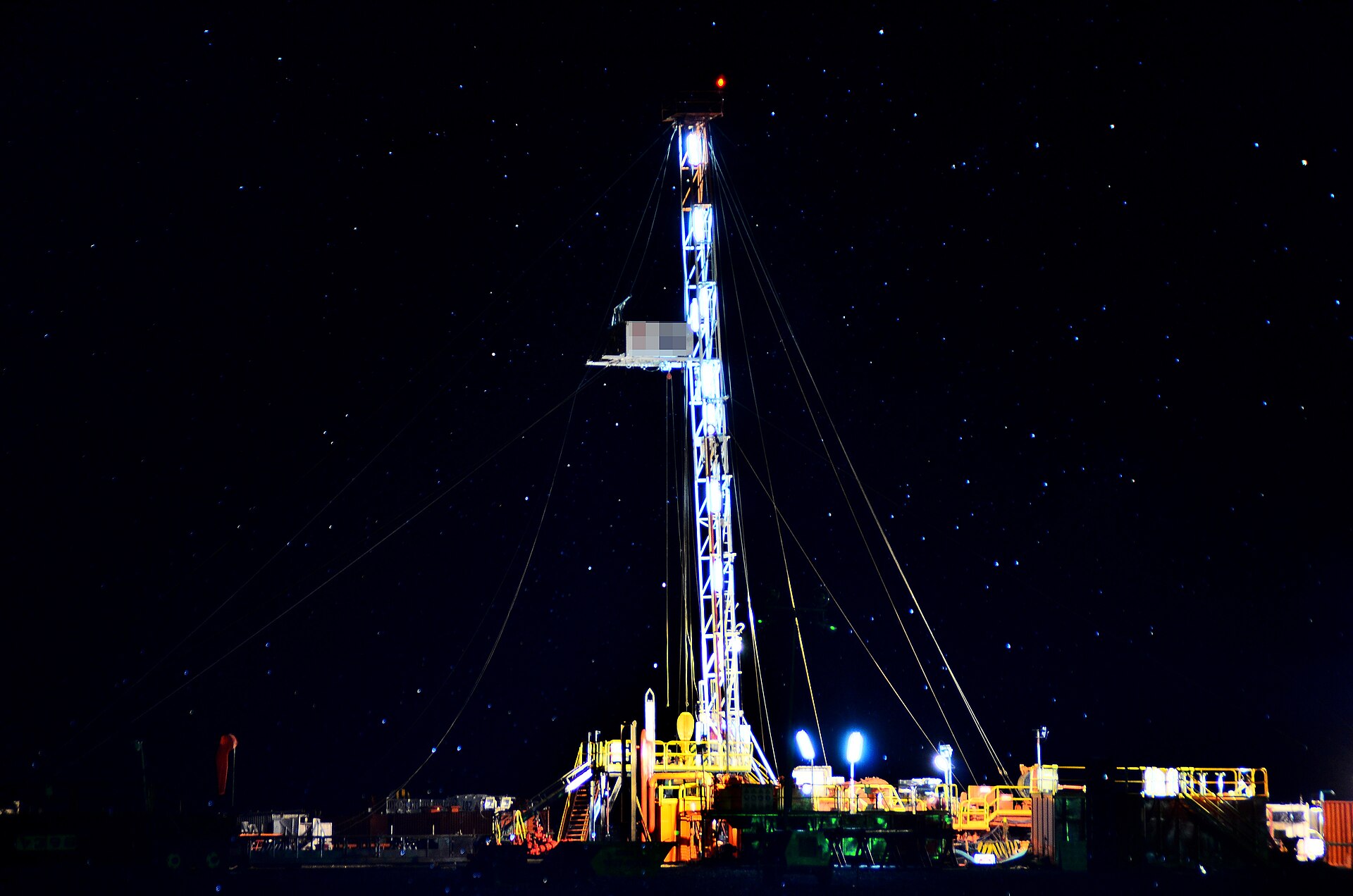
In response to these environmental concerns, the Cabinet Office’s Strategic Basic Research Program (SIP) and JAMSTEC have been conducting environmental monitoring tests in parallel with the mining operations. During tests off of Minamitorishima between January and February 2026, researchers recovered rare-earth slurry using a mining system adapted from oil and gas drilling technology and designed to minimize environmental impacts from sediment plumes.
Field operations, such as exploration and mining trials, are primarily carried out by the Japan Agency for Marine-Earth Science and Technology (JAMSTEC). The tests involved deploying methods developed by SIP Ocean, which have since become ISO international standards, to help monitor environmental changes during mining operations and document the condition of the seafloor prior to extraction.
Hiroyuki Yamamoto observed these operations firsthand as project leader of the Marine Environmental Impact Assessment System Development Project Team, which evaluates the environmental impacts of deep-sea resource development. He draws a sharp distinction between two things that are easily conflated: JAMSTEC’s monitoring technology and tools to detect changes on the seafloor, and the actual evaluation of what commercial-scale mining would do to the ecosystem. SIP, he said, has built the former, not the latter.
“SIP hasn’t done an impact assessment. Developing monitoring technology and conducting an impact assessment are two different things. Once you say you’re going to mine on a commercial basis, you have to run the calculations at that scale – and that hasn’t been done yet,” said Yamamoto.
The reason, he explains, is that such an assessment requires modeling at a commercial scale that does not yet exist while the project is still in a test phase. The implication is striking: a project the government says could reach commercial production by 2028 has not yet been assessed – and by its own lead scientist’s account, cannot yet assess – what mining at that scale would do to the deep sea.
The rare-earth mud layer on Minamitorishima was formed approximately 34.5 million years ago. Once the deep seafloor is disturbed, recovery takes at least many decades, if not longer. However, the reality is that there is currently no long-term monitoring program in place to observe this recovery process.
The Cost Wall Facing Commercialization
While some are calling for rare-earth commercialization on Minamitorishima within the next few years, Yamamoto had this to say in response to expectations of Japan’s goal of commercialization by 2030: “What SIP is doing in its surveys isn’t suited for commercialization. Extraction of 350 metric tons a day is simply impossible. Even if it were possible, whether it would be commercially viable is a separate issue. I think it will take time.”
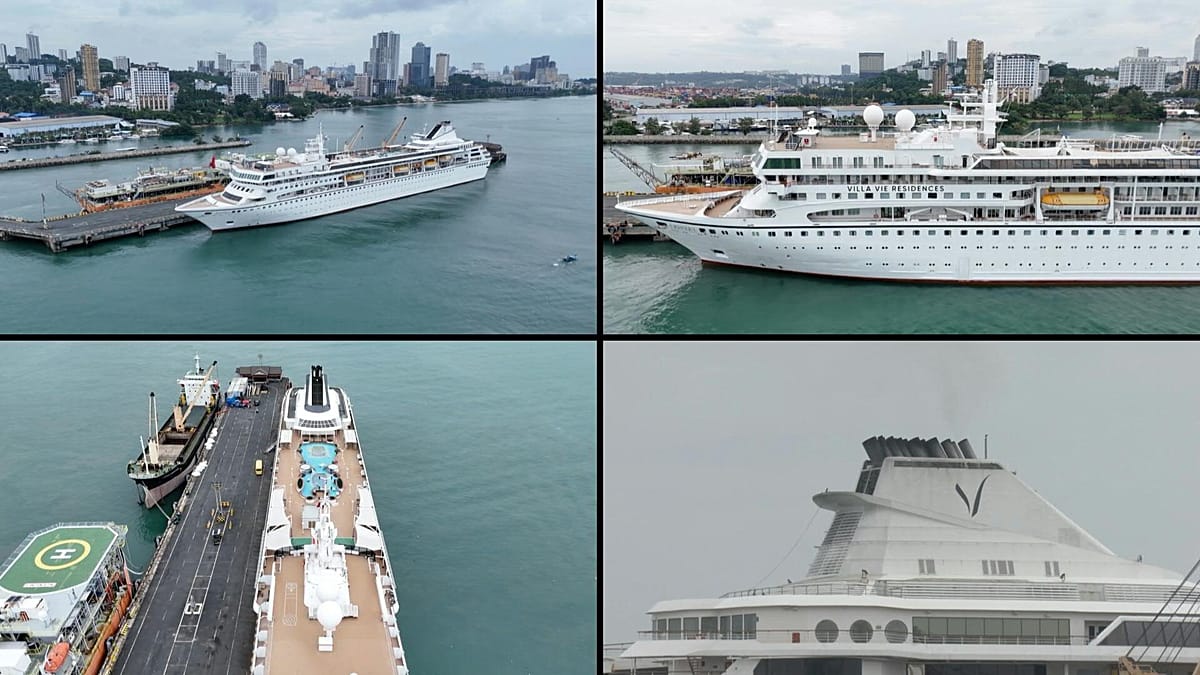
While the recent test by the research vessel Chikyu lasted only a few days, commercial mining would require the vessel to remain at the same site for months. Minamitorishima is far from the mainland, and the mud lies deep. The round trip and the work at such depths cost an enormous amount. “More than 10 million yen (over $65,000) disappears every day,” Yamamoto said. “Even while the ship sits still, the thrusters run constantly, to hold it in position.”
The problem is that even with massive investments, the amount of rare-earth elements that can be extracted is extremely small. Based on the results of the current trials, there appears to be no prospect of Japan being able to meet this demand on its own. There remains a significant gap between the amount of resources lying on the seafloor and the ability to extract them economically.
The pull of commercialization endures, as rare earths are indispensable to modern life. The medium-to-heavy rare earths said to be abundant in the Minamitorishima mud are the ones whose supply China monopolizes. Even with a wide gap between the resources lying on the seafloor and the ability to extract them economically, hopes for development run deep.
Researchers in the field are unanimous that Japan cannot realistically reach commercial production by 2030. So even if commercial mining were formally suspended until then, experts like Tanaka say there would be no real loss. That time could instead be used to refine monitoring technology, work through the unresolved problems, and engage directly in shaping the international rules, and to bring national legislation into line with UNCLOS as well.
And yet Japan will not support a moratorium.
Japan’s motivations are not simple. Julie Klinger, who studies rare earth supply chains at the University of Wisconsin–Madison, sees several calculations entangled here.
“It is for multiple reasons. The instability of dependence on China is real. There is also the matter of alliance management. The October 2025 U.S.–Japan Framework for Securing the Supply of Critical Minerals and Rare Earths explicitly links Japanese mining investment with U.S. defense supply chains,” she explained.
“And there is also the tech demonstration aspect as well. Japan’s tech and engineering breakthroughs in relation to seabed mining and exploration are themselves of very high value, scientifically, diplomatically, and potentially as a high-value export.”
Why does Japan cling so tightly to a 2030 commercialization that researchers themselves call impossible? Securing resources, managing an alliance, showcasing technology – with all of these entangled factor, the answer may lie not in the rare earths themselves, but in the geopolitics that surround them.
This article was produced as part of the Earth Journalism Network’s “Mining the Unknowns” project. It was first published in Japanese by Toyo Keizai and in English by the Earth Journalism Network and is republished with permission.

















 English (US) ·
 French (CA) ·
 French (FR) ·