

PROTECT YOURSELF with Orgo-Life® QUANTUM TECHNOLOGY
Orgo-Life the new way to the future Advertising by Adpathway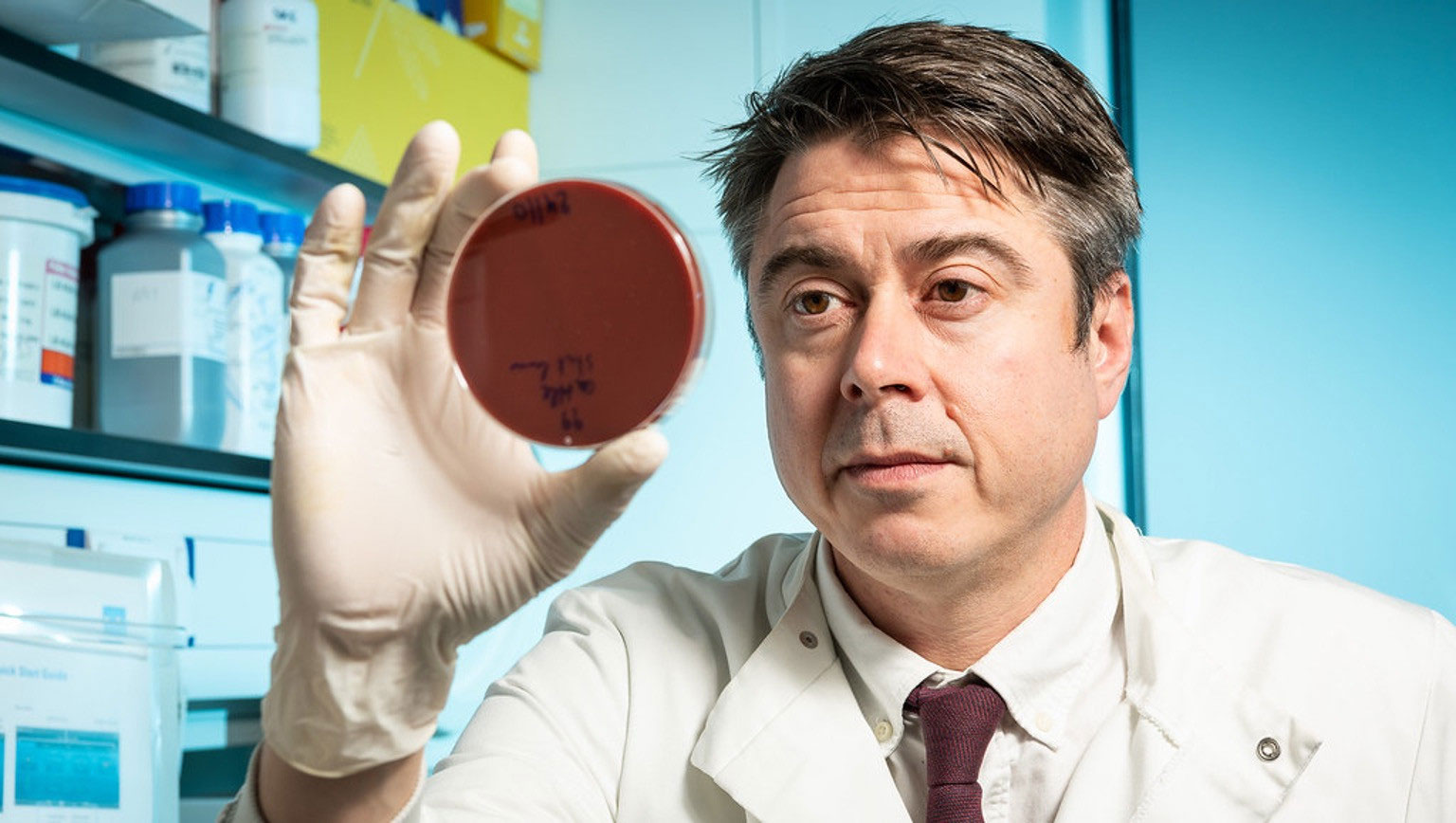 Professor Samuel Sheppard, Science Lead for Digital Microbiology and Bioinformatics at the Ineos Oxford Institute for antimicrobial research (IOI). Credit: Ineos Oxford Institute for antimicrobial research (IOI)
The global expansion of chicken farming has created conditions that allow Campylobacter to spread, mix and adapt more readily.
Commercial poultry farms now hold billions of chickens, creating a vast habitat where bacteria can move, mix and adapt. An analysis from the Ineos Oxford Institute for Antimicrobial Research at the University of Oxford found that industrial poultry production has increased the movement of Campylobacter more than 100 times, allowing strains once associated with wild birds to circulate widely among farmed chickens.
Campylobacter is the world’s most common bacterial cause of diarrhea. In the UK, it produces more than 3.5 times as many cases of gastroenteritis each year as all other monitored foodborne bacteria combined. Treatment is also becoming more difficult as antimicrobial resistance (AMR), the ability of bacteria to withstand drugs intended to kill them, continues to rise.
To reconstruct how poultry farming changed the bacterium, researchers analyzed nearly 2,800 Campylobacter genomes collected from chickens and wild birds in 30 countries (including the UK and USA) between 1979 and 2024. Their study, published in the Proceedings of the National Academy of Sciences (PNAS), indicates that the global growth of chicken production has given different strains more opportunities to spread, exchange genetic material and acquire traits that support survival.
Expanding flocks transformed bacterial spread
The worldwide chicken population has grown seven-fold since the 1960s, reaching approximately 31 billion birds. Chickens now represent about 70% of all bird biomass on Earth. This expansion has made affordable animal protein available on an enormous scale, but it has also produced favorable conditions for bacteria to circulate and evolve.
Genomic analysis identified changes associated with Campylobacter adapting to life in chickens. The affected genes were involved in antimicrobial resistance, tolerance of oxidative stress, acquisition of metals and motility, all of which can improve bacterial survival within modern poultry production systems.
 Oakem Kyne, PhD researcher at the Ineos Oxford Institute for antimicrobial research (IOI). Credit: Ineos Oxford Institute for antimicrobial research (IOI)
Professor Sam Sheppard, Professor of Microbial Genomics and Evolution at the University of Oxford and senior author of the paper, said: “Industrial farming has created one of the largest animal habitats on the planet. Our findings provide new evidence that human-driven environmental change can increase the spread of infectious diseases.
“As chicken populations have grown, bacteria that were once largely confined to wild birds have gained far more opportunities to enter poultry flocks, spread and become established. Understanding these evolutionary consequences is essential if we are to reduce future risks from zoonotic disease and antimicrobial resistance.”
Dense flocks can amplify new strains
The findings suggest that enormous, densely packed flocks may function as ecological ‘pathogen sponges,’ taking in bacterial strains from different sources and amplifying them.
Mathematical modeling showed that after chicken populations pass a critical size, Campylobacter strains originating in wild birds can continue circulating within poultry without repeated introduction. This can happen even when those strains are initially poorly suited to chickens.
The findings have direct relevance to human infection. An earlier IOI study associated 80% of human Campylobacter infections in Oxfordshire with poultry meat and found that many of those infections were resistant to antibiotics.
Farming practices shape bacterial evolution
Oakem Kyne, a DPhil student at the University of Oxford and first author of the paper, said: “As Campylobacter strains adapt to life in poultry, they can acquire traits that help them survive in challenging environments, including traits linked to antimicrobial resistance. Understanding how farming practices influence bacterial evolution is an important step toward reducing the burden of foodborne disease.”
Reference: “Accelerating Campylobacter zoonosis in the Anthropocene” by Oakem J. Kyne, Bridget S. Penman, David J. Kelly and Samuel K. Sheppard, 27 July 2026, Proceedings of the National Academy of Sciences.
DOI: 10.1073/pnas.2609969123
Never miss a breakthrough: Join the SciTechDaily newsletter.
Follow us on Google and Google News.






















 English (US) ·
  French (CA) ·
  French (FR) ·