

.svg) 2 months ago
78
2 months ago
78
PROTECT YOURSELF with Orgo-Life® QUANTUM TECHNOLOGY
Orgo-Life the new way to the future Advertising by Adpathway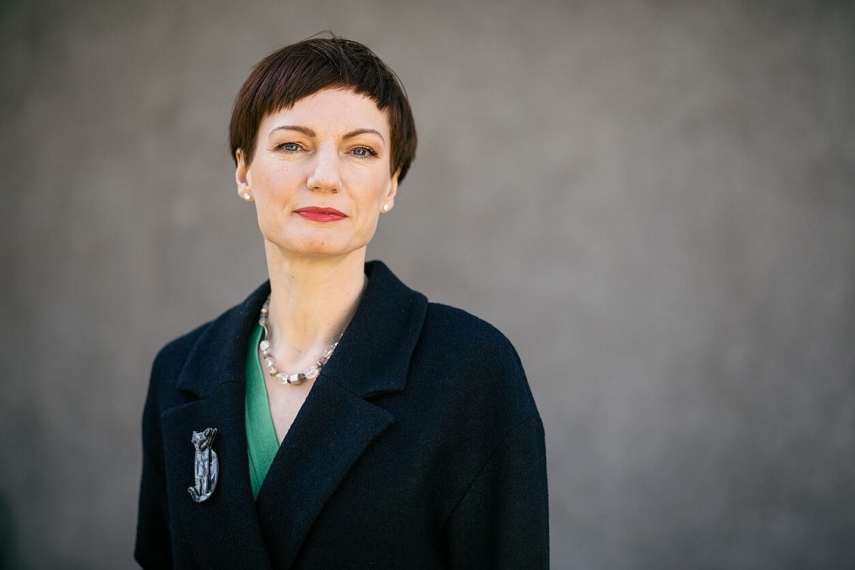
Photo: Monika Garbaciauskaite-Budriene is Director General of Lithuania's public broadcaster LRT
In December, tens of thousands of people gathered in Vilnius under the banner “Hands Off Free Speech.”
It was a timely response to warnings, as the Lithuanian public broadcaster LRT faced coordinated pressures following familiar patterns of media capture.
The past two years show how quickly conditions for media capture can arise - even in a country with strong democratic credentials and a resilient media system. The decisive factor is how early society recognises threats and how firmly it responds.
Only a partial victory
On 2 June, following a six-month legislative process initiated by the ruling majority, the Lithuanian Parliament adopted amendments to the law governing LRT. The most far-reaching attempts to take control of LRT were pushed back.
Yet significant risks remain. The budget freeze continues without proper impact assessment or consultation with LRT. Politization of the LRT Council persists: the expanded Council is still majority-appointed by politicians and the new, expanded governance structure may create inefficiency rather than strengthen oversight.
Important safeguards have been weakened. Granting the Council discretion to choose between open and secret votes when dismissing the LRT head reduces transparency and departs from clear procedural standards. The lack of transitional provisions to ensure that any dismissal procedures apply only to directors general appointed after the entry into force of the amendments raises concerns that the law could be applied in an ad personam way.
Although recent amendments represent some improvement over the initial bills, the major battle for LRT’s independence lies ahead: the proposal for a public-service contract with the government is expected this autumn.
A playbook pattern applied in Lithuania
The capture efforts unfolded over a longer time in patterns identified by media studies.
Pressure on management
In 2023, the election of the LRT Director General became a prolonged and politically marked process that lasted eight months and included two failed voting rounds. The competition was shaped not only by professional criteria, but by political affiliations. It exposed the risk of politicising LRT: eight of its twelve members are appointed by politicians, who can influence the selection of the public broadcaster’s head through their appointees. This risk became apparent when LRT Council members discussed dismissing the head of LRT with members of the Seimas in November 2025.
Instrumentalisation of the oversight mechanisms and discursive capture
At the end of 2024, the LRT Council initiated an audit of "political neutrality" at LRT in a move that threatened editorial independence and risked prompting self-censorship.
Soon after, a state audit was initiated by leader of a radical Nemunas Dawn party. The audit’s conclusions were clear: no major violations were found and no recommendation was made to change the management or funding model.
But the public was presented with a different picture shaped by the ruling majority: the audit findings were cast as 'systemic risks' and even as potential criminal misconduct. This was followed by calls to remove management and was a manifestation of what researchers call ‘discursive capture’, i.e., the deliberate undermining of trust in public media to justify intervention.
Driven by politicians and social-media bots, a sustained narrative portrayed LRT as biased, inefficient, overfunded and lacking transparency, and was accompanied by verbal attacks on journalists.
Structural pressure
In November 2025, the Seimas adopted legislation freezing LRT’s budget for three years, without a substantiated analysis of needs or impact assessment.
Simultaneous efforts under an expedited legislative procedure sought to change the dismissal rules for the head of LRT and to weaken safeguards against arbitrary removal.
Taken together, these steps reveal a coherent strategy: control of governance; constraints on funding; shaping of narratives; application of sustained institutional pressure, including subsequent investigations of LRT by oversight and control bodies at the request of legislators.
Why timing matters
The main lesson is that our success depended on the public recognising early warning signs and mobilising timely support.
The public had seen how quickly public service media were captured in Hungary, Poland and Slovakia. That experience sharpened public vigilance in Lithuania and helped trigger alarms in time.
It also drew strong attention on an international level: European institutions, the EBU and press freedom groups reacted forcefully; the European Parliament warned of an “attempted takeover” of LRT, and the Venice Commission assessed the related legislation.
Lithuania’s case shows that capture can be prevented, but warns that media freedom, while not lost overnight, can erode rapidly if early warning signs are not immediately confronted.














 English (US) ·
  French (CA) ·
  French (FR) ·