

.svg) 5 hours ago
5
PROTECT YOURSELF with Orgo-Life® QUANTUM TECHNOLOGY
Orgo-Life the new way to the future Advertising by Adpathway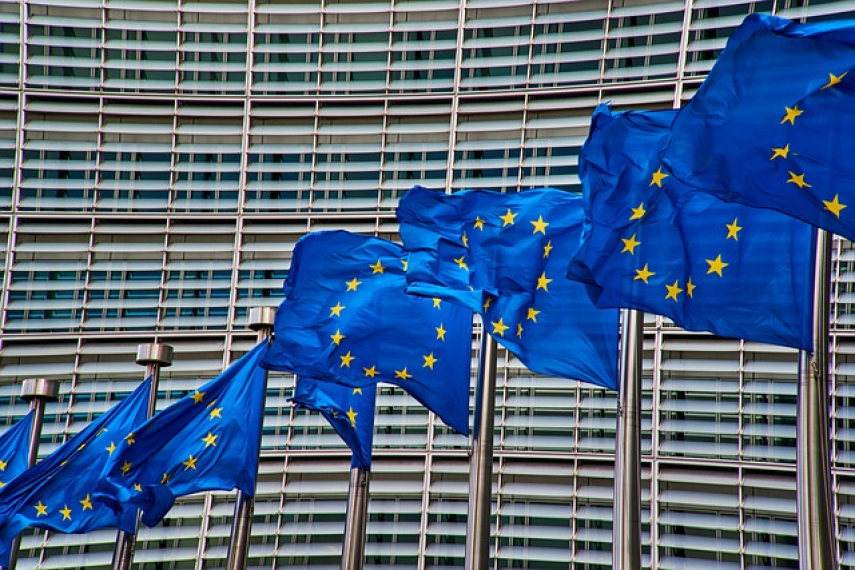
Photo: NakNakNak from Pixabay
RIGA - The European Parliament (EP) is calling for an increase in funding for research, infrastructure, and agriculture in the European Union’s (EU) 2027 budget, Kristine Liepina, the EP’s press secretary in Latvia, told LETA.
On Wednesday, the EP set the overall level of commitment appropriations for 2027 (legal promises to pay in the same year or later) at EUR 194 billion, with a targeted increase of EUR 1.17 billion compared to the European Commission’s (EC) original proposal.
MEPs set the overall level of payment appropriations (actual payments made to beneficiaries) at EUR 203.3 billion. MEPs want to ensure adequate financing for the EP’s priorities within the current budgetary constraints. The EP also calls for financing the EU debt repayment without cutting expenditure on key EU programs.
To boost European competitiveness, innovation, and cross-border connectivity, MEPs want to increase funding for Horizon Europe by EUR 63 million, transport and energy networks by EUR 260 million, and support for small and medium-sized enterprises by EUR 31.5 million. MEPs also propose EUR 50 million more for EU4Health, and EUR 96 million more for Erasmus+.
MEPs are pushing for an increase in funding for the European Agricultural Guarantee Fund by EUR 85 million, including EUR 20 million more for young farmers, and an additional EUR 85 million for the LIFE program. To better respond to natural disasters, they want to increase funding for the Civil Protection Mechanism by EUR 80 million.
To reinforce the EU’s capacity to manage migration and protect its external borders, MEPs propose increasing funding for the Asylum, Migration and Integration Fund by EUR 20 million and the Border Management and Visa Instrument by EUR 40 million.
The EP demands EUR 20 million more for military mobility. Funding for the Southern Neighborhood should increase by EUR 60 million and by EUR 30 million for the Eastern Neighborhood, with an additional EUR 40 million for humanitarian aid.
As LETA was told at the office of Nils Usakovs (Harmony), general rapporteur for the EU’s 2027 budget, the Latvian MEP indicated that, historically, following the adoption of the EU’s annual budget, rapporteurs could afford to present tens or hundreds of millions of euros, allocated to various programs, as the fruit of their labor. Usakovs concluded that this year, simply having an EU budget is an achievement in itself.
The MEP explained that the 2027 budget was drafted at an exceptionally difficult moment for Europe, as the financial situation is strained, the geopolitical situation is complex, and political fragmentation is increasing both among the bloc’s member states and within the EP.
Usakovs noted that the vote in the EP is a "semi-final," as three weeks of negotiations with the Council of the EU are still to come. He added that the EP, together with the Council of the EU and the European Commission, shares a single goal: a strong, united Europe in which its member states thrive.
"Let’s use the negotiations on the final budget of the current seven-year cycle as a good warm-up for finding compromises before the even more complex work on the new EU multiannual budget. What European citizens expect most from us right now is not slogans or symbolism, but real, tangible results," the MEP concluded.
The resolution setting out EP’s position was adopted by 400 votes to 189, with 84 MEPs abstaining. The Council of the EU adopted its position on the 2027 budget in September.
An agreement between the EP and the Council of the EU must be reached by the end of the year. The first round of negotiations is expected to take place on November 3.
















 English (US) ·
 French (CA) ·
 French (FR) ·