

 1 month ago
68
1 month ago
68
PROTECT YOURSELF with Orgo-Life® QUANTUM TECHNOLOGY
Orgo-Life the new way to the future Advertising by AdpathwayPolitics
Key Facts
—The Order. Justice Flávio Dino gave Chamber Speaker Hugo Motta 10 calendar days to send all internal processing documents on suspect amendments.
—Immediate Freeze. The decision suspends all phases of public spending tied to the amendments under investigation, including commitment, verification, and payment.
—Legal Basis. The STF used its criminal and precautionary powers to investigate suspected illicit targeting and misuse of purpose in public resource allocation.
—Financial Scale. Earlier related decisions blocked R$119 million (US$21.6 million) in assets and suspended roughly R$7 billion in commission amendments.
—Institutional Clash. The order deepens a multi-year standoff between the judiciary and Congress over control of Brazil’s multi-billion-real amendment system.
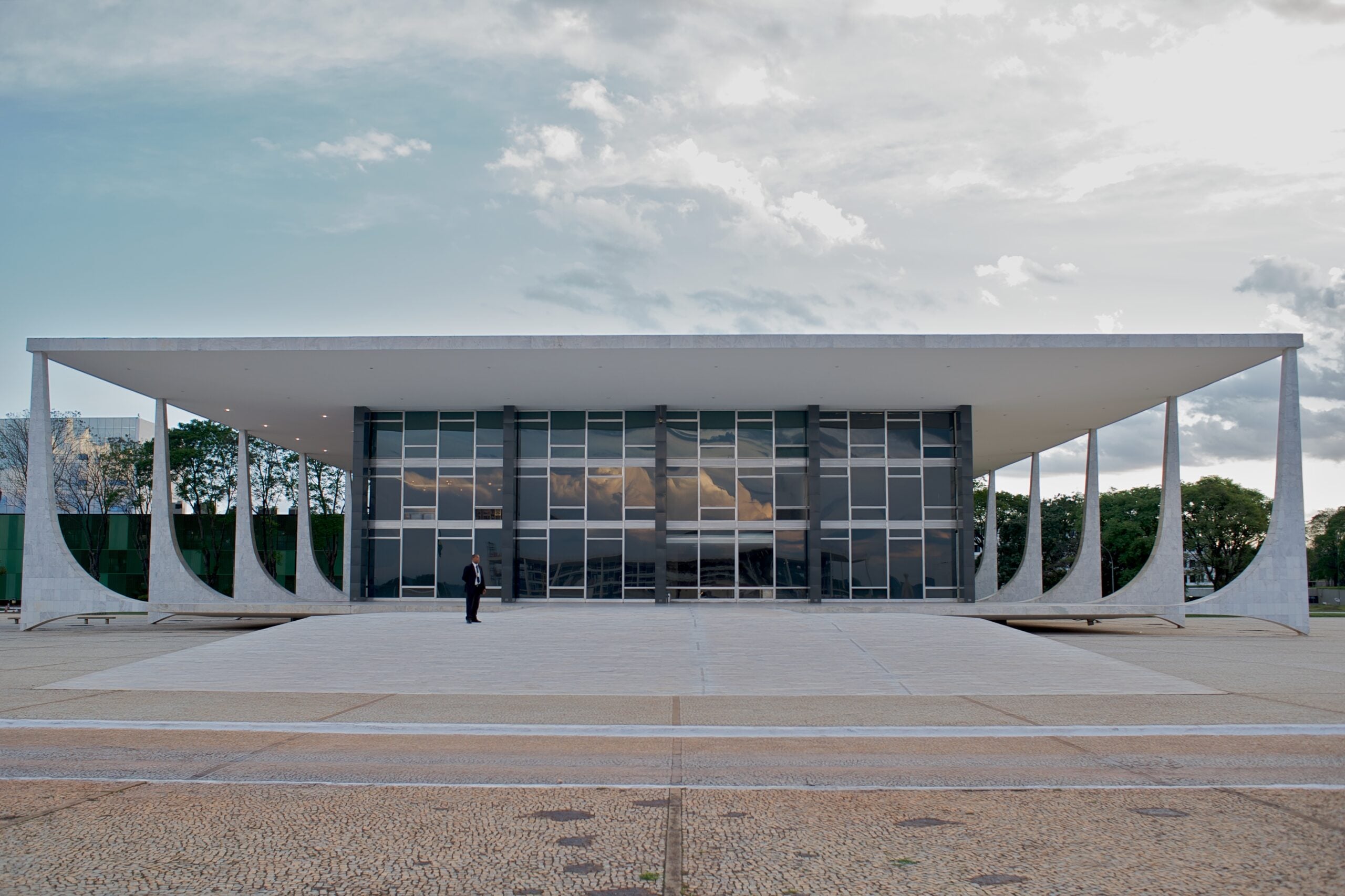
Brazil’s Supreme Court has intensified its scrutiny of parliamentary spending after Justice Flávio Dino ordered Speaker Hugo Motta to surrender all internal documentation on a set of Dino Motta amendments identified by federal police as potentially fraudulent.
One-stop reference
Company Intelligence
Every listed company in Latin America — financials, ownership and structure for 1,450+ companies across 26 exchanges, in one place.
What the July 2026 Decision Demands
Justice Flávio Dino signed the decision on 12 July 2026, dispatching an official request to the Speaker of the Chamber of Deputies, Hugo Motta. Motta must present all internal processing documents for the specific parliamentary amendments flagged by the Federal Police, organised individually by amendment, within 10 calendar days.
The order aims to substantiate an investigation into suspected illicit targeting and misuse of purpose in the allocation of public money. Dino simultaneously ordered the immediate suspension of all expenditure execution phases—commitment, verification, and payment—for those suspect amendments.
The decision also notifies the Chamber of Deputies, the Advocacy-General of the Union, and the Office of the Comptroller General to ensure compliance with the spending freeze. Once asset-freezing measures are carried out, the secrecy over the dispatch will be lifted.
The Legal Foundation for the Court’s Action
The decision rests on the Supreme Federal Court’s (STF) criminal jurisdiction and precautionary powers over high-level political and budgetary corruption cases. Legal commentators emphasise that the STF has full competence to verify whether fraud, misuse, or illicit interests exist in the allocation of parliamentary funds.
Analysts stress a crucial distinction: the judiciary cannot control the political convenience or merit of amendments, but it can control their legality. This includes examining whether an amendment serves as a vehicle for embezzlement, resource diversion, or patronage schemes that violate constitutional norms.
This order continues a line of jurisprudence dating back to 2022, when the STF restricted rapporteur’s amendments to curb opaque discretionary spending. In late 2024, Dino suspended roughly R$7 billion in commission amendments found to lack proper approval, and he has since ordered asset blocks including R$119 million belonging to PL party president Valdemar Costa Neto.
The Escalating Judiciary-Congress Standoff
The 10-day order lands amid a years-long escalation between the Supreme Court and Congress over parliamentary amendments. Hugo Motta, who became Speaker after Arthur Lira, has previously stated that Congress would not negotiate its prerogatives with the STF and publicly appealed for Dino to unblock the Legislature’s budget.
After an earlier decision blocking Costa Neto’s assets and suspending 21 suspect amendments, Motta expressed discontent with what he called undue judicial intervention in typical parliamentary activity. He argued the decision relied on inferences rather than identifying concrete deviation or abuse of public funds.
Congressional leaders fear the STF’s actions represent a challenge to their constitutional prerogative over the budget and a transfer of discretionary spending power back to the Executive. The pool of funds under dispute, including 2025 allocations and unpaid balances, could reach R$76.5 billion, illustrating the scale of budgetary power at stake.
Broader Investigations and the Secret Budget Legacy
Dino’s order fits into a broader effort to curb structural corruption in Brazil’s amendment system. Investigations into the so-called secret budget—a scheme involving over R$50 billion in unrestricted funds channelled through parliamentary amendments during the Bolsonaro administration—have been running at the STF for years.
In mid-2026, Dino also issued a separate dispatch demanding explanations about Health Ministry funds indicated by parliamentarians outside formally registered legislative amendments. This further irritated Motta, who responded by threatening to stall votes in Congress on matters important to the Executive.
Frequently Asked Questions
What exactly are parliamentary amendments in Brazil?
Parliamentary amendments are budget allocations that individual lawmakers or congressional committees direct towards specific projects, often in their home states. They have become a central tool of political negotiation, with mandatory execution rules making them a powerful instrument for legislators to channel public funds.
Why can the Supreme Court intervene in budget matters?
The STF has constitutional authority to review the legality of public spending, not its political merit. When there is evidence of fraud, embezzlement, or misuse of purpose, the Court can use its criminal jurisdiction and precautionary powers to freeze assets, suspend payments, and demand documentation to protect public coffers during investigations.
What happens if Hugo Motta refuses to comply with the order?
Non-compliance with a Supreme Court order can trigger institutional and legal consequences, including potential charges of disobedience or obstruction of justice. The standoff would likely deepen the existing political crisis between the branches, with Congress potentially retaliating by stalling legislative votes important to the Executive, as Motta has already threatened. Sources for this article include reporting from JC/UOL, Brasil247, and Valor Econômico.






















 English (US) ·
  French (CA) ·
  French (FR) ·