

 1 month ago
39
1 month ago
39
PROTECT YOURSELF with Orgo-Life® QUANTUM TECHNOLOGY
Orgo-Life the new way to the future Advertising by AdpathwayArgentina · LABOUR
Key Facts
- —What happened Airport workers postponed a strike that was set to begin on September 3.
- —New dates ATE has floated September 7-8 for a new stoppage but has not formally confirmed it.
- —Who is striking ATE members at ANAC, including ground staff and firefighters; air traffic controllers are not involved.
- —Why Workers say the government has not paid wage increases it previously agreed to.
- —The catch No verified figure exists for flights or passengers affected.
- —What comes next ATE awaits a Labour Ministry hearing on essential-service rules before deciding whether to strike.
Argentina’s airport strike was postponed just before it began on September 3. The union ATE has warned it could resume on September 7 and 8 if wage talks fail.
One-stop reference
Company Intelligence
Every listed company in Latin America — financials, ownership and structure for 1,450+ companies across 26 exchanges, in one place.
Argentina’s airport strike could resume on September 7 and 8, after being postponed just before it began. The union ATE says it will wait for a Labour Ministry hearing before deciding whether to proceed.
Strike Postponed After Government Warning
Argentina’s airport workers called off a planned 48-hour strike just before it was due to start on September 3. The government had ordered the union to guarantee at least 75% of services during the stoppage.
The State Workers Association (ATE), which represents state employees, suspended the action on September 3. It requested a hearing with the Labour Ministry to discuss wages and the strike’s legality.
New Dates: Still Not Confirmed
The Buenos Aires Herald reported on September 2 that a new stoppage was expected for September 7-8. The stoppage would use the same two daily windows as the original plan, 09:00-12:00 and 18:00-21:00.
As of September 4, the union had not formally confirmed the new dates. No outlet has reported that ATE has dropped the plan either.
The strike could still be called off if the Labour Ministry hearing produces an agreement. It could also go ahead exactly as first floated.
Who Is ATE
ATE stands for Asociación de Trabajadores del Estado, the State Workers Association, one of Argentina’s largest public-sector unions. Its general secretary is Rodolfo Aguiar.
The union is organizing this strike through its section at the National Civil Aviation Administration, known as ANAC. ANAC is the government body that oversees airports and air navigation in Argentina.
ATE members work at more than 27 airports nationwide, including Ezeiza and Aeroparque Jorge Newbery in Buenos Aires. The union has raised similar strike threats at ANAC earlier in 2026.
Which Airport Workers Are, and Are Not, Striking
ATE members covered by this action include ground traffic controllers, firefighters, healthcare staff, inspectors and administrative personnel. These are ANAC employees, not airline staff.
Air traffic controllers, pilots and cabin crew belong to separate unions and are not part of this strike, the Buenos Aires Herald reported. Ground-handling and airline staff outside ANAC are also not involved.
The Wage Dispute
ATE says the government has not paid wage increases, including extra-paritario items, that a previous Transport Secretary agreed to. The union also wants sector-wide pay talks for ANAC staff reopened.
ATE says wages have lost more than 40% of their purchasing power since President Javier Milei took office. The union also wants more funding for operational tasks and airport oversight.
No specific peso figure or percentage increase has been confirmed as of September 4. ATE says the conflict will deepen if no negotiation table is opened.
The Legal Basis for the 75% Rule
Argentine law requires unions to guarantee minimum service levels during strikes affecting essential activities. That framework comes from Law 25,877, as amended by Law 27,802.
The reform set the minimum at no less than 75% for services declared essential. National air navigation falls into that category.
ANAC applied the rule to aviation strikes through Resolución 173/2026, issued in March 2026. That resolution sets out how the 75% minimum must be calculated and enforced.
How the 75% Rule Works in Practice
The resolution measures the 75% minimum against scheduled flights during the affected time window. It does not simply guarantee three of every four individual flights.
Some flights are always exempt from a stoppage: official, medical and humanitarian flights, plus organ-transport flights. Aircraft already in the air cannot be grounded.
Routes with only one daily frequency must still be served. These carve-outs aim to limit the strike’s impact on essential travel.
Why the September Plan Was Ruled Non-Compliant
The government said ATE’s original plan for September 3-4 did not meet this threshold, according to EFE. Mercedes Cabezas, ATE’s assistant general secretary, said the Labour Ministry called the measure illegal.
The ministry argued the plan did not guarantee the required “essentiality” of the service. That finding is what pushed ATE to postpone the strike.
No Verified Impact Numbers
No verified figure exists for the number of flights or passengers affected. Reports mention possible delays and cancellations, but no exact counts.
The original strike was suspended, so operations on September 3-4 were normal. If the new strike goes ahead, its impact will depend on how many workers take part.
What Aeroparque and Ezeiza Passengers Should Expect
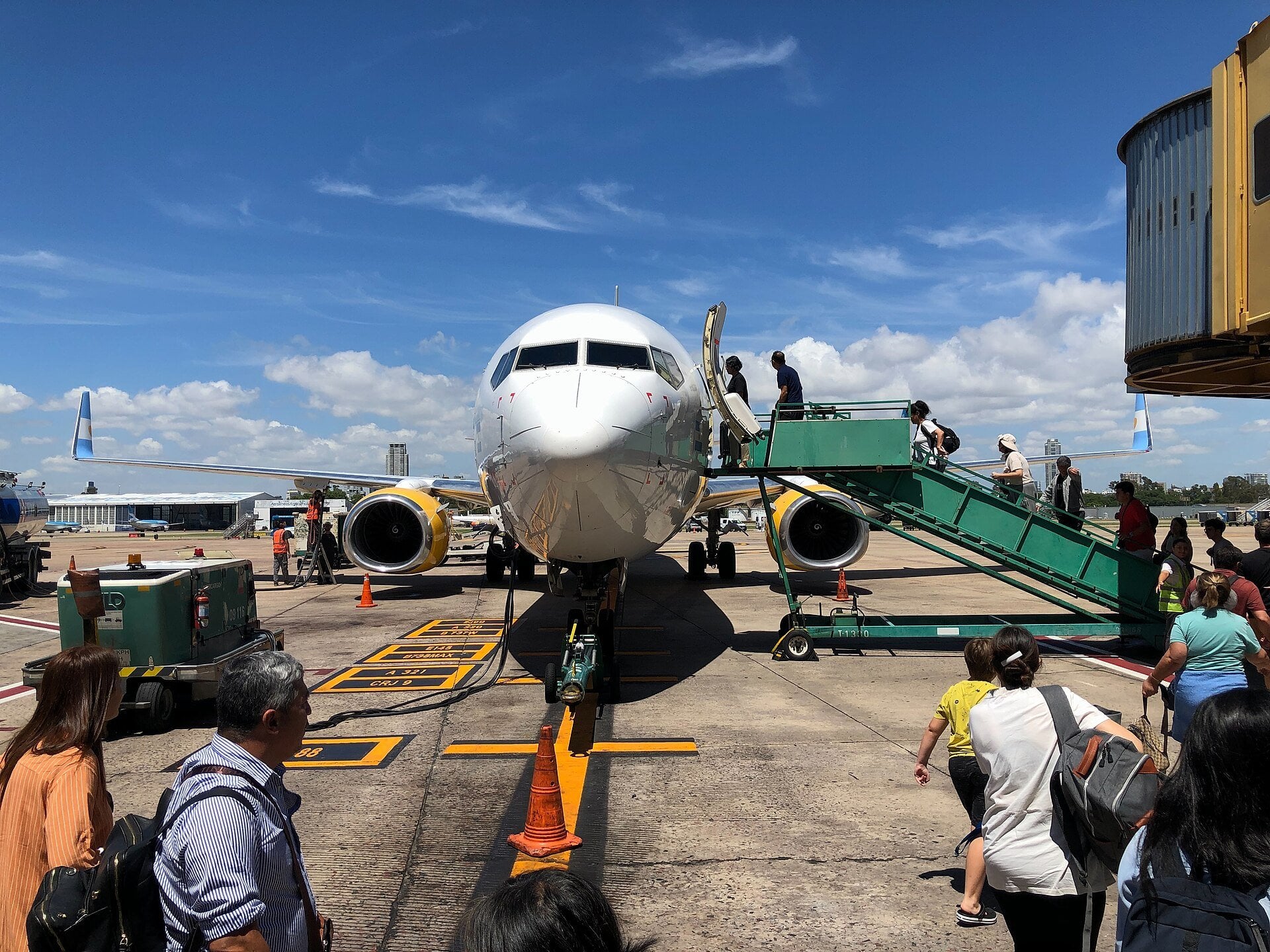
Aeroparque Jorge Newbery and Ezeiza are Argentina’s two main Buenos Aires hubs and would likely feel the heaviest impact. Aeroparque handles most domestic routes, while Ezeiza handles most international flights.
Under the 75% rule, most scheduled flights should still operate even if the strike goes ahead. Delays are more likely to cluster around the start and end of each stoppage window.
Travelers flying on September 7 or 8 should check with their airline for updates. Arriving early is advisable during the 09:00-12:00 and 18:00-21:00 windows.
How the Strike Was Postponed at the Last Minute
On the morning of September 3, the strike was set to start at 09:00. ATE postponed it minutes before that time, according to La Nación.
Mercedes Cabezas said the Labour Ministry had notified the union that the plan did not guarantee the required essential-service level. An ATE source said the measures “quedaron postergadas hasta el lunes” — postponed until Monday.
ATE called the postponement a gesture of goodwill toward the government. The union said it would hold assemblies at airport facilities on September 4 to decide its next steps.
The Role of the Ministry of Labour
ATE requested a hearing with the Ministry of Labour before postponing the strike, according to Infobae. The union wants that hearing to define the scope of aviation’s “essentiality” before any new stoppage.
The ministry can also issue a “conciliación obligatoria,” a mandatory conciliation order that forces both sides to negotiate. Such orders typically suspend strike action for a fixed period, often 15 days.
As of September 4, no such order had been reported for this dispute. Both sides remain under pressure to reach a deal before September 7.
A Precedent: The March 2026 Dispute
This is not the first time in 2026 that ATE has threatened a strike at ANAC over the same wage claim. In March, the government issued a formal conciliación obligatoria that halted a similar 27-airport strike planned for March 18-24.
Some headlines that month described the dispute as involving air traffic controllers. The union involved was again ATE, representing ground and support staff, not the controllers who manage aircraft in flight.
Aguiar said at the time that the underlying wage claim remained unresolved. That same claim is now driving the September dispute.
What Happens Next
As of September 4, talks between ATE and the government continue. The Labour Ministry has not announced a formal conciliation order for this dispute.
ATE has warned the conflict will deepen if no negotiation table is opened, a warning reported by La Gaceta on September 1. The strike could still be called off, or could go ahead as planned.
Frequently Asked Questions
Why was the airport strike postponed?
The government said ATE’s strike plan did not meet the legally required 75% minimum service level. The union postponed the action and requested a hearing with the Labour Ministry.
When is the new airport strike scheduled?
ATE has floated September 7 and 8, in the same 09:00-12:00 and 18:00-21:00 windows. As of September 4 the union had not formally confirmed the dates.
Which airports are affected?
The strike covers more than 27 airports, including Ezeiza and Aeroparque. These are the main airports serving Buenos Aires.
Will my flight be canceled?
It depends on the timing. The government requires at least 75% of services to keep running, so most flights should proceed even if the strike goes ahead.
Sources: Buenos Aires Herald; Infobae; La Nación; EFE; 0223; La Gaceta.



















 English (US) ·
  French (CA) ·
  French (FR) ·