

 1 month ago
13
1 month ago
13
PROTECT YOURSELF with Orgo-Life® QUANTUM TECHNOLOGY
Orgo-Life the new way to the future Advertising by AdpathwayETHIOPIA · ENERGY
Key Facts
—The revenue flip: Data-mining companies paid Ethiopian Electric Power 50.4 billion birr last year, against 46 billion birr from the national utility. Their contracts are settled in foreign currency.
—A third of the power: Data miners took 32.5% of the utility’s output by volume, behind the Ethiopian Electric Utility on 56.4%. Heavy industry took 4.24% and the Ethio-Djibouti Railway 0.4%.
—First profit: Total revenue rose 57% to 124.2 billion birr, with net profit of 39.5 billion birr. It is the company’s first profitable year, after debt restructuring and tariff adjustments.
—What the dam delivers: The Grand Ethiopian Renaissance Dam produced 18.3 terawatt hours, or 52% of national electricity. National generation grew 21%.
—Exports and hard currency: Kenya paid 16 billion birr and Djibouti 5.5 billion birr for Ethiopian power. Total foreign exchange earnings rose 27% to US$475.7 million.
—The unfinished dam: The Koysha project on the Omo River is 77% complete and needs a further €500 million. About €400 million has been agreed with Italian banks, with the rest from internal revenue.
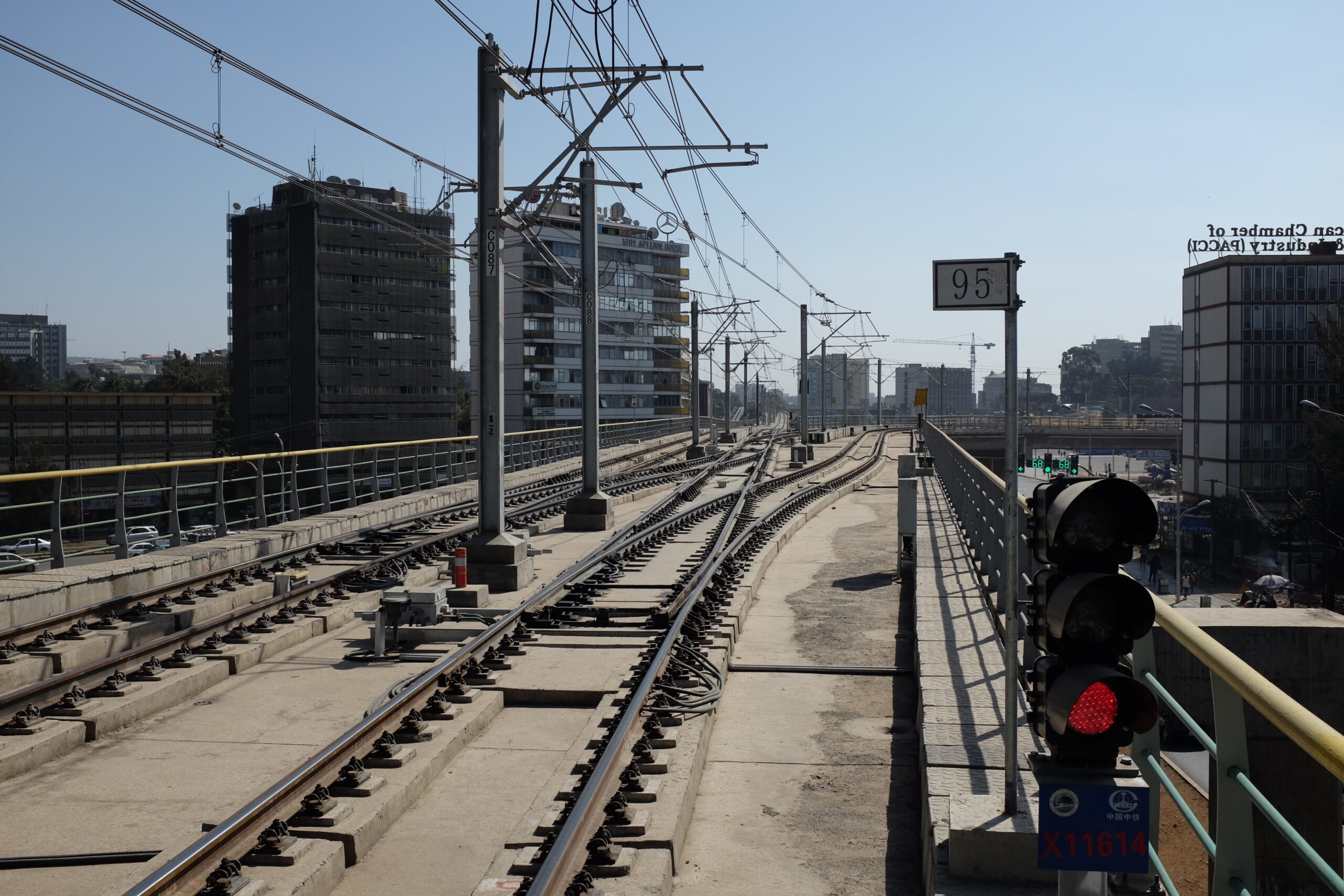
For Ethiopia electricity data miners are now the single largest source of revenue, paying 50.4 billion birr last year against 46 billion birr from the national distribution utility. They take a third of the power and settle in foreign currency, which is why they pay more for less.
One-stop reference
Company Intelligence
Every listed company in Latin America — financials, ownership and structure for 1,450+ companies across 26 exchanges, in one place.
How Ethiopia electricity data miners became the top customer
Ethiopian Electric Power set out the figures in its annual performance report, briefed to reporters on 28 August by chief executive Ashebir Balcha. Data-mining companies accounted for 32.5% of output by volume and 50.4 billion birr of revenue.
The Ethiopian Electric Utility, which supplies homes and businesses, took 56.4% of the volume and paid 46 billion birr. Heavy industry took 4.24% and the Ethio-Djibouti Railway 0.4%.
The reason for the inversion is contractual rather than technical. Data-centre agreements are settled in foreign currency, while domestic supply is billed in birr at regulated tariffs.
The company has not named the data-mining firms. That is a substantial gap, given they are now its largest revenue source and a meaningful share of national load.
The first profitable year
Total revenue rose 57% to 124.2 billion birr, with net profit of 39.5 billion birr. The company holds more than 900 billion birr in assets and 585 billion birr in paid-up capital, and is the largest subsidiary of Ethiopian Investment Holdings.
Management attributes the turn to government debt restructuring, the capitalisation of local projects and tariff adjustments. This is the first year the utility has reported a profit.
Foreign exchange earnings rose 27% to US$475.7 million, with Kenya paying 16 billion birr and Djibouti 5.5 billion birr for imported Ethiopian power. Exports account for 6.5% of generation, with 93.5% consumed domestically.
No birr-to-dollar conversion is provided for the local-currency figures in the report, so they are left unconverted here. The company reports on the Ethiopian fiscal calendar, and the Gregorian equivalent is not stated.
The dam, and the one still being built
The Grand Ethiopian Renaissance Dam produced 18.3 terawatt hours, which the company puts at 52% of national electricity. Total national generation grew 21%.
Installed capacity across 21 facilities is 9,730 megawatts, made up of 15 hydro plants at 9,201 megawatts, five wind farms at 504 megawatts and one waste-to-energy plant at 5 megawatts. The system runs at roughly half its potential.
The Koysha project on the Omo River, in the South West Ethiopia Peoples’ Region, is 77% complete against an estimated total cost of €3 billion. It needs a further €500 million, of which about €400 million has been agreed with Italian banks and €100 million will come from internal revenue.
Balcha was candid about the delay. “The project was originally scheduled for completion three years ago,” he said, without explaining why it slipped.
The banks were not named, and no terms, tenor or pricing were disclosed. Construction is now due to finish in 2027, with early generation in 2028 and full operation in 2029, delivering up to 6,460 gigawatt hours a year.
The risk in the next twelve months
The company’s targets for the coming year are lower than last year’s outturn: 9,770 megawatts of capacity, 32,134 gigawatt hours of generation and 121.2 billion birr of revenue. The reason given is weather.
El Niño is projected to cut inflows at key reservoirs, including the Renaissance Dam, by up to 20%. A hydro-dominated grid with a foreign-currency customer base has no easy substitute when the water is short.
Reliability was scored at 84% and overall target execution at 92%. Disruptions came from transmission infrastructure theft, regional security problems and difficulty accessing sites for maintenance.
Those three causes are worth reading together. They describe a grid whose main operational risk is not generation but the ground the wires cross.
What this tells outside investors
Ethiopia has, quietly and without a policy announcement, become an energy-arbitrage destination. Cheap hydro power is being sold to computing customers who pay in dollars, in a country that badly needs dollars.
That is a genuinely attractive proposition while the rains hold and the birr floats. It is a concentrated one, because a third of load now sits with an unnamed group of firms in a single industry.
It also gives Addis Ababa an unusual lever. Kenya and Djibouti are paying customers, which turns electricity into a regional instrument as well as a domestic service.
The reporting rests on a single company briefing carried by one outlet, and none of the figures are independently audited in what is available. Readers should treat them as management’s own account.
Frequently Asked Questions
Who is Ethiopian Electric Power’s largest customer by revenue?
Data-mining companies paid 50.4 billion birr last year, against 46 billion birr from the Ethiopian Electric Utility. Their contracts are settled in foreign currency, which is why they pay more despite taking less power.
How much of Ethiopia’s power do data centres use?
Data-mining companies took 32.5% of output by volume, behind the national utility on 56.4%. Heavy industry took 4.24% and the Ethio-Djibouti Railway 0.4%.
How much electricity does the Renaissance Dam supply?
The company says the Grand Ethiopian Renaissance Dam produced 18.3 terawatt hours, or 52% of national electricity. National generation grew 21% over the year.
What is holding up the Koysha dam?
Koysha is 77% complete and needs a further €500 million, with about €400 million agreed with Italian banks and €100 million to come from internal revenue. The chief executive said the project was originally due for completion three years ago.
What is the main risk to next year’s output?
El Niño is projected to cut inflows at key reservoirs, including the Renaissance Dam, by up to 20%. The company has set targets for capacity, generation and revenue below last year’s outturn.
This article was produced by The Rio Times’ automated newsroom system. How we use AI · Report an error
The Rio Times · Power Map
See who really holds power in Latin America
Click to open the Power Map →

















 English (US) ·
  French (CA) ·
  French (FR) ·