

 2 months ago
79
2 months ago
79
PROTECT YOURSELF with Orgo-Life® QUANTUM TECHNOLOGY
Orgo-Life the new way to the future Advertising by AdpathwayEnvironment & Travel
Key Facts
—Total wetlands. Chile holds roughly 40,000 wetlands covering about 4.5 million hectares, or 6% of the national territory.
—Protection gap. Only about 2% of mapped wetlands have any formal protection status, leaving the vast majority legally exposed.
—Historical loss. An estimated 80% of Chilean wetlands have disappeared in the last 50 years due to urban growth, drainage, and agriculture.
—Ramsar sites. Chile has 16 Ramsar Sites of international importance, covering roughly 363,927 hectares across the country.
—Cartographic erasure. In a recent update, 539 wetlands were removed from Chile’s official biodiversity register, reducing the inventory from 2,461 to 1,922 ecosystems.
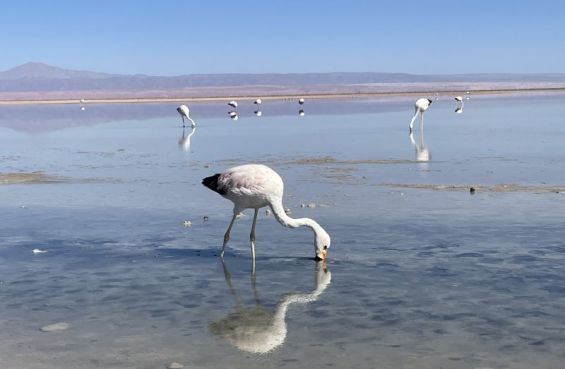
Chile’s wetlands span from high-altitude salt flats hosting three flamingo species to Patagonian peatlands that serve as critical carbon sinks, yet roughly 80% have been lost in half a century and over 40% of coastal sites now face high vulnerability.
One-stop reference
Company Intelligence
Every listed company in Latin America — financials, ownership and structure for 1,450+ companies across 26 exchanges, in one place.
The High-Andean Jewels of Chile’s Wetlands
The Salar de Surire in the Arica y Parinacota region sits at roughly 4,300 metres above sea level and hosts three of the world’s four flamingo species in a single location. Declared a Natural Monument and Ramsar Site, its white salt crusts and turquoise lagoons framed by snow-capped volcanoes make it one of the most photographed high-altitude landscapes in South America.
Further south, the Soncor Hydrological System inside the Salar de Atacama basin forms part of the Los Flamencos National Reserve and serves as the principal global breeding centre for the Andean flamingo. This same basin holds over 90% of Chile’s lithium reserves, placing it at the centre of a growing tension between conservation and the global energy transition.
The recently created Salar del Huasco National Park in the Tarapacá region protects another high-altitude salt flat where all three Chilean flamingo species coexist alongside vicuñas and alpacas. Its new park status signals a governmental push to safeguard these fragile ecosystems, though enforcement capacity remains limited.
Coastal Wetlands: Accessible and Under Siege
The El Yali wetland in the Valparaíso Region lies less than two hours from Santiago and hosts over 130 bird species, functioning as a critical stopover for migratory birds travelling between hemispheres. Its marked trails and visitor infrastructure make it one of the most accessible sites for travellers wanting to experience Chile’s wetlands firsthand.
Laguna Conchalí near Los Vilos in the Coquimbo Region remains one of the last intact coastal wetlands in the area, with more than 100 bird species recorded and a Nature Sanctuary designation dating back to 1996. The Batuco wetland, roughly 40 kilometres from Santiago, protects about 300 hectares and harbours 150-plus bird species including threatened ones like the reed cormorant.
A multi-scale vulnerability assessment found that 42.6% of evaluated coastal wetlands in Chile have high or very high vulnerability. The most exposed sites cluster in central Chile, where urban expansion, real-estate pressure, and reduced rainfall from climate change converge most intensely.
The Southern Riverine and Urban Wetland Networks
The Carlos Anwandter Nature Sanctuary on the Cruces River near Valdivia was Chile’s first Ramsar Site, designated in 1981, and remains the country’s most iconic riverine wetland. It is the principal habitat for the black-necked swan, an emblematic bird of southern Chile, and draws photographers and naturalists year-round.
The Rocuant-Andalién system in Concepción spans roughly 11 square miles and was designated a global Important Bird and Biodiversity Area by BirdLife International in 2021. Despite its international recognition, the complex has already been drastically reduced by industrial expansion and urban development, making it a emblematic case of an urban wetland system at risk.
Around Valdivia, the Angachilla and Llancahue wetlands form part of a network of Nature Sanctuaries that combine palustrine wetlands, flooded swamp forests, and remnants of ancient Valdivian temperate rainforest. Community-led conservation efforts in these peri-urban zones offer a model for balancing city growth with ecosystem protection.
Patagonian Peatlands and the Carbon Sink Factor
Patagonia’s vast peat bog complexes in the Aysén and Magallanes regions function as major carbon sinks, storing immense quantities of greenhouse gases in layers of partially decomposed vegetation. A new national law now explicitly recognises their role in climate mitigation, though poor extraction practices for “pompón” moss used in horticulture remain a serious threat.
Bahía Lomas in Tierra del Fuego is one of Chile’s most important coastal wetlands for migratory shorebirds, hosting large populations of Red Knot and other species that depend on its vast tidal flats. Its Ramsar designation underscores its hemispheric relevance, yet its extreme southern location means monitoring and enforcement are logistically challenging.
Chiloé Island alone concentrates roughly 29,500 hectares of wetlands embedded in a landscape of channels, estuaries, and peat bogs with strong cultural ties to local communities. The island’s wetland mosaic supports both traditional livelihoods and significant birdlife, including migratory shorebirds and waterfowl.
Lithium, Drought, and the Wetlands at Risk of Disappearing
The Salar de Atacama basin exemplifies the direct conflict between mineral extraction and wetland survival, with large-scale lithium operations drawing on the same groundwater that sustains flamingo breeding habitats. Regional analyses show that Andean wetlands across Chile, Argentina, and Bolivia face serious risk from expanding lithium and mineral extraction driven by global electric-vehicle demand.
Laguna Santa Rosa in the Atacama Region has already experienced documented environmental degradation and shrinking linked to mining and geothermal activities. The Limarí River wetland, designated a Ramsar Site in 2020, sits in a climate-change hotspot where severe drought and advancing desertification threaten to collapse its riverine ecosystem.
Arid coastal wetlands in northern Chile—including those at the mouths of the Lluta, Camarones, Loa, and Copiapó rivers—exist in zones of extreme water deficit and serve as crucial stopovers for migratory birds along the Pacific flyway. Many of these small sites go unnoticed in policy discussions despite facing threats from urbanisation, pollution, and water abstraction.
The Institutional Risk: When Wetlands Vanish from the Map
Civil society organisations recently reported that 539 wetlands were removed from Chile’s official biodiversity information system, shrinking the national register from 2,461 to 1,922 ecosystems. This cartographic erasure does not mean the wetlands have physically disappeared, but it strips them of legal recognition and leaves them more exposed to extractive or urban projects.
Only about 2% of Chile’s mapped wetlands have any formal protection status, whether as Ramsar sites, nature sanctuaries, or national park units. Restoration initiatives led by local communities and NGOs have recovered over 11,000 hectares across the country in recent years, demonstrating that degradation can be reversed when resources and political will align.
For investors and expats, the wetland protection gap represents both a regulatory risk and an emerging opportunity. Projects near vulnerable wetlands face growing scrutiny from communities and courts, while conservation finance and sustainable tourism ventures around iconic sites like El Yali or Carlos Anwandter are attracting increased attention.
Frequently Asked Questions
Which Chilean wetlands are easiest to visit from Santiago?
The Batuco wetland lies roughly 40 kilometres from the capital and hosts over 150 bird species with growing visitor infrastructure. El Yali in the Valparaíso Region is less than two hours away and offers marked trails, making it the most developed wetland tourism destination near Santiago.
Why are Chile’s high-altitude wetlands threatened by lithium mining?
The Salar de Atacama basin holds over 90% of Chile’s lithium reserves, and extraction operations pump brine from the same groundwater that sustains flamingo breeding habitats and high-Andean lagoons. Cumulative impacts on water balance threaten the entire hydrological system, with regional studies warning that Andean wetlands across Chile, Argentina, and Bolivia face serious risk from expanding mineral operations.
What does the removal of 539 wetlands from Chile’s official register mean?
The removal from the SIMBIO biodiversity information system does not indicate physical disappearance but rather a loss of official recognition in state maps. This cartographic erasure leaves affected wetlands legally unrecognised and more vulnerable to extractive or urban development projects, as they no longer appear in the inventories used for environmental impact assessments.















 English (US) ·
  French (CA) ·
  French (FR) ·