

PROTECT YOURSELF with Orgo-Life® QUANTUM TECHNOLOGY
Orgo-Life the new way to the future Advertising by Adpathway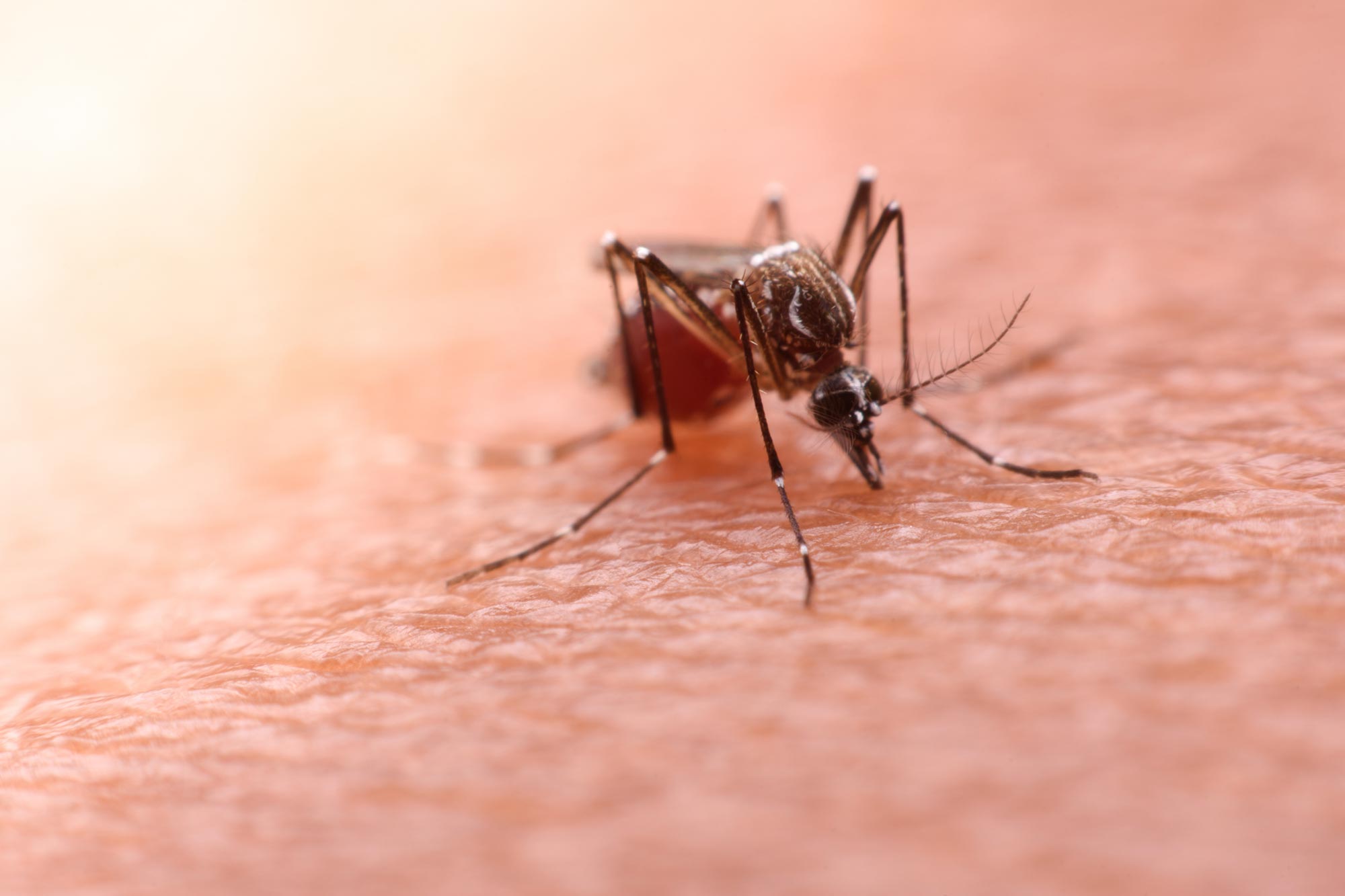 Malaria remains one of the world’s deadliest infectious diseases, killing hundreds of thousands of people each year, especially young children in sub-Saharan Africa. Caused by Plasmodium parasites and spread by infected mosquitoes, the disease can progress rapidly from fever and chills to severe anemia, organ failure, and death if treatment is delayed. Credit: Shutterstock
Laboratory tests found that the compounds could kill the malaria parasite both when it causes symptoms in people and when it reaches the stage that can infect mosquitoes.
Inside an infected person, the malaria parasite does not stay in one form. It multiplies in blood cells, producing the fever associated with the disease, and later develops into gametocytes that allow the infection to pass into mosquitoes and continue spreading. A useful treatment, therefore, has more than one vulnerable stage it could potentially attack.
That challenge has become more urgent as Plasmodium falciparum, one of the parasites that causes malaria and the species responsible for an estimated 90% of malaria deaths, has grown more resistant to drugs such as chloroquine and artemisinin. The World Health Organization estimates that malaria caused approximately 600,000 deaths in 2024.
Cancer compounds hit two parasite stages
Researchers at the University of São Paulo’s School of Pharmaceutical Sciences (FCF-USP) in Brazil tested compounds derived from anti-cancer drugs to see whether they could also work against malaria.
The team tested 14 compounds derived from an antineoplastic drug against laboratory cultures of P. falciparum. Rather than working at only one point in the parasite’s life cycle, the molecules eliminated parasites during both the asexual and gametocyte stages.
During the asexual stage, P. falciparum reproduces inside blood cells and causes the fever typical of malaria. Activity against this stage gives the compounds potential as treatments for people who are already infected.
The compounds also attacked the parasite at the stage responsible for transmission. Gametocytes are the forms that allow Plasmodium to infect mosquitoes, so eliminating them could reduce the parasite’s ability to move from one host to another.
Lab success meets real-world limits
The results, published in ACS Omega, are still limited to in vitro experiments, which means the compounds have only been tested in laboratory conditions rather than in living organisms.
Some of the compounds became less effective against human cells while maintaining their activity against P. falciparum. That pattern suggests certain derivatives may be more selective for the parasite and could pose a lower risk of serious adverse effects, although only in vivo testing can determine whether that advantage persists in the body.
Toxicity remains an important concern because molecules in this class are already associated with side effects. “Molecules in that class can cause fatigue, nausea, vomiting, and hematological changes, such as a decrease in platelets. It’s natural for that concern to exist,” says Célia Regina da Silva Garcia, a professor in the Department of Clinical and Toxicological Analysis at FCF-USP.
The compounds face another practical problem once they enter the body. Drugs in this class tend to degrade quickly under those conditions, so future experiments will need to determine whether promising candidates can remain stable long enough to work as treatments.
Chemical structure reveals a drug target
Garcia’s team is trying to address those limitations by looking closely at how chemical structure changes the behavior of each derivative. Differences among the compounds affected how they acted on the parasite, giving the researchers a way to identify which molecular features might improve potency and selectivity.
Their experiments also strengthened the hypothesis that histone deacetylase enzymes are important therapeutic targets in malaria. By identifying a more specific target inside the parasite, the researchers can adjust the chemical structure of future compounds rather than testing new variations blindly.
“When we engage in rational drug design of new molecules, we can refine their chemical structure in a targeted manner. Our experiments have strengthened the hypothesis that histone deacetylase enzymes are an important therapeutic target for malaria. As a result, we’ve been able to design new molecules that are increasingly potent and selective against the parasite,” Garcia explains.
Testing the approach against P. vivax
The same strategy could eventually be tested against other malaria-causing species. Garcia’s team plans to examine the molecules against Plasmodium vivax, which is prevalent in Brazil and can cause relapses even after treatment.
“P. vivax can also develop latent forms known as hypnozoites that lodge in the liver. Furthermore, it’s more widespread in equatorial countries. Therefore, it’s important to evaluate the efficacy of antimalarial drugs against different species to ensure they’re effective in various regions of the world,” says Garcia.
Reference: “Repurposing 6-Anilinopurine Derivatives That Exhibit PfHDAC1 Inhibition and Antimalarial Activity against Asexual and Sexual Stages of Plasmodium falciparum” by Bárbara K.M. Dias, Pedro N. Maiolini, Natacha Diesca Santos, Karoline B. Waitman, Mauricio T. Tavares, João P.F. Verotti, Mônica F.Z.J. Toledo, Thales Kronenberger, Roberto Parise-Filho and Célia R.S. Garcia, July 6, 2026, ACS Omega.
DOI: 10.1021/acsomega.5c12744
The research was funded by FAPESP (projects 17/08684-7, 21/06607-0, 23/07656-0, 24/07723-2, 22/15522-1, 24/09115-0, 24/06392-2, 22/07275-4, and 23/07455-5).
Never miss a breakthrough: Join the SciTechDaily newsletter.
Follow us on Google and Google News.



















 English (US) ·
  French (CA) ·
  French (FR) ·