

 2 hours ago
2
2 hours ago
2
PROTECT YOURSELF with Orgo-Life® QUANTUM TECHNOLOGY
Orgo-Life the new way to the future Advertising by AdpathwayBRAZIL · JUSTICE
Key Facts
—Frozen session: On 15 September 2026 the Supreme Federal Court began judging whether proceedings involving justices Alexandre de Moraes and André Mendonça, arising from the Banco Master case, should be heard jointly or separately.
Free daily brief — no card needed
Get every Brazil story in one morning email
We build you a personalized brief around the topics you follow — free for 7 days. Love it? Your first month after that is US$1.
Yes, email me my free daily brief — I can unsubscribe any time.
—Vista halts ruling: Justice Flávio Dino aligned with joining the cases but then requested a vista, suspending the session with no date set to resume.
—Provisional tally: Court president Edson Fachin announced a 4-3 provisional count in favour of keeping the cases separate, with Dino’s position uncounted because of his vista.
—Election timing: A vista can last up to 90 days, and Poder360 calculates the case could return only around mid-December 2026, after Brazil’s October general election.
—Police pause: The Federal Police has temporarily suspended new search-and-arrest requests in the case, according to Gazeta do Povo, after Fachin ordered Mendonça to hand over specific case files.
—Inquiry and depositions: Justice Cristiano Zanin denied a request to compel the immediate installation of a Senate inquiry into Banco Master, and Vorcaro’s late-September Federal Police depositions were postponed, both per Gazeta do Povo.
—Alleged fraud: Investigators describe false or unbacked credit portfolios sold to other institutions, with the total alleged fraud reported at about R$12.2 billion (US$2.34 billion).
—Customer payout: The credit guarantee fund FGC expects to disburse about R$41 billion (US$7.9 billion) to reimburse about 1.6 million customers, the largest such event in Brazil’s history.
Little more than a week before Brazil’s first-round vote, the Banco Master Supreme Court showdown sits frozen with no date to resume. A single justice’s request for more time could push any ruling past Brazil’s October 2026 general election.
One-stop reference
Company Intelligence
Every listed company in Latin America — financials, ownership and structure for 1,450+ companies across 26 exchanges, in one place.
What the court was actually deciding
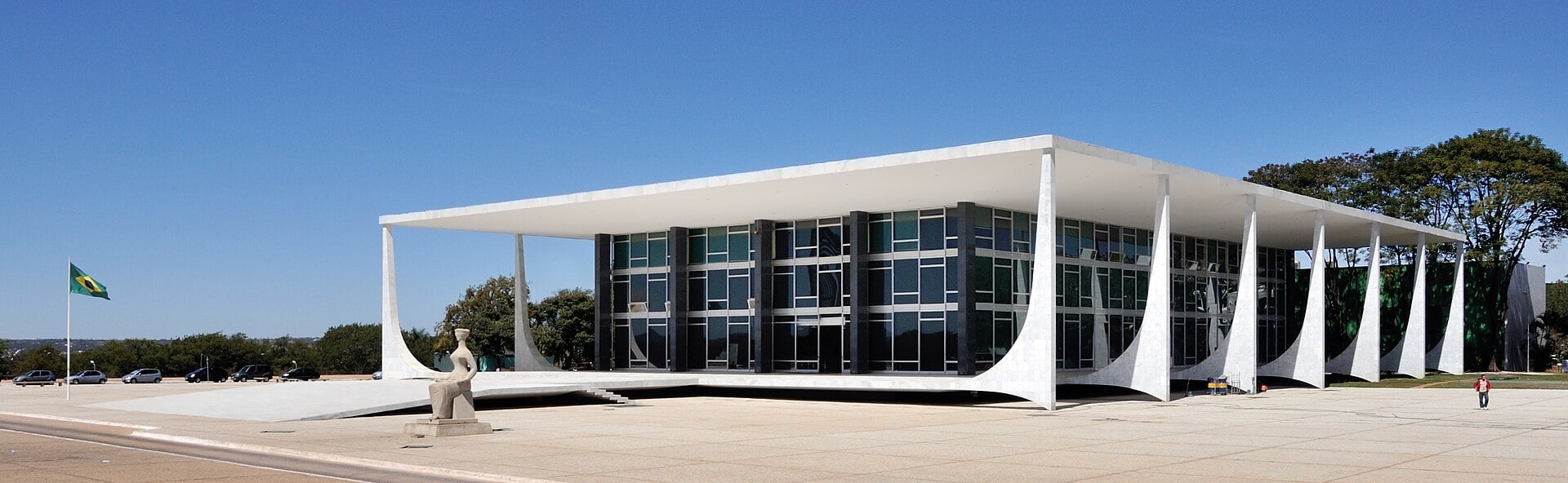
The question before the court on 15 September 2026 was procedural, not a verdict on guilt. The justices had to decide whether proceedings involving two sitting members of the court, Alexandre de Moraes and André Mendonça, should be judged jointly or separately.
The backdrop is a Federal Police report on messages exchanged between Moraes and Daniel Vorcaro, the former owner of Banco Master, according to g1/Globo, Valor and Folha de S.Paulo. Justice Gilmar Mendes proposed examining the cases together, and Justice Flávio Dino initially aligned with joining them.
Why the procedure is the story
The Supreme Federal Court has 11 justices and decides its major cases in full-bench plenary sessions. That is why a dispute over how to organise two sets of proceedings can stall the entire matter rather than merely tidy the paperwork.
A question of order is a procedural ruling that decides how a case is handled, not its merits. The 15 September 2026 vote belonged to that family of decisions, which is why no one was acquitted, convicted or formally accused by it.
Investigations targeting sitting Supreme Court justices are exceptionally rare in Brazil, which is why the procedural fight over who judges them matters. The choice between joint and separate examination shapes which panel hears what, and in what order.
Brazil holds general elections in October 2026, and the court’s own calendar now runs alongside that political timetable. A ruling that lands after the vote would arrive in a different atmosphere from one delivered before it.
Public confidence in the court is already strained, according to Gazeta do Povo, which cites Datafolha polling showing 47% of Brazilians rate the STF’s performance as bad or terrible. That figure gives the timing of any ruling a political edge beyond its legal content.
What a vista means, and why it matters
A vista is a request for more time to examine the case files, and in Brazil it is a routine procedural tool rather than a ruling on the merits. Dino asked for one after aligning with joining the cases, which suspended the session with no date set to resume, per Valor and g1.
Under court rules a vista can last up to 90 days. Reporting by Poder360 calculates the case could return only around mid-December 2026, after Brazil’s October 2026 general election, unless Dino returns it sooner.
Poder360 framed the delay as the court “saving Moraes for up to 90 days”. Court president Edson Fachin announced a provisional tally of 4-3 in favour of keeping the cases separate, with Dino’s position not counted because of his vista.
For separate examination were Fachin, Mendonça, Luiz Fux and Cármen Lúcia, according to Folha de S.Paulo. For joint examination were Gilmar Mendes, Moraes and Cristiano Zanin.
A wider freeze settles over the case
On 17 September 2026 Fachin removed from the agenda a separate session on Mendonça’s role that had been scheduled for 23 September, according to g1 and Agência Brasil. The removal left the court with no scheduled hearing on either strand of the dispute.
The pause now extends well beyond the plenary, according to Gazeta do Povo. The Federal Police has temporarily suspended sending new search-and-arrest requests in the case, because Fachin ordered Justice André Mendonça to hand over specific case files, creating a competence conflict between the two justices.
Justice Cristiano Zanin denied a request to compel the immediate installation of a Senate congressional inquiry (CPI) into Banco Master, ruling that Senate president Davi Alcolumbre must be heard first, per Gazeta do Povo. With Congress slowing its sessions for the election period, that ruling pushes any witness calls past the vote.
Vorcaro’s defence also secured the postponement of his late-September Federal Police depositions, arguing it lacked full access to the collected evidence, according to Gazeta do Povo. The depositions are now expected only after election day, and the topics he is to clarify include suspicious operations with Banco de Brasília and an alleged structure called “A Turma”, supposedly used to monitor adversaries.
Gazeta do Povo frames the sequence bluntly: little more than a week before the first round, a series of STF and Federal Police moves is stalling the advance of investigations into corruption and financial fraud. No date has been set to resume the suspended session.
The collapse behind the courtroom fight
Daniel Vorcaro was arrested by the Federal Police on 17 November 2025 in Operação Compliance Zero. The Central Bank decreed Banco Master’s extrajudicial liquidation on 18 November 2025, citing a severe liquidity crisis and grave violations of financial-system rules, per Valor and O Globo.
The alleged scheme involved false, duplicated or unbacked credit portfolios, known as cédulas de crédito bancário (CCBs), sold to other institutions. In plain terms, a bank sold bundles of loan contracts that did not exist, were counted twice, or had no borrower behind them, and the buyer paid real money for paper that could not be collected.
Banco de Brasília (BRB) bought roughly R$12 billion (US$2.3 billion) in portfolios before documentation was properly delivered, according to DW and O Globo. The total alleged fraud is reported at about R$12.2 billion (US$2.34 billion).
Investigators also cited about R$11.5 billion (US$2.2 billion) in triangulated diversions in 2023-24. The credit guarantee fund FGC expects to disburse about R$41 billion (US$7.9 billion) to reimburse about 1.6 million customers, roughly a third of the fund’s assets.
What the guarantee fund payout means
The FGC is a privately funded deposit-guarantee scheme financed by Brazil’s banks, not by taxpayers directly. When a bank is liquidated, the fund steps in to reimburse eligible customers up to set limits, which is why the Banco Master payout falls to the banking sector rather than the public purse.
At about R$41 billion (US$7.9 billion) for about 1.6 million customers, it is the largest FGC event in Brazil’s history, per O Globo and Agência Brasil. Roughly a third of the fund’s assets are committed to a single failure.
For a foreign reader, the payout is the part of the story that touches ordinary people directly. The courtroom fight is about who judges whom, while the fund is about whether depositors get their money back.
Where the investigation stands now
As of late September 2026 Vorcaro remains in preventive detention, and his defence has petitioned the court to revoke it, according to Folha de S.Paulo. Operação Compliance Zero has reached ten phases in total since November 2025, but has not gained a new phase since July 2026, despite material for dozens of new stages, according to Gazeta do Povo.
The probe has broadened to suspected corruption, money laundering, leaks of confidential information, interference in investigations, pension-fund investments and relationships with public officials and members of the branches of government, per Jornal Grande Bahia. For a foreign reader, the practical effect is that the court’s own timetable, not the evidence, now sets the pace.
What happens next
The immediate next step rests with Dino, who can return the case to the plenary at any point within the 90-day window. Until he does, the 4-3 provisional count in favour of separate examination remains provisional and cannot be finalised.
If the case returns around mid-December 2026, as Poder360 calculates, the ruling would land after Brazil’s October 2026 general election. If Dino returns it sooner, the court could settle the procedural question while the campaign is still under way.
Either way, the underlying investigation continues in parallel, and the FGC payout proceeds on its own schedule. The frozen session decides only how the court organises itself, not how the Banco Master case ends.
Frequently asked questions
What is the Banco Master Supreme Court case about?
The court is deciding whether proceedings involving justices Alexandre de Moraes and André Mendonça, arising from the Banco Master case, should be judged jointly or separately. The backdrop is a Federal Police report on messages exchanged between Moraes and Daniel Vorcaro, the bank’s former owner.
What does a vista mean in Brazil’s Supreme Court?
A vista is a request for more time to examine the case files, and it suspends the session. Under court rules it can last up to 90 days.
When could the Banco Master case return to the court?
Poder360 calculates it could return only around mid-December 2026, after Brazil’s October 2026 general election, unless Justice Flávio Dino returns it sooner. No date has been set to resume.
Is the rest of the investigation also paused?
Yes, according to Gazeta do Povo. The Federal Police has temporarily suspended new search-and-arrest requests, Justice Cristiano Zanin denied a request to compel the immediate installation of a Senate inquiry, and Vorcaro’s Federal Police depositions were postponed to after election day.
This article was produced by The Rio Times’ automated newsroom system. How we use AI · Report an error
The Rio Times · Power Map
See who really holds power in Latin America
Click to open the Power Map →















 English (US) ·
  French (CA) ·
  French (FR) ·