

.png) 2 months ago
73
2 months ago
73
PROTECT YOURSELF with Orgo-Life® QUANTUM TECHNOLOGY
Orgo-Life the new way to the future Advertising by AdpathwayBAKU, Azerbaijan, July 23. Modern auditing should be a strategic partner instead of a fault-finder.
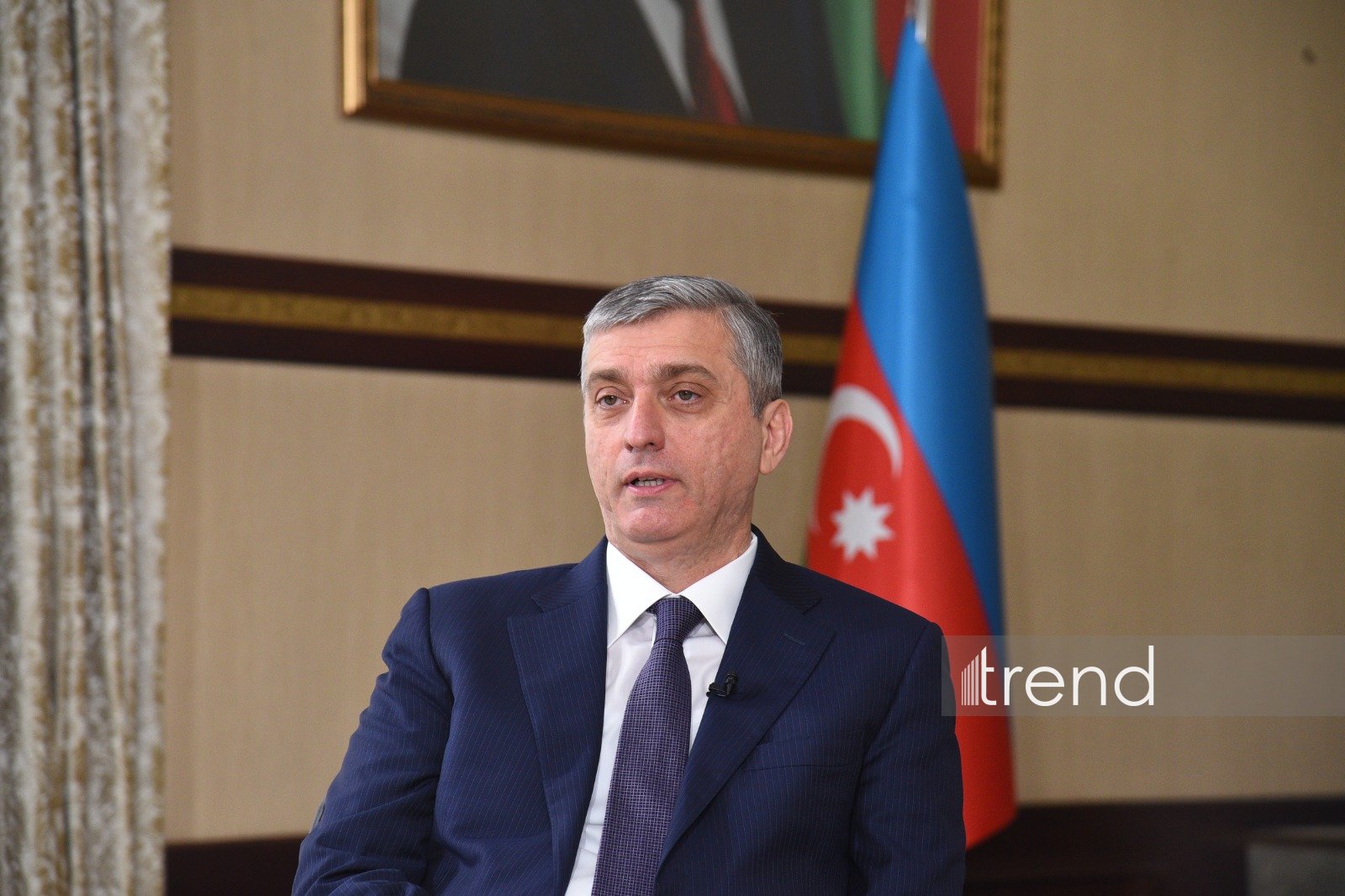
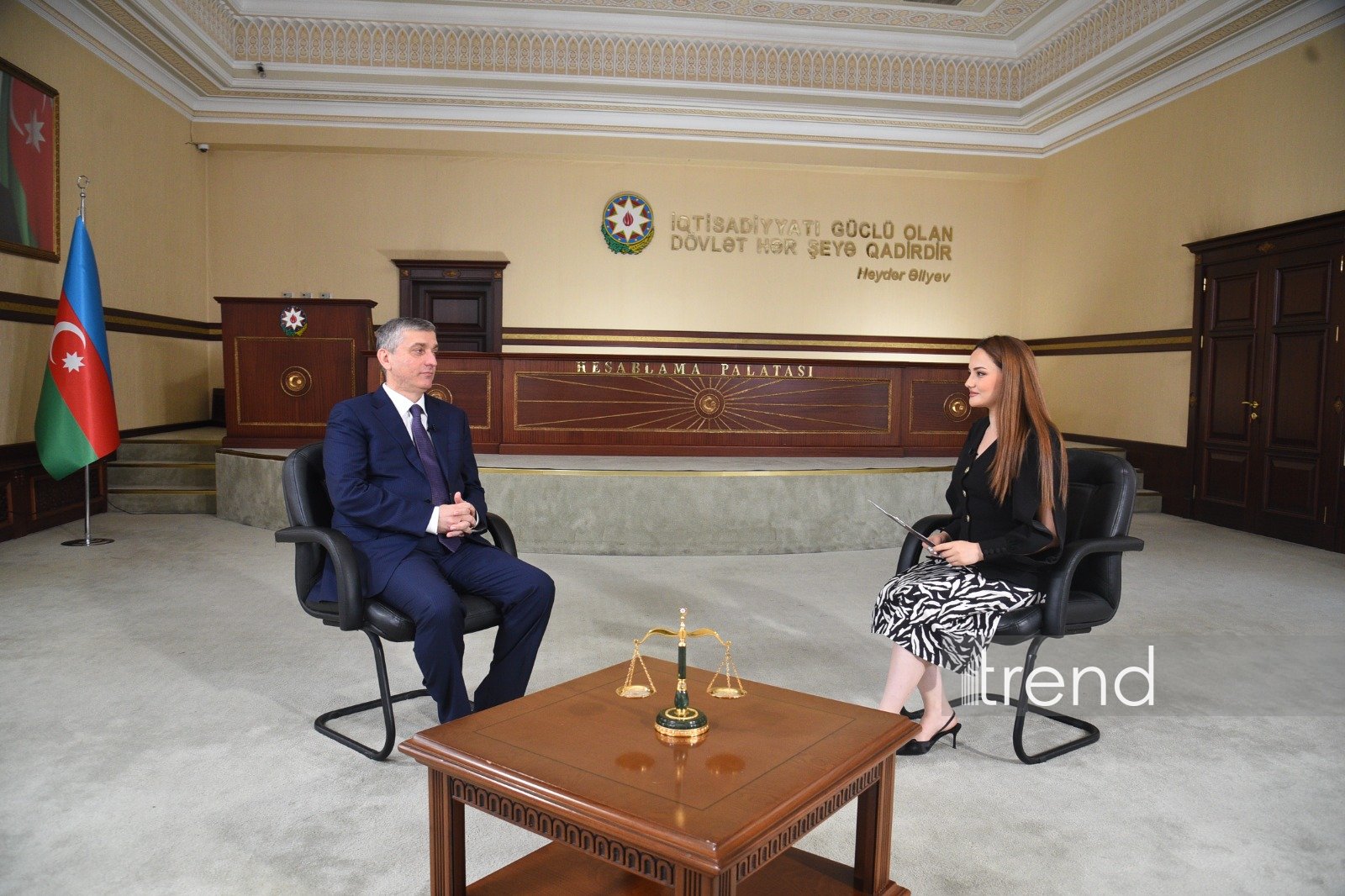
This was reported by the Chairman of the Chamber of Accounts of Azerbaijan, Vugar Gulmammadov, in a joint interview with Trend News Agency and Public Television.
He said that the implementation of the 2025 state budget was remembered for several record indicators in the history of independence. The state budget revenues amounted to 39.2 billion manat ($23 billion), and expenditures - 38.6 billion manat ($22.7 billion). At the same time, the lowest percentage of expenditure implementation was recorded in the last 10 years.
According to him, as every year, reports on the implementation of the 2025 state budget were widely discussed at both committee and plenary sessions of the parliament. The opinion prepared by the Chamber of Accounts on the draft law and the reports submitted with it was widely referred to by the MPs during the discussions.
State budget revenues reach 39.2 billion manat ($23.1 billion) in 2025
Gulmammadov said that one of the Chamber of Accounts' top functions is to provide an opinion on the execution of the state budget. He noted that the main objective of the state budget is to finance the state's functions.
"The purpose of the state budget is to finance the state's functions. The Chamber of Accounts is also an institution that assesses the extent to which these functions are carried out. We believe that the most important issue is that the submitted draft law and the report accompanying it are prepared within the timeframes and in the format established by the Law on the Budget System, and in line with the required indicators.
There are several important aspects to the execution of the 2025 state budget. The most significant of these is that, for the first time in the history of our independence, state budget revenues reached a record high of 39.2 billion manat ($23.1 billion). At the same time, for the first time in the history of our independence, a record level of budget expenditures was also recorded, reaching 38.6 billion manat ($22.7 billion).
Among these figures, I would like to note that despite executed expenditures totaling 38.6 billion manat ($22.7 billion), the execution rate was the lowest in the past 10 years at 93.2%. This means that approximately 2.8 billion manat ($1.65 billion) of the budget wasn't executed.
The failure to execute 2.8 billion manat ($1.65 billion) of the budget affected the balance of the main budget, i.e., a budget that had been planned with a 3 billion manat ($1.76 billion) deficit was ultimately executed with a surplus of approximately 580 million manat ($341.2 million)," he explained.
Main objectives of budget rule met
The Chairman of the Chamber of Accounts said that, as in all budgets, the state budget of the Republic of Azerbaijan also has a budget rule that plays the role of a macrofiscal framework.
According to him, the budget rule has two main objectives.
"As in all budgets, the state budget of Azerbaijan also has a budget rule that is a macrofiscal framework. Our budget rule has two main objectives. One of them is the ratio of the non-oil base deficit to the non-oil gross domestic product. The requirement for this rule has been met, and the indicator was 18.6%. The other objective is the ratio of state debt to gross domestic product, which was 20.1%," he said.
Chamber of Accounts submits nearly 46 new recommendations
Gulmammadov noted that during the budget discussions, several changes were made to the report and the draft law together with the Ministry of Finance and other state agencies based on the proposals of the Chamber of Accounts.
He pointed out that the Chamber of Accounts has submitted about 46 new recommendations regarding the implementation of the state budget.
"Based on the proposals put forward by the Chamber of Accounts, some changes were made to the report and the draft law during the budget discussions, together with the Ministry of Finance and other bodies. We have submitted about 46 new recommendations. These recommendations are related to both legislative and institutional changes.
In international practice, the opinion on the implementation of the state budget is given based on two main components. One is the consolidation of financial statements, and the second is the opinion given on the results-based budget, i.e. the operating budget," he clarified.
Opinion on state budget given based on control measures and reports
Gulmammadov said that currently, opinions based on audit reports are submitted only for the State Oil Fund of Azerbaijan.
According to him, the Chamber of Accounts also has the opportunity to give an opinion on the budgets of extra-budgetary funds that are part of the consolidated budget.
"Currently, we perform this function only on the State Oil Fund of the Republic of Azerbaijan based on audits and audit reports. We also have the opportunity to give an opinion on the budgets of other extra-budgetary funds that are part of the consolidated budget - the State Social Protection Fund, the Unemployment Insurance Fund and the Compulsory Medical Insurance Fund. This leaves only the state budget.
Currently, we give an opinion on the basis of reports submitted by the state budget institutions on the budget's income and expenses, as well as control measures carried out up to the period of submission of the opinion.
However, we do not currently provide an opinion based on consolidated financial statements applied in international practice. Regarding the second direction, the performance budget, you know that pilot projects on result-based budgeting have been implemented in the state budget for several years. This is one of our goals: to conduct an audit on the performance budget in the next periods and present our opinions. Of course, the budget submission period and the number of control measures "can make a great contribution to the provision of opinion," he noted.
Nearly 70 institutions issued with non-compliance certificates
The chairman of the Chamber of Accounts said that this year, for the first time, the submission of reports established by law with the help of digital solutions was evaluated on more than 100 indicators.
He noted that, based on the assessments conducted, about 70 organizations were provided with certificates of inconsistencies and deviations.
"This year, for the first time, we tried to evaluate the submission of reports required by the legislation with the help of digital solutions on more than 100 indicators. Based on these assessments, we have provided certificates of inconsistencies and deviations to about 70 organizations to date. We ask them to respond to these certificates.
At the same time, I would like to inform you that during the preparation of the opinion on the implementation of the 2025 state budget, we received more than 2,000 reports from more than 200 organizations. However, what is important is not the number of these reports, but their level of adequacy.
The application of digital solutions has once again shown that digital tools are not fully applied in organizations and there are certain problems in this area due to the shortage of professional personnel," he said.
Formal submission of reports reduces their analytical value
Gulmammadov said that formal submission of reports reduces their analytical value.
According to him, incompleteness and errors were also found in the documents of the institutions that submitted reports on time:
"I would like to note that I also stated this at the plenary session. The number of those who submitted reports on time is approximately 40% of the total. 60% of the institutions didn't submit their reports on time.
There are also incompleteness and errors in the documents of the institutions that submitted reports on time. This indicates that in some cases the reports were submitted formally. Formal submission of reports reduces their analytical value," he said.
Growth in ratio of public procurement to GDP observed
In his interview, the Chairman of the Chamber of Accounts noted that in 2025, 19,000 public procurements worth 10.8 billion manat ($6.3 billion) were carried out in Azerbaijan.
"The share of public procurement in gross domestic product increased by 0.6 percentage points to 8.4% in 2025. Public procurement is the main financial and legal tool for determining the needs of the state and meeting these needs through public spending. The quality of procurement has a significant impact on both the country's economic development and fiscal sustainability," he said.
Share of public procurement in GDP reaches 8.4%
In his interview, Gulmamammadov said that the ratio of public procurement to gross domestic product and state budget expenditures is considered an important indicator.
"Public procurement is the main financial and legal process that determines the needs of the state. At the same time, public procurement is the main tool for meeting the needs of the state through public spending. The quality of procurement has a significant impact on both the country's economic development and fiscal sustainability.
The ratio of public procurement to gross domestic product and state budget expenditures is considered an important indicator. In 2025, 19,000 public procurements worth 10.8 billion manat ($6.3 billion) were carried out in Azerbaijan.
In international practice, the share of public procurement in GDP varies between 13% and 20%, and its share in state budget expenditures varies between 30% and 50%. Based on the 2025 indicators mentioned by me, the share of public procurement in gross domestic product increased by 0.6 percentage points in 2025 to 8.4%,'' he explained.
Reporting of procurements omits some indicators
The Chairman of the Chamber of Accounts noted that in recent years, significant changes have been made in the field of state procurement, both in terms of legislation and institutional aspects. At the same time, qualitative changes have also taken place in the activities of the body carrying out current control," he said.
According to him, two main points should be paid special attention when assessing the current indicators.
"In recent years, significant changes have been made in the field of state procurement, both in terms of legislation and institutional aspects. At the same time, there have been qualitative changes in the activities of the body carrying out current control.
However, two main points regarding these figures should be especially emphasized and reviewed once again. The first of these is related to the accountability of procurements. Among the figures I have listed, the procurements carried out by state enterprises at their own expense, especially by bodies with a Supervisory Board, are not reflected in this report. This is also in accordance with the legislation. At the same time, the procurements carried out by the State Agency of Azerbaijan Automobile Roads aren't reflected in this report", Gulmammadov added.
Spending on procurement should be the main indicator
Gulmammadov said that one of the main unregulated issues regarding the calculation of the ratio of public procurement to the state budget or gross domestic product is the difference between the contract amount and the costs.
"One of the main unregulated issues regarding the calculation of the ratio of public procurement to the state budget or gross domestic product is that the contract amount for public procurement is indicated, but the contract can cover several years.
The main issue here is how much money was spent on that contract. That is, from this point of view, the cost is a more important indicator," he said.
Number of public procurements increases by 52%
The chairman of the Chamber of Accounts recalled that the new edition of the law "On public procurement" came into force on January 1, 2024.
He noted that a comparison of the periods before and after the entry into force of the new law shows a significant increase in both the number and amount of procurements.
"The new version of the law 'On public procurement' has been in force since January 1, 2024. Therefore, I would like to mention some figures showing what changes have occurred before and after the new law came into force.
First of all, when comparing 2023–2025, we see that the amount involved in public procurement and the number of procurements have increased significantly compared to 2023. The increase in terms of number was 52%, and in terms of total amount, 43%.
This means that the volume of public procurement has expanded and the application of the procurement mechanism in the implementation of public expenditures has also increased," he said.
Average amount per procurement contract increases
Gulmammadov noted that although there was a decrease in the number of procurements in 2025 compared to 2024, the total amount increased.
"In 2025, there was a 3.1% decrease in the number of procurements compared to 2024. However, an increase of approximately 9.5% was recorded in terms of amount.
What does this indicate? If the number of procurements has decreased, and the amount involved has increased, this means an increase in the average amount per procurement or contract," he said.
Main burden of procurements falls on 3rd and 4th quarters
The chairman of the Chamber of Accounts noted that another important issue is related to the timing of procurements and their distribution throughout the year.
According to him, although there was some balancing in the distribution of procurements in 2025 between the first and second half of the year, the main burden still fell on the third and fourth quarters of the year.
"The second important issue is related to the timing of procurements. If we divide the procurements made in 2025 into two parts, the specific weight of procurements made in the first half of the year increased by approximately 10 percentage points, from 31% to 41%. In the second half of the year, this indicator was 59%. This is a relatively balanced distribution.
However, when we look at the distribution by quarters, we see that the main burden falls on the third and fourth quarters. The spending of more budget funds at the end of the quarter and in the last quarters of the year leads to a certain increase in the volume of advance payments. This, in turn, leads to an increase in liabilities," he clarified.
Chamber of Accounts supports balanced distribution of procurements
Gulmammadov said that although there were no significant changes in the quarterly distribution in 2025 compared to previous years, certain cases of balancing were observed.
He noted that, according to the recommendations of the Organization for Economic Cooperation and Development and the World Bank, the distribution of procurements by quarter in the ratio of 40, 30, 20, and 10% is considered the most ideal option.
"In 2025, as in previous years, there were no significant changes in the quarterly distribution. However, there are certain cases of balancing.
I note that there are recommendations from the Organization for Economic Cooperation and Development and the World Bank in this regard. In those recommendations, the ratio is taken as 40, 30, 20, and 10%. This is considered the most ideal option and a balanced quarterly distribution.
Although this distribution isn't fully adhered to in our country yet, we are in favor of continuing certain changes in the future," the chairman of the Chamber of Accounts added.
Non-competitive procurement has a higher growth rate
The chairman of the Chamber of Accounts said that in terms of structure, state procurement is divided into two main groups: competitive and non-competitive procurement.
According to him, a comparison of the indicators for 2023–2025 shows an increase in both competitive and non-competitive procurement. However, the growth rate of non-competitive procurement is higher.
"As for the structural analysis of procurement, you know that procurement is divided into two main types: competitive and non-competitive procurement.
When comparing 2023–2025, we see that there is a certain increase in competitive procurement. At the same time, an increase is also observed in non-competitive procurement methods, which are considered non-competitive, and this increase is higher.
Thus, if there is a stable growth in competitive procurement, the increase in the number of non-competitive procurements is approximately twice as much," he added.
Total amount of single-source procurement in Azerbaijan rises by 532 million manat ($312.9 million)
Gulmammadov said that single-source procurement is one of the forms of non-competitive procurement, and the specific weight of this method depends on the economic model and regulatory rules of the countries.
"Single-source procurement is one of the forms of non-competitive procurement. In countries around the world and in international practice, the specific weight of this method depends on the economic model and regulatory rules of the countries.
"For example, last year, 9,035 procurements using the single-source procurement method were carried in our country. Although this indicator decreased by 7.6% in terms of number, it means a growth of about 10% or 532 million manat in terms of amount," he said.
Single-bid tenders account for more than 30% of all procurement in Europe
The chairman of the Chamber of Accounts said that research shows that the single-source procurement method is increasingly used in military and defense industries around the world.
According to him, the share of single-source procurement in the CIS countries is 30–50%, and in European countries it is about 40%.
"Our research shows that, as is the case all over the world, the single-source procurement method is more widely used in the military and defense industries than in civilian contracts.
The share of single-source procurement in the CIS countries is 30–50%, and in European countries it is about 40%.
However, I would like to make one point regarding European countries. One of the studies of the European Court of Auditors shows that there is a phenomenon of single-bid tenders in public procurement in European countries.
What does this phenomenon mean? This means that the conditions in procurement and tenders are set in such a way that only one supplier can participate. Although on paper this is considered a tender, in reality it turns into a form of single-source procurement. Such tenders account for more than about 30% of all procurements," he said.
What are the main concerns in public procurement?
Gulmammadov emphasized in his interview that the main concerns are the large differences between the estimated amount in public procurement and the price offered by the winning organization, the high share of non-competitive procurement, and the cancellation of procurements.
According to him, three main points should be paid special attention to in the field of public procurement at the present time.
In more than 51% of procurements, the price difference exceeds 20%
Gulmammadov said that before any procurement is made, its estimated amount is determined. The winning organization can submit a bid in accordance with both the upper and lower limits of the estimated amount.
"I would like to highlight three main points at present. Before any procurement is carried out, its estimated amount is determined. The winning organization can submit a bid at the upper limit of the estimated amount. At the same time, it can also submit a bid at the lower limit of that amount.
The results of our research conducted last year showed that the number of procurements that differed by more than 20% from the estimated amount is more than 51%. In the CIS countries, the red line for the difference between the amount offered by the winning organization and the estimated amount is 15–25%.
That is, it's impossible to offer a price that is too low. In general, the criterion of the lowest price is currently one of the problems in most countries. Why? Because the lowest price is one of the factors that ultimately leads to the project not being completed or not being completed in a high-quality manner. Therefore, if the upper limit is determined by the estimated price, the lower limit should also be determined," he said.
In 37% of procurements, the price difference exceeds 30%
The chairman of the Chamber of Accounts noted that in Azerbaijan there are differences between the estimated amount and the proposed price of 20, 30, 40, 50, even 80%.
"Unfortunately, we have figures that differ from the estimated amount by 20, 30, 40, 50, even 80%. For example, in about 37% of all procurements last year, that is, in 3,761 procurements, the price difference was more than 30%.
This may lead to the failure to execute contracts on time. This is the first main concern," he added.
Share of non-competitive procurements still high
Gulmammadov said that the second main concern is that the share of non-competitive procurements remains high compared to competitive procurements.
According to him, prices in single-source procurement contracts are usually not lower than prices in competitive procurements conducted by open tender, but on the contrary, they are more expensive.
"The second point is that the share of non-competitive procurements is still high compared to competitive procurements. In addition, we have also identified one key point during our control measures.
Usually, prices in single-source procurement contracts are not lower than prices in competitive procurements conducted by open tender, but on the contrary, they are more expensive. However, in some cases, the opposite has happened. The price offered in the open tender turned out to be more expensive than the price offered in single-source procurement.
This in itself is a mystery, a question for us, and at the same time it does not correspond to the philosophy of procurement," he added.
In 2025, 1,360 procurements were cancelled
The chairman of the Chamber of Accounts said that the third main issue is the number and amount of canceled procurements. He noted that this indicator, although it decreased in 2025 compared to 2024, is still high.
"Finally, the third point is the number and amount of canceled procurements. True, this figure decreased relatively in dynamics in 2025 compared to 2024.
In 2025, 1,360 procurements were canceled. This means approximately 500 million manat ($294 million). There was a considerable decrease compared to the previous year, and the indicator dropped by 40%. A decrease was recorded in both the number and amount of procurements.
However, the main and largest part of the decreasing procurements are open tenders. 30% of the canceled open tenders in terms of subject matter belong to the construction sector," he said.
Share of canceled procurements in total procurements amounts to 7%
Gulmammadov said that while in international practice the share of quotations in total procurements in terms of amount is usually zero percent, in Azerbaijan this indicator was 7%.
"The amount of cancellation under the quotation method is approximately 20 million manat ($11.7 million). In international practice, the share of canceled procurements in total procurements in terms of amount is usually zero percent. In our case, this year this indicator was 7%.
Besides, during the research conducted by us through the portal, we determined that the cancellation of procurements is mainly due to the non-compliance of the proposals with the set of conditions," he said.
Canceled procurements lead to failure to meet state needs
In his interview, the chairman of the Chamber of Accounts noted that all procurements are carried out to meet the needs of the state. The cancellation of the procurement means that the intended goods and property are not purchased in that period.
"Let me note one thing: all procurements are generally for meeting the needs of the state. Failure to meet the needs of the state and the cancellation of the procurement ultimately means that those goods and property are not purchased for the intended period.
We plan to conduct an analytical analysis in this area as a control measure in the future. Our goal is to determine whether the procurement method of the canceled procurement has changed later, and whether the amount has decreased or increased. We want to make the relevant assessment," he said.
Conceptual changes taking place in the audit of procurements
Gulmammadov said that in the modern world, conceptual changes are taking place in the audit of state procurements, and the Chamber of Accounts does not want to remain outside of these changes.
According to him, previously the main purpose of the audit was to determine the extent to which the requirements of the legislation were complied with.
"In the modern world, conceptual changes are already taking place in the audit of public procurement. We did not want to be left out of these changes.
Previously, the main purpose of the audit was to determine the extent to which the requirements of the legislation were complied with. In connection with the violations detected, it was determined whether any activity complied with regulatory legal acts or not.
In the new approach, the main focus is on how beneficial the procurement is to the state, how efficient, economical, and result-oriented the funds are used. In other words, we have begun to give preference to result-oriented audits," he announced.
Two audits launch this year to assess effectiveness of procurements
The chairman of the Chamber of Accounts said that two audits have already been launched this year to implement the new audit practice.
"We have already launched two audit events this year to implement this practice. In addition to compliance with the requirements of the legislation, these audit events determine the extent to which the procurement contributes and is useful to the two organizations we audit, and to what extent the state's needs are met in the form that was previously foreseen, because we must also pay attention to the correct and correct distribution of our resources in the audit process.
Previously, we assessed this as a legal violation. Now, auditors must also answer questions about the extent to which the procurement will meet the expected result," he added.
Defect classification to update based on a single approach
Gulmammadov noted that updating the defect classification is one of the most important measures to be implemented in the audit activities of the Chamber of Accounts.
"Revising the classification of deficiencies is one of the most important measures of the audit activity of the Chamber of Accounts. Our goal is to reflect the deficiencies and distortions detected during the audit in the reports with a systematic, unified approach and to analyze them correctly.
By comparatively analyzing the audit results, we will be able to monitor their dynamics, identify cases of repetition, and more precisely determine the measures to be taken in relation to these deficiencies. As a result, we will be able to further expand our analytical activities, which will have a certain impact on increasing the quality of the audits we conduct.
At the same time, we would like to conduct the classification of deficiencies in a coordinated manner with other institutions that carry out the function of state financial control. Our goal is to speak the same language with the institutions. This approach will make a significant contribution to further strengthening discipline and responsibility in state institutions," the chairman of the Chamber of Accounts noted.
New strategic plan covers 2026–2030
The chairman of the Chamber of Accounts said that the institution bases its activities on a strategic plan and continues to form a practice of results-based accountability in this direction.
According to him, the implementation of the previous strategic plan covering 2021–2025 was completed at the end of last year, and the new Strategic Plan covering 2026–2030 has already been approved.
"As is known, the Chamber of Accounts bases its activities on a strategic plan and has begun to form and promote the practice of results-based accountability through annual and semi-annual reports. At the end of last year, we finalized the implementation of the strategic plan covering the years 2021–2025. Using professional tools, we have defined a new strategic plan covering the years 2026–2030.
While preparing the new strategic plan, we tried to take into account the achievements achieved in previous years, the work done and not done, the results of peer reviews conducted regarding our activities, SWOT analyses, our analyses of the current situation, the main challenges of the modern world and the expectations of stakeholders. Our goal is to contribute to solving existing problems in both our activities and in the management of public finances, to preserve and further strengthen the achievements made," he said.
Two main goals of new strategic plan identified
Gulmammadov noted that the new Strategic Plan is built on two main goals.
"The new strategic plan has two main goals. The first of these is to support the improvement of public finance management by implementing high-quality public audits. The second goal is to contribute to improving the quality and efficiency of services provided in the public sector," he pointed out.
State audit digitalization ranks among main goals
The chairman of the Chamber of Accounts said that expanding the scope of state audit, digitalization and strengthening international cooperation are among the main priorities in the coming years.
"In order to achieve the goals of the Strategic Plan, we plan to expand the scope of state audit in terms of the consolidated budget. We want to expand the preparation of audit-based opinions. We plan to start auditing the medium-term expenditure framework.
At the same time, digitalization of state audit, application of artificial intelligence and data-based decision-making mechanisms through integration into information systems, wider application of international audit standards, and expansion of cooperation with stakeholders, including international organizations and supreme audit institutions of foreign states, are among our main goals," the official explained.
91% of the measures of the strategic plan for the first half of 2026 implemented
Gulmammadov noted that separate operational plans have been prepared for each period to implement the strategic plan.
"To achieve these goals, we have also defined operational plans for each period within the Strategic Plan. We have already implemented approximately 91 percent of the measures planned for the first half of 2026," he said.
Gulmammadov noted that the Chamber of Accounts plans to move to a new stage in the direction of full digitalization of state audit, application of artificial intelligence technologies and operational analysis of data: "The institution aims to expand the capabilities of automatic risk assessment and big data analysis in the audit process," he said.
According to him, the President has given important instructions to state bodies in the direction of improving state finance management and state financial control, and the Chamber of Accounts has also defined new tasks to increase its responsibility in the implementation of these instructions.
Digitalization of state audit ranks among main priorities
Gulmammadov noted that an action plan for digital development has been developed this year, and this document identifies the main priorities in the field of digitalization, artificial intelligence and e-government in the country.
"Relevant instructions have been given by the President Ilham Aliyev to state bodies regarding the improvement of public finance management and public financial control, and the implementation of serious legislative and institutional changes in this area. The Chamber of Accounts has also set new tasks to further increase its responsibility in the implementation of these instructions.
You know that an action plan for digital development has been prepared this year. A number of goals have been set in this action program. The main goals are to determine priorities in the field of digitalization, artificial intelligence and e-government in Azerbaijan, and to accelerate the transition to an innovation-based economic model. For this purpose, the Digital Council has been established. The fact that the Council is headed by the First Vice-President is an indication of the high attention paid to this issue by the country's leadership. We believe that the goals set for the Digital Council will be fully implemented," he said.
Chamber of Accounts of Azerbaijan creates digital audit platform
The chairman of the Chamber of Accounts noted that various directions of activity have been identified for the implementation of the tasks set, and one of the most important of them is the digitalization of state audit.
"We have started work on various directions of activity for the implementation of the tasks. One of the most important directions, as you noted, is the digitalization of state audit. We will try to create a single platform by ensuring the receipt of reports from organizations operating in the state sector through the information systems established in this direction and implement their operational processing.
Certain work has been done in this direction over the past period. One of the main tasks is the creation of a technological platform. We have placed our own information system in the government cloud. We are also trying to obtain reports and data through the system," he said.
Automatic risk assessment to be implemented
Gulmammadov said that after the information system is fully operational, all main stages of the audit process will be carried out in an electronic environment.
"After the system is fully operational, we'll carry out the preparation of annual work plans, the preparation and planning stage of the audit completely electronically. Automatic risk assessment will be provided for various scenarios.
This will allow for a more correct distribution of our existing resources and a reduction in risks arising from the human factor. At the same time, as I mentioned, integration with other state information systems will provide us with operational access to information and help us obtain audit results more quickly. In the coming years, we also plan to further expand the functions of the information system and apply artificial intelligence technologies," he pointed out.
Artificial intelligence to improve quality of auditing
The chairman of the Chamber of Accounts said that the application of artificial intelligence technologies will serve to base audit decisions on more reliable information and increase efficiency in the management of public funds.
"Let me note that we believe that artificial intelligence will play an important role in terms of increasing the quality of state audits, basing decisions on more reliable information, and increasing the efficiency of public funds management. The electronic implementation of many processes that currently take time will allow auditors to pay more attention to professional judgment.
In general, the implementation of artificial intelligence, big data analysis, and risk-based digital monitoring tools in the audit process has been identified as one of the priority directions. Currently, the Accounts Chamber is carrying out consistent work in this direction. In the coming years, we intend to further expand the functionality of the relevant information platform and increase the application of artificial intelligence technologies.
One of the main issues that we treat with special sensitivity in this process is the constant attention to cybersecurity challenges," he said.
More than 70% of the audit portfolio made public
Gulmammadov said that the Chamber of Accounts is implementing its activities in the direction of disclosing audit results and increasing transparency based on a special communication strategy.
"The Chamber of Accounts has a communication strategy covering 2024-2026. The strategy consists of five SMART goals. During the two years of the strategy's implementation, we are about to achieve almost each of these five SMART goals.
I would like to highlight two areas in particular. One of them is to increase the amount of information disclosed on opinions given to budgets by 15% annually, and the other is to expand the audit portfolio disclosed on external state financial control measures by 3% annually.
We have already disclosed more than 70% of our audit portfolio to the public in various forms. This information has been presented to the public through magazine publications, the official website, speeches and interviews," the chairman of the Chamber of Accounts added.
Disclosure of audit results considered a preventive mechanism
The chairman of the Chamber of Accounts noted that the disclosure of audit results to the public is mainly considered a preventive mechanism that serves to prevent the recurrence of shortcomings.
"Regarding the media coverage of the results of audited organizations, we consider the disclosure of audit results to be a preventive mechanism that serves to prevent the occurrence and recurrence of shortcomings in the future," he noted.
Strengthening accountability in extra-budgetary funds is considered important
Gulmammadov said that three socially significant extra-budgetary funds, which are part of the consolidated budget of Azerbaijan, operate.
"In our country, there are three socially significant extra-budgetary funds, which are part of the consolidated budget: the Compulsory Medical Insurance Fund, the State Social Protection Fund and the Unemployment Insurance Fund. In world practice, they have various forms. There is a combined model, and there are also models operating separately. This largely depends on the state's policy and approach to social policy.
For us, as the Chamber of Accounts, we believe that their accountability, proper organization of accounting, and implementation of expenses within clearly defined boundaries are more important than their independent or some other form of operation," he pointed out.
No audited financial statements found for Compulsory Medical Insurance Fund
The chairman of the Chamber of Accounts noted that recently, no audited financial statements have been found for the Compulsory Medical Insurance Fund.
According to him, the State Social Protection Fund and the Unemployment Insurance Fund submit audited financial statements to the Chamber of Accounts every year.
"For example, the Compulsory Medical Insurance Fund has not recently come across audited financial statements. However, the State Social Protection Fund and the Unemployment Insurance Fund submit audited financial statements to us every year.
Yes, we may disagree on some issues related to the income and expenses of the State Social Protection Fund and the Unemployment Insurance Fund. But behind the financial indicators of these funds lie certain obligations. It's an important condition that these obligations are reflected in the financial statements," he said.
Assets collected in funds serve to ensure rights of citizens
Gulmammadov said that funds collected in extra-budgetary state funds are intended to ensure the rights of citizens in relevant areas.
"Strengthening the financial sustainability and accountability of these funds is a very important factor for us. We are currently holding discussions with the relevant executive authorities to make some changes to the legislation on the State Social Protection Fund and the Unemployment Insurance Fund," he announced.
Modern audit should be a strategic partner of public administration
The chairman of the Chamber of Accounts said that in modern times, the main mission of audit is to act as an institution that supports the adoption of strategic decisions in public administration.
"We believe that in modern times, the main mission of audit is to be a strategic partner. That is, the supreme audit institution should be an institution that supports the adoption of strategic decisions in public administration. The audit institution has undergone a great transformation. It has turned from an institution that looks for errors into an institution that serves to improve public administration," he said.
Auditing information systems will also be a key priority
Gulmammadov noted that one of the main directions in modern auditing is digital auditing, auditing of expenditures directed towards sustainable development goals and climate finance, as well as auditing information systems.
"Of course, one of the main trends in modern times is digital auditing, and we have talked about it enough. The second important direction is the audit of expenditures directed at sustainable development goals and climate finance. These audits are mainly carried out through performance audits. The Chamber of Accounts has certain experience in this area and has already conducted relevant audits.
At the same time, the audit of information systems is also one of the important directions. Digitalization is no longer an arbitrary choice, but an institutional necessity. We plan to conduct an audit of information systems in the coming periods," he shared.
Parallel audits provide an opportunity to study international experience
The Chairman of the Chamber of Accounts said that one of the main directions in the institution's activities is to support strategic management and conduct parallel audits with partner countries.
"As I noted, the Chamber of Accounts bases its activities on a strategic plan and promotes this approach, and supports other institutions in its implementation. This serves to form strategic thinking in the public sector in general.
Finally, another important direction is the conduct of parallel audits with partner countries. This allows both our auditors and auditors of partner countries to compare the results of audits conducted in different countries on the same topic, learn from each other, and exchange mutual experience.
For example, last year we conducted parallel audits with the supreme audit institutions of Türkiye and Kazakhstan. This year, we are conducting parallel audits with the supreme audit institutions of Uzbekistan and Pakistan," Gulmammadov added.
Decision made to conduct 33 control measures in the first half of 2026
Gulmammadov said that in the first six months of this year, the Chamber of Accounts decided to conduct 33 control measures.
"In the first six months of this year, we have decided to conduct 33 control measures. The Board has made a decision on the results of eight of them. The control measures cover various areas of state finance. We have mainly focused on areas related to education, public investments, and state apparatus finances. As always, we have used compliance audits more often."
Eight performance audits launched in first six months
The chairman of the Chamber of Accounts noted that the number of performance audits in the first half of 2026 has increased significantly compared to previous years.
"I would like to note one thing: in the first six months of 2026, we have already decided to launch eight performance audits. That is, if in previous years we carried out six performance audits per year, this year we have already decided to launch eight control measures per half year.
These audits mainly cover agrarian insurance activities in agriculture, the effectiveness of the state program in the field of food security, dual diploma programs in the higher education system, and activities related to increasing competitiveness, activities carried out in some educational institutions, as well as two control measures related to the effectiveness of procurement."
More than 160 million manat ($94 million) of financial violations detected
Gulmammadov said that as a result of the completed control measures, more than 160 million manat of financial violations were identified.
According to him, 49.8 million manat ($29.3 million) of this amount constitutes damage to the state budget.
"We have identified more than 160 million manat of financial violations in the almost completed control measures. 49.8 million manat of this amount is damage to the budget. We have sent decisions to the relevant agencies regarding the restoration of damage in relation to 35 million manat ($20.6 million). We have submitted materials to law enforcement agencies regarding approximately 14 million manat ($8.2 million).
Meanwhile, 20.5 million manat ($12.1 million) is related to financial distortions, and violations worth approximately 30 million manat ($17.6 million) involve efficiency audits," he concluded.

























 English (US) ·
  French (CA) ·
  French (FR) ·