

PROTECT YOURSELF with Orgo-Life® QUANTUM TECHNOLOGY
Orgo-Life the new way to the future Advertising by Adpathway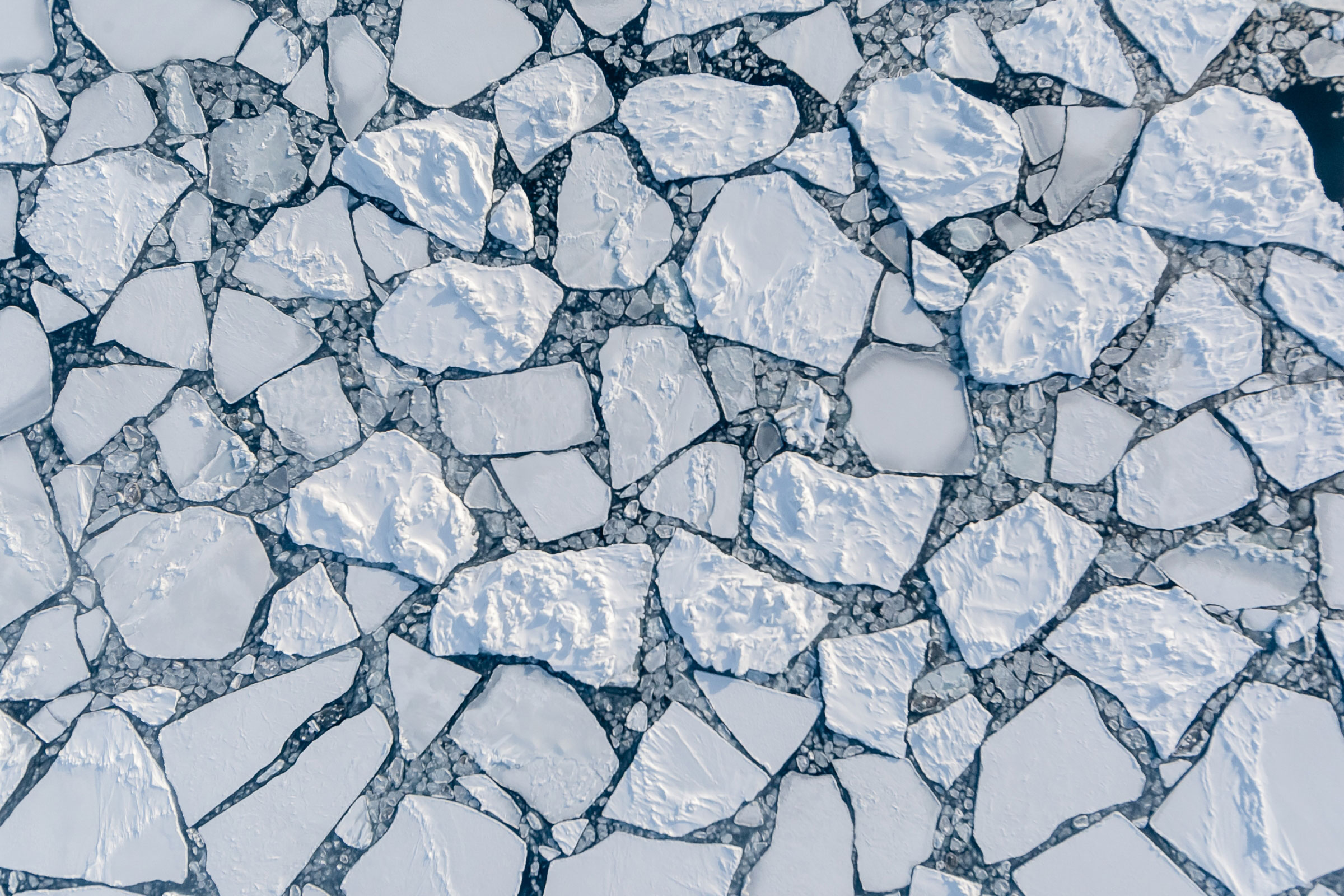 Aerial view of newly formed sea ice in the Arctic. Credit: Alfred Wegener Institute / IceCam / Stefan Hendricks
A rapid series of low-pressure systems can create weather conditions that make it difficult for ice to recover, affecting Arctic coastlines and the global climate system.
Sea ice in the Arctic can recover from a single storm, but repeated cyclones can make that recovery much harder. When several low-pressure systems sweep through the same area in quick succession, they can prolong warm, turbulent conditions that break apart ice and prevent newly opened gaps from freezing over.
An international team led by the Alfred Wegener Institute has now systematically examined this phenomenon using decades of weather and satellite observations. Their study, published in Nature Communications, describes how this process, known as ‘cyclone clustering,’ affects Arctic sea ice and may increase risks along Arctic coastlines.
‘Cyclone clustering’ refers to several low-pressure systems passing rapidly through the same region one after another, creating storms that are stronger and longer lasting than ‘normal’ storms. Similar sequences have already caused serious impacts elsewhere.
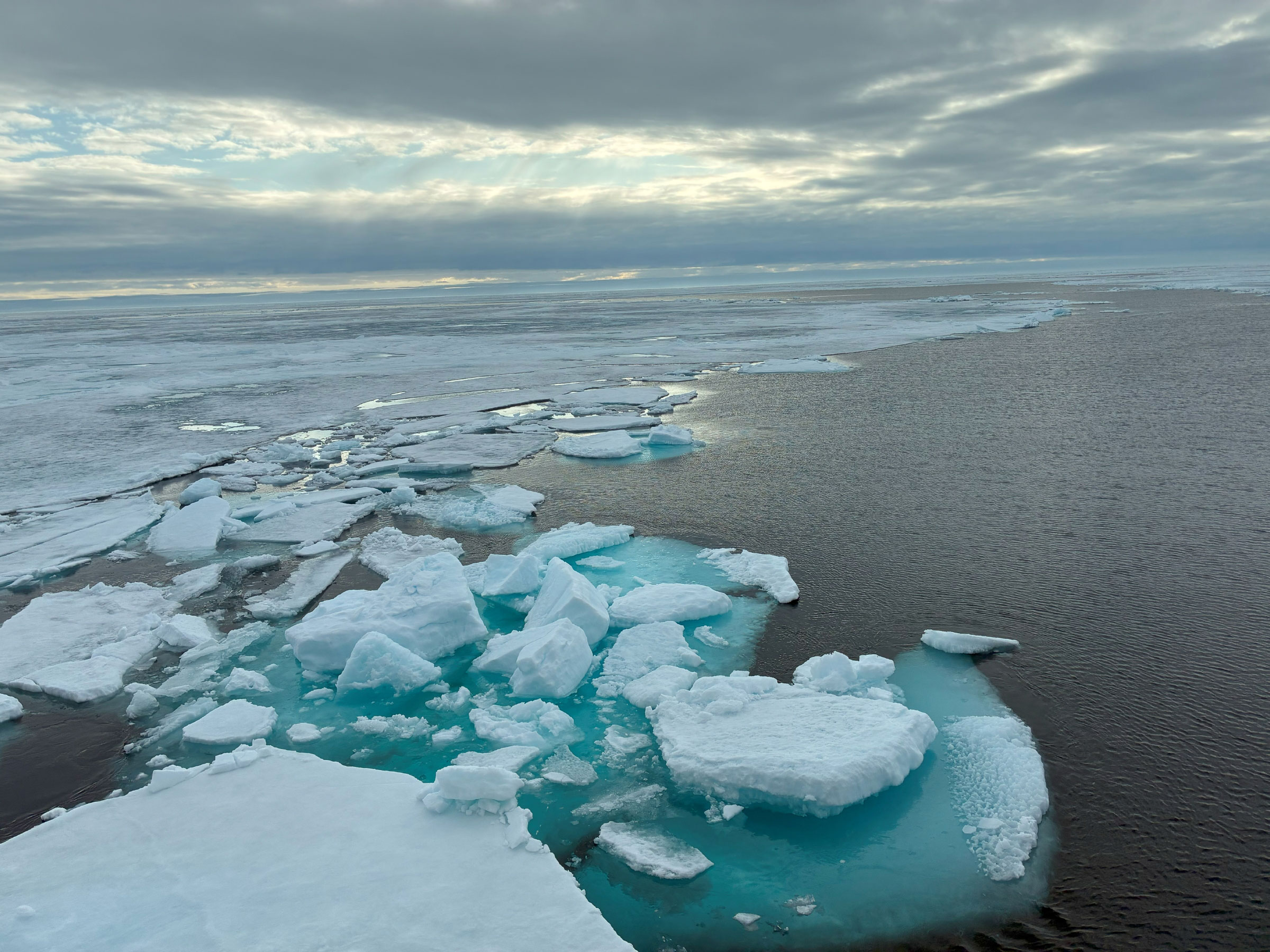 Arctic Sea Ice Floes. Credit: Alfred-Wegener-Institut
“In Europe, such events have frequently led to significant damage in the past due to high winds, heavy rainfall or high tide levels along the coast,” says Dr Lars Aue, lead author of the study from the Alfred Wegener Institute, Helmholtz Centre for Polar and Marine Research (AWI).
To determine how often these clusters occur in the Arctic and what they do to sea ice, the researchers analyzed satellite and weather records covering 1979 through 2024. They modified an existing weather tracking algorithm so it could identify Arctic cyclones arriving in rapid succession, then compared satellite images of the ice before and after each cluster.
“We adapted an algorithm for tracking weather systems so that it could detect rapidly consecutive cyclones in the Arctic,” explains Lars Aue. “We were then able to compare the state of the sea ice on satellite images before and after a cluster had passed through.”
Clustered storms keep ice gaps open longer
When cyclones pass over Arctic sea ice, they can fracture the frozen surface and push ice floes into motion, causing them to drift and collide. In winter, the resulting openings would normally freeze again within several days. A cluster of storms can prolong the disturbance, however, delaying or preventing those gaps from closing.
The effects change with the seasons. Cyclone clusters tend to be weaker during warmer months, but they can still substantially alter sea ice locally by driving floes northward and compressing them against existing ice, reducing the total area covered.
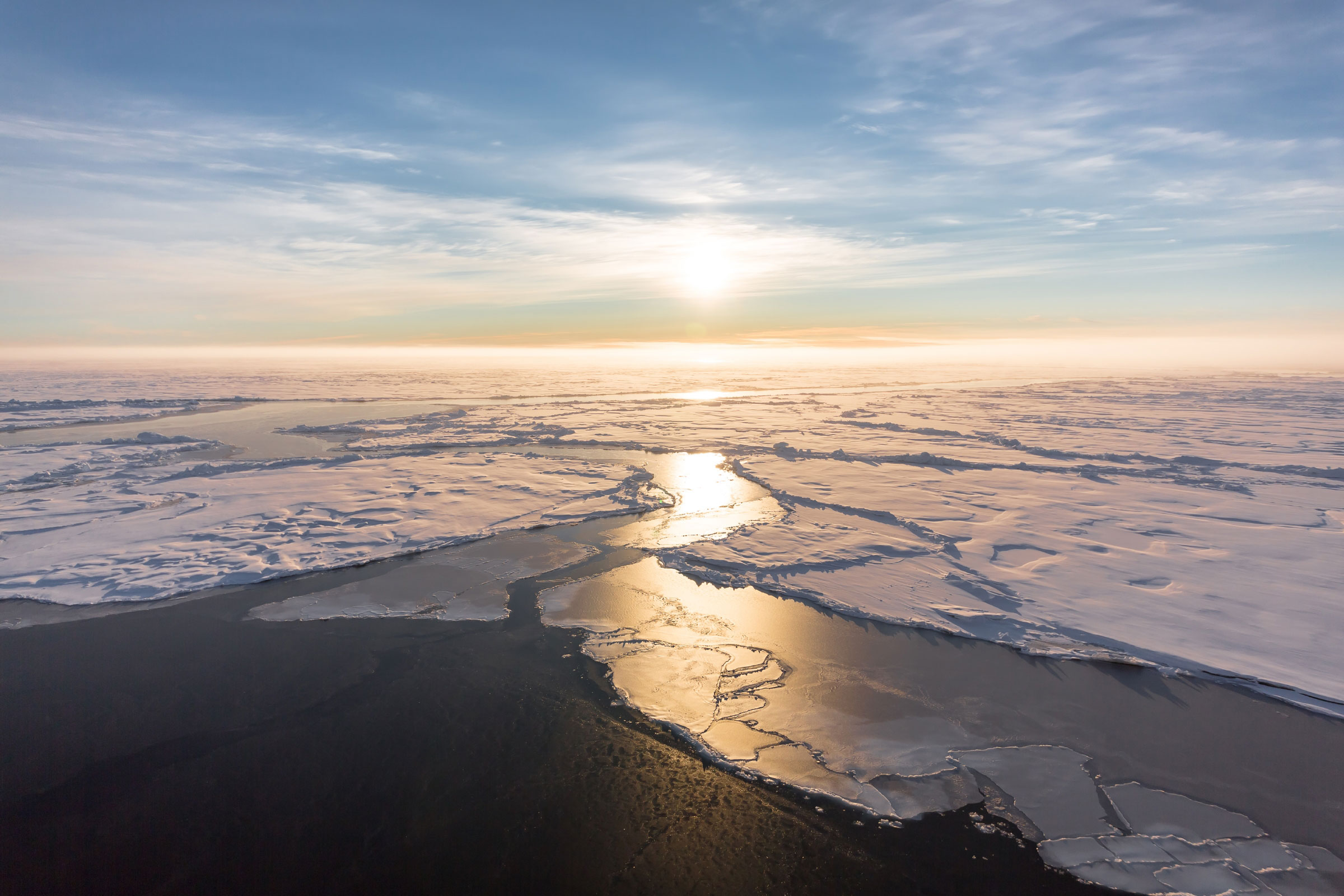 Thin new sea ice forms between older ice floes that survived the Arctic summer. Credit: Alfred Wegener Institute / Stefan Hendricks
The storms can also bring warmer air that melts ice from above and draw warmer seawater upward from deeper layers, heating the surface ocean. Over the past two decades, cyclones have contributed to sea ice loss particularly near the end of the melting season.
The size of a cyclone cluster varies by region and season, averaging about 2.5 storms. Its effect on sea ice also differs considerably from place to place. In some regions, the impact is amplified by as little as 1.5 times, while elsewhere it can reach seven times the effect of an isolated storm.
“On average across the entire Arctic, cyclone clusters reduce Arctic sea ice cover by about twice as much as conventional, isolated low-pressure systems. This condition also lasts about two and a half times longer,” says Lars Aue.
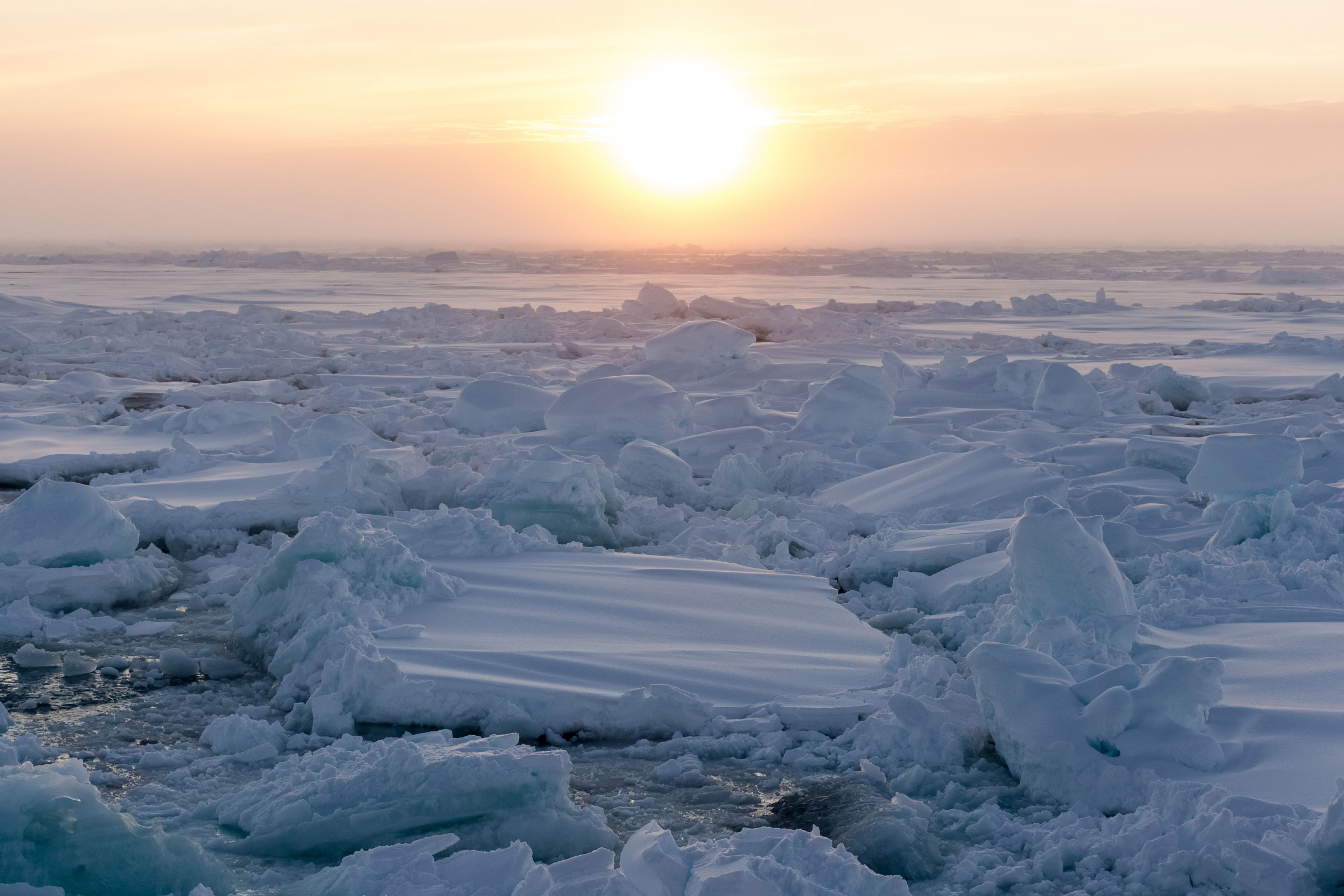 Arctic sea ice stretches across the horizon beneath the setting sun. Credit: Alfred Wegener Institute / Mario Hoppmann
Thinner ice is becoming more vulnerable
The researchers also found that sea ice losses associated with cyclone clusters have increased significantly in recent decades. One likely reason is that Arctic ice is becoming thinner and more mobile as the planet warms, leaving it less able to withstand repeated storms.
During summer, increasingly warm Arctic Ocean water may intensify the problem further.
“We could be entering a self-enforcing feedback loop: the weaker the sea ice becomes, the more cyclone clusters can reduce its extent, which in turn weakens the sea ice,” says Lars Aue. “Currently, we are using climate projections to investigate whether the intensification of the effects of cyclone clusters that we have seen in recent decades could continue in the future.”
Retreating ice leaves Arctic coasts exposed
The findings show how strongly short-term weather can influence Arctic sea ice and why understanding cyclone clusters matters beyond the ice itself. Arctic coastal communities face growing exposure to severe weather as cyclone activity increases because sea ice normally helps shield shorelines from waves.
As that protective ice retreats while permafrost continues to thaw, Arctic coasts become increasingly vulnerable to storm damage.
“Until now, there has been no systematic analysis of the impacts of cyclone clusters in the Arctic. With our work, we are filling a knowledge gap and lay an important foundation for projections that can depict the future of the Arctic sea ice – a central component of the global climate system – as accurate as possible.”
Reference: “On the relevance of serial cyclone clustering for Arctic sea ice” by Lars Aue, Sofie Tiedeck, Peter Finocchio, Timo Vihma, Petteri Uotila, Gunnar Spreen and Annette Rinke, 5 August 2026, Nature Communications.
DOI: 10.1038/s41467-026-76245-5
This research was supported in part by a grant NSF PHY-2309135 to the Kavli Institute for Theoretical Physics (KITP). Open Access funding enabled and organized by Projekt DEAL.
Never miss a breakthrough: Join the SciTechDaily newsletter.
Follow us on Google and Google News.




















 English (US) ·
  French (CA) ·
  French (FR) ·