

 4 days ago
8
4 days ago
8
PROTECT YOURSELF with Orgo-Life® QUANTUM TECHNOLOGY
Orgo-Life the new way to the future Advertising by AdpathwayOn August 7, 2026, Turkiye’s Recep Tayyip Erdoğan, Saudi Arabia’s Mohammed bin Salman, and Pakistan’s Shehbaz Sharif jointly signed the Mecca Joint Defense Agreement, which commits their countries to collective defense and expands defense cooperation. It builds on the Saudi-Pakistani Strategic Mutual Defense Agreement of September 2025. On August 31, their foreign ministers, defense ministers, and military chiefs met in Istanbul, announcing a secretariat in Saudi Arabia, initially headed by a Pakistani secretary general, alongside cooperation in military technology and production.
The most important question about the Mecca agreement is whose war they are prepared to fight. Although the text of the agreement is not publicly available yet, according to a Pakistan Foreign Ministry statement, Saudi Arabia, Turkiye, and Pakistan have agreed that an armed attack against any one of the three states shall be regarded as an attack against them all. However, with a look at their conflicting interests, one can easily predict that they will struggle to agree on what should happen next.
What makes one doubt whether such an accord could realistically function is the agreement’s central weakness: its publicly announced terms do not specify which forces would fight, under whose command, or on what timetable. All parties to the accord want greater security while retaining the freedom to decide which regional conflicts concern them. But when countries commit to collective defense, they must also agree on when and how they will defend one another, what strategic purpose the accord serves, and which threats they consider common. They must also be clear about who decides when military action is necessary, how they will share the costs, and how far each country is prepared to go if the conflict escalates; what economic interests they are willing to sacrifice, whether greater financial contributions give one country greater authority, and how they will reconcile their competing ambitions.
The first problem is that all three countries aspire to lead the Muslim world, but each has a different idea of what that leadership means. For instance, Erdoğan’s Turkiye invokes its Ottoman heritage to project authority beyond its borders. Turkiye’s reconversion of the Hagia Sophia into a mosque in 2020 to restore symbols of its Ottoman past was part of that ambition. In a 2018 speech to provincial muftis in Ankara, Erdoğan presented Turkiye as a country entitled to shape the Muslim world’s future because of the authority its Ottoman predecessors once exercised. Since Erdoğan’s rise to power, nostalgia for an imperial and caliphal past has helped shape Turkiye’s claim to leadership in the Muslim world today.
Saudi Arabia, meanwhile, bases its claim to leadership on its custodianship of Mecca and Medina and its established position in Islamic diplomacy. In the meantime, while Mohammed bin Salman wants to preserve that position and keep religion as a source of legitimacy, he is also making the kingdom a center for investment, technology, and regional diplomacy to serve the country’s economic and political ambitions. Saudi Arabia therefore wants a form of Islamic leadership that reinforces its own position, which raises the question of how far it would support an alliance that also strengthens Turkiye’s competing claim to that leadership.
For its part, Pakistan has long sought to turn its military strength into a claim to leadership of the Muslim world. This ambition is visible in how its leaders have explained the purpose of its nuclear program. Prime Minister Zulfikar Ali Bhutto famously said that other civilizations already possessed nuclear capability, writing: “Only the Islamic civilization was without it, but that position was about to change.” He was presenting Pakistan’s nuclear ambitions as an achievement that would alter the position of the entire Islamic civilization. Almost half a century later, addressing religious scholars in December 2025, Field Marshall Asim Munir, Pakistan’s first chief of defense forces and the country’s top military official, declared: “Among all Muslim countries, Allah has given Pakistan the honor of helping safeguard the Haramain,” referring to Islam’s holy sites in Mecca and Medina. Munir was thereby presenting Pakistan’s military role as a religious responsibility extending beyond its borders, giving Islamabad another basis for claiming a special position in the Muslim world.
Further, in 2020, Foreign Minister Shah Mahmood Qureshi threatened to organize Muslim countries outside the Saudi-led OIC over Kashmir. Pakistan has therefore shown a willingness to challenge the existing framework of Muslim diplomacy led by Saudi Arabia or Turkiye when it fails to serve Pakistani priorities, and this is where these ambitions could become difficult to reconcile with Saudi Arabia and Turkiye’s.
These three countries have also had differences in their foreign policies, and those differences have sometimes led them to work against one another’s regional objectives. For instance, during the 2017 blockade of Qatar by Saudi Arabia, it was Turkiye that sent troops and food supplies to Doha, helping Qatar to resist pressure from Saudi Arabia and its partners. Pakistan has also resisted Saudi expectations of military support. In 2015, after Riyadh requested Pakistani troops, aircraft, and warships for its intervention in Yemen, Pakistan’s parliament voted to remain neutral; this refusal showed that close relations did not mean Islamabad accepted Riyadh’s judgment about when military action was necessary.
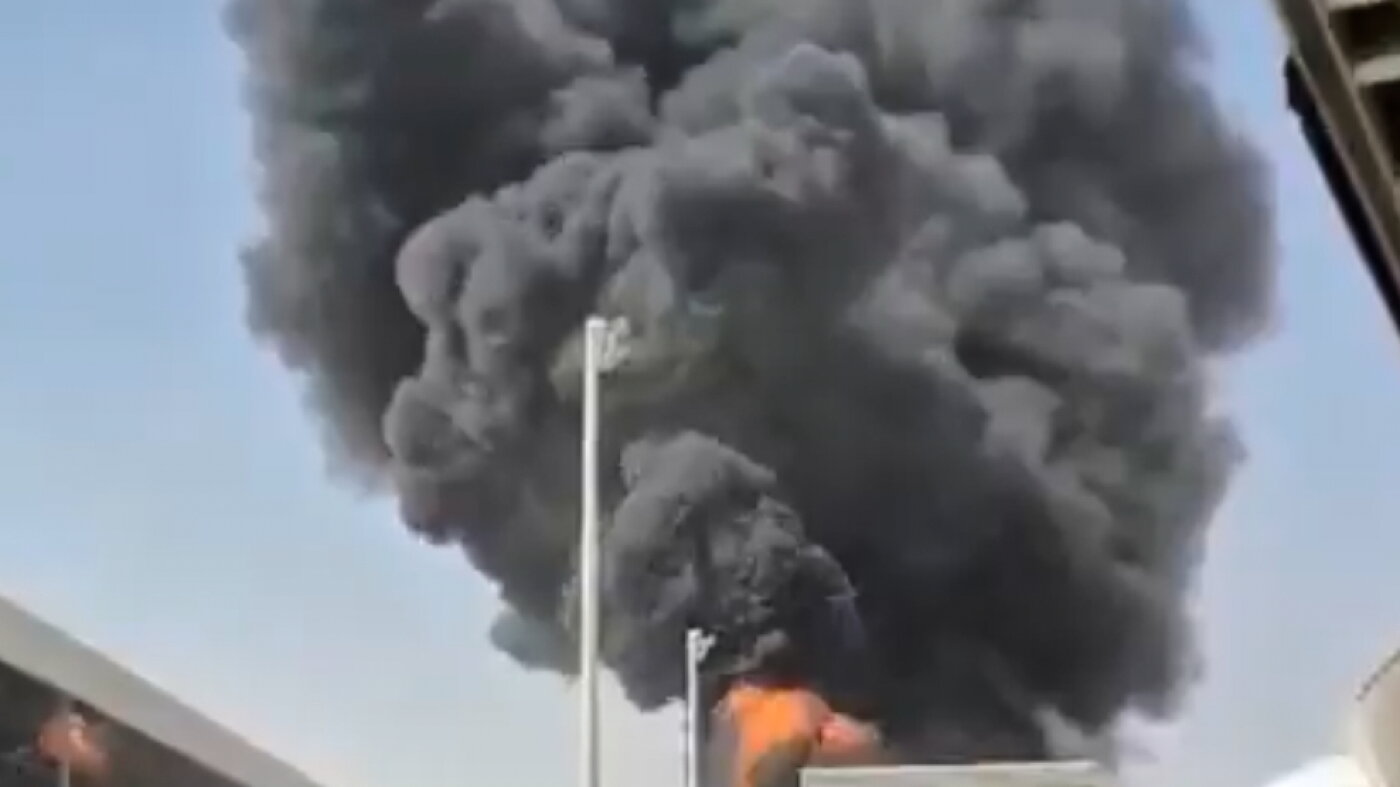
Pakistan has also not shown up to defend Saudi Arabia against the current attacks by Iran, despite the so-called “NATO-like” agreement that both countries signed last September. Most recently, on September 11, Saudi Arabia announced a precautionary shutdown of its East-West pipeline following drone attacks that Riyadh said originated in Iraq. The pipeline provided a vital alternative for oil exports disrupted by Iran’s restrictions at Hormuz. Separately, the Houthis captured Mokha and Perim, also known as Mayun, strengthening their position at Bab el-Mandeb, the southern gateway to the Red Sea and the trade route through Suez. Again, despite both the Strategic Mutual Defense Agreement and the Mecca accord, Pakistan and Turkiye have not shown up to defend Saudi Arabia, concerned with themselves being drawn into the crisis, after being threatened by Houthis that they both would pay a “high price” if they intervened.
The military picture extends the problem. Turkiye brings decades of NATO experience and a substantial domestic defense industry, while Pakistan increasingly relies on Chinese equipment, and Saudi Arabia remains heavily dependent on foreign suppliers. According to SIPRI’s 2026 data, China supplied 80 percent of Pakistan’s major arms imports in 2021–2025, while the United States supplied 77 percent of Saudi Arabia’s. If Pakistani and Saudi forces were fighting together, they would need to exchange relevant operational intelligence and coordinate forces using different military systems. However, integrating those systems could require sensitive technical information and assistance from their suppliers. Washington could object to arrangements that exposed information about American equipment to Chinese technicians, while Beijing could have similar concerns about Western access to its technology. Both would want to prevent a rival from learning how their weapons operate, identifying their vulnerabilities, or developing ways to defeat them. Suppliers could therefore have more power to limit how closely Mecca accord parties could operate together, even if those governments agreed on the need for joint military action.
Turkiye has seen how serious these restrictions can become. In July 2019, the United States excluded Ankara from the F-35 fighter program following its purchase of Russia’s S-400 air defense system, arguing that the Russian system could collect sensitive information about the aircraft’s capabilities. Turkiye’s longstanding NATO membership did not overcome Washington’s security concerns. The implication for the Mecca accord is that political agreement among its members may be insufficient to secure the military integration they need. If competing suppliers’ security concerns could obstruct cooperation inside NATO, there is little reason to assume that American and Chinese equipment can be easily integrated for the Mecca accord parties.
Turkiye’s NATO membership creates another complication. Even though the NATO Treaty places limits on collective defense obligations through Articles 5 and 6, which define the attacks and geographical areas they cover, Turkiye cannot extend NATO’s protection to Pakistan or Saudi Arabia simply by signing another agreement. However, an armed attack on Turkish territory resulting from Turkiye’s intervention in defense of either country would raise a separate Article 5 question which limits Turkiye’s freedom of action under the Mecca accord, as Ankara would have to consider how far it could go in defending its new partners and what consequences its involvement could have for its NATO allies.
Moreover, from an economic perspective, the economic imbalance among the three members makes the Mecca agreement hard to sustain. Saudi Arabia brings substantial oil wealth, Turkiye brings industrial capacity but continues to struggle with inflation, and Pakistan remains an IMF borrower. These differences raise questions about how they would divide the costs of preparing for, fighting, and recovering from a common war. NATO members finance their own forces while contributing to common budgets through an agreed formula based on national income. The Mecca accord’s statement announces a secretariat and industrial cooperation without explaining an equivalent financial arrangement.
If Saudi Arabia is expected to provide most of the money, would it demand greater influence over deployments and procurement? Would Turkiye and Pakistan accept that influence while supplying forces and bearing casualties? Conversely, would Riyadh finance military commitments over which its partners retained a veto? Paying for weapons is also different from funding years of operations, replacing losses and compensating for disrupted trade. A further difficulty is that attacks on Saudi oil infrastructure could weaken the revenue supporting any Saudi financial commitment. According to current reports, oil loadings at Saudi Arabia’s Red Sea port of Yanbu have stopped following drone attacks by the Iran-backed Houthi militia. The port has served as a major outlet for Saudi oil exports following the crisis in the Strait of Hormuz, and, according to experts, this pause in loadings could cause further severe disruption to global energy markets.
The difficulty goes further: the three countries do not share the same enemies. Pakistan shares a border with Iran, and both Islamabad and Ankara maintain relations with Tehran, while Saudi Arabia faces attacks from Iranian rockets in its territory as well as from its Houthi allies. More importantly, Turkiye has said the accord is not directed against Iran, which puts Saudi Arabia’s situation in limbo, as it’s not clear what is in this accord for Saudi Arabia and what protection Riyadh can expect if its partners prioritize preserving relations with Tehran.
Moreover, the Mecca accord countries have different approaches to Israel, the other major player in the region. Turkiye’s relations with Israel are confrontational, and Pakistan does not recognize Israel as a state, while Saudi Arabia remains the subject of efforts to expand the Abraham Accords, although Riyadh conditions normalization on Palestinian statehood.
On the other hand, with India, Pakistan’s principal strategic rival, the complications are amplified Saudi Arabia maintains a close partnership with India, with bilateral trade reaching $41.88 billion in fiscal 2024-2025. Would Riyadh jeopardize that relationship to fight New Delhi on Islamabad’s behalf? Would Pakistan confront Iran for Saudi Arabia? If each member preserves its own partnerships while expecting the others to absorb its security risks, what does the promise that an attack against one is an attack against all mean when a crisis arrives?











 English (US) ·
  French (CA) ·
  French (FR) ·