

 2 months ago
25
2 months ago
25
PROTECT YOURSELF with Orgo-Life® QUANTUM TECHNOLOGY
Orgo-Life the new way to the future Advertising by Adpathway3 min readNew DelhiUpdated: Jul 29, 2026 12:52 AM IST
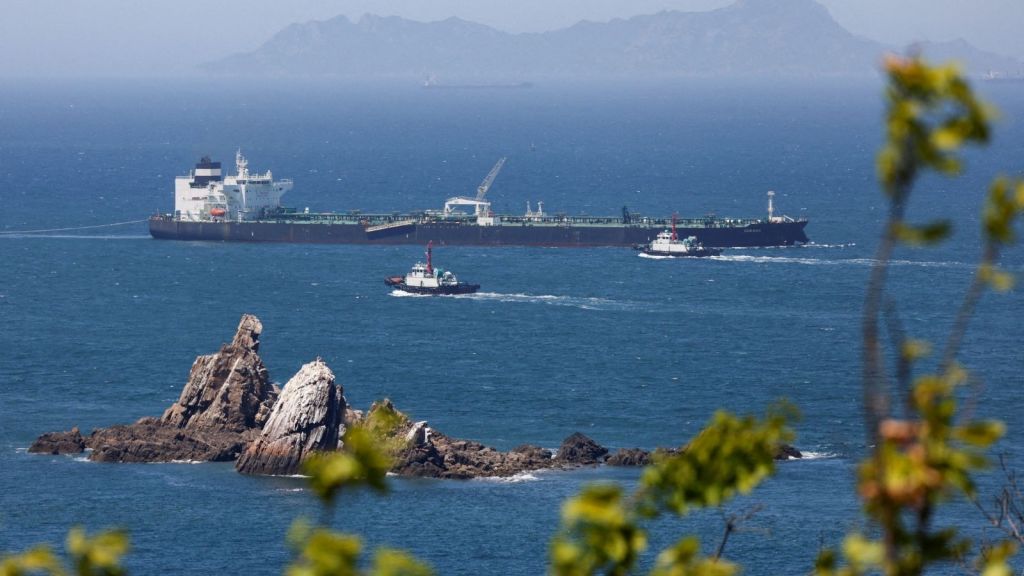 Tugboats guide the crude oil tanker Odessa, carrying UAE crude after passing through the Strait of Hormuz at Daesan port. (REUTERS FILE)
A proposal to charge fees on vessels transiting the Strait of Hormuz, which has drawn mixed signals from Iran and Oman, may offer a path to end the stalemate and revive peace negotiations with the United States as the West Asia conflict enters its sixth month.
Despite a deadlock in talks between Washington and Tehran, Iran’s Foreign Ministry spokesperson, Esmaeil Baghaei, said the Islamic Republic is engaged in “constructive” talks with Oman related to Hormuz that are not linked to the US.
Baghaei, in a statement, said, “The aim is for Iran and Oman, as the two littoral states, to develop mechanisms to ensure safe navigation in the Strait of Hormuz while respecting the sovereign rights of both coastal states and safeguarding Iran’s security and national interests,” CNN reported.
How will the toll work, and who could be charged?
Since the war between US-Israel and Iran broke out in February, Tehran has reiterated its stance to charge fees from ships for safe passage through the Strait of Hormuz, arguing that the critical waterway lies within the territorial waters of Iran and Oman.
Prior to the West Asia conflict, about 20 per cent of global oil and liquefied natural gas was being shipped through the strait, but since February 28, Hormuz has remained virtually choked, affecting energy prices across the world.
Oman has continued to resist the imposition of a toll on vessels to cross the strait, upholding the position that international law already protects the right to safe transit passage through straits used for international navigation. However, Oman has reportedly been looking for a compromise in order to accommodate Iran’s position.
What is the proposal?
The proposal presented by Oman to Iran calls for a joint regional management of the Strait of Hormuz with shipping companies paying voluntary fees for transiting the strategic waterway, Reuters reported.
Story continues below this ad
If the plan goes through, it is more likely to mirror the funding mechanism based on the Strait of Malacca, which connects the Indian Ocean with the Pacific Ocean and the waterway is bordered by Singapore, Malaysia, and Indonesia, the report added.
Strait of Hormuz has remained virtually blocked as Iran has repeatedly said the waterway cannot go back to its pre-war status, but the Gulf countries have insisted against any form of mandatory payment of toll to Iran.
The Omani proposal, which was presented to Iranian officials over the weekend and has regional backing, states that Tehran would not exercise sole control over the strait, Reuters reported, citing sources.
The Express Global Desk at indianexpress.com which delivers authoritative, verified, and context-driven coverage of key international developments shaping global politics, policy, and migration trends. The desk focuses on stories with direct relevance for Indian and global audiences, combining breaking news with in-depth explainers and analysis. A major focus area of the desk is US immigration and visa policy, including developments related to student visas, work permits, permanent residency pathways, executive actions, and court rulings. The Global Desk also closely tracks Canada’s immigration, visa, and study policies, covering changes to study permits, post-study work options, permanent residence programmes, and regulatory updates affecting migrants and international students. All reporting from the Global Desk adheres to The Indian Express’ editorial standards, relying on official data, government notifications, court documents, and on-record sources. The desk prioritises clarity, accuracy, and accountability, ensuring readers can navigate complex global systems with confidence. Core Team The Express Global Desk is led by a team of experienced journalists and editors with deep expertise in international affairs and migration policy: Aniruddha Dhar – Senior Assistant Editor with extensive experience in global affairs, international politics, and editorial leadership. Nischai Vats – Deputy Copy Editor specialising in US politics, US visa and immigration policy, and policy-driven international coverage. Mashkoora Khan – Sub-editor focusing on global developments, with a strong emphasis on Canada visa, immigration, and study-related policy coverage. ... Read More
Stay updated with the latest - Click here to follow us on Instagram




















 English (US) ·
  French (CA) ·
  French (FR) ·